
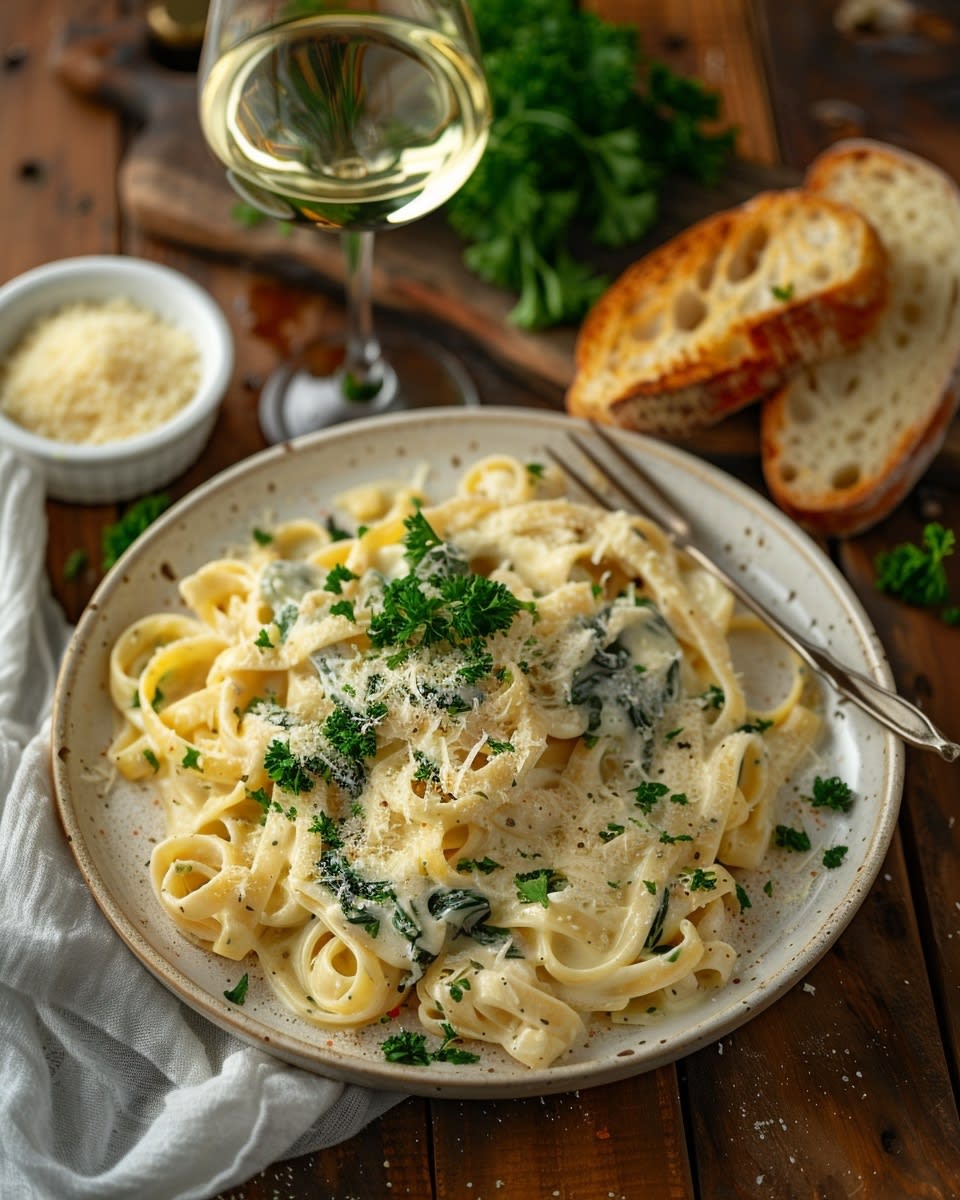
Why I Can’t Stop Making This Creamy Spinach Parmesan Pasta
Last Tuesday night, I stood in my kitchen staring at the clock. It was 6:47 PM, and I had exactly zero dinner plans. My stomach was growling, and the thought of ordering takeout again made my wallet cry a little. That’s when I remembered the bag of spinach in my fridge and the block of parmesan cheese calling my name. Thirty minutes later, I was twirling fork after fork of the creamiest, most satisfying pasta I’d made in months.
I’m obsessed with Creamy Spinach Parmesan Pasta, and I’m not apologizing for it. This dish has saved me countless times when I needed something quick but didn’t want to sacrifice flavor. It’s become my go-to recipe when comfort food calls but I still want to feel good about what I’m eating.
Here’s the thing about this pasta: it tastes like you spent hours in the kitchen. Your family will think you’re a culinary genius. But between you and me, it’s one of the easiest dishes you’ll ever make. The sauce comes together while your pasta boils, and you’ll have dinner on the table before your favorite show starts.
Pasta lovers everywhere have a special place in their hearts for creamy spinach dishes. The combination of tender greens, rich parmesan, and silky sauce creates something magical. It’s filling without being heavy. It’s fancy enough for date night but simple enough for a random Wednesday. And if you have picky eaters at home, the spinach practically disappears into the creamy sauce.
I’ve made this recipe for friends who claimed they didn’t like spinach. They went back for seconds. I’ve served it to my mother-in-law, who’s impossible to impress. She asked for the recipe. That’s when I knew I had something special.
The beauty of Creamy Spinach Parmesan Pasta lies in its flexibility. You can dress it up or keep it simple. Add grilled chicken for extra protein. Toss in some cherry tomatoes for brightness. Use whatever pasta shape you have in your pantry. The recipe adapts to your needs and what you have on hand.
Ingredients You’ll Need for the Best Creamy Spinach Parmesan Pasta
Let me walk you through what you’ll need to create this creamy masterpiece. I keep most of these items stocked because I make this dish so often. Once you taste it, you’ll probably do the same.
For the pasta and base:
- 1 pound of pasta (I love fettuccine or penne, but any shape works)
- 4 cups of fresh spinach, packed (don’t use frozen unless you absolutely have to)
- 3 tablespoons of butter (real butter, not margarine)
- 4 cloves of garlic, minced (fresh garlic makes all the difference)
- 1 cup of heavy cream (this is where the magic happens)
- 1 and 1/2 cups of freshly grated parmesan cheese (never use the pre-grated stuff from a can)
- 1/2 cup of pasta water (save this before draining)
- Salt and black pepper to taste
- Optional: red pepper flakes for a little kick
Now let’s talk about quality. I learned this lesson the hard way after making a disappointing batch with cheap ingredients. Your parmesan cheese matters more than you think. Buy a block of real parmesan and grate it yourself. Those pre-shredded bags contain anti-caking agents that prevent the cheese from melting smoothly. You’ll end up with a grainy sauce instead of a silky one.
The same goes for your spinach. Fresh spinach wilts beautifully and adds a vibrant color to your dish. Frozen spinach can work in a pinch, but it releases extra water that can thin your sauce. If you do use frozen, squeeze out every drop of moisture before adding it.
I prefer using heavy cream over milk or half-and-half. The higher fat content creates that luxurious, restaurant-quality texture. Your sauce will cling to the pasta instead of pooling at the bottom of the bowl. Trust me on this one.
The pasta shape you choose changes the entire eating experience. Fettuccine gives you those classic, silky ribbons coated in sauce. Penne holds the sauce in its tubes. Rigatoni creates little pockets of creamy goodness. I’ve used shells, bowties, and even spaghetti. Each one works beautifully.
Want to make this dish your own? The recipe welcomes additions and substitutions. Here are my favorite tweaks:
- Add sun-dried tomatoes for a tangy sweetness
- Toss in mushrooms for an earthy flavor
- Mix in cooked chicken, shrimp, or Italian sausage for protein
- Throw in some artichoke hearts for extra vegetables
- Use kale instead of spinach for a heartier green
- Add fresh basil or Italian parsley right before serving
I sometimes add a squeeze of lemon juice at the end. It brightens the whole dish and cuts through the richness of the cream. A tiny pinch of nutmeg works wonders too. It’s a secret ingredient that makes people ask what makes your sauce taste so good.
The versatility of this Creamy Spinach Parmesan Pasta means you’re never making the exact same dish twice. Last week I added roasted red peppers. The week before, I stirred in some cooked bacon. My kids loved both versions.
One of my friends swears by using orecchiette pasta. The little ear-shaped pieces catch the sauce perfectly. Another friend makes it with whole wheat pasta and adds extra spinach to sneak more vegetables into her kids’ diets. Both versions taste amazing.
Don’t skip the pasta water. It’s liquid gold for your sauce. The starch in that water helps bind everything together and creates a glossy finish. I always save at least a cup before draining my pasta.
Keep your ingredients at room temperature when possible. Cold cream can seize up when it hits the hot pan. I take my cream and butter out of the fridge about twenty minutes before cooking. This small step prevents lumpy sauce.
Fresh garlic transforms this dish from good to extraordinary. I know mincing garlic can be annoying. I get it. But jarred garlic doesn’t have the same punch. Take the extra minute to mince fresh cloves. Your taste buds will thank you.


How to Make Perfect Creamy Spinach Parmesan Pasta Every Single Time
With your ingredients ready and waiting, let’s get cooking. I’m going to walk you through this exactly how I make it in my own kitchen, including the little tricks I’ve picked up over the years.
First things first, fill your largest pot with water and get it boiling. I add about a tablespoon of salt to the water once it’s rolling. My Italian neighbor told me the water should taste like the sea, and she wasn’t wrong. This is your only chance to season the pasta itself, so don’t be shy with that salt.
While you’re waiting for the water to boil, grab a large skillet or sauté pan. I use my 12-inch skillet because you’ll need room to toss everything together later. Place it over medium heat and add your butter. Let it melt completely, but don’t walk away. Butter can burn faster than you think, and burnt butter will ruin the whole dish.
Once your butter starts foaming slightly, toss in that minced garlic. Here’s where the magic starts happening. Your kitchen is about to smell absolutely incredible. Stir the garlic around for about thirty seconds to a minute. You want it fragrant and just starting to turn golden, not brown. Brown garlic tastes bitter and harsh. Golden garlic tastes like heaven.
Now drop your pasta into the boiling water. Set a timer according to the package directions, but here’s my secret: I always cook it one minute less than recommended. The pasta will finish cooking in the sauce later, and this prevents it from getting mushy. Nobody wants overcooked pasta, especially not in a dish this good.
Back to your skillet. Pour in the heavy cream and bring it to a gentle simmer. Not a rolling boil, just a gentle bubble around the edges. This takes about three minutes. While it’s heating up, I usually prep my spinach if I haven’t already. Give it a rough chop if the leaves are huge, though baby spinach can go in whole.
Here’s where people usually mess up the sauce, so pay attention. Once your cream is simmering, reduce the heat to low. Add your freshly grated parmesan cheese in handfuls, stirring constantly between each addition. I cannot stress this enough: add it gradually. Dumping all the cheese in at once creates clumps that refuse to melt. It’s frustrating and completely avoidable.
Keep stirring in that same direction as you add each handful. The sauce should become smooth and silky. If it looks too thick, don’t panic. That’s what the pasta water is for. Speaking of which, right before you drain your pasta, scoop out at least a cup of that starchy cooking water. I use a measuring cup and just dip it right into the pot.
Drain your pasta but don’t rinse it. Rinsing washes away the starch that helps the sauce cling to each piece. Your parmesan sauce should look thick and glossy at this point. Now add your spinach directly into the sauce. It’ll look like way too much spinach. Don’t worry. Fresh spinach wilts down to almost nothing.
Stir the spinach into the sauce, and it’ll wilt in about two minutes. The bright green color mixing with that creamy white sauce looks beautiful. Once the spinach has wilted completely, season everything with salt and black pepper. I usually add about half a teaspoon of salt and several grinds of fresh pepper. Taste it though. Your taste buds are better than any measurement I can give you.
This is when I sometimes add a tiny pinch of nutmeg. And I mean tiny, like an eighth of a teaspoon. Nutmeg has this warm, slightly sweet quality that makes cream sauces taste more complex. People won’t be able to identify what makes it special, but they’ll notice something tastes different in the best way possible.
Add your drained pasta to the skillet with the sauce. Using tongs or a pasta fork, toss everything together. This is where that reserved pasta water becomes essential. If the sauce looks too thick or isn’t coating the pasta evenly, add the pasta water a quarter cup at a time. The starch in that water helps everything emulsify into one cohesive dish.
I learned this trick from watching too many cooking shows, but it works. Keep the heat on low and keep tossing the pasta with the sauce for another minute or two. The pasta absorbs some of that creamy spinach sauce, and the flavors really come together. If you’re adding protein like chicken or shrimp, this is when you’d toss it in to warm through.
The whole process from start to finish takes about twenty-five minutes. That’s faster than most delivery options, and it tastes infinitely better. I’ve made this on nights when I got home late from work, and it’s still manageable. The actual hands-on time is maybe fifteen minutes.
The Best Ways to Serve Your Spinach Parmesan Pasta
Let me tell you about presentation because it matters more than you’d think. I serve this pasta in warm bowls, and I always grate a little extra parmesan on top. A sprinkle of red pepper flakes adds visual interest and a subtle kick. Fresh basil leaves torn on top make it look like something from a restaurant.
A simple side salad balances the richness perfectly. I usually throw together some mixed greens with cherry tomatoes, red onion, and a basic vinaigrette. The acidity from the dressing cuts through the cream in the best way. Sometimes I make a Caesar salad instead, especially if I have leftover parmesan to use up.
Garlic bread is obviously a winning combination with any pasta dish. I make mine by spreading butter mixed with minced garlic and Italian herbs on a sliced baguette, then broiling it until golden. The crispy, garlicky bread soaks up any extra sauce in your bowl. My kids fight over the last piece every time.
Here’s the thing about making this recipe heartier: adding protein transforms it from a side dish into a complete meal. I’ve probably made ten different versions by now. Grilled chicken breast sliced and tossed in works beautifully. The mild chicken doesn’t compete with the parmesan cheese and lets those flavors shine. If you’re looking for something similar with chicken, check out this Tuscan Chicken Penne Pasta that has incredible flavor combinations.
Shrimp might be my favorite protein addition. I season them with salt, pepper, and a little paprika, then sauté them in a separate pan with butter and garlic. The shrimp cook in about five minutes, and they turn this pasta into something fancy enough for company. The sweetness of the shrimp pairs perfectly with the creamy sauce.
Italian sausage gives you a completely different vibe. I remove the casings and crumble the sausage into the pan before I add the garlic. The rendered fat adds so much flavor to the sauce. If you’re into sausage with pasta, you might also love this Pesto Chicken Tortellini Skillet that’s equally satisfying.
Vegetarians can boost the protein by adding white beans. Cannellini beans stirred in at the end add substance and fiber without changing the flavor profile much. Chickpeas work too, though they have a stronger taste that some people notice more.
The dietary adaptations for this recipe are easier than you’d think. Need it gluten-free? Use your favorite gluten-free pasta. I’ve tested this with several brands, and they all work. Just watch your cooking time because gluten-free pasta can turn mushy if you’re not careful. If you enjoy creamy pasta dishes, this Creamy Mushroom Fettuccine also adapts well to gluten-free pasta.
Making a vegan version requires a few more swaps but stays delicious. Replace the butter with olive oil or vegan butter. Swap the heavy cream for cashew cream or a good quality oat cream. I’ve had success with both. For the parmesan, use a vegan parmesan alternative. The brands have gotten so much better lately. Some of them fool even the pickiest eaters.
Dairy-free versions work if you’re lactose intolerant. Coconut cream makes a surprisingly good substitute for heavy cream, though it adds a very subtle coconut flavor. Most people don’t notice, but if you’re sensitive to it, use cashew cream instead. Nutritional yeast mixed with some vegan parmesan gives you that cheesy flavor without actual cheese.
Lower-calorie versions are possible too. I’ve made this with half-and-half instead of heavy cream. The sauce isn’t quite as luxurious, but it still tastes good. Using less butter and cheese reduces calories further. Some of my friends bulk it up with extra spinach and vegetables to increase the volume without adding many calories.
Funny enough, this recipe makes fantastic leftovers if you store them correctly. I add a splash of milk or cream when reheating because cream sauces tend to thicken in the fridge. A minute or two in the microwave or a quick reheat in a pan brings it back to life. My husband actually prefers the leftovers because the flavors have had time to meld together overnight.
For meal prep, I sometimes make a double batch and portion it into containers. It keeps well for three to four days in the refrigerator. I don’t recommend freezing it because cream sauces can separate when thawed, giving you a weird grainy texture that’s not appetizing. Similar to how Baked Ziti with Ricotta Cheese handles reheating, gentle warming is key to maintaining the creamy texture.
The adaptability of Creamy Spinach Parmesan Pasta means you’ll never get bored with it. I’ve been making variations of this dish for two years now, and it still excites me when it’s on the dinner menu. That’s the mark of a truly great recipe.


Why This Creamy Spinach Pasta Is Actually Good For You
Here’s something that might surprise you: this indulgent bowl of Creamy Spinach Parmesan Pasta actually delivers some serious nutritional benefits. I’m not saying it’s a health food exactly, but it’s not the dietary disaster you might think either. Let me break down what’s happening in your bowl beyond just the incredible taste.
Spinach is basically a nutritional powerhouse hiding in plain sight. Those four cups of fresh greens pack in vitamins A, C, and K, plus iron, folate, and calcium. I remember my grandmother always saying spinach would make me strong, and she wasn’t completely off base. The iron supports healthy blood cells, while vitamin K helps with bone health. My favorite part? The vitamin A content supports eye health and immune function. All that good stuff sneaks into this creamy pasta without tasting like you’re eating a salad.
The parmesan cheese contributes more than just flavor. Real parmesan cheese contains protein and calcium, supporting your bones and muscles. It’s also naturally lower in lactose than many other cheeses, which means some people who struggle with dairy can handle it better. Plus, a little goes a long way with parmesan because the flavor is so concentrated. That’s why this dish doesn’t require tons of cheese to taste amazing.
Now let’s be honest about the cream and butter situation. They’re high in calories and saturated fat, which means this isn’t an everyday meal for most people. But you know what? I’ve learned that completely denying yourself the foods you love leads to feeling deprived and miserable. I’d rather enjoy this rich, satisfying pasta once or twice a week than obsess over eating perfectly bland food every single day.
Balance is everything. The nights I make this pasta, I pair it with that big salad I mentioned earlier and call it a complete meal. The vegetables in the salad add fiber and nutrients that round out the dish. I drink plenty of water with dinner. The next day, I might have a lighter lunch with more vegetables and lean protein. It all evens out over the course of a week.
Making this dish healthier without sacrificing too much of that creamy goodness is totally possible. I’ve experimented with different modifications depending on my mood and health goals. Some work better than others, but they’re all worth trying.
Switching to whole wheat pasta adds fiber and makes the dish more filling. You’ll feel satisfied with a smaller portion, which naturally reduces calories. The nutty flavor of whole wheat pasta actually complements the parmesan sauce really nicely. My kids initially complained about the switch, but they got used to it faster than I expected. Now they don’t even notice the difference.
Reducing the cream is the most obvious modification. Instead of a full cup, try using three-quarters of a cup or even half a cup. You’ll need to add more pasta water to get the right consistency, but the sauce still tastes creamy. I’ve also mixed half heavy cream with half milk for a lighter version that still feels indulgent. The texture changes slightly, becoming less rich but still absolutely delicious.
Adding more vegetables bulks up your plate without adding many calories. I’ve stirred in cherry tomatoes, mushrooms, and extra spinach with great results. Roasted broccoli florets work beautifully too. The vegetables increase the nutrient density and add different textures that make each bite more interesting. Plus, the more vegetables you add, the smaller the pasta portion can be while still filling your bowl.
One trick I learned from a nutritionist friend: measure your pasta before cooking it. Most people way overestimate proper portion sizes. Two ounces of dry pasta per person is actually a standard serving, though I usually do three ounces because I’m hungry and don’t judge me. But being mindful of portions means you can enjoy the full-cream version without going overboard on calories.
Using less butter or swapping it for olive oil cuts saturated fat. Olive oil brings its own health benefits, including heart-healthy monounsaturated fats. I’ve made versions with just two tablespoons of olive oil instead of butter, and honestly, it still tastes fantastic. The flavor profile shifts slightly toward the Mediterranean side, which isn’t a bad thing at all.
Greek yogurt can partially replace some of the cream if you’re feeling adventurous. Add it off the heat at the very end to prevent curdling. It introduces protein and probiotics while maintaining creaminess. I usually do half cream and half Greek yogurt when I’m trying this method. The tanginess adds complexity that some people actually prefer over the traditional version.
By the way, proper kitchen sanitation practices matter when you’re handling fresh produce like spinach. Wash your greens thoroughly even if the package says pre-washed. I rinse mine under cold running water and give them a spin in my salad spinner. Food safety might not be glamorous, but getting sick from contaminated produce definitely ruins the enjoyment of any meal.
Here’s what I tell people who worry about whether they should eat dishes like this: food is meant to be enjoyed, not feared. This pasta brings happiness to my dinner table. It creates memories when I serve it to friends. My daughter requests it for her birthday dinner every year. Those experiences matter just as much as the nutritional breakdown on a plate.
The Mediterranean approach to eating has always resonated with me. People in Italy aren’t freaking out over a bowl of pasta with cream and cheese. They eat it in reasonable portions, savor every bite, and move on with their lives. They walk after dinner. They eat plenty of vegetables and fish throughout the week. They don’t assign moral value to food or feel guilty about enjoying their meals.
I’ve noticed that when I eat this pasta slowly and mindfully, I feel satisfied with less. Sitting down at the table instead of eating in front of the TV makes a difference. Putting my fork down between bites gives my body time to register fullness. These simple habits mean I enjoy my food more and don’t overeat as easily.
The protein additions I mentioned earlier also boost the nutritional profile significantly. Grilled chicken adds lean protein without much fat. Shrimp delivers protein plus beneficial omega-3 fatty acids. Even the white beans option increases protein and fiber, making the meal more balanced and satisfying for longer.
Timing matters too. I try not to eat this heavy, creamy pasta right before bed. Having it for lunch or early dinner gives my body time to digest properly. Late-night pasta comas are real, and they don’t make for great sleep. Though I’ll admit, I’ve definitely broken this rule more times than I’d like to confess.
Portion control becomes easier when you serve this as part of a larger meal. That side salad I keep mentioning? Start with that. Eat your vegetables first, then move to the pasta. You’ll naturally eat less pasta when you’re already partially full from the salad. It’s a simple psychological trick that actually works.
If you’re exploring different pasta and noodle recipes, you’ll find plenty of options that balance indulgence with nutrition. Some nights call for lighter preparations, and other nights demand something rich and comforting. Having a variety of recipes in your rotation keeps meals interesting and prevents that feeling of restriction that derails so many people’s health goals.
The bottom line is this: Creamy Spinach Parmesan Pasta can absolutely fit into a healthy, balanced diet. You don’t need to choose between eating well and eating food that tastes good. Make smart choices with your portion sizes, pair it with vegetables, stay active, and enjoy your food without guilt. Life’s too short to eat boring meals.
Your Questions About Creamy Spinach Parmesan Pasta Answered
Can I use frozen spinach instead of fresh?
You can definitely use frozen spinach, though the results will be slightly different. Make sure to thaw it completely and squeeze out every single drop of water using a clean kitchen towel or paper towels. Frozen spinach holds a surprising amount of liquid that will make your sauce watery if you don’t remove it. You’ll need about 10 ounces of frozen spinach to replace 4 cups of fresh. The texture won’t be quite as delicate, but the flavor remains excellent and it’s a great option when you don’t have fresh spinach available.
How do I store leftovers of Creamy Spinach Parmesan Pasta?
Store your leftovers in an airtight container in the refrigerator for up to four days. Let the pasta cool to room temperature before refrigerating, but don’t leave it sitting out for more than two hours for food safety reasons. When reheating, add a splash of milk or cream and a tablespoon of water to help revive the sauce. I prefer reheating in a skillet over medium-low heat, stirring frequently until warmed through. The microwave works too, but stir every 30 seconds and add that extra liquid to prevent the pasta from drying out.
Is there a way to make this dish spicier?
Absolutely, and I have several suggestions depending on your heat tolerance. Red pepper flakes are the easiest addition, stirred right into the sauce or sprinkled on top. Start with a quarter teaspoon and add more to taste. Fresh or dried cayenne pepper works similarly. For more complex heat, try adding a diced jalapeño when you sauté the garlic. I’ve also made this with calabrian chili paste stirred into the sauce for a fruity, spicy kick. A dash of hot sauce at the end works in a pinch too, though it changes the flavor profile slightly.
Can I substitute the parmesan with another type of cheese?
You can experiment with different cheeses, though the results will taste quite different. Pecorino Romano is the closest substitute, with a sharper, saltier flavor that some people prefer. Asiago cheese works well and melts beautifully into the sauce. I’ve tried using Gruyère for a nuttier, more complex flavor that’s delicious but definitely not the same dish. Regular mozzarella makes the sauce stringy and bland, so I don’t recommend it. Whatever cheese you choose, make sure you grate it fresh rather than using pre-shredded versions for the smoothest sauce.
What are some good wine pairings for this pasta dish?
A crisp white wine cuts through the richness of the cream sauce beautifully. I usually reach for a Pinot Grigio or Sauvignon Blanc, both of which have enough acidity to balance the dish. Chardonnay works if you prefer something richer, especially an unoaked version. If you’re a red wine person, try a light-bodied Pinot Noir that won’t overpower the delicate flavors. I’ve served this with prosecco at dinner parties, and the bubbles make everything feel more festive while cleansing your palate between bites.
How can I prevent my sauce from becoming grainy?
Grainy sauce usually happens when cheese is added to sauce that’s too hot or added all at once. Always reduce your heat to low before adding the parmesan cheese, and add it gradually in small handfuls while stirring constantly. Using freshly grated parmesan instead of pre-shredded makes a huge difference because pre-shredded cheese contains anti-caking agents that prevent smooth melting. If your sauce does become grainy, try whisking in a tablespoon of cream and a splash of pasta water while keeping the heat very low. Sometimes you can save it, though prevention is definitely easier than fixing it.
Can I make this pasta ahead of time for a dinner party?
I don’t recommend making cream-based pasta dishes too far in advance because the pasta continues absorbing the sauce and can become mushy. However, you can prep your ingredients ahead of time by washing and chopping the spinach, mincing the garlic, and grating the cheese. Store everything in separate containers in the fridge. You can also make the sauce earlier in the day and refrigerate it, then cook fresh pasta and combine everything right before serving. This approach gives you most of the convenience of advance prep while maintaining the best texture and flavor.
Why does my pasta clump together after tossing it with the sauce?
Clumping usually means your sauce is too thick or you didn’t use enough of it. This is exactly why I always emphasize saving that pasta water. The starchy water loosens the sauce and helps it coat every piece of pasta evenly. Add it gradually, a quarter cup at a time, while tossing the pasta continuously. Using tongs or a pasta fork to lift and toss the pasta helps separate the pieces. Make sure you’re tossing the pasta with the sauce immediately after draining it, not letting it sit and cool down first.
What’s the best way to reheat this pasta without drying it out?
The stovetop method works best for maintaining that creamy texture. Place your leftover pasta in a skillet over medium-low heat and add a few tablespoons of milk, cream, or even chicken broth. Stir frequently as it heats through, which takes about five minutes. If you must use the microwave, place the pasta in a microwave-safe bowl, add liquid, cover it with a damp paper towel, and heat in 30-second intervals while stirring between each one. The key is adding moisture back into the dish and heating it gently rather than blasting it on high power.
Is this recipe suitable for meal prep for the whole week?
I’d say this pasta works well for meal prep for three to four days maximum, but not a full week. Cream sauces don’t hold up as well as tomato-based sauces over time. The pasta continues absorbing liquid, and even with proper storage, the texture deteriorates after about four days. If you’re serious about meal prep, I’d suggest making two separate batches during the week rather than one large batch on Sunday. Alternatively, you could prep all your ingredients and store them separately, then cook fresh portions as needed throughout the week.
I hope you give this Creamy Spinach Parmesan Pasta a try in your own kitchen. It’s brought so much joy and so many easy weeknight dinners to my table, and I genuinely believe it’ll do the same for yours. Don’t be intimidated by cream sauces or worry about making it perfect the first time. Just have fun with it, adjust it to your tastes, and enjoy the process of creating something delicious.
Ingredients
Equipment
Method
- Remplissez une grande casserole d'eau, ajoutez du sel et portez à ébullition.
- Dans une grande poêle, faites fondre le beurre à feu moyen.
- Ajoutez l'ail émincé dans la poêle et faites sauter jusqu'à ce qu'il soit parfumé et doré.
- Une fois l'eau en ébullition, ajoutez les pâtes et faites cuire une minute de moins que les instructions du paquet.
- Versez la crème épaisse dans la poêle et portez à un léger frémissement.
- Ajoutez progressivement le parmesan râpé dans la poêle, en remuant continuellement jusqu'à obtenir une consistance lisse.
- Réservez 1/2 tasse d'eau de pâtes, puis égouttez les pâtes sans les rincer.
- Ajoutez les épinards frais dans la poêle et remuez jusqu'à ce qu'ils soient flétris.
- Assaisonnez la sauce avec du sel, du poivre noir et un peu de muscade (facultatif).
- Ajoutez les pâtes égouttées dans la poêle avec la sauce, en ajoutant l'eau de pâtes réservée au besoin pour obtenir la consistance souhaitée.