
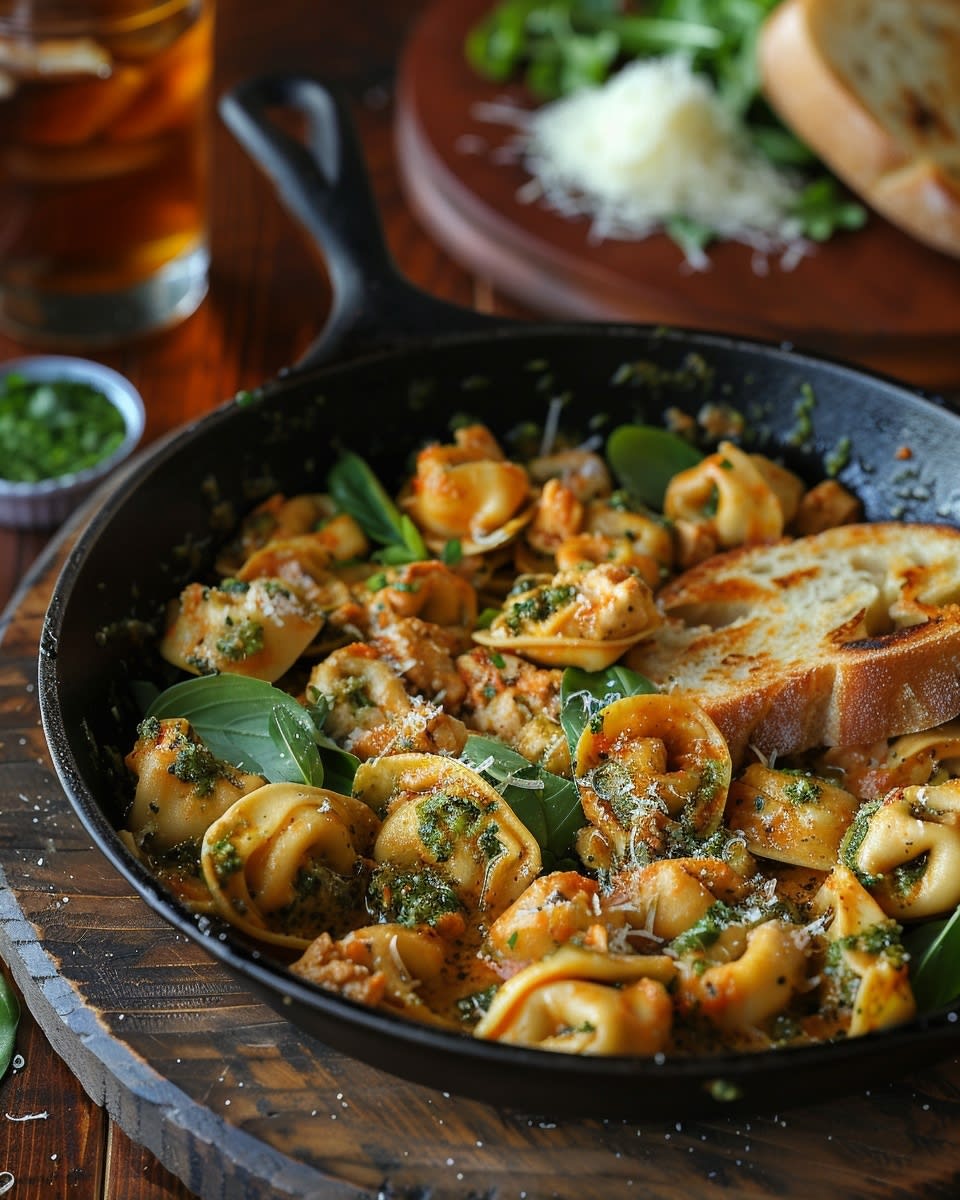
Introduction: Your New Favorite Pesto Chicken Tortellini Skillet
Last Tuesday night, I stood in my kitchen at 6 PM with zero energy and a family asking “what’s for dinner?” in that slightly desperate tone we all know. I opened my fridge, spotted some chicken breasts, a container of tortellini, and a jar of pesto. Thirty minutes later, we were eating this Pesto Chicken Tortellini Skillet, and my kids actually asked for seconds. That’s the moment I knew this recipe was a keeper.
Let me tell you about this dish that has saved my weeknight dinners more times than I can count. The Pesto Chicken Tortellini Skillet is everything you need when you’re tired, hungry, and don’t want to spend hours in the kitchen. It’s fast, it’s simple, and it tastes like you tried way harder than you actually did. I love recipes that make me look like a kitchen genius without the stress.
The beauty of this meal lies in its simplicity. You need chicken, cheese tortellini, pesto, and a few basic ingredients you probably already have. No fancy equipment required. No complicated techniques. Just one skillet and about 30 minutes from start to finish. I’ve made this on countless busy evenings, and it never disappoints.
What makes this recipe truly special is how it combines rich, herby pesto with tender chicken and pillowy tortellini. The pasta soaks up all those amazing flavors while everything cooks together in one pan. Less cleanup means more time to actually sit down and enjoy dinner with your family. Trust me, when you’re juggling work, kids, and life in general, that matters.
I remember the first time I made this dish. My daughter, who typically picks at her food, cleaned her entire plate. My husband came back for thirds. Even my picky eater son admitted it was “pretty good,” which in kid language means it’s fantastic. That’s when I realized this wasn’t just another dinner recipe. This was a quick and easy recipe that actually pleased everyone at the table.
Why This Pesto Chicken Tortellini Skillet is a Family Favorite
The flavor combination in this dish hits all the right notes. The basil pesto brings a fresh, aromatic quality that wakes up your taste buds. It’s bright and herby without being overwhelming. The chicken adds protein and substance, making this a filling meal that actually keeps you satisfied. The tortellini provides comfort in every bite, especially when it’s stuffed with cheese.
Here’s what I love about the textures: The chicken gets perfectly golden and tender. The tortellini stays soft but not mushy. If you add cherry tomatoes like I often do, they burst and create these little pockets of sweetness. Sometimes I throw in spinach for color and nutrients, and it wilts right into the sauce. Every forkful gives you something different to enjoy.
This recipe is incredibly flexible. I’ve made it with chicken thighs when that’s what I had on hand. I’ve swapped fresh tortellini for frozen. I’ve used homemade pesto and store-bought pesto with equally good results. The recipe works with what you have available, which makes it perfect for those nights when grocery shopping wasn’t in the cards.
The versatility extends to dietary needs too. Need to make it gluten-free? Use gluten-free tortellini. Want more vegetables? Add zucchini, bell peppers, or mushrooms. Looking to cut calories? Use chicken breast instead of thighs and add extra veggies to bulk it up. I’ve adapted this recipe dozens of ways, and it always works.
Let’s talk about the single skillet aspect because this is huge. I used to make pasta dishes that required boiling water in one pot, cooking chicken in another pan, and making sauce in a third. By the end, my kitchen looked like a disaster zone. With this Pesto Chicken Tortellini Skillet, everything happens in one pan. You cook the chicken, set it aside, cook the tortellini in the same skillet, then bring it all together. The flavors build on each other, and cleanup takes maybe five minutes.
My kids love this meal for obvious reasons. It’s pasta with cheese, which is basically kid currency. The pesto adds flavor without being spicy or weird. The chicken is cut into bite-sized pieces that are easy for small hands to manage. I’ve served this at playdates, and other parents always ask for the recipe.
Adults appreciate it for different reasons. It feels sophisticated enough to serve to guests but easy enough for a random Wednesday. The pesto adds an Italian flair that makes dinner feel special. My husband loves that it’s hearty and filling without being heavy. He can eat this and not feel weighed down afterward.
I’ve noticed this is one of those quick and easy recipes that doesn’t sacrifice quality for speed. Some fast meals taste like compromises. They’re fine but not exciting. This dish actually tastes like you put thought and care into making it. The flavors are balanced and complete. Nothing feels rushed or thrown together.
The convenience factor cannot be overstated. On nights when I’m running late from work or the kids have activities, I can still pull together a real dinner. Not takeout. Not cereal. An actual home-cooked meal that everyone enjoys. That peace of mind is priceless. I keep the ingredients on hand specifically because I know this recipe will save me when I need it most.
Another reason this dish wins in my house is that leftovers are actually good. Some pasta dishes get weird the next day. This one reheats beautifully. I pack it for lunch, and it tastes just as good as it did at dinner. Sometimes I add a splash of cream or extra pesto when reheating to freshen it up.
The visual appeal matters too. This dish looks vibrant and appetizing. The green pesto coats everything beautifully. If you add tomatoes, you get pops of red. The golden chicken pieces look inviting. I’ve served this to guests, and it always gets compliments before anyone even takes a bite. Presentation counts, and this meal delivers without any extra styling effort.


Gathering Your Ingredients for the Perfect Pesto Chicken Tortellini Skillet
Now that you know why this dish has become such a lifesaver in my kitchen, let’s talk about what you actually need to make it happen. I’m going to walk you through every ingredient, and trust me, this list is refreshingly short.
For the chicken, I usually grab about a pound and a half of boneless, skinless chicken breasts. Sometimes I use chicken thighs if they’re on sale or if I’m feeling like I want a bit more richness. Thighs have more fat, which means more flavor and a harder time drying them out. Breasts are leaner and cook faster. Either works perfectly, so choose based on what you prefer or what’s in your fridge.
The tortellini is obviously the star of the show here. I go for cheese-filled tortellini most of the time because that’s what my family loves. You’ll need about a pound, which is typically one package. Fresh tortellini from the refrigerated section cooks faster and has this amazing tender texture. Frozen tortellini works just as well and keeps longer in your freezer for those emergency dinner situations. I’ve even used dried tortellini when that’s all I had, though it takes a bit longer to cook. The filling matters too. Cheese is classic, but I’ve experimented with spinach and cheese, mushroom-filled, and even meat tortellini. They all turn out delicious.
Here’s the thing about pesto sauce. Quality really matters here. I make my own pesto when I have fresh basil growing in my garden, and it’s phenomenal. The bright, fresh flavor just can’t be beaten. But let’s be real—most Tuesday nights, I’m reaching for a jar from the store. When buying pesto, read the ingredient list. Good pesto should have basil, olive oil, pine nuts or other nuts, garlic, and parmesan cheese. If you see a bunch of fillers or preservatives, keep looking. I’ve found that the refrigerated pesto in the specialty cheese section usually tastes better than the shelf-stable jars, though those work fine too. You’ll need about half a cup to three-quarters of a cup depending on how pesto-forward you want the dish.
For the liquid component, I use chicken broth or chicken stock. About a cup and a half does the trick. This creates the sauce that the tortellini cooks in and helps everything come together. Low-sodium is my preference because it gives me better control over the seasoning. If you want a creamier sauce, you can swap half of the broth for heavy cream or half-and-half. I do this sometimes when I’m feeling indulgent.
Cherry tomatoes are optional but highly recommended. A cup or so adds these little bursts of sweetness and acidity that balance the richness of the pesto and cheese. I just halve them and toss them in. Grape tomatoes work the same way. If tomatoes aren’t your thing or you don’t have them, the dish still works fine.
Fresh spinach is another add-in I almost always include. A couple handfuls wilts down to nothing but adds color and makes me feel better about the nutritional value. Baby spinach is easiest because you don’t need to remove stems or chop anything. You could also use kale if you’re into that, though you’ll want to chop it finer since it’s tougher.
Garlic is non-negotiable in my version. Three or four cloves, minced. If you love garlic like I do, add more. I’ve never regretted extra garlic. Pre-minced garlic from a jar works when you’re in a hurry, though fresh tastes better.
You’ll need some olive oil for cooking the chicken, salt and pepper for seasoning, and parmesan cheese for serving. I always grate fresh parmesan because the pre-grated stuff doesn’t melt as nicely and often tastes like cardboard. A microplane grater makes quick work of this. Red pepper flakes are great if anyone in your house likes a little heat.
The beauty of this ingredient list is its flexibility. No tortellini? Use ravioli instead. No chicken? Shrimp would be incredible, or you could make it vegetarian and add white beans for protein. No fresh pesto? A good quality jarred version works perfectly. I’ve made variations of this dish so many times with whatever I had available, and it always turns out great. If you’re looking for similar pasta comfort, you might also enjoy this Tuscan Chicken Penne Pasta that uses sun-dried tomatoes for a different flavor profile.
How to Make Your Pesto Chicken Tortellini Skillet
Alright, let’s get cooking. This process is straightforward, but I’ll share the little tricks I’ve learned that make a difference.
First, cut your chicken into bite-sized pieces, about an inch or so. I season them generously with salt and pepper on both sides. Here’s a tip I learned the hard way: make sure the pieces are roughly the same size so they cook evenly. Nothing worse than some pieces being dried out while others are still pink in the middle.
Heat your largest skillet over medium-high heat. I use a 12-inch skillet because it gives everything room to cook without crowding. Add about two tablespoons of olive oil and let it get hot. You’ll know it’s ready when the oil shimmers and moves easily across the pan. Add your chicken pieces in a single layer. Don’t move them around for the first few minutes. Let them develop a nice golden crust on one side before flipping. This takes about four to five minutes. Then flip and cook the other side for another four to five minutes until the chicken is cooked through. The internal temperature should hit 165°F if you want to be precise, but I usually just cut into the thickest piece to check.
Remove the chicken from the skillet and set it aside on a plate. Don’t worry if it doesn’t look perfect or if there are some browned bits stuck to the pan. Those browned bits are flavor gold.
In the same skillet, add a bit more olive oil if needed and toss in your minced garlic. Cook it for maybe 30 seconds until it smells amazing but before it turns brown. Burned garlic is bitter, so watch it carefully. This is also when I add my halved cherry tomatoes if I’m using them. Let them cook for a couple minutes until they start to soften.
Pour in your chicken broth and use a wooden spoon to scrape up all those delicious browned bits from the bottom of the pan. This is called deglazing, and it’s how you capture all that flavor. Bring the broth to a boil, then add your tortellini. Give everything a good stir.
Here’s where timing matters. Fresh tortellini usually takes about three to five minutes to cook. Frozen takes closer to seven to ten minutes. Dried can take up to twelve minutes. Follow the package directions but start checking a minute or two early. You want the tortellini to be tender but not mushy. Stir occasionally so nothing sticks to the bottom.
When the tortellini is almost done, stir in your pesto. I add about half a cup to start, then taste and add more if needed. The sauce should coat everything nicely. If it seems too thick, add a splash more broth. If it’s too thin, let it simmer for another minute or two.
Now add the chicken back into the skillet along with any juices that collected on the plate. If you’re using spinach, throw it in now. It’ll wilt in less than a minute. Stir everything together gently. You want the chicken, tortellini, and sauce to become one cohesive dish. Taste and adjust the seasoning. Sometimes I add a squeeze of lemon juice at this point for brightness.
By the way, if you’re someone who loves creamy pasta dishes, you could stir in a quarter cup of heavy cream or cream cheese at this stage. It makes the sauce richer and more luscious. When I want something extra comforting, this Creamy Mushroom Fettuccine hits the spot in a similar way.
The whole cooking process takes about 25 to 30 minutes from start to finish. That’s faster than ordering delivery and infinitely better tasting. These skillet recipes have saved my weeknight sanity more times than I can count.
Making This Dinner Work for You
Let’s talk about what to serve alongside this dish and how to customize it for your family. I usually serve this as a complete one-pan meal because it already has protein, carbs, and vegetables if you add the spinach and tomatoes. But sometimes you want a little something extra.
A simple green salad with a light vinaigrette balances the richness of the pasta perfectly. I throw together mixed greens, cucumber, and a quick dressing with olive oil, lemon juice, and Dijon mustard. Takes five minutes and makes the meal feel more complete.
Garlic bread is always a crowd-pleaser. I keep a loaf of French bread in the freezer specifically for nights like this. Slice it, brush with butter mixed with garlic powder, and toast it in the oven while the pasta finishes cooking. My kids will eat almost anything if there’s garlic bread involved.
Funny enough, roasted vegetables work really well too. I often roast broccoli or Brussels sprouts while I’m making the pasta. Toss them with olive oil, salt, and pepper, and roast at 425°F for about 20 minutes. The slight char and crispy edges provide a nice textural contrast to the soft pasta.
Now, let’s talk about making this dish even more substantial or nutritious. I mentioned adding spinach and tomatoes, but there are so many other options. Mushrooms are fantastic. Sauté them with the garlic before adding the broth. They add this earthy, meaty quality that makes the dish feel heartier. Bell peppers add sweetness and crunch. Zucchini works great too—just dice it and add it when you add the tomatoes.
If you want more protein, you could add white beans or chickpeas. A can of cannellini beans, drained and rinsed, would be perfect. Stir them in with the chicken at the end. Sun-dried tomatoes are another favorite addition of mine. They’re intensely flavored and add another dimension to the pesto. Speaking of satisfying pasta recipes, this Baked Ziti with Ricotta Cheese is another family favorite that feeds a crowd.
For dinner ideas using leftovers, I’ve gotten creative. Cold Pesto Chicken Tortellini makes an excellent pasta salad for lunch the next day. I add some fresh mozzarella balls, extra cherry tomatoes, and a drizzle of balsamic vinegar. Suddenly it’s a completely different meal.
I’ve also used leftovers to make a frittata. Beat some eggs, pour them over the leftover pasta in an oven-safe skillet, top with cheese, and bake at 350°F until set. It’s an impressive brunch dish that uses up what you have on hand.
If you want to make this dish lighter, use more vegetables and less tortellini. Replace half the tortellini with zucchini noodles or regular pasta. The pesto sauce works with any shape. I’ve made similar versions with angel hair, and it’s just as tasty. For seafood lovers, consider trying Lemon Butter Shrimp Pasta for a different take on quick skillet dinners.
The amount of cheese you add at the end is completely up to you. I go heavy on the parmesan, but if you’re watching calories, a light sprinkle still adds flavor. Fresh mozzarella torn into pieces and stirred in at the end creates these amazing melty pockets. Burrata would be absolutely decadent if you’re feeling fancy.
Don’t be afraid to experiment with different types of pesto either. I’ve made this with red pesto made from sun-dried tomatoes, and it was incredible. Arugula pesto gives it a peppery kick. Even store-bought spinach pesto works in a pinch.


The Nutritional Side of Your Pesto Chicken Tortellini Skillet
Let me share something that makes me feel better about serving this dish regularly—it’s actually pretty nutritious. I know we often think of comfort food as unhealthy, but this Pesto Chicken Tortellini Skillet offers more than just great taste.
The chicken provides lean protein, which is essential for building and repairing tissues. A serving gives you about 25 to 30 grams of protein, depending on how much chicken you use. That’s a solid amount that keeps you feeling full and satisfied. Protein also helps stabilize blood sugar levels, which means you won’t get that crash an hour after eating like you might with a simple pasta dish.
Here’s the thing about the pesto—it’s packed with nutrients. Basil contains antioxidants and has anti-inflammatory properties. The olive oil in pesto provides healthy monounsaturated fats that support heart health. Pine nuts add vitamin E, magnesium, and zinc. Garlic boosts your immune system and has antimicrobial properties. Parmesan cheese contributes calcium and additional protein. So that green sauce isn’t just flavor—it’s bringing real nutritional value to your plate.
The tortellini does add carbohydrates, which some people worry about. But carbs aren’t the enemy. They give you energy, especially if you’re active or feeding growing kids. The cheese filling adds protein and calcium. If you want to boost the nutritional profile, look for whole wheat tortellini. I’ve found brands that make whole grain versions, and honestly, my family couldn’t tell the difference. The pesto flavor is strong enough to carry everything.
Adding vegetables transforms this from good to great nutritionally. Those cherry tomatoes I keep mentioning? They’re loaded with lycopene, an antioxidant that’s been linked to heart health and reduced cancer risk. Spinach brings iron, vitamin K, folate, and fiber. Just a couple handfuls significantly increases the vitamin content of your meal. I feel better knowing my kids are getting greens even when they think they’re just eating pasta.
One consideration worth mentioning is sodium. Store-bought pesto and chicken broth can be high in salt. When managing sodium intake, I choose low-sodium broth and check the pesto label. Making your own pesto gives you complete control over salt levels. If you’re watching sodium for health reasons, this small adjustment makes a big difference without sacrificing flavor.
The beauty of healthy recipes like this is they don’t feel like diet food. Nobody’s sitting at my table thinking “ugh, Mom’s making us eat healthy again.” They’re enjoying creamy, flavorful pasta. The fact that it also happens to deliver protein, healthy fats, vitamins, and minerals is just a bonus.
Let’s talk about the nutrition facts more specifically. A typical serving of this dish contains approximately 450 to 550 calories, depending on your portion size and whether you add cream. That’s a reasonable amount for a main meal. You’re getting a balanced macronutrient profile—protein from the chicken and cheese, carbs from the pasta, and fats from the pesto and olive oil.
For anyone following a gluten-free diet, swap regular tortellini for gluten-free versions. Several brands make excellent gluten-free stuffed pasta now. I’ve served it to friends with celiac disease, and they were thrilled to have an option that didn’t feel like a compromise. Just make sure your broth and pesto are also certified gluten-free if you’re dealing with serious sensitivities.
If you’re trying to increase your vegetable intake—and honestly, who isn’t—this dish is incredibly accommodating. I’ve loaded it up with zucchini, bell peppers, broccoli, and kale before. The more vegetables you add, the more fiber and micronutrients you get. Fiber is crucial for digestive health and helps you feel satisfied longer.
Funny enough, my husband started tracking his macros last year for fitness reasons, and he was pleasantly surprised that this meal fit perfectly into his goals. The protein content was high enough to support his workouts, the carbs gave him energy, and the fats from the pesto were the healthy kind his body needed.
For anyone counting calories, you have lots of control here. Use chicken breast instead of thighs to reduce fat. Go lighter on the cheese and pesto. Add extra vegetables to increase volume without many calories. Replace half the tortellini with zucchini noodles. These small tweaks can bring a serving down to around 350 calories while still being filling and delicious.
The omega-3 fatty acids in the olive oil and nuts support brain health. The B vitamins in chicken and eggs (if your tortellini contains eggs) help with energy metabolism. The calcium from cheese and parmesan supports bone health. When you break down what’s actually in this dish, it’s pretty impressive nutritionally.
I’ve made versions of this for friends with various dietary needs. One friend is dairy-free, so I used dairy-free pesto and vegan tortellini. Another friend is low-carb, so I served her portion over spiralized zucchini instead of tortellini. The base recipe is flexible enough to accommodate almost any restriction.
By the way, portion control is naturally easier with this dish because it’s so satisfying. The combination of protein, fat, and carbs means you feel genuinely full. I’m not reaching for snacks an hour later like I might after eating plain pasta with marinara. That satiety factor is important for maintaining a healthy weight and avoiding mindless eating.
Answering Your Pesto Chicken Tortellini Questions
Over the years of making this recipe and sharing it with friends, I’ve gotten asked the same questions repeatedly. Let me answer the most common ones to make your cooking experience even easier.
What are the best types of pesto to use in this recipe?
Traditional basil pesto works beautifully and is what I use most often. Look for brands that list basil as the first ingredient and use real parmesan cheese. Refrigerated pesto from the specialty cheese section typically has fresher flavor than shelf-stable jars. That said, I’ve had great results with sun-dried tomato pesto for a richer, more intense flavor. Arugula pesto adds a peppery kick that some people love. Homemade pesto is always best if you have the time and fresh basil. Whatever you choose, quality matters more than the specific type.
Can I use other types of pasta instead of tortellini?
Absolutely, this recipe is incredibly flexible. Ravioli works perfectly since it’s similar to tortellini. I’ve made this with penne, farfalle, and even angel hair pasta with great results. The cooking time might change depending on the pasta shape—just follow the package directions. Smaller pasta shapes like orecchiette or shells catch the pesto sauce nicely. If you’re going with regular pasta instead of stuffed pasta, you might want to increase the chicken or add beans to compensate for the lost protein. The dish adapts well to whatever you have in your pantry.
How can I make this dish spicier?
There are several ways to add heat without overwhelming the other flavors. Red pepper flakes are my go-to—start with half a teaspoon and add more to taste. You can stir them in when you add the garlic. Fresh jalapeños or serrano peppers diced and sautéed with the vegetables add a fresh, bright heat. Some spicy Italian sausage mixed with or replacing some of the chicken brings heat and extra flavor. A drizzle of hot honey at the end creates this amazing sweet-spicy combination. Calabrian chili paste stirred into the pesto adds complex heat. Start small and taste as you go—you can always add more spice but can’t take it away.
Is there a way to make this recipe vegetarian?
Yes, and it turns out fantastic. Simply skip the chicken and add more vegetables and a protein alternative. White beans or chickpeas provide protein and make it filling. I usually add about a can and a half of drained beans. Extra mushrooms add a meaty texture that makes the dish feel substantial. You could also use plant-based chicken alternatives if you want to maintain that chicken element. Increase the vegetables—try adding roasted red peppers, artichoke hearts, or extra zucchini. Use vegetable broth instead of chicken broth. The pesto provides so much flavor that you won’t miss the meat at all.
How long does it take to prepare the Pesto Chicken Tortellini Skillet?
From the moment you start chopping to the moment you’re eating, this takes about 30 minutes total. Prep work is minimal—maybe 5 to 10 minutes to cut the chicken, mince garlic, and prep any vegetables. The actual cooking takes 20 to 25 minutes. If you’re using fresh tortellini, it’s on the faster end. Frozen or dried tortellini adds a few extra minutes. This is genuinely one of those easy weeknight meals that doesn’t stretch into an hour-long project. I’ve timed myself many times, and even on my slowest nights, I’m done in under 35 minutes including cleanup.
Can I freeze the leftovers? If so, how should I reheat them?
You can freeze this, though the texture of the tortellini might change slightly when thawed. Let it cool completely, then transfer to freezer-safe containers. It keeps for up to three months. To reheat, I prefer thawing it overnight in the refrigerator first. Then reheat gently in a skillet over medium-low heat, adding a splash of broth or cream to loosen the sauce. You can also microwave it, but stir it every minute and add liquid to prevent drying out. Honestly, I find this dish is best eaten fresh or within a day or two from the fridge. The pasta stays tender and the flavors are brightest that way.
What are some good wine pairings for this dish?
A crisp white wine complements the herby pesto beautifully. Pinot Grigio or Sauvignon Blanc are my favorites with this dish. The acidity cuts through the richness of the cheese and pesto without overwhelming the flavors. If you prefer red, a light-bodied option like Chianti or Pinot Noir works well. Stay away from heavy, tannic reds that might clash with the basil. Honestly, a cold beer is great too, especially a light lager or wheat beer. My husband loves this with an Italian Peroni. Non-alcoholic options include sparkling water with lemon or a crisp iced tea.
Are there any common mistakes to avoid when making this recipe?
The biggest mistake I see is overcooking the chicken. It dries out quickly, especially breast meat. Use a meat thermometer if you’re unsure—165°F is perfect. Another common error is adding the pesto too early. If you add it while the broth is boiling vigorously, the heat can make it taste bitter. Wait until the end and stir it in off the heat or on low. Don’t skip deglazing the pan after cooking the chicken—those browned bits are pure flavor. Also, people sometimes use too little liquid, and the tortellini doesn’t cook properly. When in doubt, add more broth. You can always simmer it down if it’s too thin.
Can I make this ahead of time for meal prep?
You can prep components ahead, which saves time on busy nights. Cook the chicken a day or two in advance and store it in the fridge. Chop your vegetables and store them in containers. You could even make the entire dish ahead and reheat it, though the pasta is best fresh. For meal prep, I sometimes cook everything except the tortellini. Then when I’m ready to eat, I just cook the tortellini and combine everything. It takes ten minutes to finish and tastes freshly made. This approach works great if you’re cooking for the week ahead.
What’s the best way to store leftovers?
Store leftovers in an airtight container in the refrigerator for up to three days. The pasta will absorb some of the sauce as it sits, which is normal. When reheating, add a splash of chicken broth, cream, or even water to bring back the sauce consistency. I reheat portions in the microwave for about two minutes, stirring halfway through. You can also reheat on the stovetop over medium-low heat. Sometimes I’ll add fresh cherry tomatoes or extra spinach when reheating to freshen it up. A sprinkle of fresh parmesan at the end makes leftovers taste like a new meal.
This Pesto Chicken Tortellini Skillet has earned its place as one of my most reliable dinner solutions, and I genuinely hope it becomes one of yours too. The combination of quick preparation, incredible flavor, and real nutritional value makes it stand out among weeknight dinner recipes. If you’re looking for more satisfying pasta and noodle dishes that bring comfort and convenience to your table, you’ll find plenty of inspiration to keep your meal rotation exciting and delicious.
Give this recipe a try tonight. Take a photo when you make it. Share it with someone who needs a reliable dinner solution. And most importantly, enjoy the process of making something delicious without the stress. That’s what cooking should be about.
Ingredients
Equipment
Method
- Coupez le poulet en morceaux de la taille d'une bouchée et assaisonnez généreusement avec du sel et du poivre.
- Chauffez une grande poêle à feu moyen-vif et ajoutez l'huile d'olive.
- Une fois chaude, ajoutez les morceaux de poulet en une seule couche et faites cuire pendant environ 4-5 minutes sans les déplacer.
- Retournez le poulet et faites cuire encore 4-5 minutes jusqu'à ce qu'il soit bien cuit. Retirez et mettez de côté.
- Dans la même poêle, ajoutez plus d'huile d'olive si nécessaire et ajoutez l'ail haché, en faisant cuire pendant 30 secondes jusqu'à ce qu'il soit parfumé.
- Ajoutez les tomates cerises coupées en deux (si vous en utilisez) et faites cuire pendant quelques minutes jusqu'à ce qu'elles soient ramollies.
- Versez le bouillon de poulet et grattez les morceaux bruns du fond de la poêle pour déglacer.
- Porter le bouillon à ébullition, puis ajoutez les tortellinis et remuez.
- Faites cuire les tortellinis selon les instructions du paquet, en remuant de temps en temps.
- Une fois presque cuits, incorporez la sauce pesto et ajustez l'épaisseur avec plus de bouillon si nécessaire.
- Ajoutez le poulet cuit dans la poêle avec tous les jus accumulés.
- Si vous utilisez, ajoutez les épinards et remuez le tout jusqu'à ce que ce soit bien chaud. Goûtez et ajustez l'assaisonnement.
- Servez chaud, garni de parmesan râpé et de flocons de piment rouge si désiré.