
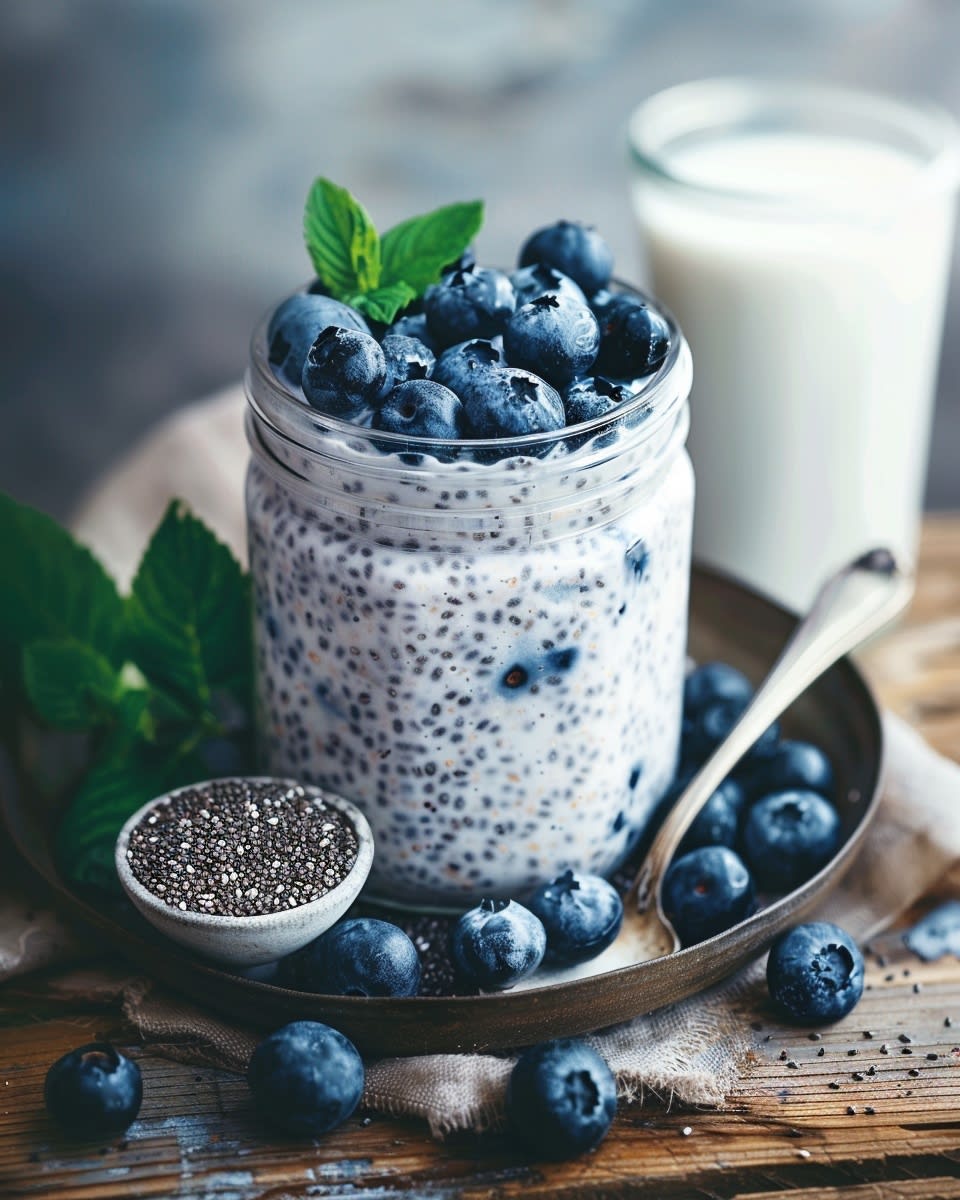
My Morning Game-Changer: Blueberry Overnight Oats with Chia Seeds
I used to be that person who hit snooze five times and rushed out the door with nothing but coffee in my system. My mornings were chaos. I’d end up grabbing a pastry from the coffee shop, feeling hungry again by 10 AM, and crashing hard before lunch. Sound familiar?
Everything changed when I discovered blueberry overnight oats with chia seeds. This simple breakfast transformed my mornings from stressful to smooth. I prep it the night before in about five minutes, and wake up to a delicious, ready-to-eat meal that actually keeps me full.
Let me share why this has become my go-to breakfast and how it might just change your mornings too.
This recipe combines rolled oats, chia seeds, fresh or frozen blueberries, and your choice of milk. You mix everything in a jar, let it sit overnight in the fridge, and breakfast is ready when you wake up. No cooking. No morning prep. Just grab and go.
The best part? It’s incredibly healthy and packed with nutrients your body actually needs. Chia seeds bring fiber and omega-3 fatty acids to the table. Blueberries add antioxidants and natural sweetness. The oats provide sustained energy that lasts for hours.
I make mine on Sunday nights for the entire week. Five jars lined up in my fridge means five worry-free mornings. My kids even started asking for their own versions.
Why Blueberry Overnight Oats with Chia Seeds Are Worth Your Time
Let’s talk about what makes this breakfast so special. I’m not just hyped about the convenience. The nutritional benefits genuinely impressed me once I dug into the research.
Oats are a powerhouse of complex carbohydrates. They release energy slowly throughout the morning. You won’t get that sugar spike and crash you experience with sugary cereals or pastries. I noticed I could make it to lunch without snacking constantly.
The beta-glucan fiber in oats helps lower cholesterol levels. My doctor actually mentioned my improved numbers at my last checkup. I can’t say it’s only from the oats, but they definitely played a role in my healthier eating habits overall.
When you add blueberries to your overnight oats, you’re getting one of the most antioxidant-rich fruits available. These little berries contain anthocyanins, which give them that deep blue color. These compounds help fight inflammation and protect your cells from damage.
I love using frozen blueberries because they’re available year-round and often more affordable than fresh. They work just as well and sometimes even better because they release their juices overnight, creating a beautiful purple color throughout the oats.
The blueberry overnight oats calories typically range from 250 to 400 depending on your add-ins. That’s a reasonable amount for a filling breakfast that sustains you for hours. Compare that to a bagel with cream cheese or a muffin from your local café, and you’re getting way more nutrition for similar or fewer calories.
The Chia Seed Advantage
Now let’s talk about those tiny seeds that pack such a big punch. I’ll admit I was skeptical at first. How could something so small make any real difference?
Chia seeds absorb liquid and expand to about 10 times their original size. This creates that thick, pudding-like texture in your overnight oats with chia seeds and berries recipe. The consistency becomes creamy and satisfying instead of soupy or runny.
But the texture is just the beginning. Each tablespoon of chia seeds contains about 5 grams of fiber. That’s a significant portion of your daily fiber needs in such a small amount. Fiber keeps your digestive system running smoothly and helps you feel full longer.
The omega-3 fatty acids in chia seeds are another major benefit. Most of us don’t get enough omega-3s in our diet. These healthy fats support heart health and brain function. They also help reduce inflammation throughout your body.
When I started adding chia seeds to my breakfast routine, I noticed I wasn’t reaching for mid-morning snacks anymore. The combination of fiber, protein, and healthy fats kept my hunger in check until lunch.
Here’s what you get in a typical serving of overnight oats with blueberries and chia seeds:
- Around 10-12 grams of fiber from the oats and chia seeds combined
- Approximately 8-10 grams of protein (more if you use Greek yogurt)
- Healthy omega-3 fatty acids from the chia seeds
- Antioxidants and vitamins from the blueberries
- Complex carbohydrates for sustained energy
Blueberries: Small Fruit, Big Benefits
I grew up picking wild blueberries with my grandmother every summer. She always said they were “nature’s candy” and good for your brain. Turns out she was right on both counts.
Blueberries consistently rank as one of the top antioxidant foods. They contain vitamin C, vitamin K, and manganese. The antioxidants in blueberries may help improve memory and cognitive function. Some studies suggest they might even slow brain aging.
For anyone watching their blood sugar, blueberries have a relatively low glycemic index. They won’t cause sharp spikes in blood sugar like some other fruits or sweeteners. When combined with the fiber from oats and chia seeds, you get an even more balanced blood sugar response.
The natural sweetness of blueberries means you can skip added sugars entirely. I don’t add any honey or maple syrup to mine. The berries provide plenty of sweetness on their own. This makes the blueberry overnight oats recipe for weight loss even more effective.
Fresh blueberries are wonderful when they’re in season. But frozen blueberries work beautifully too. I actually prefer frozen for overnight oats because they thaw overnight and release their juices, creating a naturally flavored and colored breakfast.
Perfect for Special Dietary Needs
One question I get often is about eating overnight oats every day. Is it okay to eat overnight oats with chia seeds every day? The short answer is yes for most people.
This breakfast provides a good balance of nutrients. The variety comes from changing your toppings and mix-ins. I rotate between different berries, nuts, and seeds throughout the week to keep things interesting.
For those on GLP-1 medications, high-fiber, high-protein breakfasts can be helpful. The combination of oats, chia seeds, and protein from yogurt or protein powder creates a filling meal that supports your goals. The fiber slows digestion, which can help with the appetite regulation these medications promote.
Women going through perimenopause often struggle with energy fluctuations and maintaining a healthy weight. The steady energy from easy blueberry overnight oats can help stabilize blood sugar throughout the morning. The fiber supports hormone balance and digestive health during this transition.
I’ve made versions with dairy milk, almond milk, oat milk, and coconut milk. All work great. The recipe is naturally vegetarian and easily made vegan by skipping yogurt or using plant-based alternatives.
The beauty of this breakfast is its flexibility. You can adjust every ingredient to match your needs and preferences. More protein? Add protein powder or extra Greek yogurt. Need it dairy-free? Use plant milk and skip the yogurt. Want it sweeter? Drizzle a bit of honey on top.
Making blueberry overnight oats with yogurt adds creaminess and extra protein. Greek yogurt is my favorite because it’s thick and tangy. It balances the sweetness of the berries perfectly.


How to Make the Perfect Blueberry Overnight Oats with Chia Seeds
Now that you understand why this breakfast is such a winner, let’s get into the actual making of it. I promise you’ll be shocked at how ridiculously simple this is.
The first time I made overnight oats with chia seeds and blueberries, I kept thinking I must be missing something. It felt too easy to be this good. But that’s the whole point. You literally just mix everything in a jar and walk away.
Start with a mason jar or any container with a lid. I use half-pint mason jars because they’re the perfect single-serving size. Plus they look pretty lined up in my fridge, which somehow makes me more excited about breakfast. Weird, I know.
Here’s my basic formula: Half a cup of rolled oats goes in first. I use old-fashioned oats, not the quick-cooking kind. The texture is better and they hold up overnight without getting mushy. Steel-cut oats don’t work well for this because they need actual cooking to soften.
Next comes one tablespoon of chia seeds. That’s all you need. I learned the hard way that more isn’t better here. I once added three tablespoons thinking I’d get extra health benefits, and ended up with something that had the texture of wallpaper paste. Not appetizing.
Then add about two-thirds cup of milk. Any kind works. I rotate between regular milk and almond milk depending on what’s in my fridge. Oat milk makes it extra creamy. Coconut milk gives it a tropical vibe that’s nice in summer.
Throw in a handful of blueberries. If using frozen, don’t bother thawing them. They’ll thaw perfectly overnight and their juices will flavor everything. Fresh berries are lovely too, but I save those for topping in the morning because they look prettier.
Now for sweetness. This is totally optional. The blueberries might be enough for you. I add a teaspoon of honey or maple syrup, but my husband skips it entirely. My daughter adds way more because she’s twelve and thinks everything needs to be dessert-level sweet.
A pinch of salt goes in every time. Don’t skip this. Salt enhances all the other flavors. It’s like how a tiny bit of salt makes chocolate taste more chocolatey. Trust me on this.
Sometimes I add a quarter teaspoon of vanilla extract. It’s not necessary but it makes everything smell amazing when you open the jar in the morning. Cinnamon is another nice addition, especially in fall when I’m craving those cozy flavors.
Put the lid on and shake it up. Give it a good shake to distribute the chia seeds evenly. Otherwise they all sink to the bottom and form a weird gel layer. After about thirty seconds of shaking, pop it in the fridge.
That’s it. Seriously. You’re done. Go watch TV or read a book or whatever you do at night. The oats and chia seeds will absorb the liquid and soften while you sleep.
In the morning, give it a stir. The mixture will be thick and creamy. If it’s too thick for your liking, add a splash more milk. Too thin? Next time use slightly less liquid or add another half tablespoon of chia seeds.
Making Blueberry Overnight Oats with Yogurt
Here’s where things get even better. Adding yogurt transforms this from great to incredible. The blueberry overnight oats with chia seeds and yogurt version is my absolute favorite way to make these.
I replace about a third of the milk with Greek yogurt. So instead of two-thirds cup of milk, I’ll do a third cup of milk plus a third cup of yogurt. The yogurt adds this tangy creaminess that balances the sweetness perfectly.
The protein boost is significant too. Greek yogurt adds anywhere from 10 to 15 grams of protein depending on the brand. That makes your breakfast even more filling and satisfying. I stay full until lunch easily with the yogurt version.
My favorite trick is layering. Sometimes I put the oat mixture on the bottom and a layer of yogurt on top. In the morning it looks like a fancy parfait. My kids think I’m being fancy, but really I’m just being lazy in a pretty way.
For a dairy-free version, coconut yogurt works beautifully. It’s thick and creamy just like Greek yogurt. I’ve also used almond yogurt, though it’s usually thinner so you might want to adjust your liquid amounts.
One thing I discovered by accident: mixing in the yogurt the night before versus adding it in the morning creates different textures. Mixed in overnight, everything becomes uniformly creamy. Added in the morning, you get distinct layers and textures. Both are delicious, just different experiences.
What If You Don’t Like Chia Seeds?
I get it. Not everyone is on the chia seed bandwagon. Maybe you don’t like the texture or you just don’t have them on hand. The blueberry overnight oats without chia seeds version still works great.
Without chia seeds, your oats will be slightly less thick. They’ll still soften overnight and taste delicious, just with a looser consistency. Some people actually prefer this thinner texture. My mom says the chia seeds remind her of tapioca pudding, which she hates, so she always makes hers without.
If you skip the chia seeds but still want that thick, creamy texture, increase your oats slightly or add more yogurt. Another option is using mashed banana. Half a mashed banana will thicken things up and add natural sweetness. Plus you get extra potassium and fiber.
Ground flaxseed can substitute for chia seeds too. Use the same amount. Flax doesn’t create quite the same gel-like texture, but it still adds fiber and omega-3s. The flavor is slightly nuttier.
Blueberry Overnight Oats for Weight Loss That Actually Work
Let’s talk about using this breakfast as part of a weight loss plan, because this is where things get really practical. I lost about fifteen pounds last year, and these oats were part of my strategy. Not the whole strategy, obviously, but a helpful tool.
The thing about blueberry overnight oats recipe for weight loss is that it checks all the boxes for a weight-loss-friendly breakfast. High fiber keeps you full. Protein prevents muscle loss. Complex carbs give you energy for workouts or just getting through your day without feeling deprived.
But here’s where people mess up: they turn their healthy overnight oats into a 600-calorie dessert by adding every topping imaginable. I’ve done this myself. Suddenly you’ve got nuts, nut butter, chocolate chips, granola, honey, and dried fruit all piled on top. At that point you might as well have eaten protein cottage cheese pancakes with all the fixings.
For weight loss, I keep my blueberry overnight oats with blueberries and chia seeds calories around 300. That’s filling enough to get me through the morning but leaves plenty of room for lunch and dinner.
Here’s my exact weight-loss version: Half cup oats, one tablespoon chia seeds, two-thirds cup unsweetened almond milk (way fewer calories than regular milk), quarter cup nonfat Greek yogurt, half cup blueberries, and no added sweetener. That comes to roughly 280 calories with about 12 grams of protein and 10 grams of fiber.
The protein and fiber combo is key for weight loss. They both trigger satiety hormones that tell your brain you’re full. I used to eat a bagel for breakfast and be starving by 10 AM, snacking on whatever I could find. With these oats, I barely think about food until noon.
By the way, if you’re looking for more high-protein meal ideas that support weight loss goals, I’ve found that balanced meals throughout the day make everything easier. Sometimes I’ll prep grilled steak and avocado tacos for dinner, which gives me that satisfying protein hit without feeling like I’m on a restrictive diet.
Portion control matters more than people think. Even healthy food adds up calorie-wise. I measure my ingredients at first until I got good at eyeballing portions. Now I can pour oats and chia seeds without measuring and get pretty close to the right amounts.
One trick that helped me: I prep my jars on Sunday with just the dry ingredients—oats, chia seeds, a pinch of salt. Then each night I add the wet ingredients and berries. This speeds up the evening prep even more and ensures I’m not overfilling the jars when I’m tired and not paying attention.
My Easy Go-To Recipe
People ask me for my easy blueberry overnight oats recipe all the time, so here’s what I make most often. This is the version I’ve refined over the past year to be the perfect balance of simple, delicious, and nutritious.
In a mason jar or container with a lid, combine half cup old-fashioned rolled oats, one tablespoon chia seeds, third cup plain Greek yogurt, third cup milk of choice, half cup fresh or frozen blueberries, half teaspoon honey or maple syrup (optional), quarter teaspoon vanilla extract, and a tiny pinch of salt.
Stir everything together or put the lid on and shake well. Make sure those chia seeds get distributed throughout. Refrigerate for at least four hours, but overnight is ideal. In the morning, stir again and add a splash of milk if it’s too thick.
Top with whatever sounds good that morning. I keep it simple during the week—maybe a few extra blueberries or a sprinkle of sliced almonds. On weekends when I have more time, I might add a drizzle of almond butter or some coconut flakes.
The beauty of this recipe is how adaptable it is. You can batch it for the whole week or make it one night at a time. You can eat it cold straight from the fridge or warm it up for thirty seconds in the microwave. Some mornings I eat mine while rushing around getting ready. Other mornings I sit down and actually enjoy it like a civilized human.
Funny enough, my teenagers started making their own versions after watching me prep mine every week. They add way more sweet stuff than I do, but at least they’re eating a real breakfast instead of grabbing junk food on their way out. Small victories.
If you’re someone who likes variety in your breakfast rotation, these oats pair well with other quick, healthy options. I alternate between these, protein-packed meals, and lighter options depending on my schedule. The key is having go-to recipes that don’t require much thought or effort when you’re half-awake.
The other thing I love is that this recipe travels well. I’ve taken these oats camping, on road trips, to early morning meetings, and even on a plane once. As long as you can keep them reasonably cool, they’re good to go. Way better than trying to find healthy breakfast options when you’re away from home.
For anyone worried about getting bored, remember you can switch up the toppings daily. Fresh berries, nuts, seeds, nut butter, coconut, cacao nibs—there are endless combinations. I sometimes make my oats plain and let each family member customize their own jar with toppings. Everyone’s happy, and I’m not making four different breakfasts.
This breakfast has honestly simplified my mornings more than I ever expected. It’s one of those small changes that creates a ripple effect. When breakfast is handled, I’m less stressed. When I’m less stressed, I make better choices the rest of the day. When I make better choices, I feel better overall. It all connects.


Real Questions People Ask About Overnight Oats
I get messages and questions about my overnight oats constantly. People want to know if they’re really as healthy as they seem, whether they work for specific health conditions, and if there are any downsides to eating them regularly. Let me tackle the most common questions I hear.
Are Overnight Oats Good for GLP-1?
This question comes up so often lately, especially from friends who’ve started medications like Ozempic or Mounjaro. Are overnight oats good for GLP-1? The short answer is yes, they can be a great breakfast option.
Here’s why this matters. GLP-1 medications work by slowing down how fast your stomach empties. They also affect your appetite signals, making you feel fuller faster and for longer. The problem is that some foods don’t sit well when your digestion is slower. Heavy, greasy breakfasts can make you feel uncomfortably full or even nauseous.
My friend Sarah started one of these medications last spring and struggled with breakfast. Everything she tried either made her feel too full or didn’t give her enough energy. She felt stuck between feeling sick and feeling weak by mid-morning.
Overnight oats turned out to be perfect for her. The soft texture is gentle on the stomach. There’s no grease or heavy fats that might cause discomfort. The fiber from the oats and chia seeds supports the medication’s effects by naturally slowing digestion and keeping blood sugar stable.
The protein content is crucial too. When you’re eating less overall due to reduced appetite, getting enough protein becomes more important. You don’t want to lose muscle mass along with fat. Adding Greek yogurt or protein powder to your overnight oats with blueberries and chia seeds ensures you’re getting quality protein even in a smaller portion.
Start with a smaller serving if you’re new to GLP-1 medications. Maybe a third cup of oats instead of half cup until you see how your body responds. You can always eat more if you’re still hungry, but it’s harder to deal with feeling overly full.
The cold temperature of overnight oats can actually be helpful too. Sarah found that cold foods were easier to tolerate than hot foods when she first started her medication. Room temperature works fine too if you prefer—just let the jar sit out for fifteen minutes before eating.
Is It Okay to Eat Overnight Oats with Chia Seeds Every Day?
Another question I hear constantly: Is it okay to eat overnight oats with chia seeds every day? I’ve been doing this for over a year now, and my doctor says my bloodwork looks great, so that’s a good sign.
Eating the same breakfast daily isn’t inherently problematic as long as that breakfast is nutritious and balanced. Think about it—plenty of people have coffee and toast every single morning. At least with overnight oats, you’re getting fiber, protein, healthy fats, vitamins, and minerals.
The variety in this case comes from rotating your toppings and mix-ins. Monday might be blueberries and almonds. Tuesday could be strawberries and pumpkin seeds. Wednesday brings banana and walnuts. You’re getting different vitamins, minerals, and antioxidants throughout the week even though your base stays the same.
One thing to watch is your total fiber intake. Both oats and chia seeds are high in fiber, which is generally great. But if you’re also eating lots of beans, whole grains, and vegetables throughout the day, you might end up with more fiber than your system can comfortably handle. I learned this when I went overboard on my “health kick” and felt bloated for a week straight.
If you’re new to high-fiber eating, start with smaller amounts of chia seeds. Use half a tablespoon instead of a full tablespoon for the first week. Let your digestive system adjust gradually. Trust me, your stomach will thank you for this patience.
Some people worry about the phytic acid in oats and chia seeds. Phytic acid can interfere with mineral absorption if consumed in very large amounts. But here’s the thing—soaking the oats overnight actually reduces phytic acid content. Plus, unless you’re eating nothing but oats all day every day, it’s not really a concern for most people.
By the way, I asked my nutritionist about this exact question during my last appointment. She said eating overnight oats with chia seeds and blueberries daily is perfectly fine for most people. The only exception might be if you have specific digestive conditions that make fiber difficult to tolerate. Even then, you’d just need to modify the recipe rather than avoid it entirely.
Are Overnight Oats Good for Perimenopause?
This question hits close to home because I’m going through perimenopause myself. The energy crashes, the weird weight gain around my middle, the sleep issues—it’s been a journey. So are overnight oats good for perimenopause? From my experience and research, yes they are.
Perimenopause messes with your blood sugar regulation. Estrogen helps control insulin sensitivity, and as estrogen levels fluctuate, blood sugar can get wonky. I noticed I’d get these intense crashes mid-morning where I felt shaky and irritable. My husband started recognizing the signs before I did.
The complex carbohydrates in oats provide steady energy without the spikes and crashes. The fiber and protein from chia seeds and yogurt slow down digestion even more. My blood sugar stays much more stable throughout the morning now. Those terrible mid-morning crashes basically disappeared.
Weight management during perimenopause is challenging. Your metabolism shifts, and suddenly the eating habits that worked for years don’t anymore. The high fiber content in blueberry overnight oats with chia seeds supports healthy weight management by keeping you full and reducing overall calorie intake throughout the day.
Bone health becomes more important as estrogen declines. Oats contain some calcium, magnesium, and phosphorus—all important for bone health. When you make them with dairy milk or fortified plant milk, you’re adding even more calcium. It’s not a complete solution, but every bit helps.
The omega-3 fatty acids in chia seeds might help with some perimenopausal symptoms too. Some research suggests omega-3s can help with mood fluctuations and may even reduce hot flash frequency. I can’t say for certain it’s helped my hot flashes, but I’ll take any potential benefit at this point.
Here’s something interesting I discovered: eating a substantial breakfast like this actually improved my sleep. Sounds backwards, right? But stable blood sugar throughout the day leads to better sleep at night. When my blood sugar was all over the place from skipping breakfast or eating junk, my sleep was terrible. Now it’s noticeably better.
The antioxidants in blueberries support overall health during this transition. Your body is under increased oxidative stress during perimenopause. Fighting that with antioxidant-rich foods just makes sense. Plus, exploring different healthy cooking methods throughout your day helps maximize the nutritional benefits of all your meals.
Making Overnight Oats Work for Your Life
Let me share some practical tips that took me months to figure out. These little tricks make the difference between overnight oats being a nice idea and actually becoming part of your daily routine.
First, invest in good containers. I use wide-mouth mason jars because they’re easy to eat from and easy to wash. Narrow containers are annoying to eat from and impossible to clean properly. You’ll end up with chia seeds stuck in corners forever. Ask me how I know.
Label your jars with the day of the week if you’re meal prepping. I use dry erase marker right on the lid. It sounds silly but on a hectic Monday morning, knowing which jar is which saves me from having to open them all to find the freshest one.
Double the recipe if you have a partner or kids who might want to try it. My husband was skeptical at first but kept stealing bites of mine. Now I make two jars instead of constantly sharing. Much less annoying for both of us.
Keep a stash of emergency toppings at work. I have almonds, dried cranberries, and a small jar of honey in my desk drawer. If I forget to grab my overnight oats from home, I can buy plain yogurt and oatmeal from the cafeteria and doctor it up with my toppings. Not quite as good but way better than a vending machine breakfast.
Don’t be afraid to warm them up. I know they’re called overnight oats and traditionally eaten cold, but there’s no rule against heating them. On cold winter mornings, I microwave mine for thirty seconds. It becomes like a warm porridge. Completely changes the vibe but still delicious.
Experiment with spices beyond cinnamon. I’ve added cardamom, nutmeg, ginger, and even a tiny pinch of cayenne pepper. Each brings a completely different flavor profile. The cardamom version tastes almost fancy, like something from a café.
If you’re someone who loves trying new recipes, you might want to check out more breakfast and brunch ideas to keep your morning routine exciting. Having a few go-to options means you never get bored.
Pack them for travel but keep them cold. I use a small insulated bag with an ice pack if I’m going somewhere without refrigeration. They stay good for several hours this way. I’ve taken them on early morning flights, long car rides, and camping trips. Beats airport food every single time.
One last thing—take a picture of your favorite combination and keep it saved in your phone. When you’re tired and can’t remember what proportions tasted best, you’ll have a visual reference. I do this with all my favorite meal prep ideas now.
The best part about establishing this breakfast routine is how it creates momentum for the rest of your day. When you start with something nutritious and satisfying, you’re more likely to make good choices at lunch and dinner too. It’s like a tiny daily win that sets the tone.
If you’re still hesitant, I’d say just try it for one week. Make a single jar tonight. See how you feel tomorrow morning. You’re not committing to anything long-term. But I have a feeling that after a few days of easy, delicious, filling breakfasts, you’ll be lining up jars in your fridge just like I do.
Frequently Asked Questions
Can I make overnight oats without a refrigerator?
While overnight oats work best when refrigerated, you can make them at room temperature if absolutely necessary. The oats will still soften in about four to six hours. However, if you’re using dairy products like milk or yogurt, refrigeration is important for food safety. In warm climates or summer months, don’t risk it—always refrigerate to prevent bacterial growth. If you’re camping or traveling without refrigeration, stick to shelf-stable milk alternatives and skip the yogurt. Add fresh toppings right before eating.
How long do overnight oats with chia seeds last in the fridge?
Properly stored overnight oats stay fresh for up to five days in the refrigerator. I make mine on Sunday evening and they’re still perfectly good on Friday morning. Keep them in airtight containers to prevent them from absorbing other food odors or drying out. The texture might get slightly thicker by day four or five, so just add a splash of milk when you’re ready to eat. If you notice any off smells or the milk has separated in a weird way, toss it and make a fresh batch.
Can I use instant oats instead of rolled oats?
You can, but the texture won’t be as good. Instant oats are cut much thinner than rolled oats, so they absorb liquid very quickly and can turn mushy overnight. If instant oats are all you have, reduce the liquid by about a quarter and check the consistency after just two to three hours. Steel-cut oats go the opposite direction—they stay too hard even after soaking overnight. Old-fashioned rolled oats really are the best choice for this recipe.
What’s the best milk to use for overnight oats?
Any milk works, so choose based on your preferences and dietary needs. Regular dairy milk creates a creamy, slightly sweet result. Almond milk is lighter and lower in calories. Oat milk makes them extra creamy and thick. Coconut milk adds a tropical flavor. Soy milk provides more protein than most plant milks. I rotate between different types throughout the week for variety. Just avoid anything too thin like rice milk, which can make your oats soupy.
Can I eat overnight oats if I have diabetes?
Yes, but portion control and ingredient choices matter. The fiber from oats and chia seeds actually helps regulate blood sugar by slowing carbohydrate absorption. Stick to unsweetened milk and skip added sugars like honey or maple syrup. The natural sweetness from blueberries should be enough. Consider adding extra protein through Greek yogurt or protein powder to further stabilize blood sugar. Monitor your blood sugar response the first few times you eat them to see how your body reacts. Many people with diabetes find overnight oats work well for them when prepared mindfully.
Do I have to use chia seeds or can I substitute something else?
Chia seeds aren’t mandatory. You can make blueberry overnight oats without chia seeds and they’ll still be delicious. The texture will be slightly thinner and less pudding-like. Ground flaxseed works as a substitute in the same amount and provides similar nutritional benefits. Hemp seeds add protein but won’t thicken as much. Mashed banana will thicken your oats while adding natural sweetness. Each substitution creates a slightly different result, so experiment to find what you like best.
Can kids eat overnight oats with chia seeds?
Absolutely! This is a nutritious breakfast option for children. The soft texture is easy for young kids to eat. Just make sure chia seeds are fully soaked to avoid any choking hazard for very young children. You might want to add more natural sweetness like mashed banana or a bit more fruit since kids often prefer sweeter flavors. Let them help prep their own jars with different toppings—they’re more likely to eat something they helped create. My kids love making their own combinations each week.
Why are my overnight oats watery or too thick?
Getting the texture right sometimes takes a couple tries. If they’re too watery, you used too much liquid or not enough oats and chia seeds. Next time, reduce the milk by a few tablespoons or add another tablespoon of chia seeds. If they’re too thick, you did the opposite—just add milk a splash at a time in the morning until you reach your preferred consistency. Different brands of oats absorb liquid differently too, so you might need to adjust based on what you buy.
Can I warm up overnight oats?
Yes! Remove the metal lid if you’re using a mason jar, then microwave for thirty to sixty seconds. Stir well because it might heat unevenly. Add a splash of milk after heating since warming can thicken the oats. I actually prefer warm overnight oats during winter months. It feels cozier than eating something cold when it’s freezing outside. The texture changes slightly when heated—it becomes more like traditional oatmeal but with a creamier consistency.
What toppings work best with blueberry overnight oats?
The topping possibilities are endless. Sliced almonds add crunch and healthy fats. A drizzle of almond butter or peanut butter boosts protein. Fresh berries on top provide extra vitamins and make it prettier. Coconut flakes add tropical flavor and texture. A sprinkle of granola gives you that satisfying crunch. Dark chocolate chips turn it into a treat. Pumpkin seeds or sunflower seeds add minerals. Just watch your portions if you’re counting calories—toppings add up quickly. I usually stick to one or two toppings max during the week and go a bit fancier on weekends.
Starting your morning with something as simple and nourishing as blueberry overnight oats with chia seeds might seem like a small change, but these small changes often create the biggest shifts in how we feel every day. Give it a try tonight, and tomorrow morning might just become the easiest part of your day.
Ingredients
Equipment
Method
- Dans un bocal ou un récipient avec couvercle, mélangez les flocons d'avoine et les graines de chia.
- Ajoutez le yaourt grec (si utilisé), le lait, les myrtilles, le miel ou le sirop d'érable (si désiré), l'extrait de vanille (si utilisé) et une pincée de sel.
- Mélangez bien ou secouez pour vous assurer que les graines de chia sont bien réparties.
- Fermez le récipient et réfrigérez pendant au moins 4 heures, de préférence toute la nuit.
- Le matin, remuez et ajustez la consistance avec un peu plus de lait si elle est trop épaisse.
- Garnissez avec des myrtilles supplémentaires ou d'autres garnitures de votre choix si désiré.