
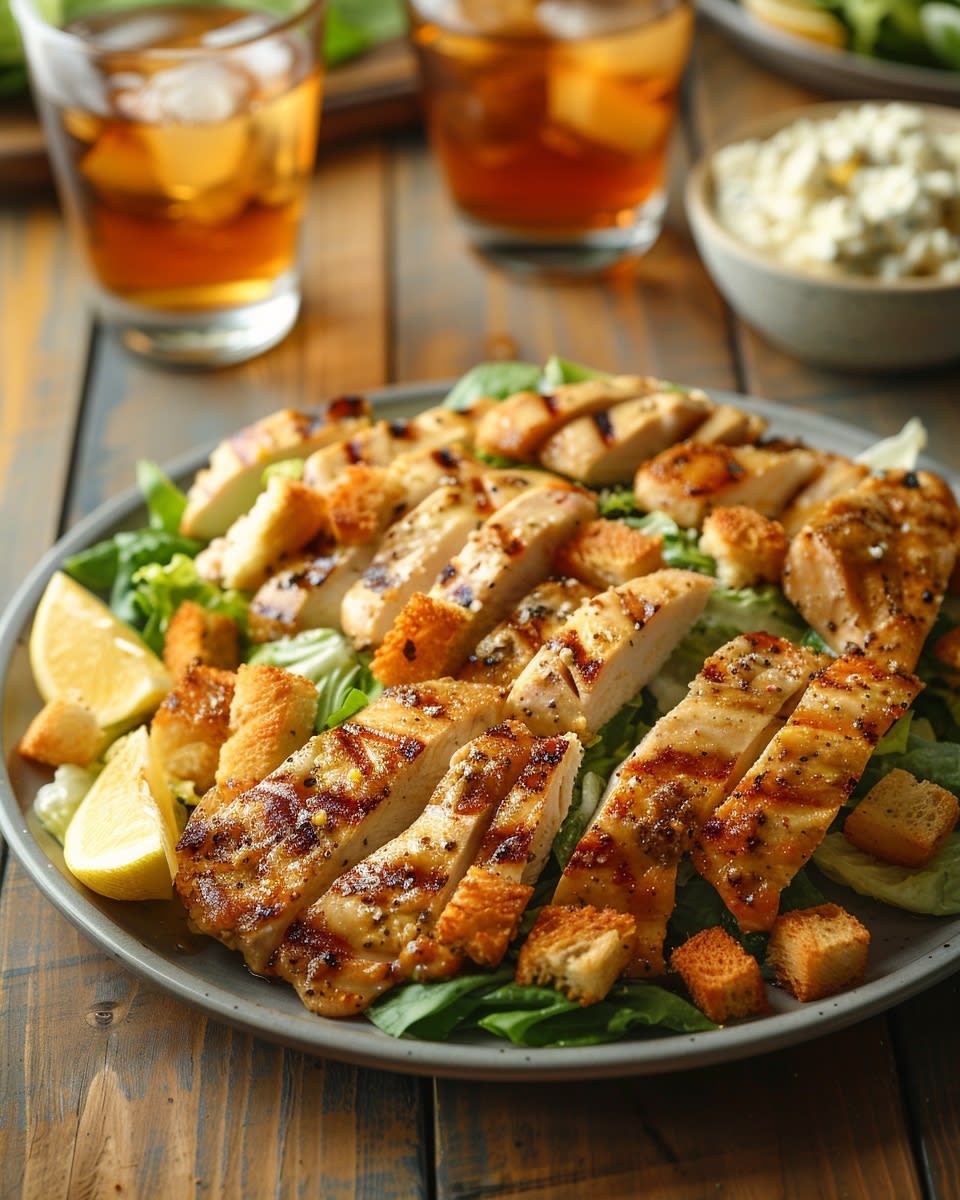
I’ll never forget the first time I had a truly great Caesar salad. I was at a small Italian restaurant, and the waiter made the dressing right at our table. The smell of fresh garlic and anchovies filled the air. That first bite changed everything I thought I knew about salad. It wasn’t just leaves on a plate. It was creamy, tangy, and full of flavor that made me want more.
That experience stuck with me for years. I tried dozens of store-bought Caesar dressings after that night. None of them came close to what I had tasted. They were either too sweet, too thick, or just tasted fake. That’s when I decided to learn how to make my own classic Caesar salad with homemade dressing. It turned out to be easier than I expected and absolutely worth the effort.
Making your own Caesar dressing at home takes maybe ten minutes. You get to control every ingredient that goes into it. No weird preservatives or mystery additives. Just real food that tastes amazing. Plus, once you make it from scratch, you’ll understand why restaurant versions cost so much. The difference between homemade and bottled is like night and day.
In this article, I’m going to share everything I’ve learned about making the perfect Caesar salad. You’ll discover the real history behind this famous dish. I’ll show you exactly what goes into an authentic Caesar dressing. We’ll cover the key ingredients, common mistakes to avoid, and tips for getting restaurant-quality results at home. By the end, you’ll have all the knowledge you need to impress your family and friends with this classic recipe.
Understanding the Classic Caesar Salad
A classic Caesar salad is pretty simple when you break it down. It’s crisp romaine lettuce tossed in a creamy, garlicky dressing. Then it’s topped with crunchy croutons and shaved Parmesan cheese. That’s the basic formula. But like many simple dishes, the magic is in the details.
The dressing is where things get interesting. A true Caesar dressing contains raw egg yolk, garlic, anchovies, lemon juice, Dijon mustard, olive oil, and Parmesan cheese. Some people freak out when they hear about the anchovies. Trust me on this one. You won’t taste fishy flavor. The anchovies add a deep, savory quality that makes the dressing special. Without them, it’s just not a real Caesar.
Here’s something that surprises most people. The Caesar salad isn’t from Italy at all. It was invented in Tijuana, Mexico, back in 1924. A restaurant owner named Caesar Cardini created it on a busy Fourth of July weekend. He was running low on supplies and needed to make something with what he had left in the kitchen. He tossed together some romaine lettuce, garlic, olive oil, eggs, Parmesan cheese, and Worcestershire sauce. His guests loved it so much that it became a permanent menu item.
The salad spread from Tijuana to California and then across the United States. By the 1940s, it was showing up in restaurants everywhere. Hollywood celebrities started requesting it. Food magazines published recipes. Before long, it became one of the most popular salads in America.
What makes a Caesar salad truly authentic? Let’s start with the lettuce. You need romaine lettuce, not mixed greens or iceberg. Romaine has the right texture and structure. The leaves are crisp enough to hold up to the thick dressing. They have a slight bitterness that balances the rich, creamy sauce. I always use the inner leaves when I can. They’re more tender and have a better taste.
The Parmesan cheese matters more than you might think. Real Parmigiano-Reggiano from Italy is best. It has a nutty, complex flavor that the domestic versions can’t match. I buy a wedge and grate it fresh right before serving. Pre-grated cheese from a bag or can doesn’t have the same taste or texture. It’s also often mixed with cellulose to prevent clumping. That stuff doesn’t belong in your salad.
Good croutons are the final piece of the puzzle. They add crunch and another layer of flavor. You can buy them at the store, but homemade croutons are so much better. I cut day-old bread into cubes, toss them with olive oil and garlic, and bake them until golden. They stay crispy longer and taste fresher than anything from a package.
Using fresh, high-quality ingredients isn’t just fancy food talk. It actually changes how the salad tastes. Fresh garlic has a sharp, clean flavor that garlic powder can’t replicate. Real lemon juice is bright and acidic in a way that bottled juice isn’t. Good olive oil adds richness and body to the dressing. When you start with better ingredients, you end up with a better salad. It’s that straightforward.
I learned this lesson the hard way. When I first started making Caesar salad at home, I tried to cut corners. I used the cheap Parmesan in the green can. I bought pre-made croutons. The salad was okay, but it wasn’t great. Then I invested in better ingredients. I spent a few extra dollars on real Parmigiano-Reggiano and fresh romaine. The difference shocked me. It actually tasted like the salad from that restaurant years ago.
What’s in the Original Caesar Salad Dressing?
The original Caesar salad dressing recipe has been debated for decades. Different sources give slightly different versions. But most food historians agree on the core ingredients. Caesar Cardini’s original dressing contained the following:
- Raw egg yolk for creaminess and to help emulsify the oil
- Fresh garlic cloves, minced or pressed
- Anchovy fillets for umami depth
- Fresh lemon juice for acidity
- Worcestershire sauce for extra savory flavor
- Dijon mustard to help bind everything together
- Extra virgin olive oil for richness
- Freshly grated Parmesan cheese
- Black pepper and a pinch of salt
Some modern recipes add mayo to make the dressing thicker and safer. Raw eggs can carry salmonella, so some cooks prefer using pasteurized eggs or skipping them entirely. I personally use fresh eggs from a trusted source. The risk is very low, and the texture is better with raw yolk.
The key to great Caesar dressing is balance. You want it creamy but not too thick. Tangy but not sour. Garlicky but not overpowering. Getting that balance right takes practice. But once you nail it, you’ll never want to go back to bottled dressing again.


How to Make Homemade Caesar Salad Dressing
Now that you know what makes a real Caesar salad tick, let’s get into the fun part—actually making that dressing.
I’m going to walk you through my favorite method for whipping up homemade Caesar salad dressing. It’s the version I’ve tweaked over the years after countless attempts. Some turned out too garlicky. Others were too thin or didn’t have enough punch. But I finally landed on a recipe that works every single time.
First, let’s talk about what you’ll need. Grab two or three anchovy fillets packed in oil. I know, I know—I already mentioned anchovies, but they really are essential. You’ll also need two cloves of fresh garlic, one large egg yolk (or two smaller ones), one tablespoon of Dijon mustard, the juice of one whole lemon, three-quarters of a cup of good extra virgin olive oil, half a cup of freshly grated Parmesan cheese, and some freshly cracked black pepper. That’s pretty much it. No fancy equipment required either, though a food processor or blender makes things easier.
Here’s how I do it. Start by mincing your garlic really fine or crushing it with a garlic press. Then mash those anchovy fillets with the side of your knife until they form a paste. If you’re using a food processor, just toss the garlic and anchovies in there and pulse a few times. Add the egg yolk, Dijon mustard, and lemon juice. Blend or whisk until everything’s combined and you’ve got a smooth base going.
Now comes the important part—adding the oil. You can’t just dump it all in at once. That’s how you end up with a broken, separated mess. Instead, add the olive oil in a slow, steady stream while whisking constantly or while the food processor is running. This creates an emulsion, which is just a fancy way of saying the oil and other ingredients blend together into a thick, creamy sauce. It should take you about two minutes to add all the oil. I usually pour it from a measuring cup with a spout, which gives me better control.
Once all the oil is incorporated, stir in your freshly grated Parmesan cheese. Add some black pepper to taste. Give it a quick taste test. Does it need more lemon? Add a squeeze. Not garlicky enough? Toss in a bit more minced garlic. Too thick? Thin it out with a tablespoon of water or more lemon juice. The dressing should coat the back of a spoon but still be pourable. If it’s as thick as mayo, it’s too heavy for the salad.
Here’s a tip I learned from a chef friend: let the dressing sit for at least fifteen minutes before using it. This gives the flavors time to blend and mellow out. The garlic loses some of its raw bite. The anchovies distribute their umami goodness throughout. Everything just comes together better. I usually make my dressing an hour or two ahead if I have the time.
By the way, homemade dressing will keep in the fridge for about three days. Store it in an airtight container. It’ll thicken up in the cold, so let it sit at room temperature for ten minutes before using it again. Give it a good stir, and you’re back in business.
Why is homemade so much better than store-bought? It’s not just about freshness, though that’s a big part of it. Commercial dressings are designed for shelf stability and mass appeal. They add stabilizers, thickeners, and preservatives. Some brands load them up with sugar to balance out cheaper ingredients. They also have to pasteurize everything, which changes the flavor. What you end up with is something that vaguely resembles Caesar dressing but lacks the depth and brightness of the real thing.
When you make it yourself, every ingredient shines through. You can actually taste the lemon juice, smell the garlic, and appreciate the savory notes from the anchovies and Parmesan. It’s a completely different experience. Plus, you know exactly what’s in it. No weird chemicals or additives you can’t pronounce.
Some people worry about using raw eggs at home. If that’s a concern for you, there are options. You can use pasteurized eggs, which you can find at most grocery stores. They’re heat-treated to kill bacteria but still raw enough to work in the dressing. Another option is to use two tablespoons of mayonnaise instead of the egg yolk. Mayo is basically emulsified eggs and oil anyway, so it gives you a similar texture. The flavor won’t be quite as bright, but it’s a solid workaround.
What about people who need to make substitutions for dietary reasons? I’ve experimented with quite a few variations. For a vegetarian version, skip the anchovies and add an extra teaspoon of Worcestershire sauce plus a bit of capers for that salty, briny flavor. Just know it won’t taste exactly the same. For vegans, things get trickier. I’ve had decent results using cashew cream as the base instead of egg yolk. Soak raw cashews for a few hours, blend them with water until smooth, then use that in place of the egg. Add nutritional yeast instead of Parmesan for that cheesy flavor.
If you’re watching your fat intake, you can lighten up the dressing by replacing half the olive oil with Greek yogurt. It won’t be traditional, but it still tastes good and cuts the calories significantly. Just remember that the more you change the original recipe, the further you get from authentic Caesar flavor. There’s nothing wrong with adaptations—I make them all the time—but it’s good to know what you’re working with. Similar to how you might adapt a garden fresh salad to your taste preferences, Caesar salad can handle some creative tweaking too.
Common Caesar Salad Mistakes and How to Avoid Them
Let me tell you about the time I made Caesar salad for a dinner party and completely botched it. I was so excited to show off my homemade dressing that I drowned the lettuce in it. We’re talking swimming-in-sauce levels of overdressed. My guests were polite, but I could tell. The salad was a soggy, heavy mess. I learned an important lesson that night about restraint.
Overdressing is probably the most common Caesar salad mistake. People think more dressing means more flavor. But really, it just means wet lettuce and no texture contrast. The dressing should lightly coat each leaf, not pool at the bottom of the bowl. Here’s what I do now: I put the romaine in a large bowl, add just a few spoonfuls of dressing, and toss with my hands or tongs. Then I taste a leaf. If it needs more, I add a bit at a time. You can always add more dressing, but you can’t take it away once it’s on there.
Another mistake? Getting the garlic amount wrong. Too little garlic and your dressing tastes flat and boring. Too much and it overpowers everything else, burning your mouth and giving you dragon breath for hours. I’ve found that two medium cloves per batch is the sweet spot for most people. If you really love garlic, you can push it to three cloves. But go beyond that and you’re entering dangerous territory. Also, fresh garlic is way stronger than the jarred stuff, so keep that in mind if you’re substituting. Much like balancing flavors in an orzo feta salad, getting the garlic just right makes all the difference.
Funny enough, the anchovy debate causes more problems than it should. Some people skip them entirely because they think they hate anchovies. Then they wonder why their dressing tastes boring. Others go overboard and add six or seven fillets, ending up with something that tastes like they’re eating the ocean. The right amount is about two to three fillets for a standard batch of dressing. They should add background flavor—that savory, umami depth—without announcing themselves. If someone eats your salad and says “This tastes fishy,” you used too many anchovies.
Here’s the thing about balancing flavors: a great Caesar salad with homemade dressing hits all the right notes. You want richness from the oil and egg yolk, brightness from the lemon juice, saltiness from the Parmesan and anchovies, sharpness from the garlic, and a bit of tang from the mustard. When one ingredient dominates, the whole thing feels off. That’s why tasting as you go is so important. Add your ingredients gradually and keep adjusting until everything works together.
Texture is another thing people mess up. If your croutons are stale or soft, they don’t add anything to the salad. If your lettuce isn’t properly dried after washing, the water dilutes the dressing and makes everything watery. I always spin my romaine in a salad spinner and then let it air dry on a kitchen towel for a few minutes. Those extra steps make a difference. The dressing clings better to dry leaves. The croutons stay crunchy longer. Everything just works better when the textures are right.
One more mistake I see all the time: using lettuce that’s past its prime. Romaine should be crisp and fresh, with tight leaves and no brown edges. If it’s wilted or slimy, no amount of great dressing will save it. I check the base of the romaine head when I buy it. It should look freshly cut, not brown or dried out. I also store it properly—wrapped in a slightly damp paper towel inside a plastic bag in the crisper drawer. This keeps it fresh for about a week.
Temperature matters too, believe it or not. If your dressing comes straight out of the fridge, it’ll be too thick to toss properly. Let it warm up for ten or fifteen minutes on the counter first. The olive oil loosens up and coats the lettuce better. Same goes for the cheese—cold Parmesan doesn’t taste as good as room temperature Parmesan. These little details might seem fussy, but they add up to a better salad. Whether you’re making this classic or branching out to something like a taco salad or spinach strawberry salad, temperature and texture always play a big role in the final result.
The final mistake worth mentioning: not tossing the salad enough. I used to just pour dressing over the top and call it done. But that means the leaves on top get all the dressing while the ones on the bottom stay dry. You need to really get in there and toss everything together. Use your hands if you have to. Make sure every leaf gets coated. It takes an extra minute, but it’s worth it for even coverage and better flavor in every bite.


Is Caesar Salad Suitable for Diabetics?
I get this question a lot, especially from friends and family members who are managing their blood sugar. They love Caesar salad but worry about whether it fits into their meal plan. The answer isn’t as straightforward as yes or no. It really depends on how the salad is made and what portion you’re eating.
Let’s break down the nutritional profile of a typical classic Caesar salad with homemade dressing. A standard restaurant serving—which is usually pretty generous—contains somewhere between 400 to 600 calories. The dressing alone can pack 150 to 200 calories per two-tablespoon serving. Most of those calories come from fat, specifically the olive oil and cheese. You’re also looking at about 15 to 20 grams of carbohydrates per serving, though this can vary a lot depending on how many croutons are piled on top.
The carbohydrate content is what matters most for people with diabetes. In a traditional Caesar salad, the croutons are the main carb culprit. One cup of croutons can contain 20 to 30 grams of carbs. That’s not terrible compared to a plate of pasta, but it’s something to keep an eye on. The romaine lettuce itself is incredibly low in carbs—only about two grams per two cups. The dressing has minimal carbs too, maybe one or two grams per serving. So if you’re watching your carb intake, the croutons are what you’d want to modify or reduce.
Here’s the thing about fat content in Caesar salad. Yes, there’s quite a bit of fat from the olive oil, egg yolk, and cheese. But we’re talking about mostly healthy fats. Extra virgin olive oil is rich in monounsaturated fats, which can actually help improve insulin sensitivity. Studies have shown that diets higher in these kinds of fats can be beneficial for people managing diabetes. The Parmesan cheese adds some saturated fat, but in moderate amounts, it’s not a major concern for most people.
One thing I’ve noticed over the years is that Caesar salad can actually be a smart choice for diabetics when you compare it to other restaurant options. It’s primarily made of non-starchy vegetables. The protein from the cheese and the fat from the oil help slow down digestion, which means blood sugar rises more gradually rather than spiking quickly. That’s generally a good thing for blood sugar management. Unlike a big bowl of pasta or a sandwich on white bread, Caesar salad won’t send your glucose levels on a rollercoaster ride—as long as you’re mindful about portions and modifications.
The health benefits of the core ingredients are worth talking about too. Romaine lettuce is loaded with vitamins A and K, along with folate and fiber. It’s hydrating and filling without adding many calories or carbs. Olive oil, as I mentioned, brings those heart-healthy fats plus antioxidants. Garlic has been linked to improved cardiovascular health and may even have mild blood-sugar-lowering effects. Even the anchovies contribute omega-3 fatty acids, which are great for heart health—something especially important for people with diabetes who face higher cardiovascular risks.
Now, if you’re diabetic and want to enjoy Caesar salad regularly, there are some smart modifications you can make. First off, watch the crouton situation. Instead of a full cup, use just a small handful for crunch. Or swap them out entirely for toasted nuts like almonds or walnuts. You get the same satisfying texture but with more protein, healthy fats, and way fewer carbs. I started doing this even before I worried about blood sugar, and honestly, I like the nutty flavor better than regular croutons anyway.
Another tweak: add some grilled chicken, shrimp, or salmon to your Caesar salad. This bumps up the protein content significantly, which helps keep you full longer and further stabilizes blood sugar. My cousin has type 2 diabetes, and she makes what she calls “protein-packed Caesar” with grilled chicken breast and only a light sprinkle of croutons. She says it keeps her satisfied for hours without affecting her glucose readings much at all.
Portion control matters more than people realize. A side Caesar salad at a restaurant is usually fine for most diabetics. But those massive entree-sized portions with double dressing and a mountain of croutons? That’s where things can get dicey. When I make Caesar at home, I measure out my dressing instead of just pouring it on. Two tablespoons is usually plenty for a good-sized salad. It sounds fussy, but it helps you stay aware of what you’re actually eating.
You can also lighten up the dressing itself. Mix your regular Caesar dressing half-and-half with Greek yogurt. This cuts the fat and calories while adding extra protein. The tanginess of yogurt actually complements the Caesar flavors pretty well. Or thin out your dressing with a bit of water or extra lemon juice so it goes further without needing as much per serving.
Here’s something I learned from my doctor when I was dealing with pre-diabetes a few years back. It’s not just about what you eat, but what you eat it with. If you have a Caesar salad alongside a piece of grilled fish and some roasted vegetables, your overall meal is balanced and diabetes-friendly. But if you pair that salad with garlic bread and a sugary dessert, well, that’s a different story. Context matters. The salad itself isn’t the problem—it’s how it fits into your overall eating pattern.
One more consideration: sodium content. Caesar salad can be pretty high in salt thanks to the anchovies, Parmesan, and sometimes the croutons. If you’re diabetic and also managing high blood pressure—which often goes hand in hand—you might want to use fewer anchovies or rinse them before adding them to your dressing. Choose low-sodium Parmesan if you can find it. Make your own croutons without added salt. These small changes add up.
By the way, glycemic load is something worth understanding if you’re serious about managing diabetes. Glycemic load takes into account both the type of carbs in a food and the amount you’re eating. A food can have a high glycemic index but a low glycemic load if you only eat a small portion. Caesar salad typically has a low glycemic load overall because there just aren’t that many carbs in it, especially if you go easy on the croutons. Compare this to how mindful preparation techniques used in various food preparation methods can affect the nutritional profile and blood sugar impact of different dishes.
I’ve also experimented with adding extra vegetables to my Caesar salad to boost the nutrition and fiber content. Cherry tomatoes, sliced radishes, or even some cucumber add volume and nutrients without significantly affecting carbs. The extra fiber from these additions can help with blood sugar control too. It stops being a “pure” Caesar salad at that point, but sometimes flexibility is more important than tradition.
The bottom line? Is Cesar salad okay for diabetics? Yes, it can be, especially when you make it at home where you control the ingredients and portions. It’s definitely not off-limits the way some high-carb foods are. You just need to be smart about how you build it. Focus on lots of romaine, a reasonable amount of homemade dressing, and go light on the croutons. Add some lean protein if you want to make it a complete meal. When you do this, Caesar salad becomes not just acceptable for diabetics but actually a pretty solid choice.
For more delicious and nutritious options that you can customize to your dietary needs, check out our full collection of salad recipes that range from traditional classics to creative new combinations.
Making your own Caesar salad at home is one of those small cooking skills that pays off over and over again. Whether you’re managing diabetes, trying to eat healthier, or just want something that tastes incredible, this recipe delivers. The homemade dressing takes minutes to whip up and tastes a thousand times better than anything from a bottle. You know exactly what’s going into your food, and you can adjust it to fit your needs. Give it a try this week. Your taste buds—and your blood sugar—will thank you.
Frequently Asked Questions
What’s in the original Caesar salad dressing?
The original Caesar salad dressing contains raw egg yolk, fresh garlic, anchovy fillets, fresh lemon juice, Worcestershire sauce, Dijon mustard, extra virgin olive oil, and freshly grated Parmesan cheese. Some versions also include a bit of black pepper and salt. The egg yolk and oil create a creamy emulsion while the anchovies and Parmesan add savory depth. This combination was first created by Caesar Cardini in Tijuana, Mexico in 1924. The dressing should be thick enough to coat lettuce but still pourable.
How do you make homemade Caesar salad dressing?
Start by mincing two garlic cloves and mashing two to three anchovy fillets into a paste. Combine these with one egg yolk, one tablespoon of Dijon mustard, and juice from one lemon in a bowl or food processor. Slowly drizzle in three-quarters cup of olive oil while whisking constantly to create an emulsion. Once thick and creamy, stir in half a cup of freshly grated Parmesan and season with black pepper. Let it sit for fifteen minutes before serving to allow the flavors to blend. The whole process takes about ten minutes.
Is Cesar salad okay for diabetics?
Yes, Caesar salad can be suitable for diabetics with some modifications. The main concern is the carbohydrate content from croutons, which can be reduced or replaced with nuts. The salad’s base of romaine lettuce is very low in carbs, and the healthy fats from olive oil can help stabilize blood sugar. Adding grilled chicken or fish increases protein, which further helps with blood sugar management. Portion control is important, and measuring your dressing helps keep calories in check. Overall, it’s a much better choice than many high-carb restaurant options.
What are common Caesar salad mistakes?
The most common mistake is overdressing the salad, which makes the lettuce soggy and heavy. Other frequent errors include using too much or too little garlic, skipping the anchovies entirely, and not properly drying the lettuce after washing. Using pre-grated Parmesan instead of fresh also diminishes flavor significantly. Many people don’t toss the salad thoroughly enough, resulting in uneven dressing coverage. Finally, serving the dressing straight from the fridge makes it too thick to coat the leaves properly.
Can I make Caesar dressing without raw eggs?
Absolutely. You can use pasteurized eggs, which are heat-treated to kill bacteria but still function like raw eggs in the recipe. Another option is to replace the egg yolk with two tablespoons of mayonnaise, which is already an emulsified egg and oil mixture. Some people use Greek yogurt for a lighter version, though this changes the texture and flavor slightly. Each substitute will give you a slightly different result, but all of them work well. The key is maintaining that creamy consistency that makes Caesar dressing special.
How long does homemade Caesar dressing last?
Homemade Caesar dressing will keep in the refrigerator for about three days when stored in an airtight container. Because it contains raw egg, you shouldn’t keep it much longer than that. The dressing will thicken when chilled, so let it sit at room temperature for ten to fifteen minutes before using. Give it a good stir to recombine the ingredients. If you notice any off smells or the dressing separates and won’t come back together, it’s time to make a fresh batch.
Can I make Caesar salad vegetarian?
You can create a vegetarian version by omitting the anchovies, though this changes the authentic flavor profile. To replace the umami depth that anchovies provide, add an extra teaspoon of Worcestershire sauce and some capers for briny saltiness. Another option is to use a vegetarian Worcestershire sauce since the traditional version contains anchovies too. Some people add a bit of miso paste for that savory quality. The result won’t taste exactly like traditional Caesar, but it can still be delicious in its own right.
Should I add protein to my Caesar salad?
Adding protein turns a Caesar salad from a side dish into a complete meal. Grilled chicken is the classic choice and pairs beautifully with the creamy dressing. Shrimp is another popular option that cooks quickly and adds a touch of elegance. Salmon brings healthy omega-3s and a richer flavor profile. For vegetarians, chickpeas or white beans work well and add fiber along with protein. The extra protein also helps keep you full longer and stabilizes blood sugar, making the meal more satisfying overall.
Why do my croutons get soggy?
Croutons get soggy when they’re added to the salad too early or when the lettuce isn’t properly dried. Water on the lettuce leaves dilutes the dressing and creates moisture that softens the croutons. Always spin your lettuce dry and even pat it with paper towels before assembling the salad. Add croutons right before serving rather than letting them sit in the dressed salad. If you’re making the salad ahead, keep the croutons separate and sprinkle them on at the last minute for maximum crunch.
What type of romaine lettuce is best for Caesar salad?
Look for romaine hearts, which are the pale, tender inner leaves of the romaine head. They’re crisper, sweeter, and less bitter than the outer dark green leaves. The heads should feel firm and heavy for their size with no brown edges or wilting. Avoid pre-cut or bagged romaine if possible, as it loses freshness quickly and often has added moisture that makes your salad watery. Fresh whole romaine heads that you wash and tear yourself give you the best texture and flavor for an authentic Caesar salad experience.
Ingredients
Equipment
Method
- Hachez finement l'ail ou écrasez-le avec un presse-ail.
- Réduisez les filets d'anchois en pâte.
- Combinez l'ail et les anchois dans un bol ou un robot culinaire.
- Ajoutez le jaune d'œuf, la moutarde de Dijon et le jus de citron ; mélangez ou fouettez jusqu'à consistance lisse.
- Ajoutez lentement l'huile d'olive tout en fouettant constamment ou en mélangeant pour créer une émulsion.
- Incorporez le parmesan fraîchement râpé et le poivre noir selon votre goût.
- Goûtez la vinaigrette ; ajustez l'assaisonnement avec plus de citron, d'ail ou d'eau si nécessaire.
- Laissez la vinaigrette reposer pendant au moins 15 minutes avant de servir pour mélanger les saveurs.
- Mélangez la laitue romaine hachée avec la quantité désirée de vinaigrette et les croutons faits maison ou achetés en magasin.