
The Cozy Kitchen Hack: Freshen Your Whole House in Minutes
Have you ever walked into your kitchen and thought, “It smells a bit… lived in?” Maybe last night’s fish dinner is lingering, or the trash needs taking out. I’ve been there! One chilly afternoon, I wanted to bake my famous Cheesy Fajita Bake for friends, but first I needed to clear the air. I discovered this magical little trick with two things I always have on hand, and now my kitchen always smells like a spa. Let me show you how to perfume the whole kitchen in 1 minute with a sprig of rosemary and a lemon.
A Scent-Sational Little History
This isn’t so much a recipe as it is an old-fashioned home remedy. Before plug-in air fresheners, people used what they had. Simmering citrus and herbs on the stove is a tradition that spans cultures. In many Mediterranean homes, the scent of lemon and rosemary is as common as the smell of coffee. I like to think of it as the original “smart home” device—simple, natural, and wonderfully effective. My grandma used to do this with apple peels and cinnamon at Christmastime. I’ve just given it a sunny, year-round twist.
Why You’ll Love This Kitchen Perfume
First, it’s dead simple. You can’t mess it up! Second, it uses natural ingredients, so you know exactly what you’re breathing in. It’s also incredibly cheap. Instead of masking odors with chemicals, it gently pushes them out with a clean, uplifting aroma that makes your whole home feel fresh and welcoming. It’s the perfect thing to do while you’re prepping other meals, like my hearty Cheesy Fajita Bake.
Perfect Occasions for a Scent-sational Simmer
- Before guests arrive: Quick refresh for book club or game night.
- After cooking pungent meals: Say goodbye to garlic or fish smells.
- On a gloomy day: The bright citrus scent can lift everyone’s mood.
- During holiday prep: A non-food related way to make the house feel festive.
- Real estate showings: Makes a home feel clean and inviting.
Gather Your Natural Ingredients
Honestly, the ingredient list is so short it makes me smile.
- 1 lemon, sliced
- A sprig of fresh rosemary
- Water
Easy Substitution Options
Don’t have rosemary or lemon? No problem! The beauty is in the customization.
- Instead of lemon: Use orange, lime, or grapefruit slices.
- Instead of rosemary: Try thyme, sage, or a few basil leaves.
- For a sweet twist: Add a cinnamon stick, a few cloves, or a dash of vanilla extract.
- For fresh herbs: Mint or lavender sprigs work beautifully for a calmer scent.
Let’s Make the Air Smell Amazing
Here’s the step-by-step guide to creating your own stovetop potpourri. It’s more relaxing than lighting a candle!
Step 1
Grab a small to medium saucepan. I use my favorite little blue one. Fill it with water, about two-thirds of the way up. You don’t want it too full, or it might bubble over when it boils. Leaving space also means you can let it simmer for a long time without worry. Pro tip: If your water is very hard, use filtered water to prevent mineral buildup on your pot.
Step 2
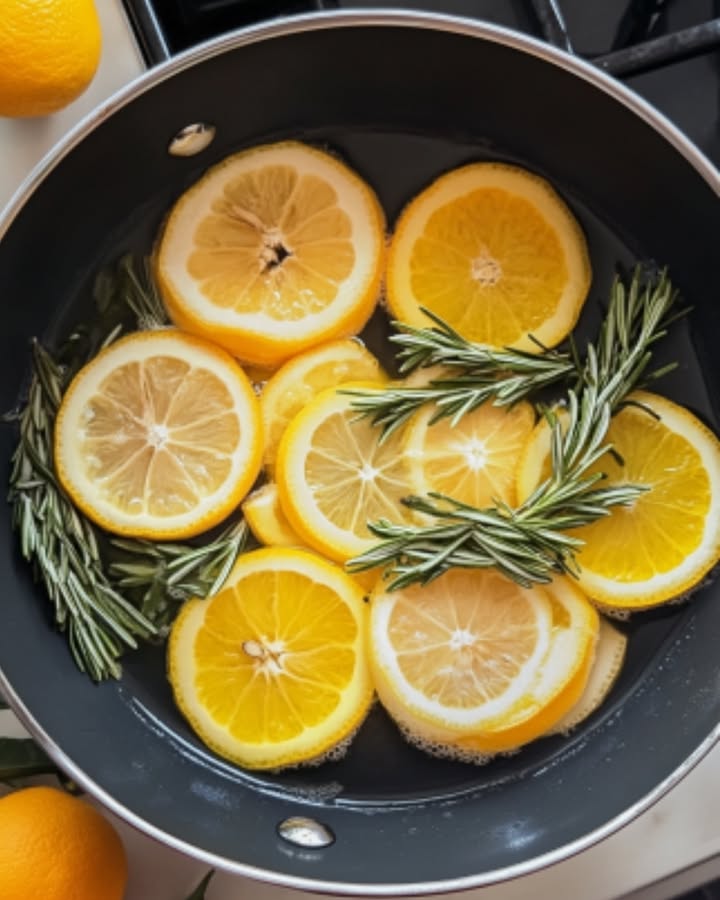
Now for the fun part! Take your bright yellow lemon and slice it into rounds. Don’t worry about seeds—they’ll stay in the pot. Drop those sunny slices right into the water. Next, take your sprig of rosemary. Give it a gentle roll between your fingers to release its oils, then place it in the water. You’ll see the lemon slices floating and the rosemary bobbing like a little green island. It already looks pretty!
Step 3
Place the saucepan on the stove over medium-high heat. Put the lid on if you want it to boil faster, but I often leave it off so I can watch the magic happen. Soon, you’ll see little bubbles forming around the lemon slices. The heat is waking up all those wonderful essential oils locked inside the peel and the herbs. You might start to catch a faint, fresh scent already.
Step 4
Once the water comes to a full, rolling boil, it’s time to turn it down. Reduce the heat to the lowest setting so that the water is just barely bubbling—a gentle simmer. This is the key! A hard boil will use up the water and the scent too quickly. A soft simmer lets the fragrance release slowly and steadily, filling your kitchen room by room.
Step 5
Let the mixture simmer away. This is where the enchantment happens. As the water heats and evaporates, it carries the vibrant citrus and earthy pine notes of the rosemary into the air. After about 10 minutes, my entire downstairs smells incredible. It’s clean, it’s fresh, it’s happiness in a pot. You can wander off and fold laundry, and the scent will follow you.
Step 6
Keep an eye on the water level. After 30-45 minutes, you might notice it’s getting low. Just grab your kettle or a measuring cup and carefully add more hot water to the saucepan. You can do this many times! I often keep mine going for hours on a lazy weekend afternoon. Chef’s tip: When you’re finally done, let the water cool and use it to water your plants (once it’s room temperature). It’s a great way of avoiding food waste and giving your greens a little citrusy treat!
Timing Breakdown
- Prep Time: 1 minute (seriously!)
- Time to Boil: ~5 minutes
- Simmering Time: 30 minutes to all day (your choice!)
- Total Active Time: Just that 1 minute of slicing and pouring.
Chef’s Secret for Maximum Scent
For an even stronger aroma, gently muddle or press down on the lemon slices and rosemary sprig with a spoon once they’re in the warm water. This breaks the cell walls slightly and lets more of those fragrant oils escape into the steam right from the start.
A Little Extra Info
Rosemary isn’t just for taste and smell—it’s been linked to memory and focus for centuries. Students in ancient Greece would wear rosemary wreaths during exams! So maybe this simmer pot isn’t just freshening your home, it’s subtly sharpening your mind while you plan your weekly menu.
Necessary Equipment
- A small or medium saucepan (non-reactive like stainless steel is best).
- A stove.
- A knife and cutting board for the lemon.
- A spoon for stirring (optional).
How to Store Your Scented Water
Once your simmer session is over, you can actually store the used lemon and rosemary in the water. Let the mixture cool completely to room temperature in the pot. This usually takes an hour or two. Don’t put a hot lid on it, as it can create condensation and spoil faster.
After it’s cool, pour the entire contents—water, fruit, and herbs—into a clean mason jar or an airtight container. Seal it tightly and pop it in the refrigerator. Stored this way, your “kitchen perfume” base can last for 2-3 days. The cold fridge slows down bacterial growth and keeps the ingredients from fermenting.
When you’re ready to use it again, simply pour it back into your saucepan and reheat! The scent will be a little milder the second time, but it’s still wonderfully effective. It’s a fantastic way to get multiple uses out of your ingredients. After the second use, it’s best to compost the solids and start fresh.
Tips and Advice for the Best Results
- Always stay in or near the kitchen while the pot is simmering. Never leave it unattended for long periods as the water can eventually evaporate completely.
- Use organic lemons if you can, since you’re heating and inhaling the peel.
- For a stronger rosemary scent, use two sprigs instead of one.
- If the water evaporates completely and the lemon slices start to burn, don’t panic. Just turn off the heat, let the pan cool, and add water to help loosen the residue.
Presentation Ideas (Yes, Even for This!)
Want to make it look as good as it smells?
- Use a pretty, clear glass pot or a small cast-iron Dutch oven on the stove.
- Float a few whole cranberries or edible flowers on top during the holidays.
- Set the pot on a trivet in the center of your kitchen island so the scent radiates evenly.
6 Healthier Alternative Simmer Pot Recipes
Mix and match based on your mood or the season!
- Winter Spice: Orange slices, 2 cinnamon sticks, 5 cloves, and a star anise. Smells like Christmas morning and pairs wonderfully with the rich flavors of a Cheesy Fajita Bake.
- Summer Garden: Lime slices, fresh mint sprigs, and a handful of blackberries. This is bright, refreshing, and perfect for a summer gathering.
- Calming Spa: Sliced cucumber, a few sprigs of lavender, and a slice of lemon. Incredibly relaxing for a quiet evening in.
- Apple Pie: Apple peels (save them from your baking!), a cinnamon stick, and a teaspoon of vanilla extract. This makes your home smell like you’ve been baking all day.
- Forest Walk: Pine or fir sprigs (ensure they’re non-toxic and pesticide-free), a few cranberries, and a cinnamon stick. Pure winter wonderland.
- Tropical Escape: Pineapple core and peel, sliced ginger, and a piece of lemongrass. Close your eyes and pretend you’re on a beach. It also adds a lovely aromatic touch to a casual dinner, perhaps served alongside some refreshing homemade lemonade.
Common Mistakes to Avoid
Mistake 1: Letting the Pot Boil Dry
This is the biggest one! If you get distracted and all the water evaporates, the lemon slices and rosemary will burn onto the bottom of your pot. This creates a nasty, acrid smell that defeats the whole purpose and is a pain to clean. To avoid this, set a timer to check the water level every 30 minutes. Better yet, keep the pot on the back burner where you can see it as you move around the kitchen.
Mistake 2: Using High Heat the Whole Time
Once you bring the water to a boil, turning the heat down to low is crucial. A furious boil shoots the fragrant steam straight up and out too quickly. A gentle simmer allows the scent to waft and diffuse slowly, permeating more of your living space. Think of it as a steady, quiet perfume rather than a loud shout. Your ingredients will also last much longer.
Mistake 3: Using Bottled Lemon Juice or Dried Rosemary
This trick relies on the essential oils in the lemon peel and the fresh rosemary leaves. Bottled lemon juice has none of that fragrant zest, and dried rosemary has lost most of its volatile oils. The result will be a very weak, barely-there scent. Always use a fresh, whole lemon and a springy, green sprig of rosemary for the best effect. It’s worth the small effort.
Mistake 4: Not Cleaning the Pot Properly Afterwards
The citrus oils can leave a slight film on your pot, especially if you use it for multiple simmer sessions. If you just rinse it, your next batch of pasta sauce might taste lemony (not always in a good way!). Wash the pot with warm, soapy water after each use. For any stubborn oily residue, a paste of baking soda and water works wonders.
Frequently Asked Questions
Can I reuse the lemon and rosemary more than once?
Absolutely! You can typically get two good simmer sessions out of one set of lemon slices and a rosemary sprig. After the first use, let everything cool and store it in the water in the fridge for a day or two. When you’re ready, just reheat. The fragrance will be a bit softer the second time. The citrus oils and herbal essences do eventually get “spent,” so if you can’t smell much on the second go, it’s time for fresh ingredients.
Is this safe for pets like dogs and cats?
In general, the diluted scent from simmering lemon and rosemary is considered safe for pets as it’s just aroma in the air. However, essential oils in high concentrations can be problematic. The key is ventilation and moderation. Make sure your pet can leave the kitchen if they want to, and don’t run the simmer pot for hours on end in a tiny, closed room. If you have birds, be extra cautious as their respiratory systems are very sensitive. Always observe your pet for any signs of discomfort.
How long does the fresh scent last in the house?
The active scent will last as long as the pot is simmering and for about 15-30 minutes after you turn it off. To have a longer-lasting effect, you need to keep adding water and simmering. It doesn’t permanently scent your home like a spray might. Think of it as a temporary, natural air freshener that creates a beautiful ambiance while it’s on. For a lingering fresh smell, I like to run it for an hour before guests arrive.
Can I do this in a slow cooker or Crock-Pot?
Yes, and it’s a fantastic, safe option! Add your ingredients to the slow cooker, fill it about halfway with water, put the lid on, and set it to “High.” Once you see steam and smell the fragrance (about 30-45 minutes), you can turn it down to “Low” or “Keep Warm.” This is actually safer than the stovetop for all-day simmering because the risk of boiling dry is much lower. Just keep the lid off or slightly ajar to let the scent escape.
What if I don’t have fresh rosemary? Can I use something else?
Of course! The magic of a simmer pot is its flexibility. If you don’t have rosemary, raid your spice cabinet or herb garden. A cinnamon stick and some cloves will give you a warm, spicy scent. Fresh thyme or sage leaves offer a lovely, earthy aroma. A few drops of pure vanilla extract (added to the water) creates a sweet, cozy smell. Even just lemon on its own is wonderfully fresh and clean.
Will this help eliminate strong cooking odors, like fish or burnt food?
It helps a lot, but it works by adding a stronger, pleasanter scent to the air, not by chemically neutralizing the bad smell. For the best results, start the simmer pot while you’re cooking the pungent food. The fresh citrus and herb steam will mix with the cooking odors and help carry them away through ventilation. It’s also a great idea to open a window for a minute to let some stale air out before you start simmering.
Is it okay to use a pot with a non-stick coating?
It’s best to avoid non-stick pots for prolonged simmering. Keeping water at a near-boil for hours in a non-stick pot can potentially degrade the coating over time, especially if the water level gets too low. A stainless steel, enameled cast iron, or glass pot is ideal. They are durable, easy to clean, and won’t be damaged by the citrus acids.
Can I add sugar or other food to make it a drink?
Important: Do not drink this water! While the ingredients are edible, simmering them for a long time in a pot you also use for cooking can introduce traces of cleaning products or metals from the pot into the water. This simmer pot is strictly for fragrance. If you want a delicious, drinkable version, make a separate pot of tea or infused water where you control all the ingredients and use food-safe equipment.
How much does this cost compared to store-bought air fresheners?
It’s incredibly cheap! One lemon costs about 50 cents, and a rosemary plant costs a few dollars and provides dozens of sprigs. A single plug-in air freshener refill can cost $5 or more. This natural method costs just pennies per use. Plus, you’re not creating plastic waste from disposable cartridges. It’s a win for your wallet and the planet, much like choosing to cook with whole ingredients for a Cheesy Fajita Bake instead of buying a processed meal kit.
Can I make a big batch and store it for later use?
You can pre-slice lemons and store them in a zip-top bag in the freezer for this exact purpose! When you’re ready, just pull out a handful of frozen slices and a sprig of rosemary (fresh herbs can be frozen too, though they get limp). Toss them straight into the pot with water. You can’t really store the mixed, wet “brew” for more than a few days in the fridge, but freezing the raw components is a brilliant time-saver.
Your Home, Your Scent Sanctuary
So there you have it! The simplest, coziest kitchen trick in the book. It takes less time than finding where you left that fancy candle. This little ritual connects us to simpler times and lets us care for our homes in a natural, joyful way. Next time your kitchen needs a pick-me-up, before you tackle a big dish like the Cheesy Fajita Bake, just grab a lemon and some rosemary. In one minute, you’ll be on your way to a house that smells like a sunny, herb-scented dream. Now, if you’ll excuse me, my simmer pot is calling, and I have some cheesy baking to do!