
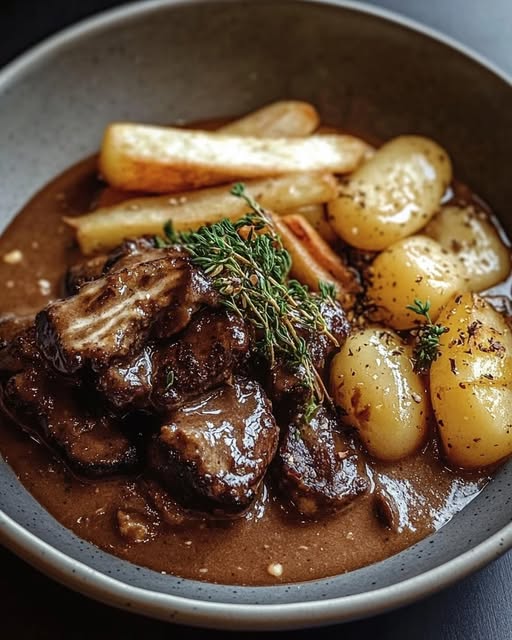
A Cozy Belgian Secret: My Family’s Favorite Beer-Braised Beef
The first time I smelled Carbonade Flamande, it was in a tiny Brussels bistro on a rainy day. The rich, malty aroma of beer-braised beef filled the air, promising pure comfort. I was hooked! Back home, I spent years tweaking the recipe until I landed on this version. It’s become my go-to for warming up a crowd. Imagine tender beef in a sweet-savory beer sauce so good, you’ll want to lick the plate. Let me show you how to make this Belgian classic, a true hug in a pot!
A Taste of Flanders: The Story Behind the Stew
Carbonade Flamande (or “Stoofvlees”) is the heart and soul of Belgian home cooking. For centuries, this beer-braised beef stew has been the hero of family dinners and pub menus. It was born from cleverness—using dark local beer to braise tougher, affordable cuts of beef until they melt. The unique touch? A slice of spiced bread spread with mustard, which dissolves into the sauce, adding body and a hint of spice. While the classic is a must-try, it’s endlessly adaptable. Whether you enjoy it the traditional or find a delicious variation like this simplified Carbonade Flamande with Frites, the soul-warming result is the same.
Why You’ll Fall in Love with This Beer-Braised Beef
This isn’t just another stew. It’s a flavor adventure! The dark beer creates a deep, rich sauce that’s not bitter at all. Instead, it’s balanced by the sweetness of brown sugar and the tang of mustard. The beef becomes unbelievably tender after its slow bath. Beyond the incredible taste, it’s wonderfully hands-off. Once you get it simmering, you can relax while your kitchen fills with the most amazing smell. It’s a foolproof recipe that makes everyone think you’re a culinary genius.
When to Serve This Hearty Belgian Stew
This dish is your secret weapon for any cozy gathering. It’s perfect for a hearty Sunday family dinner. It’s a showstopper for a casual dinner party with friends—they’ll be so impressed. It’s also my top pick for game day when you need to feed a hungry crew. Honestly, any chilly evening is a good excuse for this beer-braised beef. It brings people together around the table.
Ingredients for the Perfect Carbonade Flamande
- 1 kg (about 2.2 lbs) beef chuck or shank, cut into chunks
- 3 onions, thinly sliced
- 3 tablespoons all-purpose flour
- 2 tablespoons Dijon mustard
- 2 tablespoons dark brown sugar or cassonade
- 1 bottle (33 cl) dark or amber beer
- 2 slices of gingerbread or bread spread with mustard
- 2 tablespoons red wine vinegar
- 1 bouquet garni (thyme, bay leaf, parsley)
- Butter or oil for cooking
- Salt and pepper
- Chopped parsley for garnish (optional)
No Problem! Handy Ingredient Swaps
Don’t worry if you’re missing an item. Cooking is about improvising! Here are easy swaps:
- Beef: Any good braising cut works—brisket, short ribs, or bottom round.
- Beer: Use a dark Belgian ale like a Dubbel for authenticity. A brown ale or stout also works. Avoid hoppy IPAs.
- Gingerbread: A slice of rye or pumpernickel bread with a dash of molasses or allspice is a fine substitute.
- Brown Sugar: Maple syrup or a tablespoon of molasses can work in a pinch.
- Vinegar: Apple cider vinegar or balsamic vinegar adds a nice touch.
Your Step-by-Step Guide to Amazing Beer-Braised Beef
Step 1: Browning the Beef to Perfection
Heat a good splash of oil or butter in a large, heavy pot over medium-high heat. Pat your beef chunks dry with a paper towel—this is key for a good sear. Working in batches, add the beef. Don’t crowd the pan! Let the pieces sizzle until they develop a deep, brown crust on all sides. This isn’t just cooking the meat; it’s building the flavor foundation for your entire stew. The brown bits left in the pot are pure gold. Remove the beef and set it aside on a plate.
Step 2: Sweetening Up the Onions
In that same flavorful pot, add the sliced onions. Turn the heat down to medium. Cook them slowly, stirring now and then. You want them to soften, become translucent, and turn a lovely light golden color. This will take about 10 minutes. The smell will be incredible! This step sweetens the onions and continues to build the rich flavor base for your beer-braised beef.
Step 3: Creating the Roux for Thickening
Now, return all the browned beef and any juices to the pot with the onions. Sprinkle the flour evenly over everything. Stir well for a couple of minutes. The flour will coat the meat and onions, and start to cook in the fat. You’re making a simple roux right in the pot! This magic step is what will give your finished sauce a beautiful, glossy thickness. Pro tip: Let the flour cook for 2-3 minutes to get rid of any raw taste.
Step 4: Adding the Beer and Building Flavor
Time for the star ingredient! Slowly pour in your bottle of dark beer. As you pour, use your spoon to scrape up all those delicious browned bits from the bottom of the pot. This is called deglazing, and it’s where huge flavor lives. Then, stir in the brown sugar, red wine vinegar, and your bouquet garni. The vinegar is a secret weapon—it cuts the richness and makes all the other flavors pop.
Step 5: The Belgian Trick with Mustard Bread
This is the fun, unique part! Take your two slices of gingerbread (or regular bread) and spread a generous layer of Dijon mustard on each one. Gently place them, mustard-side down, on top of the beef and liquid in the pot. Don’t stir them in! They will slowly sink and melt into the stew as it cooks. This traditional trick thickens the sauce naturally and adds a subtle, spiced complexity you won’t get any other way.
Step 6: The Long, Slow Simmer
Cover your pot with a tight-fitting lid. Reduce the heat to the lowest possible setting. Let the stew simmer gently for 2 to 2.5 hours. You want just the occasional bubble to break the surface. This long, slow cooking is what transforms the beef from chewy to “melt-in-your-mouth” tender. Peek and give it a gentle stir every 45 minutes or so. If the sauce looks like it’s reducing too much, add a splash of water.
Step 7: The Final Taste and Seasoning
After a couple of hours, your kitchen will smell heavenly. Carefully remove the lid. The bread will have disappeared, and the sauce will be thick and luxurious. Fish out and discard the old bouquet garni. Now, taste! This is the most important step. The long cooking mellows everything, so it will likely need a good pinch of salt and a few cracks of black pepper. Adjust until it tastes just right for you.
Step 8: Serving Your Masterpiece
Ladle the hot carbonade into deep bowls. I love to sprinkle a little fresh chopped parsley on top for a pop of color. The classic, must-have side is a huge pile of crispy Belgian fries for dipping. Buttered egg noodles or creamy mashed potatoes are also fantastic for soaking up that incredible sauce. Serve it with a smile and get ready for the compliments!
Chef’s Tip: Let It Rest
For the absolute best flavor, make this a day ahead. Let it cool and store it in the fridge overnight. When you reheat it the next day, the flavors will have deepened and married into something even more spectacular. It’s a guaranteed way to wow your guests with minimal last-minute effort.
Time You’ll Need from Start to Finish
- Prep Time: 20 minutes
- Cooking Time: 2 hours 30 minutes (mostly hands-off)
- Resting Time (Optional but recommended): Overnight
- Total Time: About 3 hours
My Secret for the Best Carbonade Ever
Use two types of onions! I often use two yellow onions and one red onion. The red onion adds a slight extra sweetness and complexity that blends beautifully with the beer and brown sugar. It’s a tiny change that makes a noticeable difference in the depth of your sauce.
Why Belgian Beer Makes the Stew
The beer isn’t just liquid; it’s a core flavor. Belgian dark ales are often brewed with candi sugar, giving them notes of caramel, dried fruit, and spice. These flavors directly infuse the beef and create that unique, sweet-savory sauce you can’t replicate with broth or wine. It’s the soul of the dish!
What You’ll Need to Cook With
- A large, heavy-bottomed pot or Dutch oven (this distributes heat evenly)
- A sharp chef’s knife and cutting board
- Wooden spoon or sturdy spatula
- Measuring spoons
- Tongs for turning the beef
Storing Your Leftover Beer-Braised Beef
Let the carbonade cool completely to room temperature before storing. Do not leave it out for more than two hours.
Transfer it to an airtight container. It will keep in the refrigerator for 3 to 4 days. The flavors actually improve each day!
It also freezes beautifully for up to 3 months. Thaw overnight in the fridge and reheat gently on the stove with a splash of water or beer to loosen the sauce.
Tips for a Flawless Carbonade Flamande
- Don’t skip browning the beef. It creates essential flavor.
- Use a beer you’d enjoy drinking. A bad beer makes a bad stew.
- If your sauce is too thin at the end, you can mix a tablespoon of cornstarch with a little water and stir it in, then simmer for 5 minutes.
- If it’s too thick, just stir in a little water, broth, or more beer until it’s the consistency you like.
Make It Look Beautiful on the Plate
- Serve in a shallow, wide bowl to show off the rich color of the sauce.
- Garnish with that fresh parsley and a twist of black pepper.
- Place the crispy fries in a separate bowl or pile them right next to the stew.
- For a dinner party, consider a small ramekin of extra Dijon mustard on the side.
Common Mistakes to Avoid
Mistake 1: Crowding the Pan When Browning
We’ve all done it—trying to save time by browning all the meat at once. This is a big mistake. Adding too much beef lowers the pan’s temperature drastically. Instead of searing, the meat steams and releases its juices, preventing a beautiful brown crust from forming. That crust equals flavor! Fix: Be patient. Brown your beef in 2 or 3 batches, giving each piece plenty of space. The result is worth the extra few minutes.
Mistake 2: Boiling Instead of Simmering
Once you add the beer and cover the pot, turning the heat too high is a common error. A rapid boil will make the beef tough and chewy, no matter how long you cook it. It can also cause the sauce to reduce too quickly and burn. Fix: After bringing it to a brief initial boil, immediately reduce the heat to the lowest setting. You should see just a few small bubbles breaking the surface. This low, gentle heat breaks down the tough fibers slowly, resulting in fork-tender meat.
Mistake 3: Skimping on the Simmering Time
Thinking the stew is done after just an hour because the meat looks cooked is a recipe for disappointment. Chuck and shank are tough cuts packed with collagen. They need time—real time—for that collagen to melt into gelatin, which makes the meat tender and the sauce luscious. Fix: Trust the process. Set a timer for at least 2 hours. The meat is ready when you can easily pull it apart with a fork. It should never be firm or rubbery.
Mistake 4: Forgetting to Season at the End
You seasoned the beef at the start, so you’re done, right? Not quite. Long cooking mellows salt and amplifies other flavors. If you only season at the beginning, your finished stew will likely taste flat and underseasoned. Fix: Always, always taste your Carbonade right before serving. Add salt and pepper in small increments, stirring and tasting after each addition until the flavors truly sing. This final adjustment is what separates a good stew from a great one.
Hearty Stew Variations to Try
Love the idea of a rich, slow-cooked beef dish? You can explore so many flavors! For another Belgian classic, try this ultimate Carbonade Flamande with perfect Frites. If you want something with a French twist using red wine, these French-style Braised Short Ribs are pure elegance. For a stunning one-pot meal, this Dutch Oven Short Rib Ragu with Pappardelle is a pasta lover’s dream.
Frequently Asked Questions
What is the best beer to use for Carbonade Flamande?
For authentic flavor, choose a Belgian dark or brown ale, like a Dubbel or a Brune. These beers have malty, caramel, and sometimes fruity notes that sweeten the stew beautifully. A good brown ale or stout from your local brewery also works wonders. Avoid very hoppy beers like IPAs, as they can make the sauce bitter. The rule is simple: use a beer you enjoy drinking, and your stew will taste great.
Can I make this in a slow cooker or Crock-Pot?
Absolutely! This recipe adapts perfectly to a slow cooker. Just complete Steps 1 through 4 on the stove in a skillet to brown the beef and onions. Then, transfer everything (including the mustard bread) to your slow cooker. Cook on LOW for 7-8 hours or on HIGH for 4-5 hours. The long, slow heat is ideal for making the beef incredibly tender. It’s a fantastic set-it-and-forget-it meal.
What can I use instead of gingerbread?
No problem! The gingerbread adds spice and helps thicken the sauce. An easy substitute is a slice of dark rye or pumpernickel bread. Spread it with mustard as directed. For a flavor boost, you can even sprinkle the bread with a tiny pinch of ground allspice or cinnamon before adding it to the pot. The bread will still dissolve and do its job of enriching the stew.
Why do you add vinegar to a beef stew?
Adding a bit of acid, like red wine vinegar, is a chef’s trick for balancing flavors. The sweet beer and brown sugar create a rich, sweet base. The vinegar provides a subtle tang that cuts through that richness. It brightens the entire dish and makes the other flavors—like the meat and onions—stand out more clearly. Don’t worry, it won’t make the stew taste vinegary!
How do I know when the beef is perfectly tender?
The best test is the fork test. After about 2 hours of simmering, take a piece of beef and try to pull it apart with two forks. If it shreds easily with little resistance, it’s done. If it still feels firm or rubbery, it needs more time. The beef should be fall-apart tender, almost melting in your mouth. Be patient; tough cuts need this long cooking to become soft.
Can I prepare Carbonade Flamande ahead of time?
Yes, and I highly recommend it! Stews like this actually taste better the next day. After cooking, let it cool completely. Then, store it covered in the refrigerator. When you’re ready to eat, gently reheat it on the stove over low heat. You might need to add a splash of water or beer to loosen the sauce. The flavors have more time to blend and deepen overnight, making it even more delicious.
What are the best side dishes to serve with it?
Classic Belgian fries are the number one partner. Buttery mashed potatoes, boiled potatoes, or wide egg noodles are also fantastic for soaking up the sauce. For a lighter option, try a simple green salad with a sharp vinaigrette to balance the hearty stew. Crusty bread for dipping is never a wrong choice, either!
Is there a way to make this recipe thicker?
If your sauce is thinner than you’d like at the end of cooking, make a quick slurry. Mix one tablespoon of cornstarch with two tablespoons of cold water in a small bowl until smooth. Stir this mixture into the simmering stew. Let it cook for another 5-10 minutes, stirring occasionally. The sauce will thicken nicely. Alternatively, you can simply simmer the stew uncovered for a bit longer to reduce the liquid.
How long can I store leftovers?
Properly stored in an airtight container in the refrigerator, your carbonade will stay fresh and tasty for 3 to 4 days. You can also freeze it for up to 3 months. To freeze, portion it into freezer-safe containers, leaving a little space for expansion. Thaw in the fridge overnight before reheating. Always practice good food safety by cooling and storing promptly, which is key to preventing foodborne illness.
Can I use a different cut of beef?
You can, but stick to cuts meant for braising. Chuck roast, brisket, bottom round, or short ribs are all excellent choices. Avoid lean, quick-cooking cuts like sirloin or tenderloin, as they will become dry and tough during the long cooking process. The tougher, more marbled cuts have the connective tissue that melts into tenderness and flavor during the slow simmer.
I hope this recipe brings as much warmth and joy to your table as it has to mine. It’s a cornerstone of comfort food that never fails to please. For more amazing ideas to anchor your family meals, browse all our favorite main dish recipes right here.
Ready to Cook Up Some Comfort?
There you have it—my tried-and-true path to the most comforting beer-braised beef stew. It’s more than just a meal; it’s an experience. It’s about the wonderful smell that fills your home, the anticipation as it simmers, and the happy silence that falls over the table when everyone takes their first bite. So grab your pot, pick up a good dark beer, and get ready to create a little Belgian magic in your own kitchen. Trust me, your family and friends will thank you. Now, go on and get cooking!
Beer-Braised Beef
Ingredients
Equipment
Method
- Heat oil or butter in a large pot over medium-high heat and pat beef chunks dry; brown in batches until a crust forms.
- Remove beef and set aside; add sliced onions to the same pot and cook on medium until soft and light golden (about 10 minutes).
- Return browned beef to the pot; sprinkle flour over mixture and stir well for 2 minutes to create a roux.
- Slowly pour in dark beer while deglazing the pot; stir in brown sugar, red wine vinegar, and bouquet garni.
- Spread mustard on gingerbread slices and place them mustard-side down on top of the stew; do not stir.
- Cover pot with a lid and reduce heat to low; simmer for 2 to 2.5 hours, stirring occasionally.
- Remove lid, discard bouquet garni, and adjust seasoning with salt and pepper to taste.
- Serve in bowls, garnished with parsley, alongside crispy fries, mashed potatoes, or egg noodles.