
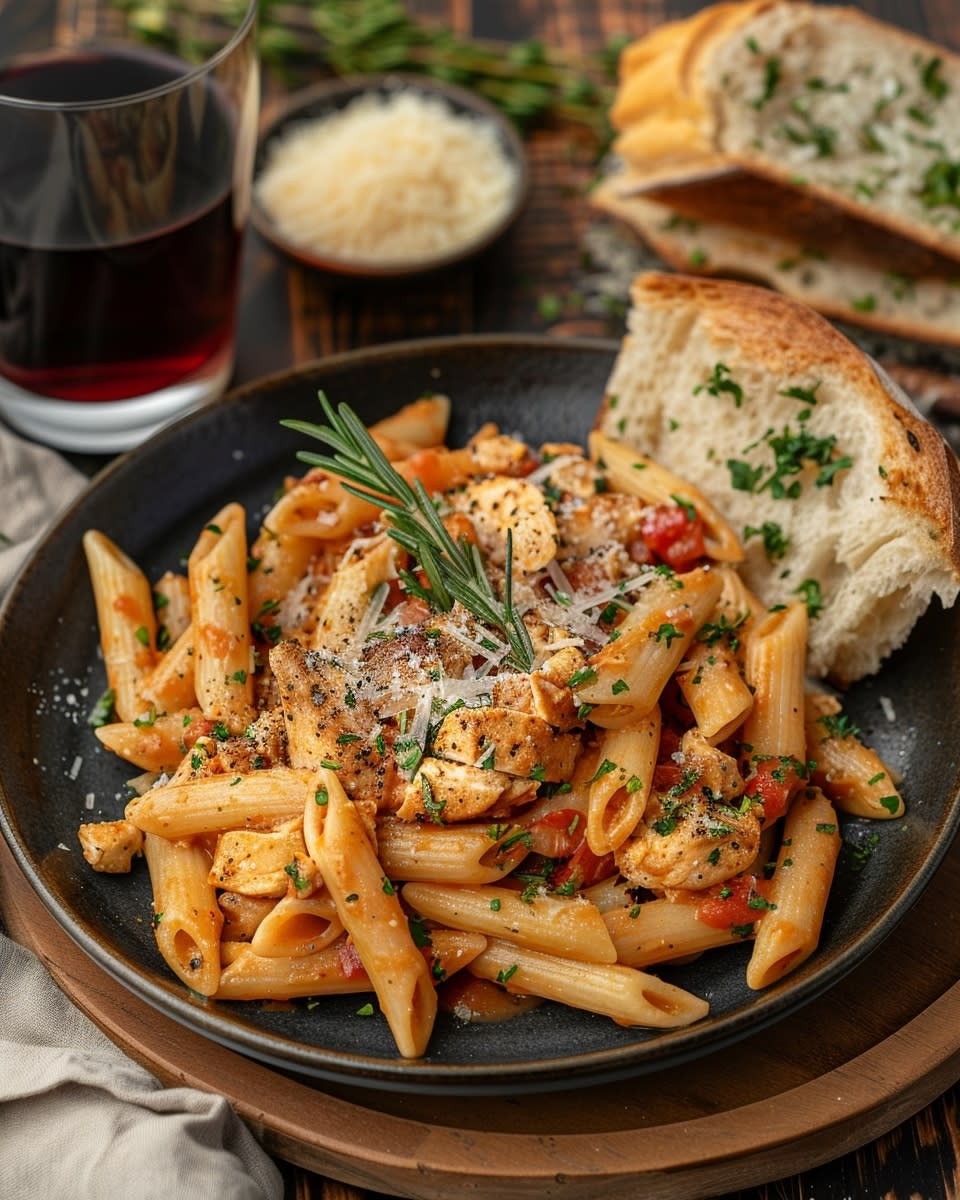
Last Tuesday night, I found myself staring into my fridge at 6 PM with zero dinner plans. I had some chicken breasts, a carton of heavy cream, and a box of penne pasta staring back at me. Thirty minutes later, I was twirling creamy, sun-dried tomato-studded pasta onto my fork while my family fought over seconds. That’s the magic of Tuscan Chicken Penne Pasta. It’s the kind of meal that makes you look like a culinary genius without breaking a sweat.
This dish brings together tender chicken, perfectly cooked penne, and a creamy sauce loaded with garlic, spinach, and sun-dried tomatoes. The flavors somehow feel both rich and light at the same time. Pasta lovers can’t resist the combination of savory chicken and that silky Tuscan-style sauce that coats every noodle. It’s restaurant-quality food you can make in your own kitchen on a random weeknight.
The best part? You don’t need fancy cooking skills or hard-to-find ingredients. Everything comes together in one pan in less than 45 minutes. I’ve made this dish dozens of times, and it never fails to impress. Whether you’re cooking for picky kids or hosting a dinner party, this pasta hits the mark every single time.
What is Tuscan Chicken Penne Pasta?
Tuscan Chicken Penne Pasta is a creamy Italian-inspired dish that combines seasoned chicken pieces with penne pasta in a rich, flavorful sauce. The sauce typically includes heavy cream, garlic, Parmesan cheese, sun-dried tomatoes, and fresh spinach. Some versions add white wine or chicken broth to balance the richness. The dish gets its name from the Tuscan-inspired ingredients and cooking style.
The key ingredients make this pasta stand out from other creamy pasta dishes. You’ll always find chicken (usually breast or thigh meat cut into bite-sized pieces), penne pasta, and that signature creamy sauce. The sun-dried tomatoes add a sweet and tangy punch that cuts through the cream. Fresh spinach wilts into the sauce and adds color and nutrients. Garlic and Italian herbs like basil or oregano round out the flavor profile.
Now, here’s something interesting. While we call it “Tuscan,” this dish isn’t actually traditional Italian cuisine. You won’t find it on menus in Florence or Siena. The recipe is an American creation inspired by the flavors and ingredients common in Tuscany, Italy. Americans took elements of Italian cooking and created something new that fits our love for creamy, hearty pasta dishes.
Traditional Tuscan cooking focuses on simple, fresh ingredients. Think olive oil, tomatoes, beans, and herbs. The region is known for dishes like ribollita (a hearty vegetable soup) and bistecca alla fiorentina (a massive T-bone steak). Cream sauces aren’t really part of authentic Tuscan cuisine. But the sun-dried tomatoes, garlic, and spinach in our pasta definitely nod to Tuscan flavors.
The preparation method is pretty straightforward. You season and cook the chicken until golden brown, then set it aside. In the same pan, you build the sauce by sautéing garlic, adding cream and cheese, then tossing in the sun-dried tomatoes and spinach. The cooked pasta and chicken go back into the pan, and everything gets tossed together until coated in that gorgeous sauce. The whole process happens in about 30 to 45 minutes.
Variations of this dish are endless. Some people use chicken thighs instead of breasts for extra flavor and moisture. Others swap penne for fettuccine or rigatoni. I’ve seen versions with mushrooms, artichoke hearts, or roasted red peppers mixed in. Some recipes call for a lighter sauce made with half-and-half or milk instead of heavy cream. You can even make it with shrimp instead of chicken if you’re in the mood for seafood.
What is Tuscan Style Pasta Sauce?
Tuscan style pasta sauce refers to a creamy, garlic-forward sauce that features ingredients commonly associated with Tuscany. The base is usually heavy cream or a cream and broth mixture. Parmesan cheese gets stirred in for depth and saltiness. The standout ingredients are sun-dried tomatoes, which provide concentrated tomato flavor and a slight sweetness, and fresh spinach or kale.
This sauce has a tan or pale orange color thanks to the cream and sun-dried tomatoes. It clings to pasta beautifully without being overly thick or gloopy. The texture should be silky and smooth. When you twirl your fork, the sauce should coat the pasta completely, not pool at the bottom of the bowl.
The flavor profile balances rich and bright notes. The cream and cheese create that comfort food richness we all crave. Garlic adds a sharp, aromatic quality that wakes up your taste buds. The sun-dried tomatoes bring acidity and sweetness. Fresh greens like spinach add a subtle earthiness. Italian herbs tie everything together.
Many cooks add a splash of white wine or chicken broth to thin the sauce and add complexity. The wine brings acidity that cuts through the cream, while chicken broth adds savory depth. Some recipes include a squeeze of lemon juice at the end for brightness. I always add a pinch of red pepper flakes for a gentle heat that complements the other flavors.
The beauty of Tuscan style pasta sauce is its flexibility. You can make it richer by using all heavy cream and extra cheese. Want it lighter? Use half-and-half or add more broth. The sauce works with chicken, shrimp, Italian sausage, or even just vegetables for a meatless meal. I’ve made it with leftover rotisserie chicken on nights when I’m extra tired, and it still tastes incredible.
This sauce differs from other creamy Italian-American sauces like Alfredo or carbonara. Alfredo is just butter, cream, and Parmesan. Carbonara uses eggs and pancetta instead of cream. Tuscan style sauce is more complex with its mix of sun-dried tomatoes, greens, and herbs. It has more going on flavor-wise than a basic cream sauce.
Making Tuscan style pasta sauce from scratch takes about 15 minutes. You start by cooking garlic in butter or olive oil until fragrant. Then you pour in the cream and let it warm through. Grated Parmesan melts into the warm cream. The sun-dried tomatoes (usually from a jar, either oil-packed or rehydrated) get chopped and stirred in. Finally, fresh spinach wilts into the hot sauce. Season with salt, pepper, and herbs, and you’re done.
Store-bought versions exist, but they never taste as good as homemade. The cream can separate, and the flavors taste muted. Making it yourself means you control the garlic level, the amount of sun-dried tomatoes, and the final consistency. Plus, it’s so easy that buying a jar doesn’t really save you much time.


How to Make Tuscan Chicken Penne Pasta
Now that you know what makes the sauce special, let’s get into actually making this dish. I promise it’s way easier than you might think.
Start by gathering everything you need before you turn on the stove. This isn’t fancy French cooking, but having your ingredients ready makes the whole process smoother. You’ll need about a pound of chicken breast, a pound of penne pasta, two cups of heavy cream, a cup of grated Parmesan cheese, a half-cup of sun-dried tomatoes (the oil-packed kind work great), three cups of fresh spinach, four cloves of garlic, and your basic seasonings like salt, pepper, and Italian herbs.
Here’s the thing about ingredients: quality actually matters here. I used to buy the cheapest chicken breasts at the grocery store and wonder why my pasta tasted bland. Then I switched to organic, air-chilled chicken, and the difference was night and day. The chicken stayed juicy and had actual flavor. Same goes for the Parmesan cheese. Please don’t use that powdery stuff in the green can. Get a block of real Parmigiano-Reggiano and grate it yourself. It melts better and tastes like actual cheese instead of salty dust.
Cut your chicken into bite-sized pieces, about one-inch cubes. Season them generously with salt, pepper, and a bit of Italian seasoning. I mean really season them. Under-seasoned chicken is the death of good pasta. Heat a large skillet over medium-high heat and add a couple tablespoons of olive oil. Once the oil shimmers, add the chicken pieces in a single layer. Don’t crowd the pan or they’ll steam instead of brown. Cook for about five to six minutes, flipping halfway through, until they’re golden on the outside and cooked through. Remove them to a plate and set aside.
In that same pan (don’t wipe it out, all those browned bits are flavor), turn the heat down to medium and add a tablespoon of butter. Toss in your minced garlic and cook it for about thirty seconds until it smells amazing. Be careful not to burn it. Burnt garlic tastes bitter and ruins everything. Pour in the heavy cream and stir, scraping up those browned bits from the bottom of the pan. Let the cream warm through for a couple minutes.
While the sauce simmers, get your pasta cooking. Bring a big pot of salted water to a boil. I mean really salt it. The water should taste like the ocean. Drop in your penne pasta and cook it according to the package directions, but pull it out about a minute early. It’ll finish cooking in the sauce. By the way, save at least a cup of that starchy pasta water before you drain it. That liquid is liquid gold for adjusting sauce consistency later.
Back to your sauce. Once the cream is heated through, start stirring in the grated Parmesan a handful at a time. Let each addition melt before adding more. The sauce will thicken up nicely. Chop your sun-dried tomatoes into strips and add them in. They’ll release their concentrated tomatoey flavor into the cream. Add the spinach next. It looks like a massive pile at first, but it wilts down in about a minute. Stir it in and watch it shrink.
Taste your sauce and adjust the seasoning. It probably needs more salt and definitely some black pepper. I always add a good pinch of red pepper flakes here because I like a little heat. If the sauce seems too thick, add some of that reserved pasta water a splash at a time. The starch helps the sauce cling to the pasta better. If you’re looking for other creamy pasta inspiration, you might want to check out this creamy mushroom fettuccine recipe that uses similar techniques.
Drain your pasta and add it straight to the pan with the sauce. Toss everything together so every piece of pasta gets coated. Add the chicken back in and give it another toss. The pasta should be glossy and the sauce should coat it without being soupy. If it looks dry, add more pasta water. If it’s too loose, let it simmer for another minute to thicken up.
Can I serve Tuscan chicken with pasta? Absolutely, that’s literally what this dish is. The chicken and pasta together create a complete meal that’s satisfying and balanced. Some people serve the chicken on top of the pasta instead of mixed in, which looks fancier for dinner parties.
One trick I learned the hard way: don’t cook the chicken on high heat thinking it’ll be faster. Medium-high is perfect. Too high and the outside burns before the inside cooks through. Another tip is to let your cream come to room temperature before adding it to the pan. Cold cream takes forever to heat up and can cause the sauce to break. I just leave mine on the counter while I prep everything else.
For a completely different take on baked pasta dishes, you might enjoy baked ziti with ricotta cheese, which offers that comfort food feeling in a different format.
Choosing the Right Pasta for Your Health
Funny enough, the type of pasta you choose actually matters beyond just the shape. I never thought about this until my doctor told me to watch my sodium intake, and suddenly I was reading every pasta box label at the store.
Regular white pasta is made from refined wheat flour. It cooks up tender and has that classic pasta texture we all know. But it doesn’t offer much nutritionally beyond carbohydrates. It digests quickly and can spike your blood sugar, which isn’t ideal if you’re watching your glucose levels. That said, it tastes great and works perfectly fine if you’re healthy and active.
Whole wheat pasta changes the game completely. It’s made from the entire wheat kernel, which means it keeps the bran and germ that white pasta loses during processing. This gives you way more fiber, B vitamins, and minerals like magnesium and iron. The fiber content is what really matters. It slows down digestion, which means your blood sugar rises more gradually instead of spiking. You feel full longer too.
What pasta is best for high blood pressure? Whole wheat pasta wins here. The fiber in whole grains has been shown to help lower blood pressure over time. It also contains potassium, which helps balance out sodium in your body. High sodium is a major contributor to high blood pressure, and while pasta itself isn’t high in sodium, the sauces often are. Choosing whole wheat gives you some nutritional insurance.
I’ll be honest, I resisted whole wheat pasta for years because I thought it tasted like cardboard. And some brands do taste pretty bland and have a weird grainy texture. But I found some good ones that actually taste great once you get used to them. Barilla’s whole wheat line is solid. So is Bionaturae if you can find it. The key is not overcooking it. Whole wheat pasta gets mushy fast, so check it a minute or two before the package says.
Beyond whole wheat, there are tons of alternative pastas now. Chickpea pasta has become my go-to when I want extra protein. Brands like Banza taste surprisingly similar to regular pasta and pack about 25 grams of protein per serving. That’s double what regular pasta offers. The texture is slightly different, a bit more firm, but it holds up great in creamy sauces. For lighter pasta options with seafood, this lemon butter shrimp pasta works beautifully with alternative pasta choices.
Lentil pasta is another good option, especially the red lentil variety. It has a mild, slightly sweet flavor and cooks up tender. It’s high in fiber and protein, plus it’s naturally gluten-free if that matters to you. I use it when I’m making pasta for friends who can’t have wheat.
Brown rice pasta is the mildest alternative. It tastes almost identical to regular pasta but offers more nutrients and fiber than white pasta. It can get sticky if you don’t rinse it after cooking, so keep that in mind. I’ve also tried black bean pasta, edamame pasta, and even hearts of palm pasta (which is super low-carb but weird). They’re all fine, but chickpea and lentil are my favorites for everyday cooking.
For people managing diabetes or pre-diabetes, choosing higher-fiber pasta options makes a real difference. The glycemic index measures how quickly foods raise your blood sugar. Regular white pasta has a glycemic index around 50, which is medium. Whole wheat pasta drops to about 42, and legume-based pastas like chickpea or lentil are even lower. This means they cause smaller, slower blood sugar rises.
One thing nobody tells you: you can mix regular and whole wheat pasta together. I do this sometimes when I’m cooking for my kids who turn their noses up at full whole wheat. Half and half works great, and they can’t really tell the difference once it’s coated in that creamy Tuscan sauce. They get some extra fiber and nutrition without the battle at dinner time. If you’re into bold flavors that work with various pasta types, these spicy garlic chili oil noodles show how different pasta shapes and types can handle intense seasoning.
The bottom line is this: use whatever pasta makes you happy and fits your health needs. If you have high blood pressure or other health concerns, whole wheat or legume-based pastas give you more nutritional benefits. But if you’re healthy and just want delicious pasta, regular penne works perfectly fine. This isn’t about being perfect. It’s about making choices that work for your body and your life.


Variations and Serving Suggestions for Tuscan Chicken Penne Pasta
The beautiful thing about creamy Tuscan chicken is how it basically begs you to mess with it. I’ve probably made twenty different versions by now, and honestly, it’s hard to screw up. The base recipe is so solid that you can throw in whatever you have sitting in your fridge and it usually turns out great.
Let’s start with vegetables. The classic version has spinach and sun-dried tomatoes, but you can add so much more. I love throwing in mushrooms, especially baby bellas. Slice them up and sauté them with the chicken, or cook them separately and add them to the sauce. They soak up all that creamy goodness and add an earthy flavor that works perfectly with the garlic and cheese. Roasted red peppers are another winner. The jarred kind works fine. Just drain them, chop them up, and toss them in with the sun-dried tomatoes.
Artichoke hearts completely transform the dish. I use the marinated ones from a jar because they already have tons of flavor. Quarter them and stir them into the sauce near the end. They add this tangy, slightly briny taste that cuts through the richness of the cream. My neighbor swears by adding cherry tomatoes. She halves them and tosses them in right before serving so they stay fresh and juicy. The burst of freshness is actually really nice against all that cream.
Asparagus works if you’re making this in spring. Chop it into one-inch pieces and blanch it separately, then add it at the very end. Broccoli florets are solid too, though my kids give me grief about “ruining” the pasta with vegetables. I ignore them. Zucchini sliced into half-moons adds bulk without changing the flavor much. I’ve even tried adding frozen peas in a pinch, and they were totally fine.
Herb variations can change the whole vibe of the dish. The classic uses Italian seasoning or basil, but fresh thyme gives it a more sophisticated, earthy quality. Rosemary is bold and works if you use it sparingly, maybe just half a teaspoon of fresh chopped leaves. Too much and it takes over everything. I made that mistake once and the whole dish tasted like a pine tree. Fresh basil added right at the end keeps things bright and aromatic. Parsley might seem boring, but a handful of fresh chopped parsley stirred in before serving adds a pop of color and a clean, fresh taste.
Here’s something I discovered by accident: a tiny bit of fresh oregano or marjoram completely changes the Italian profile. It becomes more pizza-like in the best way possible. And if you’re feeling adventurous, a few fresh sage leaves fried in butter until crispy and then crumbled over the top is restaurant-level fancy.
Protein swaps work great too. Swap the chicken for shrimp and you’ve got creamy Tuscan shrimp pasta that cooks even faster. Use Italian sausage, either mild or spicy, and brown it instead of chicken. The fat from the sausage adds extra flavor to the sauce. I’ve done half chicken and half sausage when I’m feeding a crowd and everyone always loves it. Salmon is weird but it works. Flake cooked salmon into the sauce instead of chicken for something totally different. Just be gentle when mixing so it doesn’t turn into salmon mush.
For vegetarians, skip the meat entirely and double down on vegetables. Add chickpeas for protein and substance. White beans work too and actually feel kind of Italian. The sauce is rich enough that you don’t really miss the meat if you load up on veggies. I’ve served the meatless version to vegetarian friends and they demolished it.
Now let’s talk about making it lighter without sacrificing too much flavor. Replace half the heavy cream with chicken broth or white wine. You lose some richness but gain more depth of flavor from the broth. Using half-and-half instead of heavy cream cuts the calories and fat pretty significantly. The sauce won’t be quite as thick and luxurious, but it’s still delicious. Greek yogurt stirred in at the very end adds creaminess and tang with way less fat than cream. Just make sure the heat is off when you add it or it’ll curdle.
If you’re watching cholesterol balance but still want that creamy indulgence, try using a combination of low-fat milk thickened with a little cornstarch slurry, plus reduced-fat cream cheese for body. It’s not quite the same, but it’s surprisingly close and much lighter on your system.
Side dishes can round out the meal nicely. A simple arugula salad with lemon vinaigrette cuts through all that cream and refreshes your palate between bites. The peppery bite of arugula works especially well. Garlic bread is obvious but perfect. Crusty bread for sopping up leftover sauce is basically mandatory in my house. We fight over it. Roasted vegetables like asparagus, green beans, or Brussels sprouts add color and nutrition to the plate without competing with the pasta.
A Caesar salad is classic for a reason. The anchovy and Parmesan flavors echo the Italian vibe of the pasta. If you want something lighter, a cucumber and tomato salad with red onion and Italian dressing is refreshing. Roasted garlic bread with melted mozzarella is over the top but sometimes you just want to go all in. On nights when I’m feeling lazy, I just steam some broccoli and call it done.
Wine pairings elevate this dish from weeknight dinner to something special. A crisp white wine works best with creamy sauces. Pinot Grigio is my go-to. It’s light and acidic enough to cut through the richness without overwhelming the flavors. Sauvignon Blanc also works, especially if your sauce has lots of garlic and herbs. The herbal notes in the wine complement the dish beautifully.
Chardonnay is great if you like something rounder and buttery, especially an oaked Chardonnay. The buttery quality matches the creaminess of the sauce. Just don’t go too heavy or it’ll be cream on cream, which is too much. A dry Riesling is surprisingly perfect. The slight sweetness plays off the sun-dried tomatoes, and the acidity balances everything out. If you’re a red wine person, go light. A Pinot Noir works because it’s not too tannic or heavy. Anything heavier will clash with the cream sauce.
By the way, a sparkling wine like Prosecco is actually fantastic with this. The bubbles and acidity cleanse your palate, and it feels festive. I served this dish with Prosecco at a dinner party last month and everyone commented on how well they paired.
Popular variations of this dish have taken on lives of their own. The most famous is probably Marry Me Chicken, which is basically the same concept but usually baked instead of made on the stovetop. Why is it called “marry me pasta”? The story goes that this dish is so delicious, it’ll make someone propose marriage to you after eating it. It’s one of those internet legends that probably isn’t true but sounds romantic enough that everyone repeats it. The name started circulating on social media, probably TikTok or Instagram, and caught on because it’s catchy and fun.
Honestly, I think it’s called marry me pasta because it’s the kind of comforting, impressive meal that makes people feel loved and cared for. Food has always been tied to romance and affection. Making someone a delicious homemade meal shows effort and thoughtfulness. Whether it actually leads to marriage proposals, I can’t say. But I can tell you my husband definitely looks at me differently when I make this dish.
Another popular variation is Tuscan Chicken Pasta Bake. You make the sauce and toss everything together, then transfer it to a baking dish, top it with extra cheese and maybe some breadcrumbs, and bake until bubbly and golden. It’s great for meal prep or feeding a crowd because you can make it ahead and just pop it in the oven when people arrive. The baked version gets these crispy edges that are absolutely addictive.
Some people make a lighter version called Tuscan Chicken Pasta Primavera that loads up on spring vegetables like asparagus, peas, and cherry tomatoes. It uses less cream and more broth, so it’s not quite as rich. The focus shifts from indulgent comfort food to something that feels fresher and more vegetable-forward. I make this version in summer when I don’t want something too heavy.
There’s also a spicy version that adds red pepper flakes, hot Italian sausage instead of chicken, and sometimes a pinch of cayenne to the sauce. My brother-in-law makes it this way and it’s seriously good. The heat plays against the cream in a really interesting way. Just make sure you warn people it’s spicy before they take a big bite.
One-pot versions have become popular because who wants to wash a million dishes? You cook everything in one large, deep skillet or Dutch oven, including the pasta. The pasta cooks right in the sauce, which means it absorbs all those flavors directly. The downside is you have to watch it more carefully so the pasta doesn’t stick or overcook, but the payoff is fewer dishes and more concentrated flavor.
Slow cooker and Instant Pot adaptations exist too. For the slow cooker, you brown the chicken first, then throw everything except the cream and spinach into the pot. Cook on low for a few hours, then stir in the cream, cheese, and spinach at the end. The Instant Pot version uses the sauté function for the chicken and garlic, then pressure cooks the pasta right in the sauce. Both methods work, though I prefer the stovetop because you have more control.
If you’re exploring more pasta and noodle recipes, this style of creamy, one-pan pasta can be adapted endlessly to match whatever ingredients you have on hand or dietary needs you’re working with.
Honestly, the best way to make this dish your own is to just start experimenting. Keep the basic framework—protein, pasta, creamy sauce with garlic and Parmesan—and then play with everything else. Swap ingredients based on what’s in season or what you happen to have. Add your favorite vegetables. Try different herbs. Adjust the spice level. The recipe is forgiving enough that most changes will work out just fine.
However you choose to make your Tuscan chicken penne pasta, remember that the goal is a meal that makes you and the people you’re feeding happy. That’s it. It doesn’t have to be perfect or exactly like the recipe. It just has to taste good and bring some joy to your dinner table.
Final Thoughts
The next time you’re standing in your kitchen wondering what to make for dinner, give this dish a shot. Start with the classic version, get comfortable with the technique, and then make it your own. Most importantly, don’t stress about making it perfect—just cook it, enjoy it, and maybe share a bowl with someone you care about.
Frequently Asked Questions
What is Tuscan style pasta sauce?
Tuscan style pasta sauce is a creamy, garlic-rich sauce featuring heavy cream, Parmesan cheese, sun-dried tomatoes, and fresh spinach or kale. The sauce has a silky texture that clings to pasta without being too thick. It’s an American creation inspired by Tuscan ingredients rather than an authentic Italian recipe. The sun-dried tomatoes provide tangy sweetness while garlic adds aromatic depth. Many versions include white wine or chicken broth for added complexity and to balance the richness.
Can I serve Tuscan chicken with pasta?
Absolutely, that’s exactly what Tuscan chicken penne pasta is all about. The tender, seasoned chicken pieces pair perfectly with pasta coated in creamy sauce. You can toss the chicken and pasta together in the sauce for a cohesive dish, or place the chicken on top for a more elegant presentation. This combination creates a complete, satisfying meal that doesn’t need much else. The chicken adds protein while the pasta provides comfort and substance. It’s a match that works beautifully both for weeknight dinners and special occasions.
What pasta is best for high blood pressure?
Whole wheat pasta is the best choice if you’re managing high blood pressure. The fiber in whole grains helps lower blood pressure over time and contains potassium, which balances sodium in your body. Whole wheat pasta also causes slower, more gradual blood sugar rises compared to refined white pasta. Legume-based pastas like chickpea or lentil varieties offer even more fiber and protein. These alternatives provide nutritional benefits without sacrificing the comfort and satisfaction of a good pasta dish.
Why is it called “marry me pasta”?
The name marry me pasta comes from the idea that this dish is so delicious, it would inspire a marriage proposal. The story spread through social media platforms like TikTok and Instagram, where romantic food legends tend to go viral. While probably not literally true, the name captures how impressive and comforting the dish is. Making someone a meal this good shows care and effort, which are romantic gestures. The name also just sounds fun and memorable, which helped it catch on. Whether it leads to actual proposals or not, it definitely makes people feel loved.
Can I make Tuscan chicken pasta ahead of time?
Yes, but with some considerations. The pasta will continue absorbing sauce as it sits, so you might need to add extra liquid when reheating. I recommend slightly undercooking the pasta if you’re making it ahead. Store everything together in an airtight container in the fridge for up to three days. Reheat gently on the stovetop with a splash of cream or chicken broth to loosen the sauce. The microwave works too, but stir frequently to heat evenly. For best results, make the sauce ahead but cook the pasta fresh when you’re ready to serve.
How do I keep the cream sauce from separating?
The key is managing your heat carefully. Never let cream boil—keep it at a gentle simmer. Add the cream to a warm pan, not a screaming hot one, and stir frequently. Let cream come to room temperature before adding it to the pan. If you’re adding acidic ingredients like wine or lemon juice, do it before the cream goes in. Once the sauce is made, if you need to reheat it, do so over very low heat and stir constantly. Adding a little pasta water can help bring a broken sauce back together.
Can I freeze Tuscan chicken penne pasta?
Technically yes, but cream sauces don’t freeze perfectly. The texture can become grainy when thawed because the fat separates from the liquid. If you do freeze it, store it in an airtight container for up to two months. Thaw overnight in the fridge, then reheat very slowly on the stovetop. Stir constantly and add extra cream or milk to help the sauce come back together. Honestly, this dish tastes so much better fresh that I only freeze leftovers if I absolutely have to avoid waste.
What can I substitute for heavy cream?
Several options work depending on your dietary needs. Half-and-half creates a lighter sauce with less richness. A mixture of milk and butter (add a tablespoon of butter per cup of milk) mimics cream fairly well. For a healthier option, try Greek yogurt stirred in off the heat at the very end. Cashew cream works for dairy-free versions—blend soaked raw cashews with water until smooth. Coconut cream from a can also works but adds a slight coconut flavor. Each substitution changes the texture and richness, but they all create a creamy sauce.
How do I prevent the chicken from drying out?
Don’t overcook it—that’s the main thing. Use a meat thermometer and pull the chicken when it hits 165°F internally. Cut the chicken into even-sized pieces so they cook at the same rate. Pound thicker pieces to an even thickness before cutting. Don’t cook the chicken on heat that’s too high. Once the chicken is cooked, remove it from the pan while you make the sauce so it doesn’t continue cooking. Adding it back at the end lets it warm through without overcooking. Using chicken thighs instead of breasts also helps since they stay juicier.
What other shapes of pasta work well with this sauce?
Lots of shapes work beautifully with Tuscan-style sauce. Rigatoni has ridges and a hollow center that catch all that creamy goodness. Fettuccine or linguine create a more elegant presentation and twirl nicely on your fork. Farfalle (bow ties) are fun and hold sauce in their folds. Shells, especially medium shells, cup the sauce perfectly. Even spaghetti works, though you lose some of the sauce-holding power. Basically, any pasta shape with texture or curves will grab onto the sauce better than smooth, straight noodles. Just avoid angel hair—it’s too delicate for this rich sauce.
Ingredients
Equipment
Method
- Assaisonnez les morceaux de poulet avec du sel, du poivre et des herbes italiennes.
- Chauffez l'huile d'olive dans une poêle à feu moyen-élevé, puis ajoutez le poulet.
- Cuisinez le poulet pendant 5-6 minutes jusqu'à ce qu'il soit doré et cuit. Mettez le poulet de côté.
- Dans la même poêle, baissez le feu à moyen, ajoutez le beurre et l'ail haché, en cuisant jusqu'à ce que cela soit parfumé (environ 30 secondes).
- Puis versez la crème épaisse, en remuant et en grattant les morceaux bruns au fond de la poêle.
- Faites cuire les pâtes dans de l'eau bouillante salée selon les instructions du paquet, mais égouttez-les une minute trop tôt en réservant une tasse d'eau de cuisson des pâtes.
- Incorporez le fromage parmesan râpé dans le mélange de crème jusqu'à ce qu'il soit fondu.
- Ajoutez les tomates séchées et les épinards frais dans la sauce, en remuant jusqu'à ce que les épinards flétrissent.
- Goûtez et ajustez l'assaisonnement ; ajoutez l'eau de cuisson réservée pour obtenir la consistance souhaitée de la sauce.
- Égouttez les pâtes puis ajoutez-les dans la poêle avec le poulet, en mélangeant pour bien enrober le tout de la sauce.
- Servez immédiatement, garni de parmesan supplémentaire si désiré.