
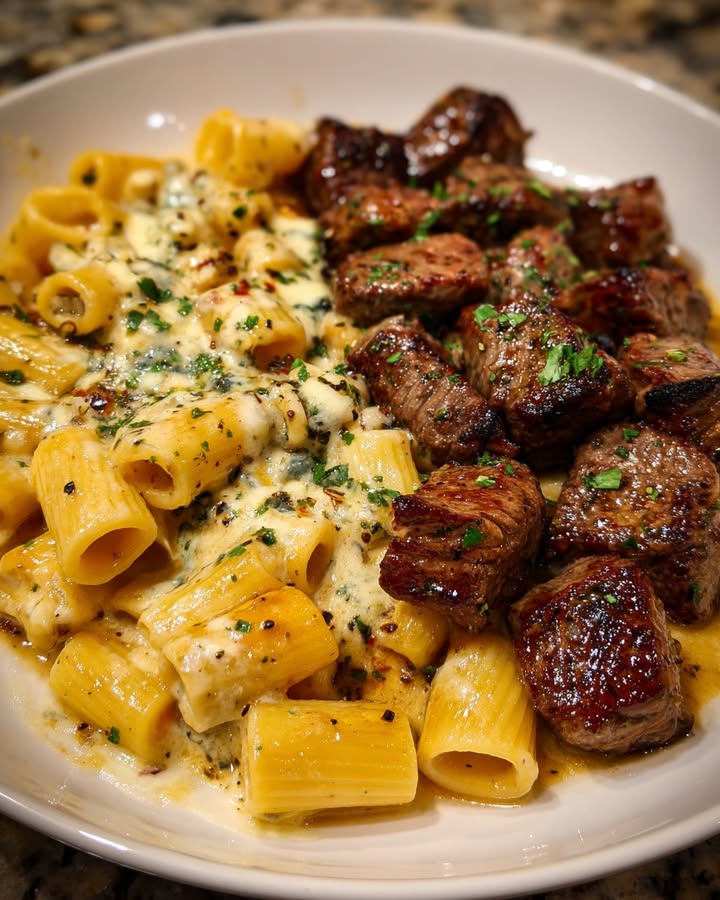
The Dish That Made My Saturday Night Legendary
Have you ever had one of those meals where everyone just stops talking? I mean, the only sounds are happy sighs and the gentle clink of forks against plates. That was my table last weekend. I decided to throw together a one-pan wonder that’s part steakhouse dinner, part cozy pasta night, and it completely stole the show. We’re talking juicy steak bites, swirled in a garlic butter parmesan sauce so creamy it should be illegal, all clinging to perfect rigatoni tubes. It’s magic in a skillet, I tell you.
A Tale of Two Classics: The Story of Steak and Pasta
This recipe doesn’t hail from a specific Italian nonna’s kitchen. Instead, it’s a glorious mash-up of American steakhouse indulgence and Italian-American comfort food genius. Think of it as the love child of a peppercorn steak and the creamiest fettuccine Alfredo you’ve ever had. The idea of pairing tender beef with pasta is nothing new—think of classic beef stroganoff or hearty Bolognese. But the modern twist of searing quick-cooking steak bites and folding them into a rich, cheesy garlic butter sauce? That’s a weeknight dinner revolution. It brings fancy restaurant vibes right to your kitchen table in under 30 minutes.
Why You’re Going to Fall Head Over Heels for This Steak Pasta
First, the flavor. It’s a powerful trio: savory seared beef, nutty parmesan, and aromatic garlic butter. Second, it’s deceptively simple. If you can boil pasta and sear meat, you’ve got this. The sauce comes together in the same pan as the steak, using all those delicious browned bits for extra flavor. Third, it’s a crowd-pleaser. This is the kind of dish you serve to fussy kids, hungry partners, and foodie friends, and they all ask for seconds. Plus, clean-up is a breeze with just one main pan!
When to Whip Up This Decadent Garlic Butter Rigatoni
This dish is your secret weapon for so many occasions. It’s perfect for a no-stress date night at home—light some candles and you’re set. Need to impress the in-laws? This says “I’m an amazing cook” without you sweating over the stove for hours. It’s also my go-to for celebrating small wins, like a promotion or just making it through a tough week. Honestly, any Tuesday that feels like it deserves a treat is the perfect occasion.
What You’ll Need for Your Garlic Butter Steak Rigatoni
- 1.5 lbs sirloin steak, cut into bite-size pieces
- 12 oz rigatoni pasta
- 2 tablespoons olive oil
- 3 tablespoons butter, divided
- 1 tablespoon minced garlic
- 1 teaspoon garlic powder
- 1 teaspoon smoked paprika
- Salt and black pepper, to taste
- 1 cup heavy cream
- 1/2 cup grated Parmesan cheese
- 1 cup shredded mozzarella cheese
- 4 oz cream cheese (for that dreamy creaminess!)
- Splash of reserved pasta water if needed
- Chopped parsley for garnish
No Problem! Handy Substitution Options
Don’t stress if you’re missing an ingredient. Cooking is about making it work for you!
- Steak: Sirloin is great, but flank steak, ribeye, or even pre-cut “stir-fry” beef strips work well.
- Pasta: Penne, ziti, or fusilli are fantastic at holding that creamy sauce.
- Dairy: Swap heavy cream for half-and-half for a slightly lighter sauce. Freshly grated Pecorino Romano is a sharp, tasty swap for parmesan.
- Spice: No smoked paprika? A pinch of regular paprika or even a dash of cayenne for heat works.
Cooking Your Garlic Butter Steak Parmesan Rigatoni: Step-by-Step
Step 1: The Perfect Pasta Base
Grab a large pot and fill it with generously salted water. Bring it to a rolling boil. This is your chance to season the pasta from the inside out. Add your rigatoni and cook it until it’s just al dente, with a slight bite. Trust me, it will cook a touch more in the sauce later. Before you drain it, scoop out about a cup of that starchy, salty pasta water. This liquid gold is your secret weapon for adjusting the sauce later. Set your drained pasta aside.
Step 2: Seasoning the Star of the Show
While the pasta cooks, pat your steak bites completely dry with paper towels. This is the most important step for getting a good sear. Toss them in a bowl with the garlic powder, smoked paprika, salt, and black pepper. The smoked paprika adds a warm, subtle depth that pairs beautifully with the beef. Make sure each piece is nicely coated. You’ll see the color change to a warm, reddish-brown.
Step 3: Searing for Flavor and Texture
Heat the olive oil in a large skillet over medium-high heat. You want the oil to be shimmering but not smoking. Add the steak in a single layer—don’t crowd the pan! You might need to do this in two batches. Let them sear, untouched, for about 2-3 minutes per side. You’re looking for a beautiful, deep brown crust. The skillet will sizzle and smell incredible. Pro tip: Don’t move the steak around! Let it develop that crust. Remove the steak and set it aside on a plate. It will finish cooking later.
Step 4: Building the Garlic Butter Foundation
Lower the heat to medium. Add 2 tablespoons of butter to the same skillet. Let it melt and foam slightly. All those little browned bits from the steak are still in there—that’s pure flavor. Now, add your minced garlic. The moment it hits the warm butter, the aroma will fill your kitchen. Sauté it for just about 60 seconds, stirring constantly. You want it fragrant and golden, not bitter or burned.
Step 5: Creating the Creamy Dream Sauce
Slowly pour in the heavy cream. It will bubble and meld with the garlic butter. Now, add the cream cheese in small chunks. This is the trick for extra richness and a silky texture that won’t break. Stir patiently until the cream cheese has completely melted and the sauce is smooth and uniform.
Step 6: The Cheesy, Velvety Finish
Reduce the heat to low. Sprinkle in the grated Parmesan and shredded mozzarella. Stir slowly and constantly in a figure-eight motion. Watch as the sauce transforms, thickening and becoming velvety. If it seems too thick or tight, loosen it up with a splash of your reserved pasta water. The starch helps emulsify everything into a luscious coating.
Step 7: Bringing the Family Together
Add your drained rigatoni directly into the skillet with the sauce. Use tongs to gently toss and fold until every single tube is gleaming and coated in that cheesy sauce. The sound changes from a sizzle to a soft, creamy shuffle. This is where it all comes together.
Step 8: The Grand Reunion
Now, add your beautiful steak bites and any accumulated juices back into the skillet. Gently stir them in, just enough to warm them through and let them get acquainted with the sauce. Be careful not to overcook them now—they’re already perfect. You just want everything to be the same warm, comforting temperature.
Step 9: The Final Flavor Boost
For one last punch of that irresistible garlic butter flavor, melt your final tablespoon of butter. Drizzle it right over the top of the pasta and steak in the skillet. It adds a beautiful gloss and an extra layer of richness that makes the dish sing.
Step 10: The Pretty (and Tasty) Finish
Transfer your masterpiece to a serving dish or plate it straight from the skillet. Sprinkle generously with chopped fresh parsley. It adds a pop of color and a fresh flavor contrast. A little extra shower of grated Parmesan on top never hurt anybody either. Chef’s tip: Let the pasta sit for just two minutes before serving. This lets the sauce cling to the pasta even better.
Timing is Everything: Your Roadmap to Dinner
This dish is famously quick, making it perfect for busy nights.
- Prep Time: 10 minutes (chopping, seasoning, gathering)
- Cook Time: 15-20 minutes
- Total Time: 25-30 minutes from start to finish
- Servings: 4 hearty portions
A Little Secret From My Kitchen to Yours
Here’s my not-so-secret secret: let your skillet get properly hot before adding the steak. I wait until the oil shimmers and a single drop of water sizzles and dances on the surface. A hot pan is the difference between steaming your steak (gray, tough) and searing it (brown, juicy). That sear, called the Maillard reaction, is where the deep, savory flavor comes from. It’s the foundation of the whole dish.
Rigatoni is the perfect pasta for this dish, and it’s not by accident! The name “rigatoni” comes from the Italian word “rigato,” meaning “ridged” or “lined.” Those deep ridges and wide tubes are designed by pasta geniuses to do two things: scoop up thick, chunky sauces and trap creamy ones inside every single bite. It’s the ultimate vehicle for getting maximum flavor in every forkful.
Gear Up: The Simple Equipment You Need
You don’t need fancy tools! Just:
- A large pot for boiling pasta
- A large, deep skillet or cast-iron pan (the wider the better for searing)
- Tongs for turning steak and tossing pasta
- A wooden spoon or silicone spatula for stirring the sauce
- A colander for draining the pasta
Keeping Your Leftover Steak Pasta Delicious
Store any leftovers in an airtight container in the refrigerator for up to 3 days. The sauce will thicken as it cools, which is completely normal.
To reheat, add a splash of milk, cream, or broth to a skillet over low heat. Add the pasta and steak and warm gently, stirring often. Using the microwave can overcook the steak and make the sauce separate, so the stovetop method is best.
I do not recommend freezing this dish. The dairy-based sauce can separate and become grainy when thawed, and the steak can become tough. It’s so good, though, I doubt you’ll have leftovers!
My Best Tips for Steak Pasta Perfection
- Don’t skip drying the steak. Moisture is the enemy of a good sear. Pat it dry!
- Use freshly grated Parmesan if you can. The pre-grated stuff in bags often contains anti-caking agents that can make your sauce gritty.
- If you love garlic, add an extra clove or a pinch of garlic powder to the sauce. You do you!
- Let the steak rest for 5 minutes after searing before adding it back. This keeps the juices inside.
Make It Look Like a Million Bucks: Presentation Ideas
- Serve it family-style right in the skillet for a rustic, cozy feel.
- Twirl portions into shallow bowls. Top with extra steak bites, a parsley sprig, and a crack of black pepper.
- For a restaurant touch, wipe the rim of the plate clean before serving.
- Add a simple side salad with a sharp vinaigrette to cut through the richness.
Love This? Try These 6 Flavor Twists Next Time!
This recipe is a fantastic base for creativity. Here are some delicious variations:
- Cajun Steak Rigatoni: Swap the paprika for 2 tsp of your favorite Cajun seasoning on the steak. Add diced bell pepper and onion when you sauté the garlic.
- Sun-Dried Tomato & Spinach: Stir in 1/2 cup chopped sun-dried tomatoes and 2 big handfuls of fresh spinach with the cream. The tomatoes add a sweet-tart punch.
- Mushroom & Herb: Sear 8 oz of sliced mushrooms after the steak, then remove. Add them back with the pasta. Use fresh thyme or rosemary with the garlic.
- Lighter Garlic Butter Chicken Rigatoni: Use chicken breast or thighs instead of steak. They cook just as quickly and pair wonderfully with the same creamy sauce, much like in our popular Creamy Garlic Butter Chicken and Rice Skillet.
- Spicy Arrabbiata Style: Add 1/4 tsp red pepper flakes with the garlic. Stir in 1/2 cup of marinara sauce with the cream for a tomato-cream hybrid.
- Bacon & Pea Rigatoni: Cook 4 strips of chopped bacon first, then use the bacon fat to sear the steak. Stir in 1 cup of frozen peas with the pasta.
If you’re looking for other quick, one-pan wonders, you’ll adore the simplicity of our One-Pot Lemon Herb Chicken and Orzo or the vibrant flavors in this Mediterranean Chicken and Couscous Bowl.
Common Mistakes to Avoid for Your Best Dish Yet
Overcrowding the Skillet When Searing
This is the number one reason steak doesn’t brown properly. If you add too many cold steak bites at once, the pan temperature plummets. The meat ends up steaming in its own juices instead of searing. You get gray, tough steak instead of caramelized, tender bites. Always cook in a single layer, even if it means doing two batches. The extra two minutes are worth it for that perfect crust.
Overcooking the Pasta Initially
It’s easy to think “al dente” means “almost done.” But pasta continues to cook when you toss it in the hot sauce. If you boil it until it’s completely soft in the water, it will turn mushy by the time you serve it. Cook it 1-2 minutes less than the package instructions recommend. It should have a definite firmness in the center. Remember, you can always cook it a bit more in the sauce, but you can’t uncook it.
Using Pre-Grated Parmesan from a Bag
While convenient, these products often contain cellulose powder to prevent clumping. This additive doesn’t melt smoothly into warm sauces. It can leave your gorgeous, velvety sauce with a slightly grainy or gritty texture. For a perfectly smooth and flavorful sauce, take the extra minute to grate a block of real Parmigiano-Reggiano or high-quality Parmesan cheese yourself. The difference is night and day.
Adding Cold Steak Back to a Boiling Sauce
After you sear the steak and set it aside, it starts to cool. If you dump it directly into a bubbling, hot sauce and let it simmer, you will almost certainly overcook it. The goal is to just warm it through. To avoid this, let the sauce come together and thicken first, then take the skillet off the heat for a minute. Add the steak back and gently fold it in. The residual heat is enough to warm it perfectly without making it chewy.
Frequently Asked Questions
Can I use a different cut of steak?
Absolutely! Sirloin is great for its balance of flavor and value. Flank steak or skirt steak work beautifully too; just be sure to slice them very thinly against the grain after cooking for tenderness. Ribeye is a more luxurious option with fantastic marbling. Even pre-cut “stir-fry” beef from the grocery store can work in a pinch. The key is to adjust cook time based on thickness. Sirloin is a leaner cut, but still offers a great protein content and savory flavor perfect for quick-cooking dishes like this.
My sauce is too thick. What did I do wrong?
Don’t worry, this is an easy fix! Your sauce likely just reduced a bit too much. This is exactly why we reserve that starchy pasta water. Simply add a splash (start with 2-3 tablespoons) and stir it in over low heat. The starch in the water will help loosen the sauce without making it watery or diluting the flavor. You can also use a little warm milk or cream. Add liquid gradually until you reach your desired consistency.
Can I make this dish ahead of time?
You can do some prep ahead to save time. You can cut and season the steak a few hours in advance, keeping it covered in the fridge. You can also grate your cheeses ahead of time. However, for the best texture, I recommend cooking the dish just before serving. The pasta is best when fresh, and the steak is most tender when not reheated. If you must, assemble the whole dish, cool it completely, and store it. Reheat gently on the stovetop with added liquid.
What can I use instead of heavy cream?
For a slightly lighter sauce, half-and-half is a good substitute. The sauce won’t be quite as rich and thick, but it will still be delicious. You could also use whole milk, but you may need to simmer it a bit longer to thicken, and a small slurry of cornstarch (1 tsp mixed with 1 tbsp water) can help. Avoid using skim or low-fat milk, as they are more likely to curdle when heated with acid or cheese.
Is there a way to add vegetables to this?
Yes, and it’s a great idea! I love adding vegetables for color and nutrition. Try sautéing sliced mushrooms, bell peppers, or broccoli florets in the skillet after removing the steak. Cook them until just tender, then remove and add them back with the pasta. For spinach or arugula, simply stir in a few big handfuls at the very end until wilted. The heat from the pasta and sauce will cook them perfectly.
Why is my cheese sauce clumpy or grainy?
This usually happens if the heat is too high when you add the cheese or if you use pre-shredded cheese with anti-caking agents. Always add cheese to a warm, not boiling, sauce. Remove the skillet from the heat or turn it to the lowest setting. Add the cheese gradually, stirring constantly until it melts smoothly. If it starts to clump, a splash of hot pasta water or cream and vigorous stirring can often bring it back together.
Can I use chicken instead of steak?
You certainly can! Chicken is a fantastic alternative. Use boneless, skinless chicken breasts or thighs cut into bite-sized pieces. Season and sear them just like the steak, ensuring they are cooked through to an internal temperature of 165°F. The creamy garlic parmesan sauce pairs wonderfully with chicken. For another delicious chicken and pasta combo, check out this Spicy Honey Lime Chicken Thighs recipe for a totally different flavor profile.
What should I serve with this rich pasta dish?
Because the pasta is so rich and satisfying, a simple, fresh side is ideal. A crisp green salad with a lemony vinaigrette, some garlic bread to soak up extra sauce, or simple roasted asparagus or green beans are all perfect choices. They provide a nice textural and flavor contrast to the creamy, savory pasta without competing with it.
How do I know when the steak bites are done searing?
You’re looking for color, not a specific internal temperature (since the pieces are small). Sear for 2-3 minutes per side until they develop a deep brown crust. The inside will be medium-rare to medium, which keeps it tender. Remember, they will warm through again in the sauce. If you prefer your steak more well-done, you can cook it a minute longer per side during searing, but be careful not to overcook and toughen it.
Can I freeze the leftovers?
I don’t recommend freezing this specific dish. Cream- and cheese-based sauces tend to separate and become grainy when frozen and thawed. The texture of the pasta can also become mushy, and the steak bites may become tough. This recipe is so quick and easy, it’s best enjoyed fresh. If you have leftovers, they will keep nicely in the fridge for a few days.
For more amazing, family-friendly dinner ideas that deliver on flavor every time, be sure to explore our full collection of main dish recipes.
Your New Favorite Dinner Awaits
So, there you have it. My legendary Garlic Butter Steak Parmesan Rigatoni. It’s not just a meal; it’s a mood. It’s the smell of garlic and searing steak that brings everyone into the kitchen. It’s the comfort of a big bowl of cheesy pasta after a long day. And it’s the proud feeling of making something truly special without a ton of fuss. Give it a try this week. I promise, the only thing better than how it smells while cooking is that first, incredible bite. Happy cooking!
Garlic Butter Steak Rigatoni
Ingredients
Equipment
Method
- Bring a large pot of salted water to a rolling boil and cook rigatoni until al dente. Reserve 1 cup of pasta water and drain.
- Pat steak bites dry and season with garlic powder, smoked paprika, salt, and black pepper.
- Heat olive oil in a large skillet over medium-high heat and sear steak in a single layer for 2-3 minutes per side, then remove and set aside.
- Lower the heat to medium, add 2 tablespoons of butter to the skillet, and melt.
- Add minced garlic to the melted butter and sauté for about 60 seconds.
- Slowly pour in heavy cream, then add cream cheese in small chunks, stirring until melted and smooth.
- Reduce heat to low and stir in grated Parmesan and shredded mozzarella.
- Add the drained rigatoni to the skillet and toss to coat in the sauce.
- Add steak bites back to the skillet and gently stir to combine and warm through.
- Melt the remaining tablespoon of butter and drizzle over the top before serving.
- Transfer to a serving dish or plate, garnish with chopped parsley, and serve.