
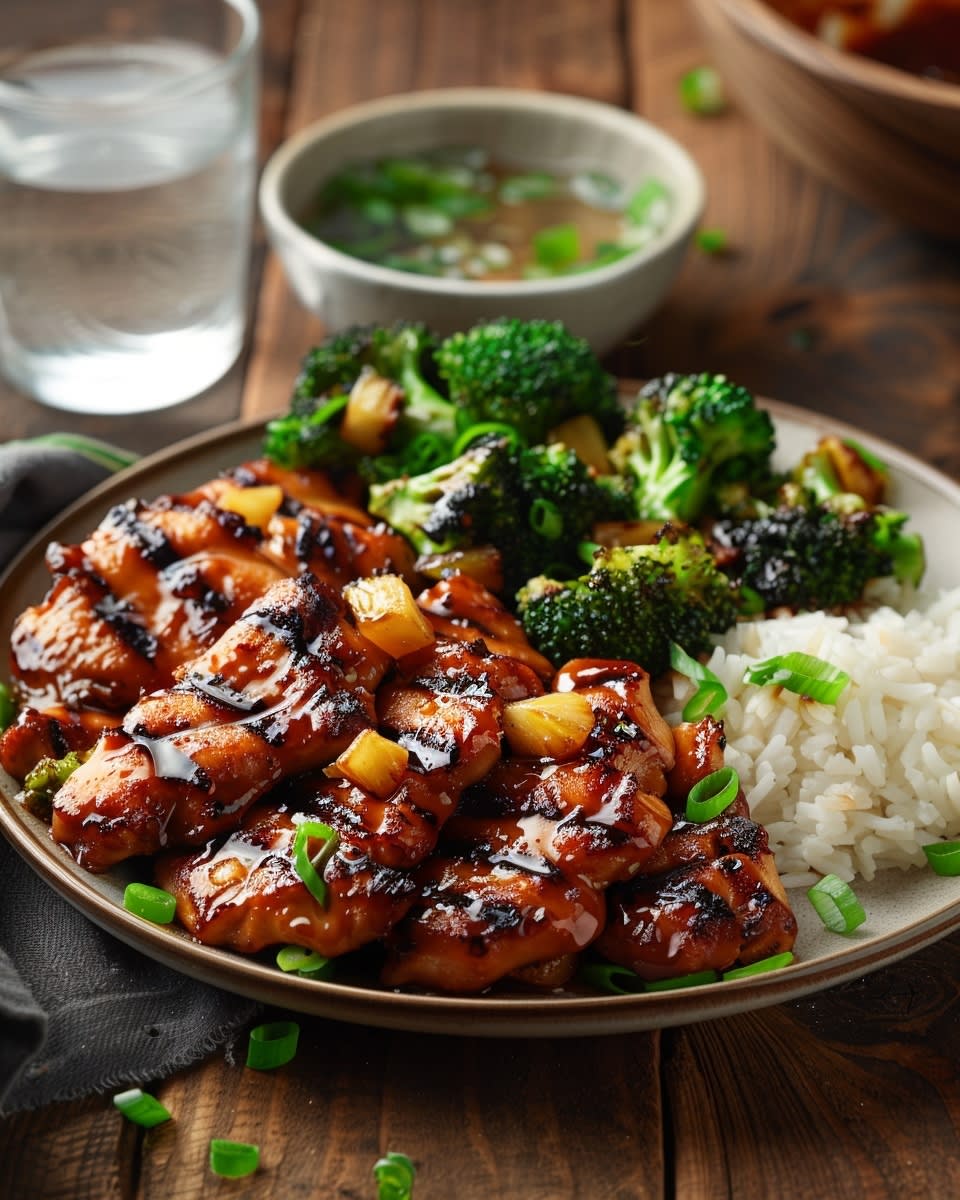
Last summer, I was standing in front of my grill with a plate of boring chicken breasts, wondering how to save dinner. My kids were getting restless, and I needed something fast. That’s when I spotted a can of pineapple in my pantry and a bottle of teriyaki sauce in the fridge. I threw them together with the chicken, and honestly, it turned into one of our family’s favorite meals. Now we make this Grilled Teriyaki Pineapple Chicken at least twice a month, and my neighbors always ask what smells so amazing.
This recipe brings together sweet pineapple, rich teriyaki sauce, and juicy grilled chicken in a way that makes your taste buds dance. The sweet and savory combo works because the pineapple’s natural sugars balance the salty teriyaki perfectly. You get caramelized edges on the chicken, charred pineapple rings with their juices concentrated, and a glaze that sticks to everything in the best possible way.
I love this dish because it feels fancy but takes almost no effort. You only need chicken, pineapple, teriyaki sauce, and a few basic ingredients you probably already have. The prep time is minimal, and the grill does most of the work. Even on busy weeknights, I can have this on the table in under 40 minutes if I’m organized. It’s become my go-to recipe when I want to impress guests without spending hours in the kitchen.
The beauty of this recipe lies in its simplicity. You marinate the chicken in teriyaki sauce with some pineapple juice, let it sit for a bit, then grill everything together. The pineapple goes on the grill too, which transforms it into something completely different from the raw fruit. While the chicken cooks, those pineapple rings get smoky and sweet, with dark grill marks that add a slightly bitter note to balance all that sweetness.
Preparing the Perfect Grilled Teriyaki Pineapple Chicken
Choosing the right chicken cut makes a huge difference in this recipe. I’ve tried this with breasts, thighs, drumsticks, and even wings. Boneless, skinless chicken thighs are my absolute favorite for Grilled Teriyaki Pineapple Chicken. They stay moist even if you slightly overcook them, and they absorb the marinade better than breasts do. The fat content in thighs keeps them tender and adds flavor that lean breast meat just can’t match.
That said, chicken breasts work perfectly fine if that’s what you prefer. Just pound them to an even thickness before marinating. This helps them cook evenly and prevents the thin parts from drying out while the thick parts finish cooking. If you’re using breasts, aim for about three-quarters of an inch thick all around.
Fresh pineapple beats canned every single time for this recipe. I know canned is convenient, but hear me out. Fresh pineapple has enzymes that actually help tenderize the chicken while it marinates. These natural enzymes called bromelain break down proteins, making your chicken incredibly tender. Plus, fresh pineapple has more texture and doesn’t turn mushy on the grill like canned sometimes does.
When you buy a fresh pineapple, look for one that smells sweet at the bottom and has leaves that pull out easily. The skin should be more golden than green. I usually buy mine a day or two before I plan to grill so it can ripen fully on my counter. Cutting a pineapple isn’t hard once you do it a few times. Slice off the top and bottom, stand it up, and cut down the sides to remove the skin. Then slice it into rings about half an inch thick and use a small cookie cutter or knife to remove the tough core in the middle.
The teriyaki sauce is the star that brings everything together. It coats the chicken with a glossy, sticky layer and mixes with the pineapple juice to create an amazing flavor combination. You can definitely use store-bought teriyaki sauce, and I often do. Look for one that lists soy sauce as the first ingredient and doesn’t have too many weird additives. The good ones have a balance of salty, sweet, and slightly tangy notes.
Making your own teriyaki marinade is even better if you have ten extra minutes. I combine soy sauce, brown sugar, rice vinegar, fresh ginger, and garlic. Sometimes I add a splash of pineapple juice from the fresh pineapple I just cut. The homemade version tastes brighter and you can control the sweetness level. If your family doesn’t like things too sweet, cut back on the brown sugar. If you want more tang, add extra vinegar or a squeeze of lime.
Here’s my basic marinade recipe that serves four people:
- Half a cup of soy sauce (I use low sodium)
- Three tablespoons of brown sugar
- Two tablespoons of rice vinegar
- One tablespoon of fresh grated ginger
- Three cloves of garlic, minced
- Quarter cup of pineapple juice
- One teaspoon of sesame oil
Whisk everything together in a bowl until the sugar dissolves completely. This takes about a minute of stirring. The marinade should smell incredible, with the ginger and garlic coming through strongly.
Now let’s talk about a question I get all the time: do I teriyaki the chicken before or after grilling? The answer is both. You marinate the chicken in teriyaki sauce before grilling, which flavors it all the way through. Then you brush on more sauce during the last few minutes of grilling. This gives you that shiny, caramelized coating everyone loves. If you only add teriyaki sauce after cooking, the chicken won’t have much flavor inside. If you only marinate without adding more at the end, you miss out on that beautiful glaze.
Place your chicken in a large zip-top bag or a shallow dish. Pour the marinade over it, making sure every piece gets coated. Seal the bag or cover the dish with plastic wrap. Put it in the fridge and let it work its magic. The minimum marinating time is 30 minutes, but I find that two to four hours gives the best results. The chicken absorbs more flavor, and the pineapple enzymes have time to tenderize the meat.
Don’t marinate for more than eight hours though. This is important. How does pineapple affect teriyaki marinade? Those bromelain enzymes I mentioned earlier are powerful. If you leave the chicken in pineapple-based marinade too long, it can start to break down the texture too much. The meat becomes mushy instead of tender. I learned this the hard way when I left chicken marinating overnight once. It tasted fine but had a weird, soft texture that my family didn’t enjoy.
If you want to prep ahead, you can mix the marinade and chicken in the morning before work. When you get home, it’s been marinating for about eight hours, which is the maximum. Any longer and you risk that mushy texture. For meal prep, I sometimes marinate the chicken and freeze it in the bag. Then I thaw it in the fridge the day before I want to grill. This works great because the chicken marinates as it thaws.
Store your marinating chicken on the bottom shelf of your fridge. This prevents any drips from contaminating other foods. Always throw away marinade that’s been in contact with raw chicken. Never reuse it as a sauce unless you boil it first for at least five minutes to kill any bacteria. I usually make extra marinade and set some aside before adding the chicken. That reserved portion becomes my basting sauce for the grill.


Grilling Techniques for Optimal Results
Once your chicken has finished marinating, it’s time to fire up the grill and get cooking. Getting the temperature right is honestly one of the most critical steps that people mess up. I aim for medium-high heat, which on my gas grill is around 375 to 400 degrees Fahrenheit. If you’re using charcoal, that’s when the coals have that white-gray ash coating but are still glowing underneath. You should be able to hold your hand about six inches above the grate for only four to five seconds before it gets too hot.
Here’s the thing about grilling chicken: too hot and you’ll char the outside while leaving the inside raw. Too cool and the chicken steams instead of getting those beautiful caramelized bits we’re after. I preheat my grill for at least ten minutes with the lid closed. This makes sure the grates are hot enough to create proper sear marks and prevents sticking.
Before placing anything on the grill, I clean the grates with a wire brush and then oil them lightly. I fold up a paper towel, dip it in vegetable oil, and use tongs to rub it across the grates. This creates a non-stick surface and helps develop those gorgeous grill marks everyone wants to see. My dad taught me this trick years ago, and it’s never failed me.
Remove your chicken from the marinade and let the excess drip off. Don’t wipe it completely dry though. You want some of that marinade clinging to the meat. Place the chicken pieces on the grill with some space between them. Crowding makes the temperature drop and prevents proper browning. If you’re making this for a crowd and need to cook a lot, work in batches instead of cramming everything on at once.
For boneless, skinless chicken thighs, I grill them for about five to six minutes per side. Chicken breasts need roughly six to seven minutes per side, depending on thickness. The exact timing varies based on your grill’s heat and the size of your chicken pieces. What matters more than exact minutes is reaching that safe internal temperature of 165 degrees Fahrenheit.
Flip the chicken only once. I know it’s tempting to keep turning it and checking it, but resist that urge. Let it cook undisturbed for those first five to six minutes. This allows the sugars in the marinade to caramelize and creates an actual crust. If you flip too early, the chicken will stick and tear, leaving all that good flavor on your grill grates instead of on your dinner.
Now for the pineapple rings, which deserve their own attention because common mistakes when grilling pineapple can turn them into a soggy, flavorless mess. I wait until the chicken has been cooking for about three minutes before adding the pineapple to the grill. Pineapple cooks faster than chicken, so it doesn’t need as much time. Pat your pineapple rings dry with a paper towel before grilling. Excess moisture creates steam instead of caramelization.
Place the pineapple rings directly on the grill grates. They’ll need about three to four minutes per side. You’re looking for visible grill marks and some charring around the edges. The fruit should soften slightly but still hold its shape. Don’t walk away during this time because pineapple can go from perfectly grilled to burnt surprisingly fast. The natural sugars caramelize quickly, and there’s a narrow window between beautifully charred and ruined.
By the way, one mistake I see people make is brushing teriyaki sauce on the pineapple. Don’t do it. The pineapple has enough natural sugar and doesn’t need extra. Adding sauce just makes it overly sweet and causes excessive charring. Let the pineapple shine on its own. Similar to how I prepare my sweet and spicy grilled shrimp skewers, sometimes the natural flavors don’t need additional glazing during the cooking process.
Does Teriyaki Sauce Go On Before or After Cooking?
Let me clear this up once and for all because I get asked this constantly. The answer depends on what result you’re after, and honestly, the best approach uses sauce at multiple stages. I marinate the chicken before grilling, as we discussed. This seasons the meat throughout. But then during the last two to three minutes of cooking, I brush on additional teriyaki sauce. This creates that sticky, glossy coating that makes Grilled Teriyaki Pineapple Chicken look so incredible in photos.
The timing matters because teriyaki sauce contains sugar, which burns easily. If you brush it on too early in the cooking process, you’ll end up with black, bitter char instead of a beautiful glaze. I learned this the hard way during a summer cookout when I kept basting the chicken throughout the entire cooking time. Everything looked burnt even though the inside was perfectly cooked.
The technique I use now works perfectly every time. After flipping the chicken for the second and final time, I give it about three minutes to cook. Then I brush on a generous layer of reserved teriyaki sauce that hasn’t touched raw chicken. I close the lid and let it cook for two more minutes. The sauce caramelizes and gets sticky but doesn’t burn. Just before taking the chicken off the grill, I brush on one final thin layer. This gives you three levels of teriyaki flavor: the marinade absorbed into the meat, the caramelized glaze, and the fresh glossy coating on top.
Some people prefer to only add sauce after cooking, serving it on the side or drizzling it over the finished dish. This works if you want lighter, less sweet results. The chicken won’t have that signature sticky coating, but it’ll still taste good. I sometimes do this when I’m making the dish for someone watching their sugar intake. You can always add more sauce, but you can’t take it away once it’s caramelized on there.
If you want to make a quick homemade teriyaki glaze specifically for basting, here’s what I do. Take about half a cup of teriyaki sauce and simmer it in a small pan with a tablespoon of honey and a teaspoon of cornstarch mixed with a tablespoon of water. Cook it for three to four minutes until it thickens noticeably. This concentrated version sticks better to the chicken than straight teriyaki sauce. It’s the same concept I use when making BBQ pulled chicken sandwiches, where reducing the sauce creates better coating and flavor intensity.
How Does Pineapple Affect Teriyaki Marinade?
The relationship between pineapple and teriyaki marinade is actually fascinating from a science perspective, but I’ll keep this practical. Fresh pineapple contains those bromelain enzymes we touched on earlier. These enzymes actively break down protein structures in the chicken, making tough muscle fibers more tender. It’s like having a natural meat tenderizer working while your chicken sits in the fridge.
But there’s a catch. These enzymes don’t stop working just because you want them to. If you leave chicken in a pineapple-heavy marinade too long, you get that mushy, almost mealy texture that’s really unappetizing. The proteins break down too much. My rule is never more than eight hours, and honestly, four hours hits the sweet spot for me. The chicken gets tender without crossing into weird territory.
Funny enough, this enzyme thing only applies to fresh pineapple. Canned pineapple has been heated during processing, which destroys the bromelain. So if you’re using canned pineapple juice in your marinade, you can marinate longer without worrying about texture issues. But you also lose that natural tenderizing benefit. It’s a tradeoff.
The pineapple also adds another dimension to the marinade beyond just tenderizing. The natural fruit sugars contribute sweetness that’s more complex than plain sugar. There’s a slight tartness too, which helps balance the salty soy sauce in the teriyaki. When you add fresh pineapple juice to your marinade, you’re creating layers of flavor that develop as the chicken cooks. Those sugars caramelize on the grill, creating depth you simply don’t get from teriyaki sauce alone.
Balancing the sweetness and acidity requires a bit of adjustment based on your pineapple’s ripeness. A very ripe pineapple is sweeter and less acidic. If I’m using one of those super sweet golden pineapples, I’ll add an extra tablespoon of rice vinegar to my marinade to keep things balanced. If the pineapple is less ripe and more tart, I might add a bit more brown sugar. Taste your pineapple before making the marinade and adjust accordingly.
One tip that’s really helped me: if you’re worried about the tenderizing effect being too strong, you can add the pineapple chunks to the marinade but not the juice. This gives you the flavor without as much enzyme activity. Or use half fresh pineapple juice and half canned. You get some tenderizing benefit without going overboard. This technique also works great with other grilled chicken recipes like my grilled lemon pepper chicken breast, where you want tender meat but need to control the marinade’s intensity.
The importance of basting during grilling can’t be overstated. Every time you brush on more teriyaki sauce, you’re building flavor and creating that glossy appearance. Keep a small bowl of reserved sauce next to the grill with a silicone basting brush. I prefer silicone over natural bristle brushes because they’re easier to clean and don’t shed bristles onto your food. Brush the sauce on in thin, even coats. Too much at once just drips into the flames and causes flare-ups.
Getting perfect grill marks is partly technique and partly patience. Those dark lines come from the Maillard reaction, where proteins and sugars react to create new flavor compounds and color. To get the classic crosshatch pattern, place your chicken at a 45-degree angle to the grill grates. After three minutes, rotate it 90 degrees without flipping. This creates the diamond pattern. Then flip and repeat on the other side. Honestly though, while it looks impressive, it doesn’t affect the taste. I only bother with this when I’m taking photos or trying to show off.
Checking if your chicken is fully cooked requires a meat thermometer, period. I don’t care how experienced you are at grilling. Chicken needs to reach 165 degrees Fahrenheit in the thickest part. Insert your thermometer into the center of the thickest piece, making sure you’re not touching bone if you’re using bone-in cuts. The temperature will continue to rise a few degrees after you remove it from heat, so I usually pull the chicken at 160 degrees and let it rest for five minutes. It reaches 165 during that resting period.
If you don’t have a thermometer, cut into the thickest piece. The juices should run clear, not pink, and the meat should be opaque all the way through. But really, invest in a decent instant-read thermometer. They’re like twenty dollars and take the guesswork out of grilling. I use mine constantly, not just for chicken but for everything from BBQ chicken flatbread pizza to checking if my grill has reached the right temperature.


Common Mistakes to Avoid When Grilling Pineapple
I’ve watched so many people throw pineapple on the grill and end up disappointed, so let me walk you through the biggest mistakes I’ve seen and made myself. Trust me, I’ve ruined my share of pineapple rings over the years.
The number one mistake is not drying the pineapple before it hits the grill. Wet pineapple steams instead of caramelizing, and you end up with limp, flavorless rings. I always pat each slice completely dry with paper towels, even if it feels excessive. That moisture creates a barrier between the fruit and the hot grates, preventing those beautiful char marks we’re after. Think of it like trying to get a good sear on a wet steak. It just doesn’t work.
Another huge error is cutting the rings too thin. I made this mistake at my sister’s birthday barbecue last year. I cut the pineapple into quarter-inch slices thinking they’d cook faster. Instead, they fell apart and slipped through the grates. Half my pineapple ended up as charred bits stuck to the bottom of the grill. Now I cut them at least half an inch thick, sometimes even three-quarters of an inch. They hold together perfectly and have enough substance to develop a nice char without disintegrating.
People also tend to move the pineapple around too much. Set it down and leave it alone for those three to four minutes per side. Every time you lift it to check, you interrupt the caramelization process. The sugars need consistent contact with the hot surface to transform properly. I literally set a timer on my phone now because I used to be guilty of this constant checking.
Using pineapple that’s too ripe or not ripe enough creates problems too. Overripe pineapple turns mushy on the grill and doesn’t hold its shape. Underripe pineapple stays tough and doesn’t caramelize well because it lacks sufficient natural sugars. The sweet spot is when the pineapple smells fragrant and the skin has turned mostly golden. Press on it gently—it should give slightly but not feel squishy.
Here’s something nobody talks about: not removing enough of the core. That woody center is tough and unpleasant to eat even after grilling. I use a small round cookie cutter to punch out the center of each ring, or you can use a knife to carefully cut around it. The core doesn’t soften much during grilling, so you really want it gone. My kids used to complain about the “hard part” until I started being more thorough about core removal.
Grilling pineapple at the same time as the chicken from the start is another common timing mistake. Pineapple needs way less time than chicken. If you put them on together, by the time your chicken reaches 165 degrees, your pineapple will be charcoal. I wait until my chicken has about seven to eight minutes left, then add the pineapple. They finish around the same time, and nothing gets overcooked.
Brushing oil on the pineapple is unnecessary and actually creates problems. Some grilling guides recommend it, but pineapple has enough natural moisture and sugar content. Adding oil just makes it greasy and can cause flare-ups when those oil drips hit the flames. The fruit caramelizes beautifully on its own without any help from oil.
Not preheating the grill properly affects pineapple more than you’d think. If the grates aren’t hot enough, the pineapple sticks badly and tears when you try to flip it. It also won’t get those defined grill marks. The high heat sears the surface immediately, creating a natural release. I always make sure my grill has been preheating for at least ten minutes with the lid closed before anything goes on.
By the way, I once tried grilling canned pineapple rings at a camping trip because that’s all we had. It was honestly terrible. They turned into soggy, shapeless mush within minutes. Canned pineapple has already been heat-processed and contains extra moisture from the syrup or juice in the can. It simply doesn’t have the structure to withstand direct grilling heat. Fresh is really the only way to go for this recipe.
One mistake I made early on was trying to grill pineapple chunks on skewers instead of rings. The pieces were too small and cooked unevenly. The edges burned while the centers stayed raw. Rings give you consistent thickness and plenty of surface area for caramelization. If you want smaller pieces, grill the rings first, then cut them into chunks after cooking. That’s what I do when serving this dish over rice or in tacos.
Finally, people forget to clean their grill grates between grilling the chicken and the pineapple. Any marinade residue or chicken bits left on the grates will stick to your pineapple and transfer unwanted flavors. I give the grates a quick brush between cooking the two items. It takes fifteen seconds and makes a noticeable difference in how clean the pineapple tastes.
Serving Suggestions and Variations
Once you’ve mastered the basic Grilled Teriyaki Pineapple Chicken, the fun part is figuring out how to serve it. I usually slice the chicken into strips and arrange them on a platter with the grilled pineapple rings. A sprinkle of sesame seeds and some chopped green onions on top makes it look restaurant-quality. Sometimes I’ll add a few lime wedges around the edges for people who want extra brightness.
Rice is the obvious side dish, and it works perfectly. I make simple jasmine or basmati rice, though brown rice adds a nice nutty flavor if you prefer something healthier. The rice soaks up any extra teriyaki sauce and pineapple juices, and honestly, that’s some of the best part of the meal. My kids always fight over who gets more of that sauce-soaked rice at the bottom of the bowl.
For vegetables, I love grilling some bell peppers and onions alongside the chicken and pineapple. Cut them into thick slices or chunks, toss them with a bit of oil and salt, and throw them on the grill. They pick up that smoky flavor and complement the sweet-savory thing we’ve got going on. Zucchini and asparagus work great too, though they need less time than bell peppers.
If you want to turn this into a complete meal on one plate, try serving the chicken and pineapple over a bed of mixed greens. The warm grilled components on cold, crisp lettuce creates an amazing temperature and texture contrast. Add some sliced cucumbers, shredded carrots, and a light sesame dressing. It becomes this incredible grilled salad that feels special enough for company but is actually just throwing things together.
Tacos are another fantastic option that my family requests constantly. Chop the grilled chicken and pineapple into smaller pieces and serve them in warm tortillas with shredded cabbage, cilantro, and a drizzle of sriracha mayo. The combination of textures and flavors in these tacos is absolutely incredible. My teenage son, who normally only eats plain chicken, actually asks for these loaded tacos.
You can adapt the basic recipe in so many ways once you’re comfortable with the technique. Sometimes I add red pepper flakes to the marinade for a spicy kick. Other times I’ll squeeze fresh lime juice over everything right before serving for extra brightness. A handful of cashews or peanuts sprinkled on top adds crunch and makes the dish feel more substantial.
For a lower-carb version, I’ve served this over cauliflower rice instead of regular rice. It still gives you that base to soak up the sauce without all the carbs. You could also stuff the chicken and pineapple into lettuce wraps for a light, refreshing meal. The crisp lettuce works surprisingly well with the warm, caramelized components.
Here’s something fun I discovered by accident: this chicken makes incredible sandwiches the next day. I had leftovers and threw them on a toasted bun with some mayo and lettuce. The cold grilled chicken with that sticky teriyaki coating was amazing in sandwich form. Now I sometimes make extra on purpose just to have sandwich supplies for lunch the next day.
If you’re feeding a crowd and want to stretch the recipe, turn it into a rice bowl bar. Set out bowls of rice, the grilled chicken and pineapple, and various toppings like edamame, cucumber, avocado, pickled ginger, and different sauces. Let everyone build their own bowl. It’s interactive, fun, and accommodates different preferences and dietary needs. Plus it takes pressure off you as the host because people assemble their own plates.
While steaming vegetables is a gentle method that preserves nutrients, grilling them alongside your chicken and pineapple adds that smoky depth that makes everything taste connected. I’ll often do a mix of both—steamed broccoli with grilled bell peppers—to give different textures and flavors on the same plate.
For those nights when you want something extra hearty, this chicken pairs wonderfully with fried rice. Use day-old rice if you have it, fry it up with some peas, carrots, and scrambled eggs, then top it with the grilled chicken and pineapple. You’ve basically created a complete one-dish meal that looks and tastes like something from a restaurant.
I’ve also made this recipe with shrimp instead of chicken, and it works beautifully. Shrimp cook even faster than chicken, so you only need about two to three minutes per side. Thread them on skewers so they don’t fall through the grates. The sweet teriyaki and pineapple complement seafood just as well as they do poultry.
If you’re really into grilling and want to explore more recipes with similar techniques and flavor profiles, check out more ideas in the BBQ and grilling recipe collection where you’ll find plenty of inspiration for your next cookout. The methods you learn from making this teriyaki chicken translate really well to other grilled dishes.
One variation I make during fall is adding some grilled sweet potato rounds to the plate. The natural sweetness of sweet potatoes goes surprisingly well with teriyaki and pineapple. Slice them about half an inch thick, brush with a tiny bit of oil, and grill them for about five minutes per side. They become these caramelized, tender rounds that add substance to the meal.
Don’t forget about garnishes because they make a bigger difference than you’d think. Fresh cilantro, basil, or mint all work well depending on the direction you want to take the dish. Cilantro gives it that fresh, bright note. Basil adds a slightly sweet, herbal quality. Mint might sound weird, but it’s actually amazing with grilled pineapple. A squeeze of fresh lime juice right before serving wakes everything up and adds acidity that balances the sweet teriyaki.
If you’re looking for something unique, try making this into a pizza topping situation. Grill the chicken and pineapple as directed, chop them up, and put them on pizza dough with some mozzarella and a drizzle of teriyaki sauce. I know pineapple on pizza is controversial, but when it’s charred and combined with teriyaki chicken, even the skeptics in my family admit it’s delicious.
The best part about having this recipe in your rotation is how adaptable it is to whatever you have on hand or whatever dietary preferences your family has. You can make it spicy, keep it mild, add vegetables, skip the rice, or turn it into completely different meals like tacos or salads. Once you nail the basic grilling technique and understand how the marinade works, you can improvise endlessly.
This Grilled Teriyaki Pineapple Chicken has honestly become one of those recipes I make without even looking at measurements anymore. I know what it should smell like, how it should look, and when it’s done just right. That kind of cooking confidence comes from making something repeatedly and paying attention to what works. Give yourself permission to mess up a batch or two while you’re learning. Every grilling mistake teaches you something valuable about heat management, timing, and flavor balance.
Frequently Asked Questions
Do I teriyaki the chicken before or after grilling?
You should do both for the best results. Marinate the chicken in teriyaki sauce for two to four hours before grilling so the flavor penetrates the meat. Then brush additional sauce on during the last two to three minutes of grilling to create that sticky, caramelized glaze. This double application gives you both deep flavor and a beautiful glossy coating. If you only add sauce after cooking, the chicken won’t taste seasoned throughout.
What are some common mistakes to avoid when grilling pineapple?
The biggest mistakes include not drying the pineapple before grilling, cutting slices too thin, moving them around too much, and adding them to the grill at the same time as the chicken. Always pat pineapple rings completely dry, cut them at least half an inch thick, and let them sit undisturbed for three to four minutes per side. Add them to the grill when your chicken has about seven to eight minutes left so everything finishes together. Never use canned pineapple for grilling because it turns mushy.
Does teriyaki sauce go on before or after cooking?
Teriyaki sauce should be applied at multiple stages for optimal flavor and appearance. Use it as a marinade before cooking to flavor the meat throughout. Then brush it on during the final two to three minutes of grilling to create the characteristic sticky glaze. The timing of this final application is crucial because the sugar in teriyaki burns easily if applied too early. Some people also drizzle a bit of fresh sauce over the finished chicken for extra shine and flavor.
How does pineapple affect teriyaki marinade?
Fresh pineapple contains bromelain enzymes that break down protein and naturally tenderize chicken. This makes the meat incredibly tender when marinated for the right amount of time. However, marinating for more than eight hours can cause the texture to become mushy and unpleasant. The pineapple also adds natural sweetness and slight acidity that balances the salty soy sauce in teriyaki. These enzymes only exist in fresh pineapple, not canned, since heat processing destroys them.
Can I make this recipe in the oven if I don’t have a grill?
Absolutely, though you’ll miss some of that smoky, charred flavor. Preheat your oven to 425 degrees Fahrenheit and place the marinated chicken on a baking sheet lined with foil or parchment paper. Bake for about twenty to twenty-five minutes, then broil for the last two to three minutes to caramelize the sauce. For the pineapple, arrange the rings on a separate baking sheet and broil them for three to four minutes per side until they start to caramelize. Watch them closely because they can burn quickly under the broiler.
How long can I store leftover grilled teriyaki chicken?
Leftover chicken and pineapple will keep in an airtight container in the refrigerator for three to four days. Make sure to let everything cool completely before storing it. The chicken is great cold in salads or sandwiches, or you can reheat it gently in the microwave or in a pan on the stove. Don’t reheat it on high heat because it can dry out quickly. The grilled pineapple can get a bit softer after storage but still tastes delicious.
What’s the best cut of chicken for this recipe?
Boneless, skinless chicken thighs are my top recommendation because they stay moist and tender even if slightly overcooked. They also absorb marinade better than breasts due to their higher fat content. However, chicken breasts work perfectly fine if that’s what you prefer or have available. Just make sure to pound them to an even thickness of about three-quarters of an inch so they cook evenly. You can also use bone-in pieces, though they’ll need significantly longer cooking time.
Can I use bottled teriyaki sauce instead of making my own?
Yes, bottled teriyaki sauce works great and saves you time. Look for brands that list soy sauce as the first ingredient and don’t contain too many artificial additives or high fructose corn syrup. Some good-quality bottled sauces taste nearly as good as homemade. That said, making your own takes only about ten minutes and allows you to control the sweetness, saltiness, and other flavors. I keep both options available depending on how much time I have.
What should I serve with grilled teriyaki pineapple chicken?
Rice is the classic accompaniment because it soaks up the delicious sauce. Jasmine rice, brown rice, or fried rice all work wonderfully. You can also serve it with grilled vegetables, over mixed greens for a salad, in tacos with shredded cabbage, or stuffed into lettuce wraps. Cauliflower rice makes a great lower-carb option. I also love serving it with simple cucumber salad or edamame on the side for extra vegetables and different textures.
Why is my chicken sticking to the grill grates?
Chicken sticks when the grill isn’t hot enough, the grates aren’t properly cleaned and oiled, or you’re trying to flip it too early. Always preheat your grill for at least ten minutes, scrub the grates clean with a wire brush, and oil them with a paper towel dipped in vegetable oil. Let the chicken cook undisturbed for five to six minutes before attempting to flip. When it’s ready, it will release naturally from the grates. If it’s sticking, it needs more time.
I hope this recipe brings as much joy to your dinner table as it has to mine. There’s something special about grilling outside, smelling that sweet teriyaki and caramelized pineapple, and gathering everyone around to eat together. Give yourself grace while you’re learning the timing and techniques, and don’t be afraid to adjust the recipe to match your family’s tastes. Happy grilling!
Ingredients
Equipment
Method
- Dans un bol, fouettez ensemble la sauce soja, le sucre brun, le vinaigre de riz, le gingembre, l'ail, le jus d'ananas et l'huile de sésame jusqu'à ce que le sucre se dissolve.
- Placez le poulet dans un sac en zip ou un plat peu profond et versez la marinade dessus, en vous assurant qu'il soit bien enrobé.
- Fermez le sac ou couvrez le plat avec du film plastique et réfrigérez pendant 30 minutes à 4 heures.
- Préchauffez le grill à feu moyen-vif (375-400°F).
- Nettoyez les grilles du grill et huilez-les légèrement.
- Retirez le poulet de la marinade, en laissant l'excès s'égoutter, et placez-le sur le grill.
- Grillez le poulet pendant 5-6 minutes de chaque côté jusqu'à ce qu'il atteigne 165°F.
- Après environ 3 minutes, ajoutez les rondelles d'ananas sèches au grill.
- Grillez l'ananas pendant 3-4 minutes de chaque côté jusqu'à ce qu'il soit caramélisé et marqué.
- Badigeonnez le poulet avec la marinade réservée pendant les 3 dernières minutes de cuisson.
- Servez le poulet grillé avec les rondelles d'ananas grillées.