
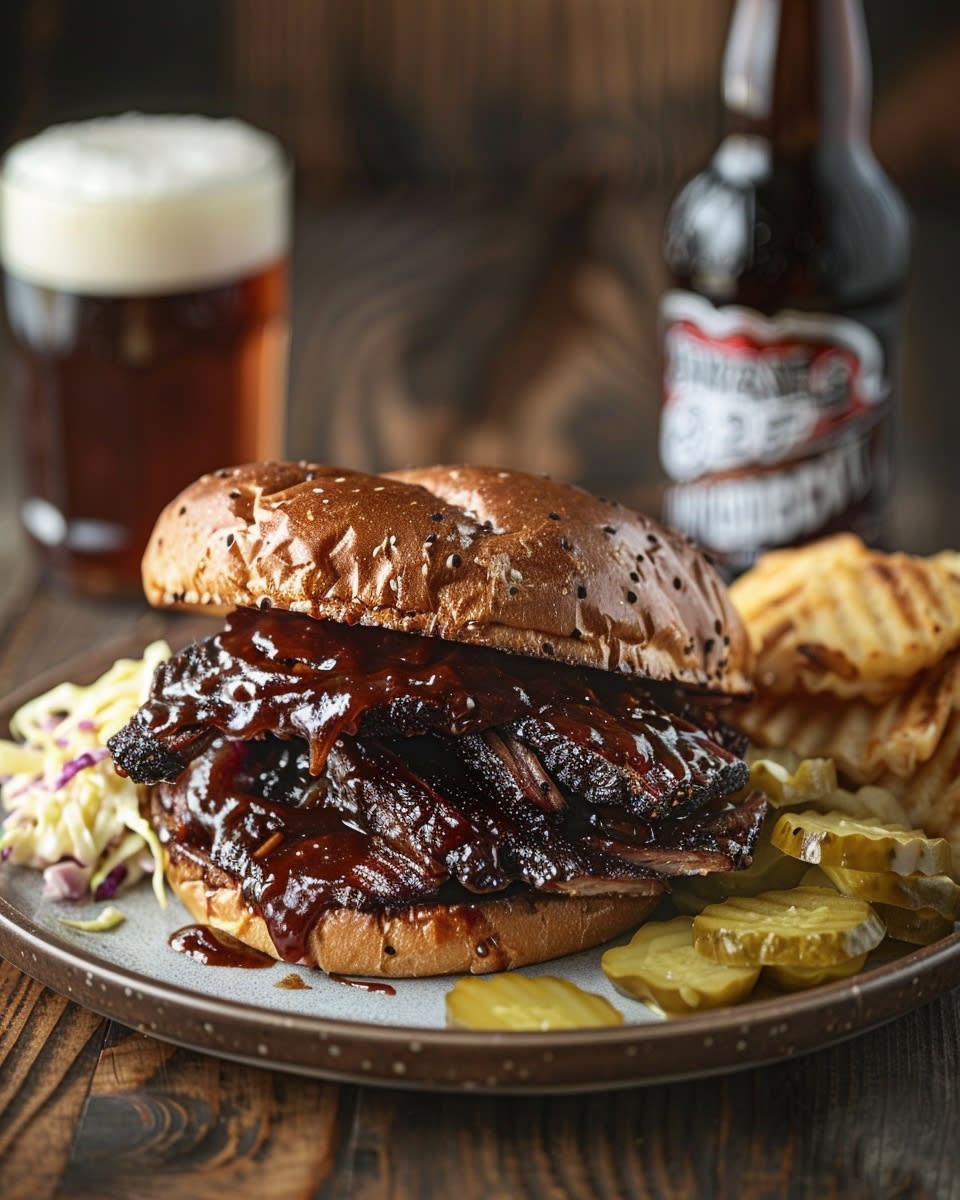
Introduction: Why I’m Obsessed with Smoked BBQ Beef Brisket Sandwiches
I still remember the first time I bit into a proper smoked BBQ beef brisket sandwich. It was at a small roadside joint in Texas, and that single bite changed everything I thought I knew about sandwiches. The tender, smoky meat practically melted on my tongue. The rich flavors hit me all at once. I’ve been chasing that perfect bite ever since.
There’s something magical about taking hours of slow-smoked meat and piling it high between two soft buns. The smoke ring, that beautiful pink layer just under the bark, tells you the meat was treated right. The juice that runs down your hands as you take that first bite? That’s pure bliss. I’ve spent years making these sandwiches at home, and I’m here to share what I’ve learned.
A great brisket sandwich comes down to three things. First, you need perfectly smoked meat with a dark, flavorful crust and tender interior. Second, the right toppings and sauce can make or break your sandwich. Third, the bread matters more than most people think. Get these elements right, and you’ll have people begging for your recipe.
Making a smoked BBQ beef brisket sandwich at home might seem scary at first. But once you understand the basics, it becomes second nature. The process takes time, sure. But most of that time is hands-off while the smoke does its magic. And trust me, the results are worth every minute.
Understanding the Basics of Smoked Brisket
Let me start by breaking down what we’re working with here. A smoked beef brisket is a cut from the lower chest of the cow. This muscle does a lot of work during the animal’s life, which means it’s packed with tough connective tissue. That might sound bad, but it’s actually perfect for smoking.
The brisket has two main parts. The flat is leaner and more uniform in thickness. The point sits on top and contains more fat and marbling. When you buy a whole packer brisket, you get both sections. This is what I recommend for sandwiches because you get variety in every bite.
So why is smoking the best cooking method? The low and slow heat breaks down all that tough connective tissue into gelatin. This process takes hours, but it transforms the meat from tough to tender. The smoke penetrates deep into the meat, adding layers of flavor you simply can’t get any other way. I’ve tried oven-roasting and braising brisket, and neither comes close to the real deal.
The smoke itself acts as a flavor enhancer. Wood smoke contains hundreds of compounds that stick to the meat’s surface. These create that signature bark and smoky taste. The long cooking time also allows the fat to render slowly, keeping the meat moist and juicy.
Choosing the right cut makes all the difference. When I’m at the butcher or store, I look for a few key things. The brisket should have a thick, even fat cap on one side. This fat protects the meat during smoking and adds flavor. I aim for about a quarter to half inch of fat.
Look for good marbling throughout the flat. Those white streaks of fat running through the meat will melt during cooking, keeping everything moist. If the flat looks dry and lean, keep looking. Size matters too. I go for briskets in the 12 to 16 pound range. Smaller ones can dry out easier, while larger ones take forever to cook.
The meat should be bright red, not brown or gray. Fresh brisket has a clean, slightly sweet smell. If it smells sour or off, walk away. Don’t be shy about asking your butcher questions. A good butcher can point you toward the best cuts and might even trim it for you.
Some stores sell choice or prime grades. Prime has more marbling and costs more, but it’s worth it for special occasions. Choice grade works great for regular smoking. I’ve made amazing brisket sandwiches with both grades.
Preparing the Brisket for Smoking
Trimming the brisket is where many people get nervous. I get it. You’re holding this expensive piece of meat and you’re about to start cutting. But proper trimming helps the smoke and rub penetrate evenly. It also prevents flare-ups from excess fat dripping on your heat source.
I start by removing any silver skin. This tough membrane won’t break down during cooking and creates an unpleasant texture. Slide a sharp knife under the silver skin and peel it away. Next, I trim the fat cap down to about a quarter inch. Some people leave more, some leave less. I’ve found a quarter inch provides protection without leaving too much unrendered fat.
Pay attention to the point where the flat and point meet. There’s usually a thick seam of fat here. I trim this down but don’t remove it completely. This fat helps keep both sections moist. Shape any uneven edges so the brisket cooks evenly. You want a relatively uniform thickness across the flat.
Save all those trimmings. I render them down for cooking fat or grind them for burgers. Nothing goes to waste.
Now let’s talk about the rub. A good rub does two jobs. It adds a layer of flavor to the outside of the meat. It also helps form that beautiful dark bark we all love. The bark is where most of the smoke flavor lives, and it provides an amazing contrast to the tender meat inside.
I keep my brisket rub simple. You don’t need twenty ingredients to make great brisket. Here’s what I use:
- 1/2 cup coarse black pepper – This is the star of the show
- 1/2 cup coarse salt – I use kosher salt for better coverage
- 2 tablespoons garlic powder – Adds depth without overpowering
- 2 tablespoons onion powder – Balances the garlic
- 1 tablespoon paprika – For color and mild sweetness
- 1 tablespoon cayenne pepper – Optional, for heat
Mix all these together in a bowl. That’s it. This ratio gives you a bold, peppery crust that complements the beef without hiding it. The coarse grind of the pepper and salt is important. Fine ground seasonings can create a muddy texture.
Some people add brown sugar or other sweeteners. I don’t because sugar can burn during the long cook time. But if you like a sweeter profile, add a tablespoon or two. Just watch your temperatures carefully.
Applying the rub is an art form. I coat the brisket liberally on all sides. Don’t be shy here. A good amount of rub will fall off during cooking, so you need to start with plenty. I press the rub into the meat gently so it sticks better.
Some folks ask me about mustard or oil as a binder. I’ve tried both and honestly, they work fine. The meat’s natural moisture is usually enough to hold the rub. But a thin layer of yellow mustard or olive oil can help if you’re worried about it. The mustard flavor cooks off completely, so don’t worry about that.
After applying the rub, I let the brisket sit. This resting period lets the salt in the rub start to penetrate the meat. Some of the moisture gets drawn out, then reabsorbed along with the seasonings. I usually give it at least an hour at room temperature, or overnight in the fridge.
If you go the overnight route, wrap the brisket loosely in plastic wrap or butcher paper. The rub will form a wet-looking layer called pellicle. This is exactly what you want. The pellicle helps smoke stick to the meat better, giving you more flavor and a better bark.
One more tip: Take the brisket out of the fridge an hour before smoking. Cold meat takes longer to cook and can create uneven results. Letting it come to room temperature helps it cook more consistently.


The Art of Smoking Brisket to Perfection
Now that your brisket is trimmed and seasoned, it’s time for the main event. Setting up your smoker properly can make the difference between amazing meat and a dried-out disappointment. I’ve used just about every type of smoker out there, and each one has its own personality.
Let’s talk about your options. Offset smokers are what you’ll see at most competition BBQ events. They have a separate firebox where you burn wood or charcoal, and the smoke travels into the cooking chamber. I love these because they give you excellent smoke flavor and let you add fuel without opening the main chamber. The downside? They require constant attention and practice to maintain steady temperatures. My first few briskets on an offset were learning experiences, to put it nicely.
Vertical water smokers are more forgiving. They use a water pan to stabilize temperature and keep moisture in the cooking chamber. These work great for beginners and don’t cost a fortune. The trade-off is less smoke flavor compared to offset smokers, and you have limited space if you’re cooking for a crowd.
Then there are pellet smokers, which have become my go-to for weeknight smoking. They use an electric auger to feed wood pellets into a fire pot, maintaining temperature automatically. It’s almost like set-it-and-forget-it cooking. Some BBQ purists say they don’t get as much smoke flavor, but I’ve made incredible brisket on mine. The convenience factor wins when I’m smoking on a Tuesday and still need to work the next day.
Electric and gas smokers offer even more convenience. They’re reliable and easy to control, though they produce the least smoke flavor. I sometimes supplement these with a smoking tube filled with pellets to boost the smoke.
Here’s the thing about temperature: consistency matters way more than the exact number. Most pitmasters smoke brisket between 225 and 275 degrees Fahrenheit. I typically run mine at 250. Lower temperatures give you more smoke flavor and a thicker bark, but they take longer. Higher temps cook faster but can dry out the meat if you’re not careful.
The real challenge is maintaining that temperature for 12 to 16 hours straight. On offset smokers, I check every hour and adjust my vents or add fuel as needed. Opening the lid drops the temperature, so I try to peek only when necessary. There’s an old saying: “If you’re looking, you ain’t cooking.”
For pellet smokers, I set the temperature and monitor it with a digital thermometer. I still check on it, but these units do most of the work themselves. Whatever smoker you use, invest in a good digital probe thermometer. The ones that came with your smoker probably aren’t accurate enough. I use one with dual probes so I can monitor both the smoker temperature and the internal meat temperature at the same time.
Wood selection deserves its own conversation because it dramatically affects flavor. Oak is my baseline wood for brisket. It burns clean, produces moderate smoke, and adds a balanced flavor that doesn’t overpower the beef. Most Texas BBQ joints use oak exclusively, and there’s a reason it’s traditional.
Hickory gives a stronger, more bacon-like smoke flavor. It’s popular in the South and works beautifully with beef. I sometimes mix hickory with oak for a more robust taste. Just don’t use hickory alone for the entire cook because it can become bitter if overdone.
Mesquite burns hot and creates an intense, almost spicy smoke. It’s native to Texas and widely available there. I use mesquite sparingly, maybe for the first few hours, then switch to something milder. Pure mesquite for a full brisket cook can be overwhelming, similar to how too much of a good thing ruins your palate. By the way, if you enjoy playing with smoke flavors, you might also like experimenting with different woods when making BBQ pulled chicken sandwiches, though chicken needs a gentler touch.
Fruit woods like apple and cherry add subtle sweetness and beautiful color to the bark. I sometimes throw in a chunk of apple wood toward the end of the cook for complexity. These woods pair nicely with any BBQ sauce you decide to use later.
Getting that gorgeous bark requires understanding what’s happening on the meat’s surface. The bark forms from a combination of the rub, smoke particles, rendered fat, and a process called the Maillard reaction. During the first few hours of smoking, the meat’s surface stays moist. Smoke sticks to this moisture, building up layers of flavor compounds.
Around 150 to 160 degrees internal temperature, the brisket hits what we call “the stall.” The meat’s temperature stops rising for hours. This happens because moisture evaporating from the surface creates a cooling effect, just like sweat cools your skin. Many beginners panic during the stall, thinking something went wrong. It’s completely normal.
During the stall, the bark sets and develops its characteristic crunchy texture. Don’t rush this phase. Resist the urge to crank up the heat. If you want a darker bark, leave the brisket unwrapped longer. The more time it spends exposed to smoke and heat, the thicker and darker the bark becomes. I usually let mine go naked until the internal temperature hits about 165 degrees.
Spritzing or mopping the brisket is optional. Some folks spray the meat with apple juice, beef broth, or water every hour after the first few hours. The theory is this keeps the surface moist, helping smoke stick and preventing it from drying out. I’ve done it both ways and honestly can’t tell much difference in the final product. If spritzing makes you feel involved in the process, go for it. Just use a spray bottle so you’re not opening the smoker for long periods.
Wrapping the brisket is where opinions divide sharply in the BBQ world. The “Texas crutch” involves wrapping the meat in aluminum foil once it reaches about 165 degrees internal temperature. This speeds up cooking by pushing through the stall faster. The foil traps moisture, essentially braising the meat in its own juices. Your brisket will be incredibly tender, but the bark softens significantly.
Pink butcher paper has become my preferred wrapping method. It’s breathable enough to let some moisture escape, preserving more of the bark’s texture while still speeding up the cook. The paper also gives the meat a beautiful mahogany color. I wrap when the bark looks set and the internal temp hits 165 to 170 degrees.
Some purists never wrap at all. They smoke the brisket completely naked from start to finish. This gives you the best bark but takes the longest and risks drying out the flat. I’ve done unwrapped briskets and they’re amazing, but they require more attention to temperature control.
How long will all this take? Plan on about an hour to an hour and a half per pound at 250 degrees. A 14-pound brisket might take 14 to 18 hours. I know that sounds insane, but remember most of that time you’re just waiting. I usually start smoking late at night so it’s ready by dinner the next day.
The brisket is done when it feels right, not when the clock says so. Internal temperature is your best guide. The flat should reach 195 to 205 degrees, while the point might go a bit higher. But here’s the real test: stick a thermometer probe into the thickest part of the flat. It should slide in like you’re poking warm butter. If there’s resistance, keep cooking even if the temperature seems right.
Once your brisket hits that perfect tenderness, don’t even think about slicing into it yet. Resting is absolutely critical. All those juices need time to redistribute throughout the meat. If you cut into it immediately, those juices run out onto the cutting board and you’re left with dry meat. What a waste after all that work!
I rest my briskets for at least an hour, often two. Leave it wrapped in the butcher paper or foil. Some people place the wrapped brisket in a dry cooler to keep it warm. This actually continues the cooking process gently, further breaking down connective tissue. I’ve held briskets in a cooler for up to four hours before serving, and they come out even more tender.
Building the Perfect Brisket Sandwich
After all that smoking and resting, it’s finally sandwich time. But don’t just throw the meat on any old bread and call it done. The bread choice matters tremendously for a proper smoked BBQ beef brisket sandwich.
My favorite choice is a simple white hamburger bun. Not those fancy brioche buns, just a basic soft white bun from the grocery store. Why? Because it’s all about balance. The bun needs to be sturdy enough to hold up to juicy meat and sauce without falling apart, but mild enough not to compete with the brisket’s flavor. White buns do exactly that. They also have just enough sweetness to complement the savory, smoky meat.
That said, I’ve made great brisket sandwiches on other breads too. Texas toast works wonderfully, especially if you butter and grill it first. The crispy, buttery surface adds another texture dimension. Soft hoagie rolls are perfect when you’re piling the meat high. Just avoid anything too crusty or chewy like a French baguette. Those will tear up the roof of your mouth and distract from the brisket.
Funny enough, some BBQ joints in Texas serve brisket on plain white bread, the cheap sandwich kind. It’s not fancy, but it works. The bread soaks up juice and sauce, becoming part of the experience rather than just a delivery vehicle.
Slicing the brisket properly makes or breaks your sandwich. Always slice against the grain. The grain refers to the direction the muscle fibers run. Cutting perpendicular to these fibers shortens them, making each bite more tender. If you slice with the grain, you’ll be chewing through long, tough fibers.
Here’s where it gets tricky: the grain changes direction between the flat and the point. On the flat, the grain usually runs lengthwise. On the point, it runs at about a 90-degree angle. I separate the two muscles first, then slice each one against its own grain.
For sandwiches, I slice about a quarter inch thick. Thicker slices give you more texture and substance. Thinner slices can get lost and feel mushy. I stack about four or five slices per sandwich, which gives you a good meat-to-bread ratio without being impossible to bite through.
Now for the big question: what to put on a smoked brisket sandwich? I’m a minimalist here because the brisket should be the star. If you smoked it right, you barely need anything else. But a few well-chosen additions can elevate the sandwich.
Pickles are essential for me. The sharp, tangy crunch cuts through the rich fattiness of the brisket. I use dill pickle chips, piled generously on top of the meat. Some folks prefer bread and butter pickles for sweetness, which works too. I’ve even used pickled jalapeños when I want heat.
Raw white or red onion adds sharpness and crunch. I slice them thin so they don’t overpower everything. If raw onion is too aggressive for you, try quick-pickled onions. They’re milder and add a nice tang.
Coleslaw is traditional on many BBQ sandwiches, though less common with brisket specifically. I sometimes add a creamy coleslaw for texture contrast and coolness. The cabbage crunch plays nicely against the tender meat, similar to how you might build layers of flavor in something like BBQ chicken flatbread pizza where textures matter.
What kind of sauce do you put on a brisket sandwich? This might be the most controversial question in BBQ. In Texas, many places serve brisket completely naked or with sauce on the side. The philosophy is that properly smoked brisket doesn’t need sauce to cover up mistakes.
I’m in the “sauce on the side” camp for the first bite. Taste the meat alone to appreciate all your hard work. Then add sauce if you want. When I do use sauce, I prefer a thin, tangy tomato-based sauce. It should complement the meat, not drown it. A good sauce has vinegar for tang, a little sweetness, and spices that echo your rub.
Some regions have their own sauce styles. Kansas City sauce is thick, sweet, and molasses-heavy. Carolina-style vinegar sauce is thin and tangy. Alabama white sauce is mayo-based with vinegar and horseradish. Each has its place, but for brisket I lean toward Texas-style: thin, slightly sweet, with a tomato base and good black pepper bite.
Making your own sauce is easier than you think, though that’s a whole other topic. Store-bought works fine too. Just avoid anything too thick or sweet that’ll mask the smoke flavor. When you’re building these sandwiches for a crowd, having a variety of sauces available lets everyone customize their meal, much like offering different toppings would work for grilled chicken options at a BBQ.
Here’s my assembly order: bottom bun, pile of sliced brisket, pickles, onions, optional sauce drizzled over everything, top bun. Keep it simple. The brisket deserves to be the star of this show. If you want to get fancy, lightly toast the buns first. That adds a little crispness that helps prevent sogginess.
One more tip: serve these sandwiches with plenty of napkins. A proper brisket sandwich is messy. Juice runs down your hands, sauce gets on your face, and that’s exactly how it should be. If you can eat one neatly, there probably wasn’t enough meat or sauce on it. The best BBQ brisket sandwiches require a shower afterward, and I mean that as the highest compliment.


Health Considerations and Variations
Let’s talk about the elephant in the room. Is brisket healthy for cholesterol? The honest answer is that brisket isn’t exactly a superfood, but it’s not the villain some people make it out to be either. A typical serving of brisket contains about 80-90 milligrams of cholesterol per 3-ounce portion. That’s roughly 30% of the daily recommended limit.
Here’s where it gets interesting though. Not all the fat in brisket is bad fat. About half of the fat content is monounsaturated fat, the same kind found in olive oil and avocados. These fats can actually help improve your cholesterol profile when eaten in moderation. The key word there is moderation, of course.
Brisket is also loaded with protein, iron, zinc, and B vitamins. A single serving gives you nearly half your daily protein needs. The iron content is particularly high because it’s heme iron, the type your body absorbs most efficiently. I’m not saying brisket is a health food, but it does provide legitimate nutritional benefits beyond just tasting incredible.
The real cholesterol concern comes from eating massive portions regularly or loading up your sandwich with tons of fatty toppings and heavy sauces. A reasonable 4-ounce portion of lean brisket on a sandwich once a week isn’t going to wreck your health. It’s the 16-ounce platters three times a week that become problematic.
If you’re watching your cholesterol, focus on the flat rather than the point. The flat is significantly leaner. Trim any visible fat before eating. Skip the heavy, creamy sauces and stick with vinegar-based options. These small changes make a real difference without sacrificing much flavor.
For those who want a lighter version of a BBQ brisket sandwich, I’ve got some tricks. First, slice the meat thinner. You can pile it high and feel like you’re getting a substantial sandwich while actually using less meat. The visual is almost more important than the actual amount sometimes.
Choose whole grain buns instead of white bread. The extra fiber helps slow down digestion and keeps you satisfied longer. I actually prefer the nutty taste of whole wheat with brisket, though I know that’s not traditional. You could also try lettuce wraps if you’re cutting carbs, though I’ll admit that changes the whole experience pretty dramatically.
Load up on vegetables. Add tomatoes, lettuce, grilled peppers, and extra pickles. These bulk up the sandwich without adding much fat or calories. The vegetables also provide fiber that helps moderate your body’s cholesterol response. Plus they add freshness and crunch that balances the rich meat beautifully.
Another option is mixing in some smoked chicken or turkey breast with your brisket. I’ve done half-and-half sandwiches that still taste amazing but cut the fat content significantly. You still get that smoke flavor and satisfaction, just with better nutritional stats.
Now let’s talk about what to serve alongside your sandwich. The right side dishes complete the meal and can make it more nutritionally balanced. My go-to is a simple green salad with vinegar dressing. The acidity cuts through the fat and the vegetables add nutrients. Nothing fancy needed, just fresh greens and a light dressing.
Coleslaw is classic BBQ fare and works great next to brisket. I make mine with a vinegar-based dressing instead of mayo to keep it lighter. Red cabbage adds beautiful color and extra antioxidants. Add some shredded carrots and a bit of jalapeño for heat, and you’ve got a side that’s both tasty and reasonably healthy.
Baked beans are traditional, though they do add sugar and calories. I make mine from scratch with less added sugar than canned versions. They provide fiber and protein that complement the brisket nicely. Just watch your portion size because those calories add up quickly.
Here are some of my other favorite sides:
- Grilled corn on the cob – Sweet, charred, and perfect for summer BBQs
- Potato salad – Use Greek yogurt instead of all mayo for a lighter version
- Cucumber salad – Cool, refreshing, and basically guilt-free
- Mac and cheese – Not healthy but absolutely delicious occasionally
- Grilled vegetables – Zucchini, peppers, and onions pick up great flavor on the grill
- Cornbread – A little sweet, a little savory, and it soaks up sauce beautifully
The secret is balance. If you’re indulging in a loaded brisket sandwich, pair it with lighter sides. Save the mac and cheese and potato salad for when you’re eating a smaller portion of meat. Your body and your taste buds will thank you.
Why Buc-ee’s Brisket Sandwich is So Good
If you’ve ever stopped at a Buc-ee’s travel center in Texas or the South, you probably noticed the insane line at the BBQ counter. Why is Buc-ee’s brisket sandwich so good? I’ve thought about this a lot because honestly, it’s gas station food that rivals many dedicated BBQ restaurants.
First off, Buc-ee’s uses quality beef. They’re not cutting corners with cheap meat. The brisket is properly smoked for hours until it’s tender and juicy. They keep it hot and fresh, restocking constantly because of high demand. That freshness matters tremendously. Even the best brisket suffers when it sits under a heat lamp for hours.
The real genius is in their assembly. They slice the brisket to order, right in front of you. It’s still warm from the smoker. They pile it high on a soft white bun, add pickles and onions if you want them, and keep the whole thing simple. No weird toppings or fancy additions that distract from the meat. Just straightforward, delicious brisket.
Their sauce deserves mention too. It’s tangy without being vinegary, slightly sweet without being cloying, and thin enough to coat the meat without drowning it. They give you plenty on the side so you control how much goes on your sandwich. That respect for the customer’s preference goes a long way.
Another factor is convenience. You’re hungry, you’re traveling, and suddenly there’s this amazing brisket sandwich available immediately. The context makes it taste even better. I’ve had fancier brisket at expensive restaurants that didn’t hit the spot quite like a Buc-ee’s sandwich did when I was starving on a road trip.
Here’s how to replicate that experience at home. Start with quality ingredients, period. Don’t compromise on the meat quality or smoking process. Use a simple white bun, not anything too fancy. Keep your toppings minimal. Slice the brisket fresh and serve it warm, not straight from the fridge.
Make a thin, balanced BBQ sauce that enhances rather than covers the meat. Buc-ee’s nails this balance. Their sauce has enough flavor to add interest but doesn’t make you forget you’re eating brisket. Mix ketchup, vinegar, Worcestershire sauce, brown sugar, garlic powder, onion powder, and black pepper. Keep it simple and adjust to your taste.
Serve everything quickly after assembly. Don’t make the sandwiches ahead and let them sit. The bun gets soggy, the meat cools down, and the magic disappears. At Buc-ee’s, you get that sandwich within minutes of it being assembled. Try to do the same at home. If you’re serving a crowd, set up an assembly station where people build their own. This keeps everything fresh and lets everyone customize their sandwich.
The Buc-ee’s phenomenon teaches us that you don’t need complicated recipes or exotic ingredients for an amazing sandwich. You need quality execution of simple elements. Proper smoking technique, fresh ingredients, and respect for the meat itself. That’s what makes their sandwich special, and that’s what’ll make yours special too.
By the way, while we’re discussing cooking methods for large cuts of meat, understanding techniques like roasting can help you appreciate why smoking works so differently and produces such unique results. Both methods use dry heat, but smoking’s lower temperature and wood smoke create flavors you simply can’t achieve through traditional roasting.
If you’re really getting into BBQ and want to expand beyond brisket sandwiches, exploring other BBQ and grilling recipes can teach you techniques that’ll improve everything you cook outdoors, from the way you manage fire to how you judge doneness by feel.
Making a truly great smoked BBQ beef brisket sandwich at home is absolutely achievable. Yes, it takes time and attention. Yes, you’ll probably mess up your first attempt. I certainly did. But once you nail it, you’ll have a skill that impresses everyone and feeds people in a deeply satisfying way. There’s something primal and wonderful about slow-smoking meat and sharing it with others. The process connects you to generations of pitmasters who’ve perfected these techniques. Every time I pull a brisket off the smoker, I feel that connection. And every time someone takes that first bite and their eyes light up, I’m reminded why I love doing this. So fire up your smoker, trust the process, and get ready for some of the best sandwiches you’ve ever made.
Frequently Asked Questions
What to put on a smoked brisket sandwich?
Keep it simple to let the brisket shine. I recommend dill pickle chips for tanginess and crunch, thinly sliced raw onions for bite, and a thin BBQ sauce either on the side or lightly drizzled. Some people add coleslaw for extra texture and coolness. The key is not overwhelming the meat with too many competing flavors. A soft white bun holds everything together without distracting from the star ingredient.
Is brisket healthy for cholesterol?
Brisket contains about 80-90mg of cholesterol per 3-ounce serving, which is moderate but not excessive. About half the fat is monounsaturated, which can actually benefit cholesterol levels. The flat cut is leaner than the point, so choose that if you’re concerned. Eating reasonable portions occasionally as part of a balanced diet shouldn’t cause problems for most people. Trim visible fat and avoid heavy sauces to make it even healthier.
Why is Buc-ee’s brisket sandwich so good?
Buc-ee’s uses quality beef and properly smokes it for hours until tender. They slice it fresh to order and serve it immediately while still warm. The simplicity of their assembly, quality ingredients, and freshness make all the difference. Their balanced BBQ sauce enhances without overwhelming the meat. The convenience factor and consistency across locations have built them a cult following among BBQ lovers.
What kind of sauce do you put on a brisket sandwich?
A thin, tangy tomato-based sauce works best for brisket sandwiches. It should have vinegar for tang, a touch of sweetness, and spices that complement your rub. Texas-style sauces are thinner and less sweet than Kansas City styles. I prefer serving sauce on the side so people can control how much they use. Many Texas purists eat their brisket completely naked to appreciate the smoke and seasoning.
How long does smoked brisket last in the fridge?
Properly stored smoked brisket lasts 3-4 days in the refrigerator. Wrap it tightly in plastic wrap or aluminum foil, or store it in an airtight container. For longer storage, freeze it for up to 3 months. I usually slice what I need for sandwiches and vacuum seal the rest for freezing. When reheating, add a little beef broth to keep it moist. Cold brisket makes amazing sandwiches too, so don’t feel like you must reheat everything.
Can you smoke brisket at 225 degrees?
Absolutely, 225 degrees is a classic smoking temperature for brisket. It produces excellent smoke flavor and a thick bark. The downside is longer cooking time, usually 1.5 to 2 hours per pound. I prefer smoking at 250 degrees for slightly faster cooking without sacrificing much quality. Lower temperatures give you more smoke ring and deeper flavor penetration. Just be prepared for the time commitment when smoking at 225.
Should I wrap my brisket in foil or butcher paper?
Both work, but they produce different results. Foil speeds up cooking and creates incredibly tender meat, but it softens the bark significantly. Butcher paper is breathable, preserving more bark texture while still speeding up the cook. I prefer butcher paper for the best balance of tenderness and bark quality. Wrapping at 165-170 degrees internal temperature works for both methods. Some pitmasters never wrap at all for maximum bark development.
What’s the best wood for smoking brisket?
Oak is my go-to because it burns clean and provides balanced flavor without overpowering the beef. Hickory adds stronger, bacon-like smoke that works beautifully mixed with oak. Mesquite is intense and should be used sparingly or only during the first few hours. Fruit woods like apple or cherry add subtle sweetness and color. Most Texas pitmasters use oak exclusively because it’s traditional and consistently delivers great results.
How do you know when brisket is done?
Internal temperature should reach 195-205 degrees, but feel matters more than numbers. Insert a thermometer probe into the thickest part of the flat. It should slide in and out like you’re poking warm butter with no resistance. If it feels tight or you have to push, keep cooking even if the temperature seems right. The meat should jiggle slightly when you shake the whole brisket. Trust your instincts and don’t rush this final stage.
Can you make brisket sandwiches ahead of time?
I don’t recommend fully assembling sandwiches ahead because the buns get soggy. Instead, slice the brisket and store it separately in the fridge with a little liquid to keep it moist. When ready to serve, warm the meat gently and assemble sandwiches fresh. You can set up a sandwich bar where people build their own, which keeps everything fresh and lets everyone customize their meal. This approach works great for parties and gatherings.
Ingredients
Equipment
Method
- Découpez la membrane du brisket et réduisez la couche de gras à environ un quart de pouce.
- Enlevez l'excès de gras à l'endroit où le plat et le point se rencontrent mais laissez-en un peu pour l'humidité.
- Mélangez les ingrédients du mélange d'épices (poivre, sel, poudre d'ail, poudre d'oignon, paprika, cayenne) dans un bol.
- Enrobez généreusement le brisket sur tous les côtés avec le mélange d'épices en le pressant dans la viande.
- Laissez le brisket reposer pendant au moins une heure à température ambiante ou toute la nuit au réfrigérateur pour développer une pellicule.
- Préchauffez votre fumoir à 120°C.
- Fumez le brisket jusqu'à ce qu'il atteigne une température interne d'environ 65-70°C.
- Enveloppez le brisket dans du papier boucher rose ou du papier aluminium pour retenir l'humidité.
- Poursuivez la cuisson jusqu'à ce que le brisket atteigne une température interne de 90-95°C.
- Laissez reposer le brisket pendant au moins une heure avant de le trancher.
- Tranchez contre le grain d'environ un quart de pouce d'épaisseur.
- Assemblez les sandwiches avec le brisket tranché, les cornichons, les oignons et la sauce optionnelle sur les pains.