
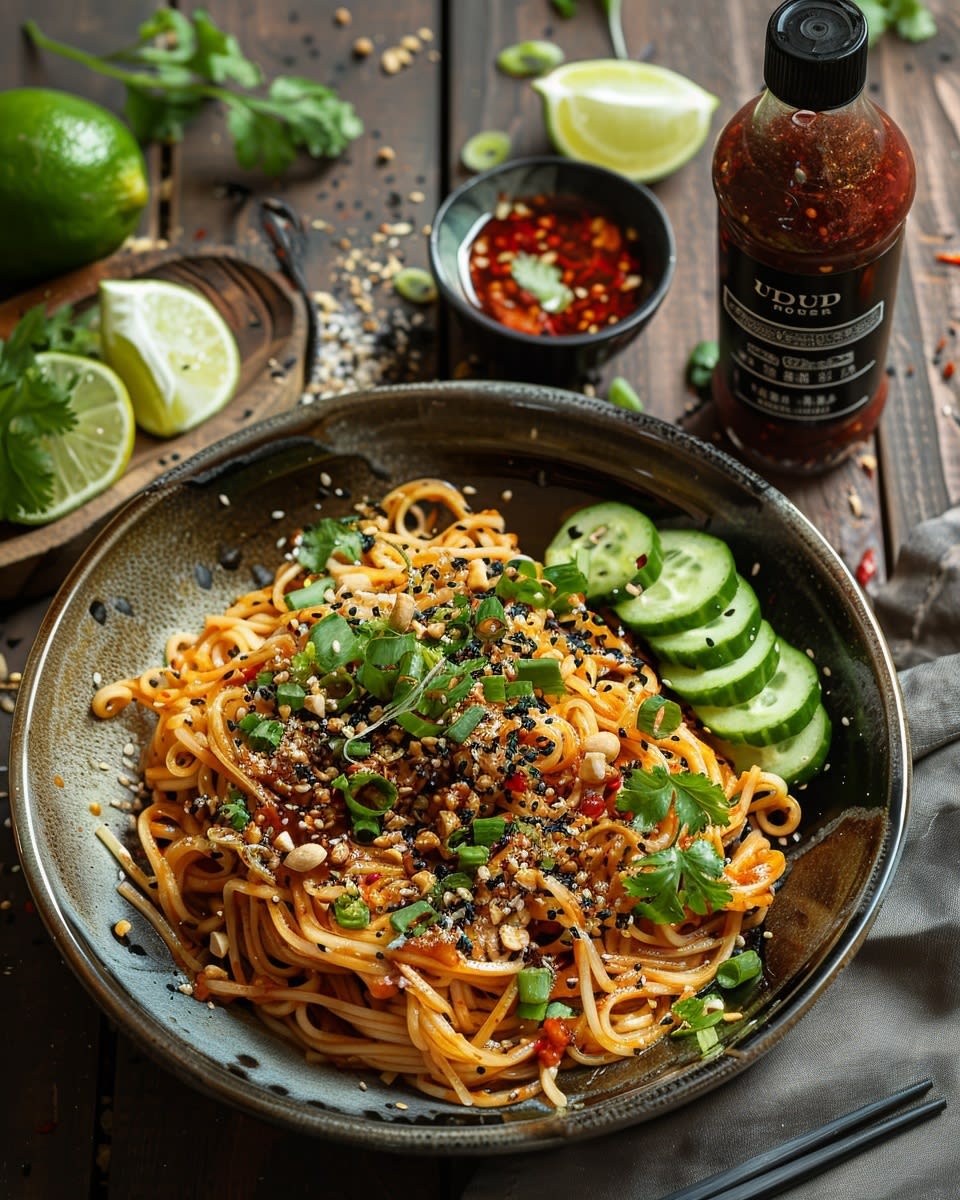
Last Tuesday night, I stood in front of my open fridge at 8 PM, staring at half a jar of peanut butter and some wilted vegetables. I was starving, tired from work, and craving something bold and satisfying. That’s when I remembered the dish that saved me countless times during my backpacking trip through Thailand. Within 20 minutes, I had a steaming bowl of Spicy Thai Peanut Noodles in front of me, and suddenly the day didn’t seem so rough anymore.
Welcome to my kitchen! Today, I’m excited to share with you a recipe that’s close to my heart: Spicy Thai Peanut Noodles. This dish is not just a feast for the taste buds but also a versatile meal that can be adapted in many ways. Whether you’re cooking for yourself on a busy weeknight or hosting friends for dinner, these noodles always deliver.
The best part? You don’t need fancy equipment or hard-to-find ingredients. Everything comes together in one pot, and you can even make a simplified version of thai peanut noodles microwave style if you’re really pressed for time. I’ve done it more times than I care to admit during late-night study sessions.
Why Spicy Thai Peanut Noodles Are a Must-Try
Here’s what makes this dish special: it’s a delightful blend of flavors and textures, perfect for those who love a little kick in their meals. You get creamy from the peanut butter, tangy from the lime, salty from the soy sauce, and that wonderful heat that makes your lips tingle just enough.
I first tried authentic pad thai noodles in a tiny street stall in Bangkok, and while this recipe isn’t traditional pad thai, it captures that same spirit of bold Thai flavors. The spicy thai peanut sauce is what ties everything together. It clings to each noodle and coats the vegetables perfectly.
What I love most is how forgiving this recipe is. Running low on vegetables? Use what you have. Want it creamier? Add some thai peanut noodles coconut milk to the sauce. Prefer more protein? Load it up. The foundation stays the same, but you can make it your own every single time.
My friend Sarah makes this at least twice a week. She’s not even a confident cook, but this recipe gave her the boost she needed. Now she’s the one teaching her roommates how to whip up a quick batch of thai chicken noodles when they’re all home from work.
Ingredients You’ll Need for Perfect Spicy Thai Peanut Noodles
Let’s start by gathering all the ingredients. Trust me, having everything ready before you start cooking makes the whole process so much smoother. I learned this the hard way after burning garlic while frantically searching for lime juice in my pantry.
For the noodles and base:
- 8-10 ounces of rice noodles (flat or thin both work great)
- 2-3 tablespoons of neutral cooking oil
- 3-4 cloves of fresh garlic, minced
- 1-inch piece of ginger, grated (optional but adds amazing depth)
For the spicy peanut sauce:
- 1/3 cup of creamy peanut butter (natural or regular)
- 3 tablespoons of soy sauce or tamari
- 2 tablespoons of lime juice (about one large lime)
- 1-2 tablespoons of chili paste or 1 teaspoon of red pepper flakes
- 1 tablespoon of brown sugar or maple syrup
- 2-3 tablespoons of warm water to thin the sauce
The peanut butter is key here. I’ve tried both natural and conventional brands, and both work fine. Natural peanut butter gives a slightly less sweet result, which I prefer. But use what you have in your pantry.
For the vegetables:
- 2 cups of shredded cabbage or pre-shredded coleslaw mix
- 1 red bell pepper, thinly sliced
- 1 cup of shredded carrots
- 1 cup of snap peas or edamame
- 3-4 green onions, chopped
Don’t stress about having every single vegetable. The beauty of spicy thai noodles with vegetables is that you can swap things around. I’ve used broccoli, zucchini, mushrooms, and even frozen mixed vegetables when that’s all I had available.
For the protein:
- 1 pound of chicken breast or thighs, thinly sliced (for spicy thai noodles with chicken recipe)
- 1 block of firm tofu or tempeh, cubed
- 1 pound of shrimp, peeled and deveined
- Or skip the protein entirely for a lighter meal
If you’re making thai peanut chicken noodles, I recommend using chicken thighs. They stay juicier and have more flavor than breasts. Cut them into thin strips so they cook quickly and evenly.
For garnish and extra flavor:
- Fresh cilantro leaves
- Chopped peanuts or cashews
- Lime wedges
- Sesame seeds
- Extra chili flakes for heat lovers
Making It Work for Your Diet
One question I get all the time is about dietary restrictions. The good news is that this recipe is incredibly flexible.
If you’re following a plant-based diet, you can easily make thai peanut noodles vegan by using tofu or tempeh as your protein and ensuring all other ingredients are free from animal products. Check your soy sauce label because some brands add fish derivatives. Tamari is usually a safe bet.
I’ve made the vegan version for my sister countless times, and honestly, it’s just as satisfying as the chicken version. The key is pressing your tofu well to remove excess water, then pan-frying it until it gets crispy edges. That texture contrast makes all the difference.
For gluten-free friends, swap regular soy sauce for tamari or coconut aminos. The rice noodles with peanut sauce are naturally gluten-free, which is fantastic. Just double-check your chili paste ingredients.
My neighbor makes a dairy-free version by adding thai peanut noodles coconut milk to create an extra creamy sauce. She uses about 1/4 cup of full-fat coconut milk mixed into the peanut sauce. It adds richness and a subtle sweetness that balances the heat beautifully.
If you’re watching calories but still want flavor, you can use powdered peanut butter (like PB2) mixed with water instead of regular peanut butter. You’ll lose some richness, but the flavor still shines through. I do this sometimes when I want a lighter lunch.
The sauce also freezes beautifully. I make double batches and freeze half in ice cube trays. Pop out a few cubes whenever you need a quick spicy thai peanut sauce for noodles, rice bowls, or even as a salad dressing.
Now that we’ve covered what you need and how to adapt it, you’re ready to start cooking. The actual cooking process is faster than ordering takeout, and you’ll have complete control over the spice level, vegetables, and portion sizes. Plus, your kitchen will smell absolutely amazing.


The Perfect Spicy Thai Peanut Sauce
With everything prepped and ready to go, it’s time to talk about what really makes or breaks this dish—the sauce.
Here’s the thing: the spicy thai peanut sauce is where all the magic happens. I’ve tweaked this recipe probably thirty times over the years, and I finally landed on a version that hits every note perfectly. It’s creamy but not too thick, spicy but not overwhelming, and has this tangy brightness that keeps you coming back for more.
Start by grabbing a medium mixing bowl. Drop in your peanut butter first—I usually eyeball about a third of a cup, maybe a bit more if I’m feeling generous. Then comes the soy sauce, lime juice, and that wonderful chili paste. My go-to is sambal oelek because it’s readily available and has a clean, bright heat without too much vinegar tang.
Now here’s where people sometimes mess up: they add everything at once and end up with a chunky, separated mess. Instead, start whisking the peanut butter with just the soy sauce and lime juice. Get it smooth first. The acidity from the lime helps break down the peanut butter, making it easier to incorporate everything else. Once that’s looking good, add your sweetener and chili paste, then slowly drizzle in warm water while whisking constantly.
The consistency you’re aiming for is similar to heavy cream—thick enough to coat the back of a spoon but thin enough to toss easily with noodles. Too thick? Add more water, a tablespoon at a time. Too thin? A bit more peanut butter will fix it right up.
Taste as you go. This is crucial. Everyone’s heat tolerance is different. My husband thinks I’m crazy with how much chili paste I add, while my college roommate used to practically double it. Start with less and build up. You can always add more heat, but you can’t take it away. Well, technically you can by adding more peanut butter and lime juice to balance it out, but why make extra work for yourself?
By the way, if you want to take this sauce to the next level, adding thai peanut noodles coconut milk creates this incredible richness that reminds me of dishes from Southern Thailand. Use full-fat coconut milk—not the light stuff, and definitely not coconut water (I made that mistake once and it was sad). About a quarter cup stirred into your sauce base transforms it into something luxurious. The coconut milk mellows the heat slightly while adding a subtle sweetness and that silky texture that makes you want to lick the bowl clean.
When I make the coconut milk version, I usually reduce the water I add since the coconut milk provides enough liquid. The sauce becomes almost like a curry-peanut hybrid, and honestly, it’s dangerous how good it is. I’ve caught myself eating it straight with a spoon while standing at the counter. No judgment here—we’ve all done it.
One trick I learned from a Thai restaurant owner in Seattle: add a tiny splash of fish sauce if you eat it. Just a teaspoon or so adds this incredible depth of flavor that’s hard to identify but makes everything taste more complex. If you’re making thai peanut noodles vegan, skip this or use a vegan fish sauce alternative. Some brands make mushroom-based versions that work surprisingly well.
The sauce keeps in the fridge for about five days, maybe a week if you’re lucky. I make extra because it’s fantastic on so many things—as a dip for spring rolls, tossed with cold noodles for lunch, drizzled over roasted vegetables, or even as a marinade for tofu. It’s become my secret weapon for making boring meals exciting, kind of like how a good ranch sauce transforms simple pasta into something crave-worthy.
Cooking the Noodles and Vegetables
Alright, sauce is done. Let’s get to the fun part—actually cooking everything.
First up: those rice noodles with peanut sauce we’ve been talking about. Rice noodles are temperamental little things. Leave them in boiling water two minutes too long and they turn into mush. Undercook them and they’re chewy and stick together like glue. The good news? Once you nail the timing, it’s easy to replicate.
Bring a large pot of water to a rolling boil. No need to salt it like you would for Italian pasta—rice noodles don’t really absorb much seasoning from the cooking water anyway. Once it’s boiling hard, turn off the heat completely. Yes, off. Then add your noodles and let them sit in the hot water. Most packages say 5-7 minutes, but I’ve found that 4-5 minutes is usually perfect for the thin rice noodles.
Set a timer. Seriously, set it. I cannot tell you how many times I’ve gotten distracted chopping vegetables and ended up with overcooked noodles. While they’re soaking, give them a gentle stir once or twice to prevent clumping. When the timer goes off, taste one. It should be tender but still have a slight bite—al dente, if we’re borrowing Italian terms.
Drain them immediately in a colander and rinse with cold water to stop the cooking process. This also washes away excess starch that can make them gummy. Funny enough, this is one area where rice noodles are more forgiving than regular wheat noodles, which lose their sauce-gripping texture when rinsed. Give them a gentle toss with a tiny drizzle of oil to prevent sticking while you finish everything else.
Now for the vegetables—this is where spicy thai noodles with vegetables really shine. The colors, the textures, the nutrition—it’s all here. I like to cook my vegetables in the same pot I’ll eventually toss everything together in. Less dishes equals more time eating, which is always my goal.
Heat your wok or large skillet over medium-high heat. Add a couple tablespoons of oil—vegetable, canola, or peanut oil all work great. Once it’s shimmering, add your garlic and ginger. Let them sizzle for just 30 seconds until fragrant. Your kitchen should smell amazing right about now.
Here’s where timing matters. Add your vegetables in order of how long they take to cook. Hard vegetables like carrots and broccoli go in first. Give them a good 2-3 minutes, stirring frequently. Then add medium-firm vegetables like bell peppers and snap peas. Another 2 minutes. Finally, toss in quick-cooking stuff like cabbage, bean sprouts, or spinach right at the end. You want everything to be crisp-tender, not mushy.
The key is keeping everything moving in the pan. Use a spatula or wooden spoon and keep tossing the vegetables around. High heat, constant movement—that’s how you get that slightly charred, smoky flavor that makes restaurant stir-fries taste so good. Similar technique to making a proper steak pasta where you want that beautiful sear without overcooking.
If you’re adding protein like chicken or shrimp, cook that first in the same pan, then set it aside while you do the vegetables. For spicy thai noodles with chicken recipe, I slice the chicken really thin against the grain so it cooks in just 3-4 minutes per side. Season it with a pinch of salt and pepper before it hits the pan. Once it’s cooked through with no pink remaining, remove it to a plate. It’ll go back in at the end when you toss everything together.
Tofu takes a bit more time if you want it crispy. Press it well, cube it, then let it sit in the hot pan without moving it for about 3-4 minutes per side. That patience pays off with golden, crispy edges that hold up beautifully in the sauce. I learned this from watching way too many cooking videos at midnight when I should’ve been sleeping.
Once your vegetables are done, reduce the heat to medium-low. Add your cooked noodles back to the pan along with your protein if you’re using any. Pour that gorgeous spicy thai peanut sauce over everything. Now comes the tossing. Use tongs or two wooden spoons and really get in there, lifting and turning everything until every single noodle and vegetable piece is coated in that beautiful sauce.
The sauce might seem a bit thick at first, but the residual heat and moisture from the vegetables will help it loosen up and coat everything evenly. If it seems too thick, splash in a tablespoon or two of the pasta cooking water you hopefully saved, or just use regular water. The starch helps the sauce cling better, kind of like how pasta water makes cheese sauce silkier.
Give everything a taste. This is your last chance to adjust seasonings. Need more heat? Sprinkle in some red pepper flakes. Want it tangier? Squeeze in more lime juice. Too salty? A tiny bit of sugar or honey balances it out. Not flavorful enough? A splash more soy sauce does wonders.
The whole cooking process from start to finish takes maybe 15 minutes if you’re organized. That’s faster than waiting for delivery and infinitely more satisfying. Plus, unlike creamy pasta dishes that get heavy, these noodles stay light enough that you don’t feel like you need a nap afterward, even though you definitely want seconds.


Adding Protein and Final Touches
So you’ve got your noodles cooked, your vegetables are perfect, and that sauce is calling your name. Now let’s talk about making this meal really stick to your ribs with the right protein choices.
Here’s the beautiful thing about this dish—you can literally go in any direction you want. Some nights I’m all about thai peanut chicken noodles when I need something hearty. Other times, especially after a heavy weekend, I keep it completely plant-based and load up on more vegetables instead. There’s no wrong answer here, just different moods and appetites.
If you’re going the chicken route for spicy thai noodles with chicken recipe, I have a trick that changed everything for me. Marinate your sliced chicken in a tablespoon of soy sauce and a teaspoon of cornstarch for just 10 minutes before cooking. This technique, called velveting, keeps the chicken incredibly tender even if you accidentally overcook it a bit. I learned this from a Chinese cooking class I took three years ago, and it works brilliantly with Thai flavors too.
Pan-fry the chicken strips in a hot skillet with a bit of oil until they get golden edges. Don’t crowd the pan—work in batches if needed. Those caramelized bits add so much flavor. Once cooked through, set them aside and they’ll stay warm enough to toss in with everything else at the end.
Shrimp cooks even faster, which is why it’s my weeknight hero. Medium-sized shrimp take literally 2-3 minutes per side. They should be pink and opaque all the way through. Overcook them and they turn rubbery, which is a sad fate for good shrimp. I always buy frozen shrimp because they’re more affordable and defrost in cold water in about 15 minutes. Just pat them super dry before cooking so they sear instead of steam.
For my plant-based friends and the days I’m craving thai peanut noodles vegan, crispy tofu is absolutely the move. But here’s what most people don’t do—they don’t press it long enough. Get that extra-firm tofu, wrap it in clean kitchen towels, and put something heavy on top for at least 20 minutes. I use my cast iron skillet. The drier your tofu, the crispier it gets. Cut it into cubes or triangles, whatever makes you happy, and pan-fry in oil until all sides are golden brown and crispy.
Tempeh is another fantastic option that doesn’t get enough love. It has this nutty flavor that plays really well with the peanut sauce. Steam it for 10 minutes first to remove any bitterness, then slice and pan-fry it. My friend Jake swears by tempeh and converts at least one person every time he makes this dish at dinner parties.
And honestly? Sometimes I skip protein entirely and just double up on vegetables. Add some roasted cashews at the end for crunch and you’ve got plenty of substance. Not every meal needs to be protein-heavy, and these noodles are satisfying enough on their own.
Now for the really fun part—the final touches that take this from good to “can I have the recipe?” level. This is where you get to be creative and add your personal stamp.
Chopped peanuts are non-negotiable in my book. That crunch against the soft noodles creates textural magic. I usually buy roasted, unsalted peanuts and roughly chop them. Sometimes I’ll throw in some cashews too if I have them around. Toast them lightly in a dry pan if you want to get fancy—it brings out their oils and makes them even more flavorful.
Fresh cilantro is another must-have for me, though I know it’s divisive. If you’re one of those people who think cilantro tastes like soap (it’s genetic, by the way), use fresh basil instead. Thai basil is ideal if you can find it, but regular basil works fine too. The fresh herb element really brightens everything up and adds a pop of color.
Lime wedges on the side are essential. I put them out and let everyone squeeze their own. A little extra lime juice right before eating adds this bright acidity that cuts through the richness of the peanut sauce. It’s like the dish comes alive with that final squeeze. My dad, who’s not usually adventurous with food, won’t eat these noodles without drowning them in lime juice first.
Sesame seeds are a nice finishing touch if you want to get a little fancy. I keep both white and black sesame seeds in my pantry because they’re pretty sprinkled on top. Just a light sprinkle adds a subtle nutty flavor and makes the dish look restaurant-worthy.
For heat seekers like my college roommate, put out some extra chili flakes or sliced fresh Thai chilies. Let people adjust their own spice level. I learned this the hard way after making it too spicy for my mom one time and watching her struggle through dinner while chugging water.
Green onions sliced thin and scattered on top add a nice sharpness. I use both the white and green parts. Sometimes I’ll also add a handful of bean sprouts right at the end for extra crunch. They stay raw and add this fresh, crisp element that contrasts beautifully with the warm noodles.
By the way, if you’re really short on time and need dinner in under 10 minutes, the thai peanut noodles microwave version is surprisingly decent. Cook your noodles according to package directions, microwave some frozen vegetables, make the sauce in a bowl, and mix everything together. It’s not quite as good as the stir-fried version, but it’s honest food that gets the job done when you’re exhausted. I’ve made it at midnight after long shifts more times than I can count.
One thing I started doing recently is keeping the components separate if I’m making this for meal prep. Store the noodles, vegetables, protein, and sauce in separate containers. When you’re ready to eat, combine them and heat everything together. This prevents the noodles from absorbing all the sauce and getting soggy. The USDA recommends proper freezer storage methods for meal components, and I’ve found that the sauce freezes particularly well for up to three months.
If you’ve got leftovers—which honestly doesn’t happen often in my house—they keep in the fridge for about 3-4 days. The noodles will absorb more sauce as they sit, so the dish becomes less saucy but more flavorful. I actually love eating it cold straight from the fridge the next day. Sometimes I’ll add a splash of water or extra lime juice to loosen things up before reheating.
To reheat, I prefer doing it in a skillet with a tiny splash of water rather than the microwave. The microwave works fine, but the skillet method brings back some of that texture. Heat over medium, toss frequently, and add a bit of water if it seems dry. Takes maybe 5 minutes and tastes almost as good as fresh.
Another leftover hack: turn them into spring rolls. Seriously. Grab some rice paper wrappers, soak them according to directions, and wrap up your leftover noodles with some fresh lettuce and herbs. Dip them in extra peanut sauce. It’s like a whole new meal and impresses people way more than the effort involved.
This dish has become such a staple in my rotation, right up there with other favorite pasta and noodle dishes that I turn to when I want something satisfying without a ton of fuss. It’s the kind of recipe that grows with you—the more you make it, the more you’ll find your own rhythm and preferences.
I’ve taught this recipe to at least a dozen people, and everyone ends up making it their own way. My sister adds mango for sweetness. My neighbor throws in whatever vegetables her kids will actually eat. My coworker makes it with zucchini noodles for a lower-carb version. The foundation is solid enough that you can riff on it endlessly.
The best compliment I ever got on this dish was from my teenage nephew who claimed he didn’t like “weird Asian food.” After one bite, he asked if he could take the leftovers home. Now he requests it every time he visits. That’s the power of a good peanut sauce, I guess.
Whether you’re making this for yourself on a random Tuesday, meal prepping for the week ahead, or serving it to friends who’ll inevitably ask for the recipe, these noodles deliver every single time. They’re comforting without being heavy, exciting without being complicated, and flexible enough to work with whatever you’ve got in your fridge.
So go ahead—make a big batch, adjust it to your taste, add your own flair with whatever garnishes speak to you. This is your kitchen, your dinner, your version of Spicy Thai Peanut Noodles. Make it yours and enjoy every single slurp-worthy bite.
Frequently Asked Questions About Spicy Thai Peanut Noodles
How do I make the sauce less spicy?
The easiest way to tame the heat is to reduce or completely skip the chili paste initially, then add it gradually until you reach your preferred spice level. You can also add more peanut butter, lime juice, or a touch of honey to balance out the spiciness. Some people add a spoonful of coconut milk which mellows the heat while adding creaminess. Start conservative with the chili and remember you can always add more heat at the table with chili flakes for those who want it.
Can I use any type of noodles for this recipe?
Absolutely! While traditional rice noodles with peanut sauce are fantastic, you can use whatever noodles you have on hand. Soba noodles, udon, ramen noodles, spaghetti, linguine, or even zucchini noodles all work surprisingly well. Just adjust cooking times according to the noodle type and remember that wheat-based noodles will give you a different texture than rice noodles. I’ve even used leftover lo mein noodles from takeout and it turned out great.
Is there a way to make this dish gluten-free?
Yes, it’s actually really simple to make gluten-free. Use rice noodles which are naturally gluten-free, and swap regular soy sauce for tamari or coconut aminos. Check your chili paste label since some brands contain wheat, and make sure your peanut butter doesn’t have any hidden gluten additives. Most natural peanut butters are just peanuts and salt, so they’re safe. The rest of the ingredients are typically gluten-free already.
What are some good side dishes to serve with Spicy Thai Peanut Noodles?
These noodles are pretty substantial on their own, but if you want sides, I’d suggest keeping things light and fresh. Spring rolls or summer rolls are perfect, especially with extra peanut sauce for dipping. A simple cucumber salad with rice vinegar and sesame seeds provides nice contrast. Thai-style coleslaw, edamame with sea salt, or even a light miso soup works well. Avoid heavy, creamy sides since the noodles themselves are already rich from the peanut sauce.
How long does the peanut sauce last in the refrigerator?
The spicy thai peanut sauce keeps really well for 5-7 days in an airtight container in the fridge. It’ll thighten up as it sits, so just add a splash of warm water and whisk it back to the right consistency before using. I actually think the flavors develop and improve after a day or two as everything melds together. You can also freeze it in ice cube trays or small containers for up to three months, which is incredibly handy for quick meals.
Can I make this dish ahead of time for meal prep?
You definitely can, though I recommend storing the components separately for best results. Keep the cooked noodles, vegetables, protein, and sauce in different containers, then combine and heat them when you’re ready to eat. This prevents the noodles from getting soggy and absorbing all the sauce. Everything keeps for 3-4 days in the fridge. If you must store it combined, expect to add extra sauce or water when reheating since the noodles will soak up moisture.
What’s the best substitute for peanut butter if I have a peanut allergy?
Almond butter, cashew butter, or sunflower seed butter all work as excellent substitutes and create equally delicious sauces. Sunflower seed butter is great for nut-free households and has a similar consistency to peanut butter. Tahini (sesame paste) also works, though it creates a more savory, less sweet sauce which some people actually prefer. You might need to adjust the sweetness slightly depending on which alternative you choose since they all have slightly different flavor profiles.
Why are my noodles clumping together?
Rice noodles clump when they’re overcooked, not rinsed after cooking, or when they sit too long without any oil or sauce. Make sure you’re not overcooking them—they should still have a slight bite when you drain them. Rinse them under cold water immediately after draining to stop the cooking and remove excess starch. Toss them with a tiny bit of oil if they need to sit before you mix everything together. Once you add the sauce and toss everything, the clumping issue usually resolves itself.
Can I use crunchy peanut butter instead of creamy?
You can, but your sauce will have a different texture with little peanut chunks throughout. Some people love this for the extra crunch, while others find it interferes with the smooth coating you want on the noodles. If you use crunchy, I’d still add separate chopped peanuts as garnish since the texture is different. Personally, I stick with creamy for the sauce and add my crunch with garnishes where I can control the amount and texture better.
What’s the difference between this and traditional pad thai?
While both are delicious noodle dishes, they’re quite different. Traditional pad thai noodles use tamarind paste, fish sauce, and palm sugar for a sweet-sour-salty flavor profile, and are typically made with shrimp, egg, and specific garnishes like dried shrimp and preserved radish. These peanut noodles focus on the creamy, nutty sauce and are more flexible with ingredients. Pad thai is stir-fried with the sauce, while these noodles are often tossed with sauce after cooking. Both are amazing, just different flavor experiences.
Ingredients
Equipment
Method
- Amenez une grande casserole d'eau à ébullition, éteignez le feu et ajoutez les nouilles de riz. Laissez-les tremper pendant 4 à 5 minutes.
- Égouttez les nouilles et rincez à l'eau froide pour arrêter le processus de cuisson. Mélangez avec un filet d'huile.
- Chauffez un wok ou une grande poêle à feu moyen-vif et ajoutez de l'huile de cuisson.
- Ajoutez l'ail émincé et le gingembre râpé ; faites sauter pendant 30 secondes jusqu'à ce qu'ils soient parfumés.
- Ajoutez les légumes durs (comme les carottes) et faites sauter pendant 2 à 3 minutes.
- Ajoutez les légumes à cuisson moyenne (comme les poivrons et les pois mange-tout) et faites sauter pendant 2 minutes supplémentaires.
- Ajoutez les légumes à cuisson rapide (comme le chou) et faites sauter pendant une minute supplémentaire.
- Si vous l'utilisez, cuisez la protéine dans la même poêle jusqu'à ce qu'elle soit dorée et bien cuite ; retirez et mettez de côté.
- Dans un bol, fouettez ensemble le beurre de cacahuète, la sauce soja, le jus de lime, la pâte de chili, le sucre brun et l'eau chaude jusqu'à obtenir un mélange homogène et lisse.
- Abaissez le feu à moyen-doux et remettez les nouilles égouttées et la protéine dans la poêle avec les légumes cuits.
- Versez la sauce aux cacahuètes sur le mélange et remuez jusqu'à ce que tout soit bien enrobé.
- Ajustez l'assaisonnement avec du jus de lime, des flocons de chili ou de la sauce soja supplémentaire au goût.
- Servez chaud, garni de coriandre, de noix hachées, de quartiers de lime, de graines de sésame et de flocons de chili supplémentaires.