
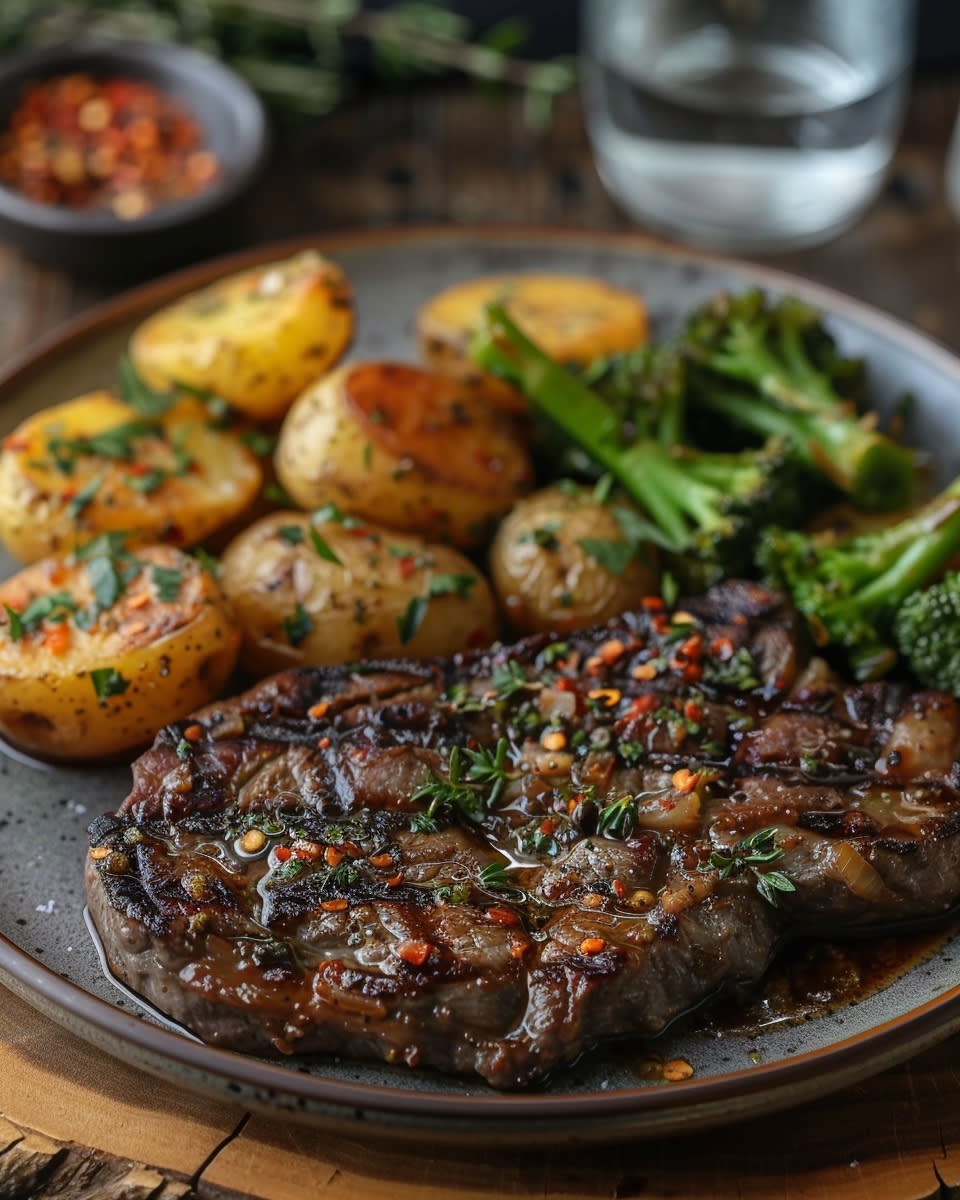
Crispy Garlic Butter Steak and Potatoes
Last Tuesday night, I walked into my kitchen after a long day and craved something special. Not fancy restaurant special, but the kind of meal that makes you close your eyes after the first bite. That’s when I made my go-to crispy garlic butter steak and potatoes, and let me tell you, it never disappoints.
Hi, I’m Sarah, and I’ve been cooking for my family for over fifteen years. This recipe has become my secret weapon for weeknight dinners and special occasions alike. There’s something magical about the combination of a perfectly seared steak next to golden, crispy potatoes, all swimming in rich garlic butter.
So what exactly is garlic butter steak with potatoes? It’s a one-pan wonder that brings together tender, juicy steak and crispy potatoes, both coated in a heavenly garlic butter sauce. The steak gets a beautiful crust on the outside while staying tender inside. The potatoes turn golden and crunchy, soaking up all those amazing flavors from the butter and garlic.
This dish has won the hearts of families across the USA for good reason. It’s simple enough for busy weeknights but impressive enough for guests. Americans love a good steak dinner, and when you add crispy potatoes and garlic butter to the mix, you’ve got a winner. Plus, it all cooks in one pan, which means less cleanup. That alone makes it a favorite in my house.
In this article, I’ll walk you through everything you need to know about making the perfect crispy garlic butter steak and potatoes. We’ll cover the ingredients you need, how to pick the right steak, and the step-by-step process to get that restaurant-quality meal right in your own kitchen. I’ll also share my best tips and tricks that I’ve learned over the years.
Ingredients You’ll Need for Garlic Butter Steak and Potatoes
Let’s talk about what you’ll need to create this amazing meal. The beauty of this recipe is that the ingredient list stays short and simple. Here’s what goes into my skillet steak and potatoes:
- Steak – 2 ribeye, sirloin, or New York strip steaks (about 1 to 1.5 inches thick)
- Baby potatoes – 1.5 pounds (Yukon Gold or red potatoes work great)
- Butter – 4 tablespoons of good quality unsalted butter
- Garlic – 6 to 8 cloves, minced
- Olive oil – 2 tablespoons
- Fresh herbs – Rosemary, thyme, or parsley
- Salt and pepper – To taste
- Optional – Red pepper flakes for a little kick
Now, let me explain why each ingredient matters. The steak is obviously the star of the show. You want a cut with good marbling because that fat creates flavor and keeps the meat juicy. I’ll get into specific cuts in just a bit.
Butter is what makes this dish truly special. It creates a rich, silky sauce that coats everything. I always use unsalted butter so I can control the salt level myself. Don’t even think about substituting margarine here. Real butter makes all the difference.
Fresh garlic brings the magic. When it hits that hot butter, it releases an aroma that fills your whole kitchen. I use a lot of garlic because I love the flavor, but you can adjust to your taste. Garlic powder won’t give you the same result, so stick with fresh cloves.
The potatoes need to be the right size. Baby potatoes are perfect because they cook quickly and get crispy on the outside. I cut them in half to create more surface area for browning. Yukon Gold potatoes have a naturally buttery flavor that works beautifully here.
Fresh herbs add a pop of color and a layer of flavor. Rosemary pairs wonderfully with steak, while thyme brings an earthy note. Parsley adds freshness at the end. I grow herbs in my kitchen window, but store-bought works just fine.
Where should you shop for these ingredients? For the best results with your garlic butter ribeye steak, I recommend visiting a local butcher for your meat. They can help you pick the perfect cut and even give you cooking tips. For everyday cooking, grocery stores like Whole Foods, Kroger, or your local supermarket carry quality steaks.
Look for meat that’s bright red with white marbling throughout. Avoid any packages with excess liquid or brown spots. The potatoes should feel firm with no soft spots or sprouts. Buy your garlic from the produce section, not the pre-minced jars. Fresh garlic has so much more flavor.
Preparing the Steak for Your Garlic Butter Recipe
Getting your steak ready is where the magic begins. This step can make or break your easy steak and potatoes recipe, so pay close attention.
First, take your steak out of the fridge about 30 to 40 minutes before cooking. This is really important. Cold steak won’t cook evenly. Room temperature steak develops a better crust and cooks more uniformly. I set mine on a plate on the counter while I prep everything else.
Pat the steak completely dry with paper towels. This might seem like a small thing, but moisture is the enemy of a good sear. You want that surface as dry as possible so it can form a beautiful brown crust. I use several paper towels and really press down to absorb all the moisture.
Now comes the seasoning. I keep it simple because good steak doesn’t need much. Sprinkle both sides generously with salt and freshly ground black pepper. I use coarse kosher salt because it adheres better to the meat. Don’t be shy with the salt. It needs more than you think.
Press the seasoning into the meat with your hands. This helps it stick and creates an even layer. Some people add garlic powder or other spices at this stage, but I prefer to let the garlic butter do that work later. The steak flavor should shine through first.
Let the seasoned steak sit for about 10 minutes. This allows the salt to penetrate the surface and start breaking down proteins. It also gives the moisture time to come back to the surface, which you’ll pat dry one more time right before cooking.
What Are the Best Cuts of Steak for This Recipe?
This question comes up all the time, and I’m happy to share what works best for pan seared steak and potatoes.
Ribeye is my personal favorite. It has beautiful marbling throughout, which means tons of flavor and a tender, juicy result. The fat renders as it cooks, basically basting the steak from the inside. Ribeyes are a bit pricier, but worth it for special occasions.
New York strip is another excellent choice. It has less fat than ribeye but still delivers great flavor. The strip has a firmer texture that some people prefer. It also holds up well to high heat, making it perfect for getting that crispy exterior.
Sirloin works great if you’re watching your budget. It’s leaner than the other two, so you need to be careful not to overcook it. Sirloin can get tough if you go past medium. But when cooked right, it’s delicious and much more affordable.
Filet mignon is the most tender cut, but it has less flavor because it’s so lean. If you use filet, the garlic butter becomes even more important for adding richness. I wrap mine in bacon sometimes to add fat.
For this one pan steak and potatoes recipe, I recommend steaks that are 1 to 1.5 inches thick. Thinner steaks cook too fast and can dry out before the potatoes finish. Thicker cuts give you more control and a better crust-to-center ratio.
Look for steaks with good marbling. Those white lines of fat throughout the meat will melt during cooking and keep everything moist. The color should be bright red, not brown or gray. A little darker red is fine, but avoid anything that looks dull.
If you’re at the butcher counter, ask them to cut steaks to your preferred thickness. They’re usually happy to help. Tell them you’re making garlic butter steak and they might offer additional tips specific to their meat.


Cooking the Potatoes to Crispy Perfection
Now that your steak is prepped and ready, let’s talk about those potatoes because honestly, they’re just as important as the meat. I’ve messed up potatoes more times than I’d like to admit before figuring out the right technique for getting that perfect golden crust.
Start by washing your baby potatoes thoroughly. I use a vegetable brush to scrub off any dirt. Don’t skip this step even though you’re peeling some of that skin away with each bite. Once clean, pat them completely dry with a kitchen towel. Here’s the thing about moisture and potatoes: water creates steam, and steam makes things soggy, not crispy.
Cut each potato in half lengthwise. This creates a flat surface that will make direct contact with the pan, which is where the magic happens. Try to make your cuts as even as possible so they cook at the same rate. I learned this the hard way when half my potatoes were crispy and the other half were still pale and soft.
Heat your skillet over medium-high heat and add about two tablespoons of olive oil. Let it get really hot until you see it shimmer. That’s your sign it’s ready. Place the potatoes cut-side down in the pan. Don’t move them! I know it’s tempting to peek underneath, but resist that urge for at least five minutes.
The key to crispy roasted potatoes is patience. When the potatoes hit that hot oil, they start forming a crust. If you flip them too early, you’ll tear that beautiful golden layer right off. Wait until they release easily from the pan. Give them about six to eight minutes on that first side.
Season them with salt and pepper while they cook. The seasoning sticks better to the hot, slightly oily surface. After the cut side develops a nice brown crust, flip them over and cook for another five to six minutes. You want them tender enough to pierce easily with a fork but not falling apart.
By the way, I usually push the potatoes to the sides of the pan once they’re done and cook my steak in the center. But if your pan isn’t big enough, take the potatoes out and keep them warm. Just don’t cover them tightly or they’ll steam and lose that crispiness you worked so hard to achieve.
How Do I Make Sure My Potatoes Are Crispy and Not Soggy?
This question keeps me up at night sometimes because soggy potatoes can ruin an otherwise perfect meal. After years of trial and error, I’ve figured out exactly what works for skillet garlic butter potatoes.
First thing: dry those potatoes like your dinner depends on it, because it does. After cutting them, I actually let them sit on paper towels for a few minutes to release any extra moisture. Some people even pat them dry twice. The drier the surface, the better the crust.
Don’t overcrowd your pan. This is probably the biggest mistake I see people make. When potatoes are packed too tightly, they steam instead of sear. Leave space between each piece. If your pan isn’t big enough, cook them in batches. It takes a few extra minutes but makes all the difference.
Use enough fat. Oil or butter creates a barrier between the potato and the pan, helping develop that crispy exterior. I use about two tablespoons of olive oil for 1.5 pounds of potatoes. Similar to how I approach my garlic butter steak bites with potatoes, getting the fat ratio right is crucial.
Keep the heat at medium-high. Too low and they’ll absorb oil and get greasy. Too high and they’ll burn before cooking through. You want to hear a steady sizzle when they’re in the pan. That sound tells you they’re developing a crust.
Resist the urge to stir constantly. Let them sit undisturbed so the starches can caramelize properly. Only flip once or maybe twice during the entire cooking process. Think of it like grilling – you get those beautiful grill marks by leaving things alone, not by constantly moving them around.
Making the Garlic Butter Sauce
Alright, here comes the best part of this whole recipe. The garlic butter sauce for steak is what ties everything together and makes people ask for seconds. It’s surprisingly simple to make, but there are a few tricks to getting it just right.
Once your steak and potatoes are cooked, reduce the heat to medium-low. Add four tablespoons of butter directly to the pan. Watch it melt and foam up. That foaming is normal – it’s just the water content evaporating from the butter.
As soon as the butter melts, add your minced garlic. Fresh garlic is absolutely non-negotiable here. I use about six large cloves, but my neighbor swears by eight. It depends on how much you love garlic. Stir it around for about thirty seconds to one minute.
Here’s where you need to pay attention: garlic can go from perfectly golden to burnt in seconds. Burnt garlic tastes bitter and will ruin your sauce. Keep stirring and watch for it to turn just slightly golden and become incredibly fragrant. The smell will make your mouth water.
Toss in your fresh herbs at this point. I usually use a sprig of rosemary and a few sprigs of thyme. Strip the leaves off the stems and add them to the butter. They’ll sizzle and release their oils into the sauce. Sometimes I add a pinch of red pepper flakes if I want a little heat, kind of like I do with my honey garlic beef rice bowl when I’m feeling adventurous.
Swirl the pan to combine everything. The butter should be golden, fragrant, and coating the bottom of the pan. This is your moment to taste and adjust. Need more salt? Add a pinch. Want more garlic? Sure, throw in another clove. This is your sauce, make it your own.
Spoon this beautiful garlic herb butter over your steak and potatoes. Don’t be stingy. Let it pool around everything. The potatoes will soak it up like little sponges, and the steak will glisten with flavor.
Can I Use Other Types of Butter for This Recipe?
Funny enough, people ask me this all the time at dinner parties. The short answer is yes, but the results will vary depending on what you choose.
Regular unsalted butter is my go-to for butter garlic steak. It gives you control over the salt level and has that classic rich flavor we all love. Salted butter works too, but you’ll need to cut back on the additional salt you add. I once used salted butter and didn’t adjust my seasoning – everything tasted like the ocean.
European-style butter has a higher fat content, usually around 82-85% compared to American butter’s 80%. It creates an even richer, creamier sauce. If you can find Kerrygold or President butter, give it a try. The difference is noticeable, though it costs a bit more.
Clarified butter or ghee works beautifully if you want to avoid the milk solids. It has a higher smoke point too, which means you can cook at higher temperatures without burning. I use ghee when I’m feeling fancy or if someone has dairy sensitivities but can handle clarified butter.
Plant-based butter? I’ve tried it. It works in a pinch but doesn’t quite deliver the same depth of flavor. The texture is slightly different too – not as silky smooth. But if you’re dairy-free, it’s better than nothing.
Can you make this ahead? Absolutely. Melt your butter with garlic and herbs, let it cool, and store it in the fridge for up to a week. When you’re ready to use it, just warm it gently in the pan. It won’t be quite as fresh-tasting as making it right then, but it’s still delicious and saves time on busy weeknights.
Combining All the Elements
Getting everything to come together at the right moment feels like conducting an orchestra. After making this easy garlic butter steak recipe dozens of times, I’ve figured out the timing that works best.
Start with the potatoes since they take the longest – about twelve to fifteen minutes total. While they’re cooking, bring your steak to room temperature if you haven’t already. Once the potatoes are nearly done, push them to the edges of the pan and add your steak to the center.
Cook the steak for about three to four minutes per side for medium-rare, depending on thickness. The potatoes stay warm around the edges while the steak sears. This method keeps everything in one pan and at similar temperatures, which is why this dish reminds me of my favorite one pot ground beef zucchini skillet – minimal cleanup, maximum flavor.
After flipping the steak, that’s when I add the butter and garlic. The steak finishes cooking while the butter melts and the garlic becomes fragrant. Everything happens in about two minutes. Then I remove the steak to rest – never skip this step! – and toss the potatoes in the remaining garlic butter.
Let your steak rest for at least five minutes before slicing. This allows the juices to redistribute throughout the meat. If you cut it immediately, all those delicious juices run out onto your cutting board instead of staying in the meat.
How Can I Make This Dish More Visually Appealing?
Presentation matters, even for weeknight dinners. When I’m serving this pan seared garlic butter steak to guests, I take an extra minute to make it look restaurant-worthy.
Slice the steak against the grain at an angle. This creates those beautiful diagonal cuts you see in restaurants. Arrange the slices slightly overlapped on one side of the plate. The angle shows off that perfect pink center.
Pile the golden potatoes beside the steak. Let some of them overlap with the meat. Drizzle extra garlic butter over everything – let it pool a little on the plate for visual interest and extra flavor.
Garnish with fresh herbs. A small sprig of rosemary or a sprinkle of chopped parsley adds a pop of green color. Sometimes I add a lemon wedge on the side, even though I don’t always squeeze it over the steak. It just looks nice and gives people the option.
Use a white plate if you have one. The contrast makes the golden potatoes and brown seared steak really stand out. I learned this trick from watching cooking shows, and it genuinely makes a difference in photos and in person.
If you’re feeling fancy, add a pat of herb butter on top of the sliced steak right before serving. It melts slightly and looks impressive. This technique works great for any special beef dinner, even something more casual like a slow cooker BBQ pulled beef sandwich when you want to elevate the presentation.
The most important thing? Serve it hot. This dish is best right off the stove when the butter is still sizzling and everything is piping hot. All the visual appeal in the world won’t matter if the food is lukewarm.


Serving Suggestions for Your Garlic Butter Steak and Potatoes
So you’ve nailed the crispy garlic butter steak and potatoes, but what should go alongside it? I’ve spent years figuring out which sides work best without stealing the spotlight from the main event.
A simple green salad is my go-to most nights. Nothing fancy – just mixed greens, cherry tomatoes, cucumber, and a light vinaigrette. The fresh, crisp vegetables cut through the richness of the butter and provide a nice contrast. I usually toss mine with lemon juice, olive oil, and a touch of Dijon mustard.
Roasted vegetables work beautifully too. Asparagus, green beans, or Brussels sprouts get a quick roast in the oven while the steak cooks. Toss them with olive oil, salt, and pepper, then roast at 425°F for about fifteen minutes. The caramelized edges add another layer of flavor without competing with your garlic butter ribeye steak.
Here’s the thing about sides – they should complement, not complicate. Since you’ve already got potatoes as your starch, skip the bread or rice. One starch is plenty. I learned this after serving mashed potatoes, roasted potatoes, AND dinner rolls at the same meal. Everyone was too full to enjoy dessert.
Sautéed mushrooms are incredible with steak. Cook them in a separate pan with butter and a splash of white wine. They’re earthy and rich, which pairs perfectly with beef. Sometimes I add them right to the same pan after cooking the steak, letting them soak up all those delicious browned bits.
Creamed spinach feels special without much effort. Wilt fresh spinach in a pan, add a bit of cream and parmesan, and you’ve got yourself a steakhouse-worthy side. It takes maybe five minutes and makes the whole meal feel elevated.
For wine pairing, I typically reach for a bold red. Cabernet Sauvignon is classic with steak – its tannins complement the fat in the meat beautifully. I’m not a wine expert by any means, but I’ve noticed that fuller-bodied reds just work better with this pan seared steak and potatoes than lighter wines.
Malbec is another favorite of mine. It’s fruity but not too sweet, with enough structure to stand up to the garlic butter. Plus it’s usually more affordable than Cabernet, which matters when you’re cooking on a Tuesday night. My local wine shop guy told me Argentine Malbecs offer the best value.
If you prefer white wine, go with something with body like an oaked Chardonnay. The buttery notes in the wine mirror the butter in your dish. Lighter whites get lost against the bold flavors of garlic and beef. Trust me, I tried serving this with Pinot Grigio once and it just didn’t work.
When serving this for a special occasion, presentation becomes extra important. I use my nice plates – you know, the ones that usually sit in the cabinet. Set the table with cloth napkins and maybe light a candle or two. It sounds cheesy, but ambiance makes food taste better.
Start with a simple appetizer about thirty minutes before the main course. Bruschetta or a cheese board gives people something to nibble while you finish cooking. It also means they won’t be starving when dinner hits the table, so they can actually savor each bite.
Serve the steak and potatoes on warmed plates. I pop mine in a 200°F oven for just a few minutes before plating. Cold plates cool down hot food too quickly. This little trick keeps everything at the perfect temperature longer.
What Are Some Good Side Dishes to Go With This Meal?
Beyond what I’ve already mentioned, there are tons of options that won’t overwhelm your easy garlic butter steak recipe. Let me share some favorites that people always ask about.
Grilled or roasted corn on the cob works great in summer. Brush it with herb butter and sprinkle with parmesan cheese. The sweetness of corn balances the savory steak perfectly. My kids actually eat their vegetables when I serve corn this way.
A Caesar salad brings that restaurant feel home. The creamy dressing and crunchy croutons add texture variety to your meal. I make mine with romaine, homemade croutons, and lots of parmesan. The anchovy in traditional Caesar dressing actually complements beef really well.
Caprese salad is perfect when tomatoes are in season. Fresh mozzarella, ripe tomatoes, basil, and a drizzle of balsamic glaze. It’s light, refreshing, and requires zero cooking. I serve it family-style on a big platter in the middle of the table.
Garlic bread might seem like overkill with already garlicky steak, but hear me out. Crusty bread is perfect for soaking up all that garlic butter sauce left on your plate. Nothing goes to waste, and honestly, that sauce is too good to leave behind.
For something different, try a wedge salad. Iceberg lettuce might not be trendy, but topped with blue cheese dressing, bacon bits, and tomatoes, it’s a classic steakhouse side for good reason. The cold, crunchy lettuce contrasts beautifully with hot, tender steak.
Storing and Reheating Your Steak and Potatoes
Leftovers happen, especially if you’re cooking for just one or two people. The good news is that crispy garlic butter steak and potatoes keeps pretty well if you handle it right.
Let everything cool to room temperature first, but don’t leave it out for more than two hours. Bacteria grow fast in that temperature danger zone between 40°F and 140°F. Once cooled, separate the steak from the potatoes and store them in different airtight containers.
Why separate them? They reheat differently. The steak needs gentle heat to avoid overcooking, while the potatoes need higher heat to crisp up again. Storing them together means compromising on both.
Store your leftovers in the refrigerator for up to three to four days. The USDA says cooked beef keeps safely for that long when properly refrigerated. I write the date on my containers with a marker so I don’t have to guess later.
For the steak, wrap it tightly or use a container with a good seal. Exposure to air dries out meat quickly. Sometimes I’ll slice leftover steak before storing since I usually use it for sandwiches or salads anyway. Pre-slicing saves time later.
The potatoes lose their crispiness in the fridge – that’s just physics. Moisture from refrigeration softens them up. But don’t worry, I’ve figured out how to bring back that crispy exterior when reheating.
Speaking of reheating, never use the microwave for steak if you can help it. Microwaving turns tender meat into rubber. I’ve made this mistake enough times to know better now. The only exception is if you’re using the meat for tacos or another dish where texture matters less.
The best way to reheat steak is low and slow in the oven. Preheat to 250°F, place your steak on a wire rack over a baking sheet, and warm it for about twenty to thirty minutes depending on thickness. This gentle heat warms it through without continuing to cook it.
For extra insurance against drying out, add a pat of butter on top or cover loosely with foil. The butter melts and bastes the meat as it warms. Sometimes I’ll add a splash of beef broth to the pan underneath too.
Potatoes need the opposite approach – high heat to restore crispiness. Heat a skillet over medium-high heat with a tablespoon of oil or butter. Add the potatoes cut-side down and let them sit for three to four minutes until they crisp up again. Don’t stir them around too much.
You can also reheat potatoes in the oven at 400°F for about ten to fifteen minutes. Spread them on a baking sheet in a single layer. They won’t be quite as crispy as fresh, but pretty close. Unlike steaming, which would make them mushy, dry heat methods bring back that texture we’re after.
By the way, leftover garlic butter steak makes incredible sandwiches. Slice it thin, pile it on crusty bread with arugula, caramelized onions, and horseradish mayo. That’s my favorite lunch the day after making this dish.
How Long Can I Store the Leftovers?
Three to four days is your safe window in the refrigerator. After that, the quality drops and food safety becomes questionable. I try to use leftovers within two days personally, just because they taste better fresher.
Can you freeze it? Technically yes, but I don’t recommend it for this dish. Cooked potatoes get grainy and weird when frozen. The texture just isn’t the same after thawing. The steak freezes okay if wrapped really well, but it’s best enjoyed fresh.
If you do freeze steak, wrap individual portions tightly in plastic wrap, then again in foil or a freezer bag. Remove as much air as possible. Label it with the date and use within two to three months for best quality.
To thaw frozen steak safely, move it to the fridge the night before you plan to eat it. Slow thawing in the refrigerator keeps bacteria from growing. Never thaw meat on the counter – that’s asking for trouble.
Meal prep fans, here’s my advice: cook the steak and potatoes fresh when you want to eat them. This isn’t a dish that benefits from advance preparation. However, you can prep ingredients ahead. Cut and season your steak the morning of, prep the potatoes, and mince your garlic. Everything gets stored in the fridge until cooking time.
The garlic butter can be made several days ahead and stored in the fridge. Just let it come to room temperature or warm it gently before using. Pre-made compound butter actually saves time on busy weeknights.
For folks exploring other hearty meals that work well for meal planning, you might want to check out more options at our collection of beef steak recipes where you’ll find dishes with different storage and reheating characteristics.
I hope this guide helps you create the perfect crispy garlic butter steak and potatoes in your own kitchen. It’s one of those recipes that looks impressive but comes together easily once you know the tricks. The combination of tender, juicy steak and golden potatoes all coated in that rich garlic butter never fails to satisfy. Give it a try this week – I think it’ll become one of your favorites too.
Frequently Asked Questions
What are the best cuts of steak for this recipe?
Ribeye offers the best marbling and flavor for this dish, making it incredibly juicy and tender. New York strip is another excellent choice with great beef flavor and a firmer texture that holds up well to high heat. Sirloin works if you’re on a budget, though it’s leaner so watch your cooking time carefully. For this recipe, choose steaks that are one to one and a half inches thick with visible marbling throughout. Thinner cuts cook too quickly and can dry out before developing a proper crust.
How do I make sure my potatoes are crispy and not soggy?
Dry your potatoes thoroughly after washing and cutting – moisture is the enemy of crispiness. Don’t overcrowd the pan, as this causes steaming instead of searing, which creates soggy potatoes. Use enough oil or butter to create a barrier between the potato and pan, and keep the heat at medium-high. Most importantly, resist the urge to move them around constantly – let them sit undisturbed for five to eight minutes per side. If you follow these steps, you’ll get that golden, crispy exterior every time.
Can I use other types of butter for this recipe?
Yes, you can use different butters with slightly different results. European-style butter with higher fat content creates an even richer sauce, while salted butter works if you reduce your additional salt accordingly. Clarified butter or ghee offers a higher smoke point and works well if you want to avoid milk solids. Plant-based butter can work in a pinch for dairy-free diets but won’t deliver quite the same depth of flavor. Regular unsalted butter remains my top recommendation because it gives you complete control over seasoning.
How can I make this dish more visually appealing?
Slice your steak against the grain at an angle to show off that perfect pink center. Arrange the slices slightly overlapped on one side of the plate with golden potatoes piled beside them. Drizzle extra garlic butter over everything and garnish with fresh herbs like rosemary or parsley for a pop of color. Use white plates if possible, as they make the colors of the food stand out more. Serve immediately while everything is hot and the butter is still sizzling for maximum visual and taste appeal.
What are some good side dishes to go with this meal?
A simple green salad with light vinaigrette cuts through the richness of the butter perfectly. Roasted vegetables like asparagus, green beans, or Brussels sprouts add color and nutrition without overwhelming the main dish. Sautéed mushrooms cooked with butter and white wine complement the beef beautifully. Creamed spinach adds a steakhouse feel, while Caesar salad brings restaurant vibes home. Since you already have potatoes, skip additional starches like bread or rice to keep the meal balanced.
How long can I store the leftovers?
Store leftovers in the refrigerator for three to four days maximum in airtight containers. Let everything cool to room temperature first, but don’t leave it out for more than two hours to prevent bacterial growth. Store the steak and potatoes separately since they require different reheating methods. Write the date on your containers so you don’t have to guess later. While you can technically freeze the steak for two to three months, I don’t recommend freezing the potatoes as their texture becomes grainy and unpleasant after thawing.
Can I make this recipe in advance for meal prep?
This dish tastes best when cooked fresh rather than made ahead completely. However, you can prep ingredients in advance to save time – season your steak, cut and dry your potatoes, and mince your garlic the morning of or night before. The compound garlic butter can be made several days ahead and stored in the refrigerator. When you’re ready to cook, everything comes together quickly in about thirty minutes. Pre-cooking and reheating compromises the texture of both the steak and the crispy potatoes.
What temperature should my steak be for medium-rare?
Medium-rare steak should reach an internal temperature of 130°F to 135°F. Use a meat thermometer inserted into the thickest part of the steak to check, avoiding any bones or fat. Remember that the temperature will rise another five degrees while the meat rests after cooking. Pull your steak off the heat at around 125°F to 130°F for perfect medium-rare. If you prefer medium, aim for 135°F to 140°F before resting.
Can I use a different type of potato for this recipe?
Baby potatoes work best because they’re the right size and get crispy quickly, but you can use alternatives. Yukon Gold potatoes cut into one-inch chunks work beautifully with their buttery flavor. Red potatoes also crisp up nicely and hold their shape well during cooking. Avoid russet potatoes as they’re too starchy and tend to fall apart. Whatever potato you choose, cut them into similar-sized pieces so they cook evenly and develop that golden crust at the same rate.
What should I do if I don’t have a cast iron skillet?
A heavy-bottomed stainless steel skillet works great for this recipe and develops a beautiful crust on both the steak and potatoes. Regular non-stick pans can work in a pinch, though they won’t get quite as hot and the browning might not be as deep. Avoid thin, lightweight pans that don’t retain heat well, as they create hot spots and uneven cooking. Whatever pan you use, make sure it’s large enough to avoid overcrowding – you may need to cook in batches with a smaller pan.
Ingredients
Equipment
Method
- Retirez le steak du réfrigérateur 30 à 40 minutes avant la cuisson pour le ramener à température ambiante.
- Essuyez complètement le steak avec des serviettes en papier et assaisonnez généreusement les deux côtés avec du sel et du poivre.
- Coupez les pommes de terre bébé en deux dans le sens de la longueur et lavez-les soigneusement; assurez-vous qu'elles soient complètement sèches.
- Chauffez une poêle à feu moyen-vif et ajoutez l'huile d'olive.
- Placez les pommes de terre côté coupé vers le bas dans la poêle, en les cuisant sans les déranger pendant 6 à 8 minutes jusqu'à ce qu'une croûte dorée se forme.
- Retournez les pommes de terre et faites cuire pendant 5 à 6 minutes de plus jusqu'à ce qu'elles soient tendres.
- Une fois que les pommes de terre sont cuites, poussez-les sur les côtés de la poêle et ajoutez les steaks au centre.
- Cuisez les steaks pendant environ 3 à 4 minutes de chaque côté pour une cuisson à point, selon l'épaisseur.
- Réduisez le feu à moyen-doux, ajoutez le beurre dans la poêle et laissez-le fondre.
- Une fois le beurre fondu, ajoutez l'ail émincé et faites-le cuire pendant environ 30 secondes jusqu'à ce qu'il soit parfumé, en faisant attention de ne pas le brûler.
- Ajoutez des herbes fraîches et une pincée de flocons de piment rouge si désiré, puis tournez pour combiner.
- Retirez les steaks de la poêle et laissez-les reposer pendant au moins 5 minutes.
- Assaisonnez les pommes de terre cuites avec la sauce au beurre à l'ail avant de servir.