
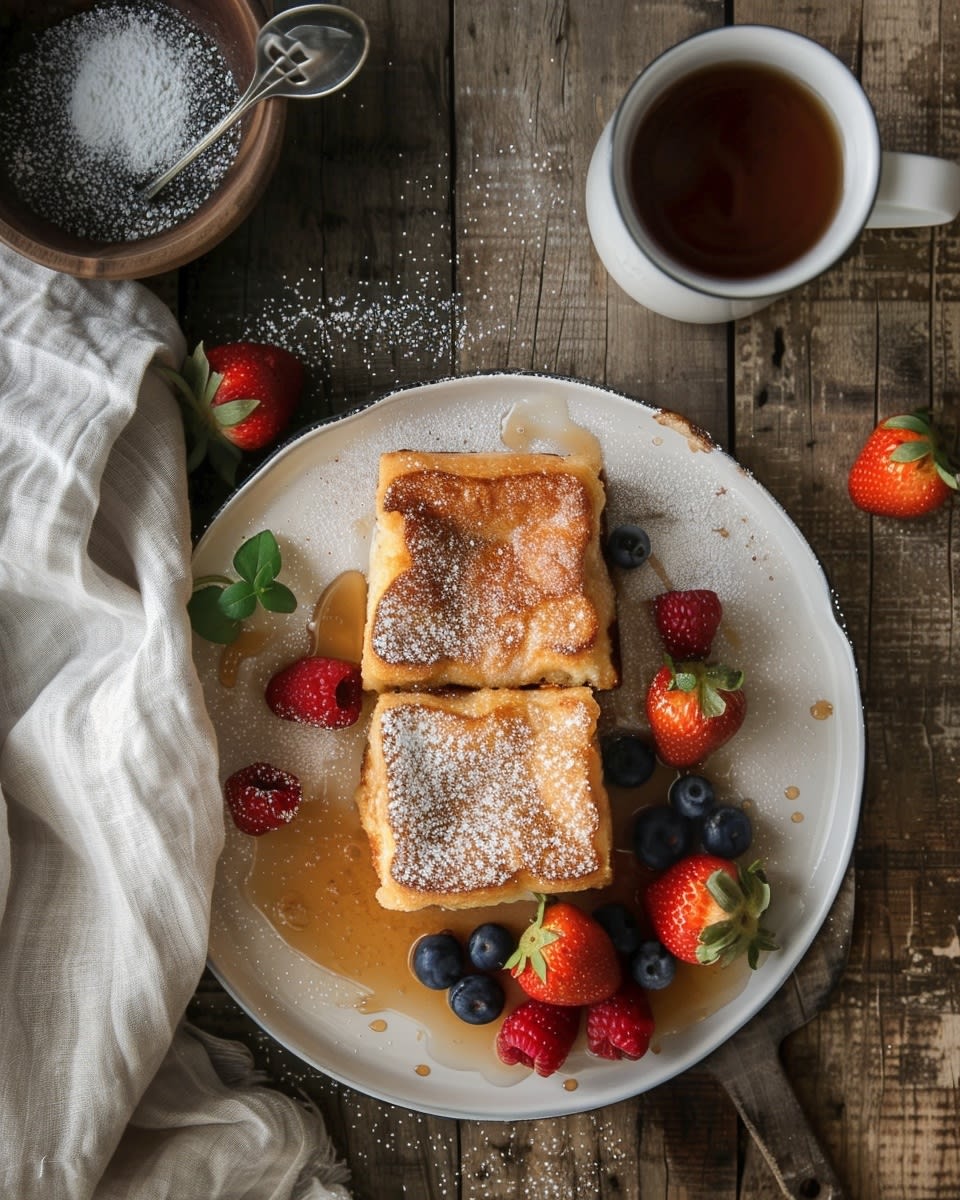
The Magic of Cinnamon Roll French Toast Bake
Picture this: It’s Saturday morning, and your kitchen smells like a bakery exploded in the best possible way. The sweet scent of cinnamon and vanilla fills every corner of your house. Your family wanders in, still in pajamas, drawn by the irresistible aroma. That’s the power of a Cinnamon Roll French Toast Bake.
I first discovered this recipe three years ago when I had leftover cinnamon rolls from a birthday party. I didn’t want them to go stale, so I started searching for ideas. What I found changed my weekend breakfast game forever. This dish combines two beloved breakfast treats into one incredible casserole. You get the soft, custardy goodness of French toast mixed with the sweet, sticky perfection of cinnamon rolls.
A cinnamon roll french toast bake is basically breakfast heaven in a 9×13 pan. You layer pieces of bread and cinnamon rolls, pour a creamy egg mixture over everything, and bake until golden. The result is a gooey cinnamon roll french toast casserole that serves a crowd without you standing over a hot stove flipping individual slices.
The best part? You can make it the night before. An overnight cinnamon french toast bake means you do the prep work when you have time, let it sit in the fridge, and pop it in the oven the next morning. No stress, no rush, just delicious breakfast waiting to happen.
This recipe has become my go-to for holiday mornings, brunch gatherings, and lazy Sundays. My kids request it for their birthdays instead of regular breakfast. My husband, who usually grabs a granola bar on his way out the door, actually sits down to eat when I make this.
Ingredients You’ll Need for Your Cinnamon Roll French Toast Bake
Let’s talk about what goes into this magical breakfast creation. The ingredient list is simple, and you probably have most items in your kitchen already.
The Essential Ingredients:
- 8 cups of bread, cut into cubes (about 1 loaf)
- 1 package of refrigerated cinnamon rolls (the kind with icing included)
- 6 large eggs
- 2 cups of whole milk
- 1/4 cup of heavy cream
- 1/3 cup of granulated sugar
- 2 teaspoons of vanilla extract
- 1 teaspoon of ground cinnamon
- 1/4 teaspoon of salt
- Butter for greasing the pan
Now, not all ingredients are created equal. The bread you choose makes a huge difference. I’ve tried this recipe with every type of bread imaginable. Day-old French bread works beautifully. Brioche creates an extra rich result. Challah gives you a slightly sweet base that pairs perfectly with the cinnamon rolls.
Avoid using sandwich bread if you can. It gets too soggy and doesn’t hold up well. You want something with a bit of structure. If your bread is fresh, cube it and leave it out overnight to dry slightly. Stale bread actually works better because it soaks up the egg mixture without falling apart.
For the cinnamon rolls, I usually grab whatever’s on sale at the grocery store. The standard Pillsbury or store-brand tubes work perfectly. You can also use a leftover cinnamon roll french toast bake approach if you have extras from another meal. Sometimes I’ll buy the cinnamon rolls specifically for this recipe because they add that signature gooey texture.
Optional Add-Ins to Take It Up a Notch:
- 4 ounces of cream cheese, cut into small cubes
- 1/2 cup of chopped pecans or walnuts
- 1/2 cup of maple syrup (plus more for serving)
- 1/4 cup of brown sugar for extra sweetness
- Fresh berries for topping
- Whipped cream for serving
The cinnamon roll casserole with cream cheese variation is my personal favorite. Those little pockets of tangy cream cheese cut through the sweetness and add incredible richness. I cube the cream cheese and tuck pieces throughout the casserole before baking.
If you’re making a cinnamon roll french toast bake with maple syrup, drizzle some into the egg mixture and save extra for serving. Real maple syrup makes a difference here. The fake stuff works in a pinch, but pure maple syrup adds depth you can taste.
How to Make a Cinnamon Roll French Toast Bake from Scratch
Making a cinnamon roll french toast casserole from scratch sounds intimidating, but I promise it’s easier than you think. I’m going to walk you through every step. If I can make this while my toddler hangs on my leg, you can absolutely do this.
Step 1: Prep Your Pan and Ingredients
Start by buttering a 9×13 inch baking dish. Don’t skip this step. Even if you have a non-stick pan, butter it anyway. The butter creates a slightly crispy edge that tastes amazing. While you’re at it, cut your bread into roughly 1-inch cubes. They don’t need to be perfect. I just tear through the loaf with a bread knife.
Open your cinnamon roll package and cut each roll into quarters. Set the icing packet aside. You’ll use that later for drizzling.
Step 2: Create the Egg Mixture
In a large bowl, whisk together the eggs until they’re well beaten. Add the milk, cream, sugar, vanilla, cinnamon, and salt. Whisk until everything combines smoothly. The mixture should look like a thin custard. This is the secret ingredient that transforms plain bread into something special.
I like to use whole milk and heavy cream for richness, but you can use what you have. I’ve made this with 2% milk and half-and-half when that’s all I had in the fridge. It still turned out great.
Step 3: Layer Your Casserole
Here’s where the fun begins. Spread half of your bread cubes in the bottom of the buttered pan. Scatter half of the cinnamon roll pieces over the bread. If you’re adding cream cheese cubes or nuts, sprinkle half of those now too.
Pour half of the egg mixture over this first layer. Use a spoon to gently press the bread down so it soaks up the liquid. Don’t worry if it looks like too much liquid. The bread will absorb it all.
Add the remaining bread cubes and cinnamon roll pieces on top. Pour the rest of the egg mixture over everything. Press down gently again. Make sure all the bread gets coated. Some pieces will float to the top, and that’s fine. They’ll get nice and crispy during baking.
Step 4: The Overnight Method
If you’re making a cinnamon roll casserole overnight, this is where you cover the pan with plastic wrap or aluminum foil and stick it in the fridge. Let it sit for at least 4 hours, but overnight is better. The bread soaks up all that custardy goodness while you sleep.
When you’re ready to bake the next morning, take the pan out of the fridge while your oven preheats. Let it sit on the counter for about 15 minutes. This takes the chill off and helps it bake more evenly.
Step 5: Baking to Golden Perfection
Preheat your oven to 350°F. If you’re baking right away instead of doing the overnight method, let the assembled casserole sit at room temperature for 15 minutes before baking. This gives the bread time to soak up the egg mixture.
Bake uncovered for 45 to 50 minutes. You’re looking for a golden brown top with slightly crispy edges. The center should be set but still have a little jiggle when you shake the pan gently. A gooey cinnamon roll french toast casserole has some softness in the middle.
If the top starts browning too quickly, tent it loosely with foil for the last 15 minutes of baking. This has happened to me a few times when my oven runs hot.
Step 6: The Finishing Touches
When your casserole comes out of the oven, let it cool for about 10 minutes. While it’s resting, warm up that icing packet from your cinnamon rolls. I usually microwave it for about 10 seconds to make it pourable.
Drizzle the icing all over the top. It will melt slightly into the warm casserole and create pools of sweetness. If you’re serving this with maple syrup, warm that too. Cold syrup on hot breakfast is a crime.
Cut into squares and serve while it’s still warm. The texture should be creamy in the middle with crispy edges. Each bite has soft French toast, gooey cinnamon roll pieces, and that sweet custard throughout.
I like to set out extra toppings so everyone can customize their serving. Fresh berries, whipped cream, extra maple syrup, and a dusting of powdered sugar all work beautifully. My daughter loads hers up with strawberries. My son wants extra icing. My husband goes straight maple syrup.
This recipe serves 8 to 10 people, depending on portion sizes. In my house, it feeds four with leftovers for the next day. Yes, it reheats well. Just microwave individual portions for about 30 seconds, or warm the whole pan in a 300°F oven for 15 minutes.


Making Your Cinnamon Roll French Toast Bake Your Own
Once you’ve mastered the basic recipe, the real fun begins. This is where you get to experiment and make the dish truly yours. I’ve spent the last three years playing around with different versions, and honestly, I haven’t found a combination that didn’t work.
The beauty of a cinnamon roll french toast bake is that it’s incredibly forgiving. You can swap ingredients, add extras, or completely change the flavor profile without ruining it. Last month, I accidentally grabbed apple cinnamon rolls instead of regular ones. My family loved it so much that now they request the “mistake version” specifically.
Here’s the thing about variations – start with one change at a time. Don’t overhaul the entire recipe on your first attempt. Trust me on this. I once tried adding three new ingredients plus changing the bread type all at once. It was overwhelming, and I couldn’t figure out what actually made a difference.
The Cream Cheese Swirl Situation
I mentioned the cinnamon roll casserole with cream cheese earlier, but let me tell you exactly why this variation has become legendary in my house. You take eight ounces of cream cheese – not the spreadable kind, the block – and cut it into half-inch cubes. Toss them throughout your layers like little treasure pieces.
When the casserole bakes, the cream cheese softens but doesn’t completely melt. You get these pockets of tangy richness that balance the sweetness perfectly. My sister-in-law, who claims she doesn’t like “sweet breakfasts,” devours this version. The cream cheese cuts the sugar just enough to make it feel less like dessert and more like sophisticated brunch food.
Another approach I’ve tried is spreading softened cream cheese on the bread cubes before layering. This creates more of a cheesecake swirl effect throughout the casserole. It takes extra time, but for special occasions like Mother’s Day or Christmas morning, it’s worth the effort.
The Leftover Magic
Funny enough, some of my best casseroles have come from using a leftover cinnamon roll french toast bake approach with random ingredients I needed to use up. Got half a loaf of challah going stale? Perfect. Three cinnamon rolls left from yesterday’s breakfast? Throw them in. That’s actually how this whole recipe started for me.
I’ve also used leftover croissants, which created this ridiculously buttery, flaky situation that made everyone at brunch ask for the recipe. Day-old donuts work too, though that version edges more into dessert territory. My nephew requested it for his birthday breakfast, and I couldn’t say no.
Toppings That Transform Everything
Let me walk you through the topping combinations that have become household favorites around here. First up: the nutty approach. Toast some pecans or walnuts in a dry pan until they smell amazing, roughly chop them, and sprinkle them over the top during the last ten minutes of baking. The nuts get slightly caramelized from the sugar and add this incredible crunch.
For fruit lovers, fresh blueberries scattered throughout before baking burst into little pockets of jammy sweetness. Sliced strawberries work better as a fresh topping after baking since they can get mushy in the oven. My daughter invented what she calls “berry explosion style” where she piles fresh raspberries, blueberries, and sliced strawberries on top of her serving.
Caramel sauce drizzled over warm cinnamon roll french toast bake with maple syrup creates this sweet-on-sweet situation that sounds like too much but somehow works. I buy the jarred caramel and warm it slightly so it drizzles easily. Sometimes I’ll add a pinch of sea salt to the caramel for that trendy salted caramel effect.
By the way, if you’re looking for other crowd-pleasing breakfast options, my protein banana oat muffins are perfect for meal prep alongside this casserole.
The Healthier Spin (Yes, Really)
Now, I’m not going to pretend this is health food. It’s not. But you can make adjustments that lighten it up without sacrificing too much of what makes it special. I’ve tried this because my husband went on a health kick last January, and I needed to adapt.
Start with whole grain bread or a hearty multigrain loaf. The texture holds up beautifully, and you get fiber and nutrients you wouldn’t get from white bread. The nuttier flavor actually complements the cinnamon really well. I’ve even used whole wheat cinnamon rolls when I can find them, though they’re harder to locate.
Cut the sugar in the egg mixture by half. You’re still getting sweetness from the cinnamon rolls and the icing, so reducing the added sugar doesn’t hurt as much as you’d think. I’ve also swapped half the milk for unsweetened almond milk, which drops the calories without changing the texture noticeably.
Instead of heavy cream, use half-and-half or even skip it entirely and go all milk. The casserole won’t be quite as rich, but it still tastes great. Add extra vanilla extract – maybe a tablespoon instead of two teaspoons – to boost flavor without adding sugar or fat.
For a protein boost that keeps you full longer, try my trick of adding a scoop of vanilla protein powder to the egg mixture. Whisk it in really well so it doesn’t clump. This makes the casserole more satisfying and less likely to cause a sugar crash an hour later. Speaking of protein-packed breakfasts, these overnight protein oats are another favorite in my house.
Serving Your Masterpiece
Presentation matters more than you might think. I learned this after bringing a casserole to a potluck in a beat-up pan covered with wrinkled foil. It tasted amazing but looked kind of sad next to everyone else’s carefully arranged dishes.
Now I bake my gooey cinnamon roll french toast casserole in a pretty ceramic baking dish when I’m serving guests. Those extra five dollars at HomeGoods were worth it for the compliments alone. If you’re sticking with a regular pan, transfer portions to individual plates rather than serving straight from the pan.
Here’s what I do for a proper presentation: let the casserole cool for those ten minutes I mentioned, then cut neat squares with a sharp knife. Wipe the knife between cuts for clean edges. Place each square on a plate slightly off-center – it looks more intentional that way. Drizzle the icing in a zigzag pattern rather than just dumping it on top.
Add a mint leaf for color if you’re feeling fancy, or a light dusting of powdered sugar using a small strainer. Fresh berries on the side add color and give people a lighter option between bites of rich casserole.
What to Serve Alongside
This casserole is rich and filling, so I typically serve lighter sides. Crispy bacon provides a salty contrast that people love. I bake it in the oven while the casserole cooks, so everything finishes at the same time. Turkey bacon works too if you want a slightly healthier option.
Fresh fruit salad brings brightness to the plate. I throw together whatever’s in season – melon, grapes, pineapple, berries. A squeeze of lime juice over the fruit keeps everything fresh and adds a tiny tang that balances the sweetness.
For something completely different on the same breakfast spread, I love offering avocado egg toast as a savory option for guests who want variety.
Drink Pairings That Work
Coffee is the obvious choice, and a strong, dark roast cuts through the sweetness perfectly. I brew a full pot knowing people will want refills. For a special touch, set out cinnamon sticks people can use as stirrers. They add extra cinnamon flavor and look pretty in photos.
Hot chocolate makes this feel like a special occasion breakfast. I make mine from scratch with real chocolate, whole milk, and a pinch of cinnamon. Top it with whipped cream and chocolate shavings if you’re really going all out.
Tea drinkers in your group will appreciate having options. I usually brew a pot of chai or cinnamon spice tea that echoes the flavors in the casserole. English breakfast tea works well too, especially with a splash of milk.
For a brunch party with adults, mimosas or a simple champagne cocktail with a sugar cube and orange peel makes everything feel celebratory. A banana peanut butter smoothie bowl station alongside the casserole gives health-conscious guests a lighter option.
Orange juice is classic for a reason. The acidity and freshness balance the rich casserole perfectly. I like squeezing fresh oranges when I have time, but good quality store-bought works fine.
Keeping It Fresh and Planning Ahead
Let’s talk about what happens after breakfast when you have leftovers, because unless you’re feeding a crowd, you’ll definitely have some. This is actually good news because cinnamon roll french toast bake keeps well.
Once the casserole cools to room temperature, cover it tightly with plastic wrap or transfer portions to airtight containers. It’ll stay good in the fridge for up to four days. I’ve pushed it to five days before with no issues, but four is the safe recommendation.
Reheating is where some people mess up. Don’t microwave the entire casserole hoping to serve it later – you’ll end up with some parts dried out and others still cold. Instead, reheat individual portions in the microwave for 30 to 45 seconds. The texture stays pretty close to fresh-baked.
If you want to reheat the whole thing, cover the pan with foil and warm it in a 300°F oven for about 20 minutes. Remove the foil for the last five minutes if you want to crisp up the top again. This method works great if you’re making an overnight cinnamon french toast bake and want to serve it for two meals.
Freezing for Future You
This casserole freezes surprisingly well, which makes it perfect for meal prep or those mornings when you need something special but don’t have time to cook. I freeze it two different ways depending on my needs.
For freezing the whole casserole before baking, assemble everything in a disposable aluminum pan, cover it really well with plastic wrap and then foil, and freeze for up to three months. When you’re ready to bake it, let it thaw in the fridge overnight, then bake as directed. You might need to add five or ten extra minutes to the baking time.
For freezing after baking, let the casserole cool completely, cut it into individual portions, and wrap each piece tightly in plastic wrap. Place the wrapped pieces in a freezer bag. These individual portions are lifesavers on busy mornings. Pull one out the night before, let it thaw in the fridge, and reheat in the microwave.
I keep a stash of frozen portions for those mornings when my kids want something special but we’re running late. Two minutes from freezer to table beats standing at the stove making pancakes when everyone needs to leave in fifteen minutes.
The texture changes slightly after freezing – it’s a bit less custardy and more bread-pudding-like – but it’s still delicious. The flavors actually intensify a bit during freezing, which some people prefer. My mom swears the frozen and reheated version tastes better than fresh, though I think she’s just being contrary.


Common Questions About Making the Perfect Cinnamon Roll French Toast Bake
Over the years of making this recipe and sharing it with friends, I’ve gotten a ton of questions. People want to know how to adapt it, fix problems, or make it work with what they have on hand. I get it – every kitchen is different, and everyone has their own preferences. So let me answer the questions I hear most often.
Can I use any type of bread for this recipe?
Honestly, you have way more flexibility than you might think. I’ve successfully made this with French bread, brioche, challah, sourdough, Italian bread, and even Texas toast. The key is avoiding thin sandwich bread that’ll turn to mush. You want something with structure that can hold up to all that custard. Day-old bread actually works better than fresh because it’s already slightly dried out and soaks up the egg mixture without falling apart. My neighbor makes hers with Hawaiian rolls sometimes, which adds this subtle sweetness that’s pretty amazing. If your bread is super fresh, cube it and leave it out on the counter for a few hours or overnight. One time I was desperate and used hamburger buns – don’t do that. They got weirdly dense and didn’t taste right at all.
How do I make the Cinnamon Roll French Toast Bake gooier?
Ah, the quest for maximum gooeyness. I love this question because I’m all about that soft, custardy center. First trick: use more cinnamon rolls and less bread. Increase your cinnamon roll package from eight to twelve rolls and reduce the bread slightly. The rolls have more sugar and fat, which creates that gooey texture everyone loves. Second, add cream cheese cubes throughout – they melt into these rich pockets that make everything softer. Third, don’t overbake it. Pull it out when the center still has a slight jiggle. It’ll continue cooking as it sits. I also pour extra icing from the cinnamon rolls over the top while it’s still hot, which melts down into the casserole and adds moisture. Some people swear by adding an extra egg to the custard mixture or using half-and-half instead of regular milk for a richer, creamier result.
What if I don’t have leftover cinnamon rolls? Can I still make this?
Absolutely, and this is actually a great opportunity to simplify things. You can make a cinnamon french toast bake with bread by skipping the cinnamon rolls entirely and ramping up the cinnamon in your egg mixture. Use two tablespoons of cinnamon instead of one teaspoon, add a quarter cup of brown sugar to the bread layers, and dot the whole thing with butter pieces before baking. It won’t have those distinct cinnamon roll spirals, but you’ll still get amazing cinnamon flavor throughout. Another option is making a quick cinnamon swirl by mixing softened butter with cinnamon and brown sugar, then spreading it on your bread cubes before layering. I’ve done this when stores were out of cinnamon rolls, and my family honestly couldn’t tell the difference. You can also buy cinnamon rolls specifically for this recipe – they’re usually cheap, and the icing packet is worth having anyway.
Is there a way to make this recipe gluten-free?
Yes, though I’ll admit the texture changes slightly. Use a good quality gluten-free bread – the kind that comes sliced and feels substantial, not the crumbly stuff. Canyon Bakehouse or Udi’s work well from what I’ve tried. Let the bread get stale before using it because gluten-free bread can get mushy faster than regular bread. For the cinnamon rolls, you’ll need to either make gluten-free cinnamon rolls from scratch or look for frozen gluten-free ones at specialty stores. Some brands like Immaculate Baking Company make refrigerated gluten-free cinnamon rolls that work perfectly. The biggest difference I’ve noticed is that gluten-free versions need about five extra minutes of baking time and the texture is slightly denser. My cousin has celiac disease, and I’ve made this for her multiple times with great results. She actually prefers it because the gluten-free bread holds its shape better and doesn’t get as soggy.
Can I prepare this the night before and bake it in the morning?
This is literally my favorite way to make it, and I’d argue the overnight cinnamon french toast bake method actually tastes better. Assemble everything exactly as the recipe describes, then cover the pan tightly with plastic wrap or foil and refrigerate for at least four hours, but preferably overnight. The bread has more time to absorb all that custardy goodness, which creates a more uniform texture throughout. When you’re ready to bake, pull the pan from the fridge and let it sit on the counter while your oven preheats – about 15 to 20 minutes. This takes the chill off so it bakes more evenly. You might need to add five extra minutes to the baking time since you’re starting with a cold dish. I make this every Christmas Eve so Christmas morning is stress-free. While everyone opens presents, the casserole bakes, and the house smells incredible. According to refrigerator safety guidelines, you can keep assembled casseroles in the fridge for up to 24 hours before baking, which gives you plenty of flexibility.
How can I add a cream cheese layer to my casserole?
The cinnamon roll casserole with cream cheese is hands-down my most requested variation. Here’s exactly how I do it: take eight ounces of full-fat cream cheese – the block kind, not spreadable – and cut it into half-inch cubes. Layer half your bread and cinnamon rolls, scatter half the cream cheese cubes over that layer, pour half the egg mixture, then repeat with remaining ingredients. The cream cheese doesn’t completely melt; instead, it softens into these tangy pockets that cut through all the sweetness. For an even more intense cream cheese flavor, I sometimes make a cream cheese mixture by beating eight ounces of softened cream cheese with a quarter cup of sugar and one egg until smooth. Dollop this mixture randomly throughout the layers. It creates more of a cheesecake swirl effect. My mother-in-law does something different – she spreads softened cream cheese directly on the bread cubes before adding them to the pan, which is more time-consuming but creates cream cheese in every single bite.
What are some good toppings for Cinnamon Roll French Toast Bake?
Beyond the obvious icing and maple syrup, there’s a whole world of topping possibilities. Fresh berries add brightness and cut the richness – I love raspberries, blueberries, and sliced strawberries. Whipped cream makes it feel special, especially if you make homemade whipped cream with vanilla extract mixed in. Toasted pecans or walnuts add crunch and nutty flavor. Caramel sauce drizzled over the top creates this over-the-top dessert vibe that’s perfect for birthdays. A dusting of powdered sugar makes it look bakery-pretty for photos. My kids love chocolate chips sprinkled on top, which sounds weird but tastes amazing. Sliced bananas with a drizzle of peanut butter is my son’s favorite combination. For adults, a scoop of vanilla ice cream turns this into a legitimate dessert situation. I’ve even seen people top it with crumbled bacon for that sweet-and-salty thing. Greek yogurt on the side gives you something tangy and adds protein if you’re trying to balance out all the sugar.
How long does it take to bake this casserole?
In a 350°F oven, you’re looking at 45 to 50 minutes for a standard 9×13 inch pan. The exact time depends on your oven, your pan material, and whether you’re starting with a cold casserole from the fridge or room temperature. Dark pans bake faster than light-colored ones, so keep that in mind. You’ll know it’s done when the top is golden brown, the edges are slightly crispy, and the center is set but still has a tiny jiggle when you gently shake the pan. A gooey cinnamon roll french toast casserole shouldn’t be completely firm – you want some softness in the middle. If you’re baking it straight from the refrigerator without letting it come to room temperature first, add about five to ten minutes to the baking time. I always check it at the 40-minute mark to see how it’s progressing. If the top is browning too fast, tent it with foil. The worst thing you can do is overbake it, which makes it dry and dense instead of custardy. Trust me, I’ve done this when I got distracted by a phone call, and everyone noticed the difference.
Can I use maple syrup instead of regular syrup?
Not only can you, but I’d argue you should. A cinnamon roll french toast bake with maple syrup has this depth of flavor that regular pancake syrup just doesn’t provide. Real maple syrup – the pure stuff from actual maple trees – adds complexity with its slightly smoky, caramel notes. I actually add maple syrup two ways: I whisk a quarter cup into the egg mixture before pouring it over the bread, and then I serve extra warmed maple syrup on the side for drizzling. The syrup in the custard bakes into the casserole and adds subtle sweetness throughout. If pure maple syrup is too expensive or hard to find, the regular pancake syrup works fine too. I grew up eating the cheap stuff, and it’s still delicious. But once you try real maple syrup on this, it’s hard to go back. My husband is from Vermont, and he’s very particular about his maple syrup. He swears by Grade A Dark Amber for cooking because it has a stronger flavor that holds up to baking.
Where can I find more recipes like this one, such as on Pinterest or other platforms?
If you search for cinnamon roll french toast bake pinterest, you’ll find thousands of variations and ideas. Pinterest is honestly where I discovered half my favorite breakfast casseroles. Look for boards dedicated to brunch recipes or make-ahead breakfasts. Instagram has a huge community of home cooks sharing their versions with the hashtag #cinnamonrollfrenchtoast. YouTube has video tutorials if you’re more of a visual learner – watching someone make it the first time can really help. Food blogs like this one often have entire categories devoted to breakfast casseroles and sweet brunch dishes. I follow several breakfast-focused accounts that share similar recipes. Facebook groups for meal prep and freezer cooking often swap recipes like this because they’re perfect for making ahead. TikTok has gotten huge for quick recipe videos, and I’ve seen some creative twists on this classic there. Reddit’s cooking and baking communities are great for troubleshooting if you run into problems or want to ask specific questions.
By the way, if you’re looking for even more creative breakfast ideas beyond this casserole, you’ll find tons of inspiration in the breakfast and brunch category where I share everything from quick weekday options to impressive weekend spreads.
Your Turn to Create Breakfast Magic
Here’s the thing about cooking – the best recipes are the ones you actually make. This cinnamon roll french toast bake isn’t complicated or intimidating once you try it. You don’t need fancy equipment or professional skills. You just need a pan, some basic ingredients, and the willingness to experiment a little.
The first time I made this, I was nervous about whether the bread would absorb all that egg mixture and if the timing would work out. But watching my family’s faces as they took their first bites made every moment of uncertainty worth it. This recipe has become part of our family traditions now. It shows up on birthday mornings, holiday gatherings, and random Saturdays when we want something special.
What I love most is how forgiving it is. You can adapt it based on what’s in your fridge, what your family likes, and how much time you have. Make it the night before when you’re already in the kitchen cleaning up dinner. Throw in whatever add-ins sound good to you. Serve it with simple toppings or go all out with a full brunch spread.
This isn’t just a recipe – it’s a way to make mornings feel special without adding stress to your life. It’s a reason for people to gather around your table. It’s the kind of dish that makes your house smell like home. So grab that bread that’s getting stale, pick up a tube of cinnamon rolls on your next grocery run, and give this a try. I’m betting it becomes part of your breakfast rotation too, requested by name and made with whatever creative twist feels right to you.
Ingredients
Equipment
Method
- Beurrer un plat de cuisson 9x13 pouces.
- Coupez le pain en cubes de 1 pouce environ.
- Ouvrez le paquet de rouleaux de cannelle et coupez chaque rouleau en quartiers.
- Dans un grand bol, fouetter les œufs, le lait, la crème, le sucre, la vanille, la cannelle et le sel jusqu'à ce que le mélange soit homogène.
- Étalez la moitié des cubes de pain au fond du plat beurré.
- Éparpillez la moitié des morceaux de rouleaux de cannelle sur le pain.
- Si vous utilisez, parsemez la moitié des cubes de fromage à la crème ou de noix.
- Versez la moitié du mélange d'œufs sur la première couche et appuyez doucement.
- Ajoutez le reste des cubes de pain et des morceaux de rouleaux de cannelle par-dessus.
- Versez le reste du mélange d'œufs sur le tout et appuyez doucement à nouveau.
- Couvrez avec du film plastique ou du papier aluminium et réfrigérez pendant au moins 4 heures, de préférence toute la nuit.
- Préchauffez votre four à 350°F et laissez le casserole reposer à température ambiante pendant 15 minutes.
- Faire cuire à découvert pendant 45 à 50 minutes jusqu'à ce qu'il soit doré.
- Faire refroidir pendant 10 minutes, puis réchauffer le glaçage et le verser sur le dessus.
- Servir chaud avec des garnitures supplémentaires si désiré.