
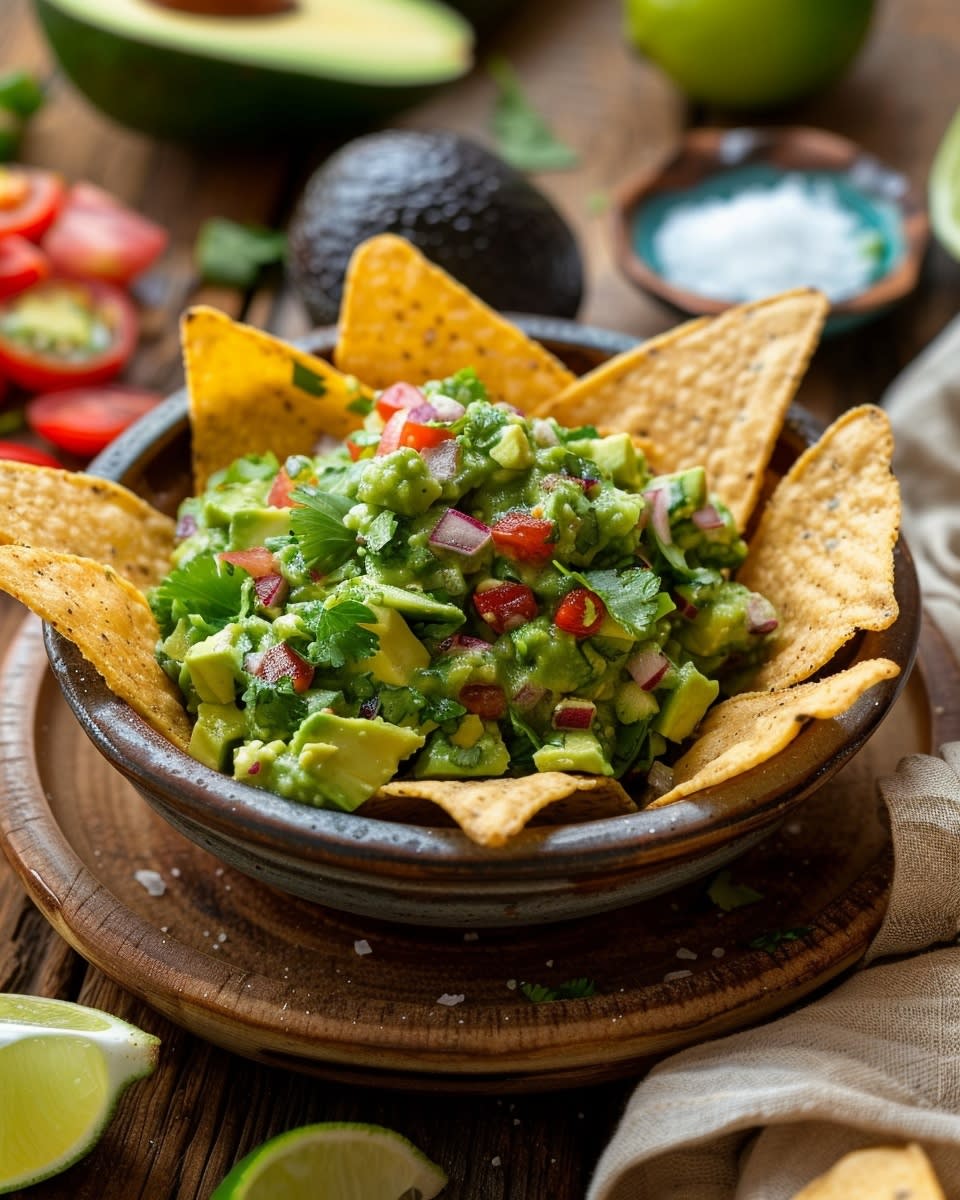
Last weekend, I had friends drop by unexpectedly, and I needed to whip up something quick. I grabbed a few avocados from my counter, some tomatoes from the fridge, and threw together a bowl of avocado salsa. Within minutes, everyone was gathered around the kitchen island, chips in hand, completely hooked. That’s the magic of this recipe. It’s simple, fresh, and always a hit.
Welcome to my kitchen, where today we’re diving into a delightful and refreshing snack that’s perfect for any occasion: avocado salsa with tortilla chips. This isn’t your typical dip. It’s creamy, chunky, and packed with flavors that dance on your tongue. Whether you’re hosting a party, having a movie night, or just craving something tasty, this recipe has you covered.
I’ll share with you not just the recipe, but also tips on how to make it even more delicious and some variations you can try at home. You’ll learn which ingredients work best, how to pick the perfect avocados, and ways to adjust the heat level to match your preference. I’ve made this recipe countless times, and I’ve figured out all the little tricks that make it stand out.
Let’s get started and see why this is a must-have in your snack repertoire. Trust me, once you make this homemade avocado dip, you’ll never go back to store-bought versions. The difference is night and day.
Why Avocado Salsa with Tortilla Chips?
I remember the first time I tasted fresh avocado salsa at a small Mexican restaurant years ago. The waiter brought it to our table with warm chips, and I couldn’t stop eating it. It was so different from guacamole, lighter yet still satisfying. I knew right then I had to recreate it at home.
Avocado salsa brings together the best of both worlds. You get the creamy richness of avocados mixed with the bright, tangy crunch of fresh salsa. It’s like guacamole met pico de gallo and they became best friends. The texture is what really sets it apart. Some bites are smooth and buttery, while others give you that satisfying crunch from diced vegetables.
The health benefits alone make this dip worth adding to your regular rotation. Avocados are loaded with healthy fats that your body actually needs. These fats help you absorb vitamins better and keep you feeling full longer. I’ve found that when I serve this at parties, people feel satisfied without that heavy, stuffed feeling you get from other dips.
Here’s what makes avocados such a nutritional powerhouse:
- Rich in heart-healthy monounsaturated fats
- Packed with fiber for better digestion
- High in potassium, even more than bananas
- Contains vitamins K, E, C, and several B vitamins
- Provides antioxidants that support eye health
But health benefits aside, let’s talk about taste and versatility. This chunky avocado dip works for so many occasions. I’ve served it at birthday parties, game day gatherings, and casual backyard barbecues. Every single time, the bowl gets scraped clean. People always ask for the recipe.
The beauty of this fresh avocado salsa is how adaptable it is. You can make it as mild or as spicy as you want. My mother-in-law can’t handle heat, so I make a mild version for her. My brother, on the other hand, wants extra jalapeños in everything. With this recipe, I can please both of them from the same batch by adjusting individual portions.
It’s also incredibly quick to prepare. I’m talking 10 minutes tops from start to finish. That’s faster than ordering takeout and definitely faster than running to the store. When you keep the basic ingredients on hand, you’re always ready for unexpected guests or sudden cravings.
For parties and family gatherings, this dip is a lifesaver. It looks impressive sitting in a nice bowl surrounded by colorful tortilla chips. People think you spent hours in the kitchen when really you just chopped a few things and mixed them together. I love recipes that give maximum impact with minimal effort.
The cost factor matters too. Have you seen how much restaurants and stores charge for a small container of fresh salsa? Making it yourself costs a fraction of that. Plus, you control exactly what goes in. No preservatives, no added sugars, no mystery ingredients you can’t pronounce.
I also appreciate how this easy avocado salsa fits different eating styles. My cousin is vegetarian, my neighbor eats gluten-free, and my best friend is always watching calories. This recipe works for all of them. It’s naturally vegetarian, gluten-free, and relatively low in calories considering how filling it is.
Another reason I love this recipe is portion control. Well, sort of. I can make a small batch just for myself as an afternoon snack, or I can triple the recipe for a crowd. The ingredients scale up perfectly without losing quality or flavor.
Let me share something I learned the hard way. Once I made regular guacamole for a party, and it turned brown within an hour. It still tasted fine, but it looked unappealing. With this avocado salsa, the added tomatoes and lime juice help keep everything looking fresh longer. The acidity slows down that browning process that makes avocados look sad.
The crunch factor from tortilla chips makes this combination irresistible. There’s something about that contrast between crispy chips and creamy dip that keeps you reaching for more. I’ve watched people who claimed they weren’t hungry suddenly find themselves unable to stop snacking once they start.
This Mexican avocado salsa also works as more than just a dip. I’ve used it as a topping for grilled chicken, spooned it over tacos, and even spread it on sandwiches. It’s one of those recipes that earns its place in your kitchen by pulling double or triple duty.
Weather doesn’t matter with this recipe either. It’s refreshing in summer heat, but it also brightens up dreary winter days. When everything outside looks gray and cold, a bowl of this colorful salsa brings a little sunshine to your table.
Making food from scratch gives you a sense of accomplishment too. Every time I mix up a batch of this salsa, I feel proud serving it. It’s a small thing, but those small victories add up. You’re not just feeding people. You’re sharing something you created with your own hands.


Ingredients You’ll Need
Now that you’re ready to make this happen, let’s talk about what you actually need to pull this off. I keep most of these ingredients stocked in my kitchen because they’re staples that work in so many other dishes too.
For the avocado salsa itself, you’ll want three ripe avocados as your base. I’m talking about that perfect stage where they yield slightly when you press them but aren’t mushy. You’ll also need two medium tomatoes, diced up nice and small. I prefer Roma tomatoes because they’re meatier and have less watery seeds, but honestly, whatever looks good at the market works fine.
Next up is half a red onion, chopped finely. Red onion gives you that sharp bite without being overwhelming like white onions can be. One jalapeño pepper joins the party, and you’ll want to remove the seeds unless you’re looking for serious heat. Fresh cilantro is essential, about a quarter cup chopped. I know some people have that genetic thing where cilantro tastes like soap to them. If that’s you, just skip it or try fresh parsley instead.
You’ll need two limes for juice, maybe three if they’re on the smaller side. Fresh lime juice makes all the difference here. That bottled stuff in the little plastic lime-shaped container? Yeah, don’t use that. The flavor just isn’t the same. Salt and pepper round out the seasoning, and I usually add about half a teaspoon of salt and a quarter teaspoon of black pepper, but taste as you go.
For the chips, you’ve got options. Store-bought tortilla chips are perfectly fine, and I use them more often than not. Look for thick, sturdy chips that won’t break when you scoop. Nothing’s more frustrating than a chip that snaps off in the dip, leaving you fishing around with your fingers. I usually grab a bag of white corn tortilla chips because they have a clean, neutral flavor that lets the salsa shine.
The quality of your avocados makes or breaks this recipe. I’ve learned this lesson more times than I’d like to admit. Here’s my system for picking them: gently squeeze the avocado in the palm of your hand. If it feels like a rock, it’s not ready. If your thumb goes right through the skin, it’s past its prime. You want that gentle give, like pressing on a stress ball.
The color under the little stem cap tells you even more. Carefully flick off that small stem at the top. If it’s green underneath, you’re golden. If it’s brown, the avocado is probably overripe inside. If the stem won’t come off easily, it’s not ripe enough yet. My grandmother taught me this trick decades ago, and it’s never failed me.
By the way, if all the avocados at the store are rock hard, buy them anyway and let them sit on your counter for a few days. Just don’t put them in the fridge until they’re ripe, or they’ll never get there. I usually buy a few at different stages of ripeness so I always have one ready when I need it.
For dietary considerations, this recipe is naturally pretty accommodating. If you need gluten-free options, most corn tortilla chips are already gluten-free, but always check the label. Some brands add wheat flour or process them on shared equipment. I’ve served this with baked parmesan zucchini chips before for a lower-carb option, and people went crazy for that combination too.
The salsa itself is vegan as written, but if you want to add a dairy element, crumbled queso fresco or cotija cheese stirred in at the end adds a nice salty tang. My friend does this sometimes, and it turns the dish into something even more substantial.
Funny enough, I’ve also used this as a pairing alongside other party snacks. It works beautifully on a spread with air fryer mozzarella sticks because you get that hot-cold, crispy-creamy contrast that keeps people interested in the flavor journey.
Step-by-Step Recipe
Alright, let’s get into the actual making of this thing. I promise you’ll be eating within fifteen minutes if you move at a reasonable pace.
First, deal with those avocados. Cut them in half lengthwise, working your knife around the pit. Twist the halves in opposite directions to separate them. Here’s a safe way to remove the pit: hold the avocado half with the pit in your non-dominant hand, wrapped in a kitchen towel for safety. Carefully strike the pit with the blade of your knife so it sticks in. Twist gently, and the pit pops right out. Then slide it off the knife into the trash.
Now scoop out the flesh with a spoon, getting as close to the skin as possible. I cut the avocado into chunks while it’s still in the skin using my knife in a crosshatch pattern, then scoop out the cubes. It’s faster than trying to dice it after scooping. Put those chunks into your mixing bowl.
Next comes the tomatoes. I dice these pretty small, maybe quarter-inch pieces. You want them small enough to get a bit in every scoop but not so tiny they turn to mush. Remove the really watery seedy parts if you want a less runny salsa. I usually do this by cutting the tomato into quarters, then running my thumb along the inside to push out the excess seeds and gel.
Chop that red onion finely. I’m talking small dice here, not chunks. Nobody wants a huge piece of raw onion overwhelming their bite. If raw onion is too sharp for your taste, you can soak the diced onion in cold water for five minutes, then drain it. This mellows out that harsh bite significantly.
For the jalapeño, slice it lengthwise and scrape out the seeds and white membranes with a spoon. Those parts contain most of the heat. Dice the pepper very finely. I learned the hard way to wash my hands immediately after handling jalapeños. Once, I rubbed my eye before washing, and let me tell you, that’s a mistake you only make once. Some people use gloves for this step, which isn’t a bad idea.
Here’s the thing about heat levels: you can always add more spice but you can’t take it away. Start with half the jalapeño, taste the finished salsa, and add more if you want. I keep a second jalapeño on standby just in case my crowd wants extra kick.
Chop up that cilantro, stems and all. The stems actually have tons of flavor, so don’t waste them. Just make sure you chop them finely since they’re a bit tougher than the leaves.
Now comes the fun part. Add everything to the bowl with your avocado chunks. Squeeze in the lime juice, making sure to catch any seeds before they fall in. I roll my limes on the counter with firm pressure before cutting them. This breaks down the membranes inside and releases way more juice. Learned that from a bartender friend years ago.
Add your salt and pepper. Then, using a fork or a potato masher, gently mash and fold everything together. This is where you control the texture. I like mine chunky with visible pieces of avocado, so I use a light hand. If you prefer it smoother and more uniform, mash more aggressively. There’s no wrong answer here, just personal preference.
Taste it. This is critical. Does it need more salt? More lime? More heat? Adjust now. I usually find I want a bit more salt than I initially added. The avocados are pretty bland on their own, so they need adequate seasoning to really pop.
Transfer your salsa to a serving bowl. I like to drizzle just a tiny bit of olive oil on top and maybe add a few cilantro leaves as garnish. It’s not necessary, but it makes it look restaurant-quality.
As for the chips, if you’re using store-bought ones, you’re done. Open the bag and arrange them around your salsa bowl. I sometimes warm my chips in a 350°F oven for about five minutes. It makes them taste fresher and crispier, especially if the bag has been open for a day or two.
Want to make homemade tortilla chips? It’s easier than you think and tastes incredible. Grab a stack of corn tortillas and cut them into triangles, six or eight per tortilla depending on size. You can use kitchen scissors for this, which is actually faster than a knife.
Spread the triangles on a baking sheet in a single layer. Brush them lightly with oil or spray them with cooking spray. Sprinkle with a bit of salt. Bake at 350°F for about 10 to 15 minutes, flipping them halfway through, until they’re golden and crispy. Keep an eye on them because they go from perfect to burnt pretty quickly.
The homemade chip route takes longer, obviously, but the flavor and freshness are next level. Plus, you can season them however you want. I’ve done lime and chili powder, garlic salt, even a sweet cinnamon-sugar version for dessert salsas. These chips also work fantastically with crispy fried pickles with ranch dip if you’re putting together a full appetizer spread.
One more thing I’ve discovered: this salsa tastes even better after sitting for about twenty minutes. The flavors have time to get friendly with each other. If you’re organized enough to make it ahead, do it. Just press plastic wrap directly onto the surface of the salsa to prevent browning, then refrigerate until you’re ready to serve.
I’ve made this recipe in hotel rooms with just a plastic knife and a coffee mug as my mixing bowl. I’ve made it camping with ingredients from a cooler. The point is, it’s forgiving and flexible. You don’t need fancy equipment or a perfectly stocked kitchen. Just fresh ingredients and a willingness to get a little messy while chopping.
If you’re looking for more party snack ideas that pair well with this, try setting out some cheesy jalapeño popper bites alongside it. The combination of hot and cold appetizers keeps your guests happy and your table interesting.


Tips and Variations for Your Avocado Salsa
Once you’ve made this salsa a few times, you’ll want to start playing around with it. That’s when things get really interesting. I’ve spent years experimenting with different tweaks and additions, and I’m excited to share what I’ve learned.
First up, let’s talk storage. Avocado salsa doesn’t last as long as some other dips because, well, avocados are the drama queens of the produce world. They don’t like sitting around. For the best results, eat your salsa the same day you make it. But I get it, sometimes you have leftovers or you want to prep ahead.
Here’s my storage trick that actually works: transfer the salsa to an airtight container and press plastic wrap directly onto the surface before putting the lid on. You want zero air touching that salsa. Air is what causes the oxidation that turns everything brown and sad-looking. I’ve kept salsa looking decent for up to two days using this method. Beyond that, the quality really starts to drop.
Another preservation hack involves adding extra lime juice. The acidity slows down browning significantly. If I know I’m making salsa for the next day, I’ll add an extra half lime’s worth of juice. It changes the flavor profile slightly, making it tangier, but that’s better than brown mush.
Freezing doesn’t really work with this recipe, unfortunately. The texture of avocados after freezing and thawing is just unpleasant and watery. I tried it once when I had way too much leftover from a party, and everyone could tell something was off. Save yourself the disappointment and just make smaller batches.
Now for the fun part: variations. This basic recipe is like a canvas waiting for your creative touches. One of my absolute favorite twists is adding diced mango. I know it sounds weird if you haven’t tried it, but trust me on this. The sweetness of mango against the creamy avocado and spicy jalapeño creates this amazing sweet-heat-cool combination. Use about half a cup of diced ripe mango and fold it in gently at the end.
Pineapple works similarly and gives you that tropical vibe that’s perfect for summer gatherings. I did this version for a luau-themed birthday party, and people absolutely lost their minds over it. Fresh pineapple is key here, not the canned stuff. Dice it small so you get a little burst of sweetness in each bite without overwhelming the avocado.
Want to try something unexpected? Diced strawberries. I’m serious. My daughter accidentally dropped some strawberries into the salsa bowl once, and instead of being annoyed, I just mixed them in. Everyone loved it. It’s not traditional at all, but neither is putting ketchup on eggs, and plenty of people do that.
For a smokier flavor, try adding some grilled corn kernels. Cut the kernels off a cob that you’ve grilled until slightly charred, let them cool, and mix them in. The char adds depth, and the sweetness of corn plays really nicely with avocado. This version is killer on fish tacos.
Speaking of which, this salsa isn’t just for chips. I use it as a topping probably more than I use it as a dip. Spoon it over grilled chicken breast, and suddenly you’ve got a restaurant-quality meal. I do this at least twice a month because it transforms plain chicken into something special without much effort.
Tacos are another obvious application. Fish tacos especially benefit from a big scoop of this salsa on top. The creaminess balances out the crispy fried or grilled fish perfectly. I’ve also put it on breakfast tacos with scrambled eggs and bacon. Game changer.
Use it as a salad dressing, sort of. I thin it out with a little extra lime juice and olive oil, then toss it with mixed greens, black beans, and grilled shrimp. It’s not exactly a dressing in the traditional sense, but it coats everything and makes a really satisfying lunch.
Burgers get better with this salsa too. Instead of regular tomato and lettuce, just pile on some avocado salsa. The moisture keeps everything juicy, and the flavor is so much more interesting than standard burger toppings. I’ve converted several burger purists with this method.
If you’re looking for a creamier texture without adding dairy, just use more avocado and mash it more thoroughly. Sometimes I’ll do four avocados instead of three and really work them into a smoother consistency. It becomes almost like a chunky guacamole at that point, but with more vegetables and brightness from the tomatoes.
For people who want to dial up the heat way beyond jalapeños, try adding a diced serrano pepper or even a small amount of habanero. Just be careful with habaneros because they’re intensely spicy. I usually add just a teaspoon of minced habanero when my spice-loving friends come over, and even they admit it’s got serious kick.
On the flip side, if you want zero spice, just skip the peppers entirely. You can add a tiny pinch of cayenne for depth without much heat, or even some smoked paprika for color and a subtle smoky note without any burn. My kids prefer this version, and honestly, it’s still delicious.
Roasted garlic takes this salsa in a more savory direction. Roast a whole head of garlic until soft and golden, squeeze out the cloves, mash them, and stir them into your salsa. The flavor becomes richer and more complex. This version pairs exceptionally well with grilled steak.
Here’s something I discovered by accident: black beans make this more of a meal. I had leftover black beans from taco night and stirred them into the salsa. Suddenly it became substantial enough to eat as a light lunch with chips, not just a snack. Rinsed and drained canned black beans work fine for this.
By the way, understanding the food composition of ingredients like avocados can help you appreciate why they’re so filling and nutritious. The fat content is what makes them so satisfying, which is why even a small serving of this salsa keeps you happy for hours.
Cucumber adds a refreshing crunch that’s especially nice in hot weather. Peel and seed a cucumber, dice it fine, and fold it in. The water content makes the salsa a bit looser, so I usually add cucumber just before serving rather than mixing it in ahead of time.
Pomegranate seeds during fall and winter add these beautiful jewel-like pops of tartness. They’re gorgeous on top of the salsa for presentation, and the flavor surprise when you bite into one is really fun. My sister-in-law started doing this for holiday gatherings, and now I steal her idea regularly.
If you’re hunting for more creative ways to serve appetizers and snacks, check out the full collection of appetizer recipes that pair beautifully with this salsa for a complete party spread.
Grilled or roasted red peppers chopped up and added in give you sweetness and a slightly smoky flavor. I keep a jar of roasted red peppers in my pantry specifically for moments like this. Just drain them well and dice them small.
For a fancy presentation, serve the salsa in individual small bowls or even in hollowed-out bell pepper halves. I did this for a baby shower once, using red and yellow bell peppers as edible bowls, and people took so many photos before they even started eating.
Experiment with different citrus juices too. Lime is traditional and what I use most, but lemon works fine if that’s what you have. I’ve even tried orange juice mixed with lime for a sweeter, more complex citrus note. Just a tablespoon or two of orange juice mixed with the lime can make things interesting.
Don’t be afraid to make this salsa your own. I’ve been making it for years, and I rarely make it exactly the same way twice. That’s the beauty of a flexible recipe like this. It welcomes your creativity and adapts to what you have on hand.
So go ahead and throw in that random ingredient sitting in your fridge that you think might work. The worst that happens is you learn what doesn’t work. The best that happens is you discover your new favorite variation that becomes your signature version.
Frequently Asked Questions About Avocado Salsa
How long does avocado salsa last in the fridge?
Freshly made avocado salsa stays at its best for about 24 hours in the refrigerator. You can push it to two days if you store it properly in an airtight container with plastic wrap pressed directly against the surface to minimize air exposure. After that, the avocados start to brown and the texture becomes less appealing. The flavor is usually still okay, but the appearance suffers. For best results, I always recommend making only what you’ll eat within a day.
Can I use frozen avocados for the salsa?
I wouldn’t recommend it for this particular recipe. Frozen avocados, once thawed, have a watery and mushy texture that doesn’t hold up well in a chunky salsa. They’re fine for smoothies or baking where texture doesn’t matter as much, but for something where you want distinct avocado pieces, fresh is the only way to go. If you absolutely must use frozen, thaw them completely, drain off excess water, and expect a smoother, less appealing texture in your final product.
What are some good substitutes for cilantro in the salsa?
Fresh flat-leaf parsley is the most common cilantro substitute and works beautifully in this salsa. It gives you that fresh herb flavor without the soapy taste that some people experience with cilantro. Fresh basil is another option that adds a slightly sweet, peppery note. Some people use fresh mint for a completely different but refreshing twist. You can also just leave herbs out entirely and the salsa will still taste good, just less bright and herbaceous.
How do I make the tortilla chips extra crispy?
For maximum crispiness, make your own chips by cutting corn tortillas into triangles and baking them at 350°F for 10 to 15 minutes, flipping halfway through. The key is spreading them in a single layer without overlapping and using just a light coating of oil. You can also fry them in hot oil for about 2 minutes until golden and crispy, then drain on paper towels. Store-bought chips get crispier if you warm them in the oven for about 5 minutes before serving, which drives off any moisture they’ve absorbed from sitting in the bag.
Is there a way to make the salsa less spicy?
Absolutely, just remove the jalapeño entirely or reduce it to a tiny amount with all seeds and membranes completely removed. You can also add more tomato and avocado to dilute the heat if you’ve already made it too spicy. A squeeze of extra lime juice and a pinch of sugar can help balance out spiciness as well. Dairy products like sour cream or Greek yogurt mixed in will calm the heat, though that changes the character of the salsa somewhat. For a completely mild version, skip peppers altogether and maybe add a tiny pinch of smoked paprika just for color.
Can I add other fruits to the salsa?
Yes, fruit additions work wonderfully in avocado salsa. Mango and pineapple are the most popular choices, adding sweetness that contrasts beautifully with the creamy avocado and spicy jalapeño. Diced peaches work surprisingly well during summer when they’re ripe and juicy. I’ve also tried diced apple for crunch and a subtle sweetness. Even watermelon works, though it adds quite a bit of moisture, so drain it well first. The key is dicing the fruit small and adding it just before serving so it doesn’t make everything too watery.
How can I make the salsa more creamy?
Use more avocados and mash them more thoroughly to create a creamier base. Adding a couple tablespoons of sour cream, Greek yogurt, or Mexican crema will make it richer and smoother. Some people stir in a bit of mayonnaise, though I think that can overwhelm the fresh flavors. You can also blend half the salsa in a food processor or blender until smooth, then fold it back into the chunky portion for a hybrid texture. More lime juice surprisingly helps too, as the acidity helps everything blend together more smoothly.
What are some good drinks to pair with avocado salsa and tortilla chips?
Margaritas are the classic pairing, whether frozen or on the rocks, because the lime and salt complement the salsa perfectly. Cold Mexican beer like Corona or Modelo with a lime wedge is refreshing and traditional. For non-alcoholic options, try fresh limeade, hibiscus tea, or even a simple sparkling water with lime. I love making agua fresca with watermelon or cucumber in summer to serve alongside. Iced tea, especially with a hint of mint, also works really well because it’s refreshing without competing with the salsa’s flavors.
Can I make avocado salsa ahead of time for a party?
You can prep all your ingredients ahead of time, but I recommend mixing everything together no more than a few hours before serving. Dice your tomatoes, onions, and jalapeños in the morning and keep them refrigerated separately. Prep your cilantro and juice your limes. Then cut and mash your avocados right before the party starts and mix everything together. If you absolutely must make it earlier, press plastic wrap directly onto the surface and refrigerate, but know that some browning is inevitable. The flavor will still be good, but the appearance won’t be as vibrant.
What’s the best way to serve avocado salsa for a large group?
For parties, I set out the salsa in a large, shallow bowl rather than a deep one, making it easier for people to scoop without breaking chips. Keep backup salsa in the fridge and refill the serving bowl as needed rather than putting everything out at once, which helps with freshness. Surround the bowl with plenty of sturdy chips arranged on a large platter. Consider making a couple of variations, like one mild and one spicy, to accommodate different preferences. Setting out small individual serving bowls with spoons lets people take their own portion, which is more hygienic for larger gatherings and keeps the main bowl from getting double-dipped into oblivion.
Now that you’ve got all these tips and ideas, you’re completely set up to make this avocado salsa your own. Don’t overthink it—just grab those ingredients, get chopping, and enjoy the process. The best part about cooking is making something delicious and sharing it with people you care about, and this recipe delivers on that every single time.
Ingredients
Equipment
Method
- Coupez les avocats en deux, retirez le noyau, puis prélevez la chair dans un bol de mélange.
- Coupez les tomates en dés, en retirant les graines excédentaires si désiré, et ajoutez-les au bol.
- Émincez l'oignon rouge et ajoutez-le au bol.
- Coupez le jalapeño en deux, retirez les graines et les membranes, puis hachez-le finement et ajoutez-le au bol.
- Hachez la coriandre, y compris les tiges, et mélangez-la.
- Pressez le jus de citron vert dans le mélange en évitant les graines.
- Ajoutez le sel et le poivre, puis écrasez et pliez doucement les ingrédients à votre texture préférée.
- Ajustez l'assaisonnement si nécessaire, puis transférez dans un bol de service et décorez si désiré.
- Servez avec des chips de tortilla.