
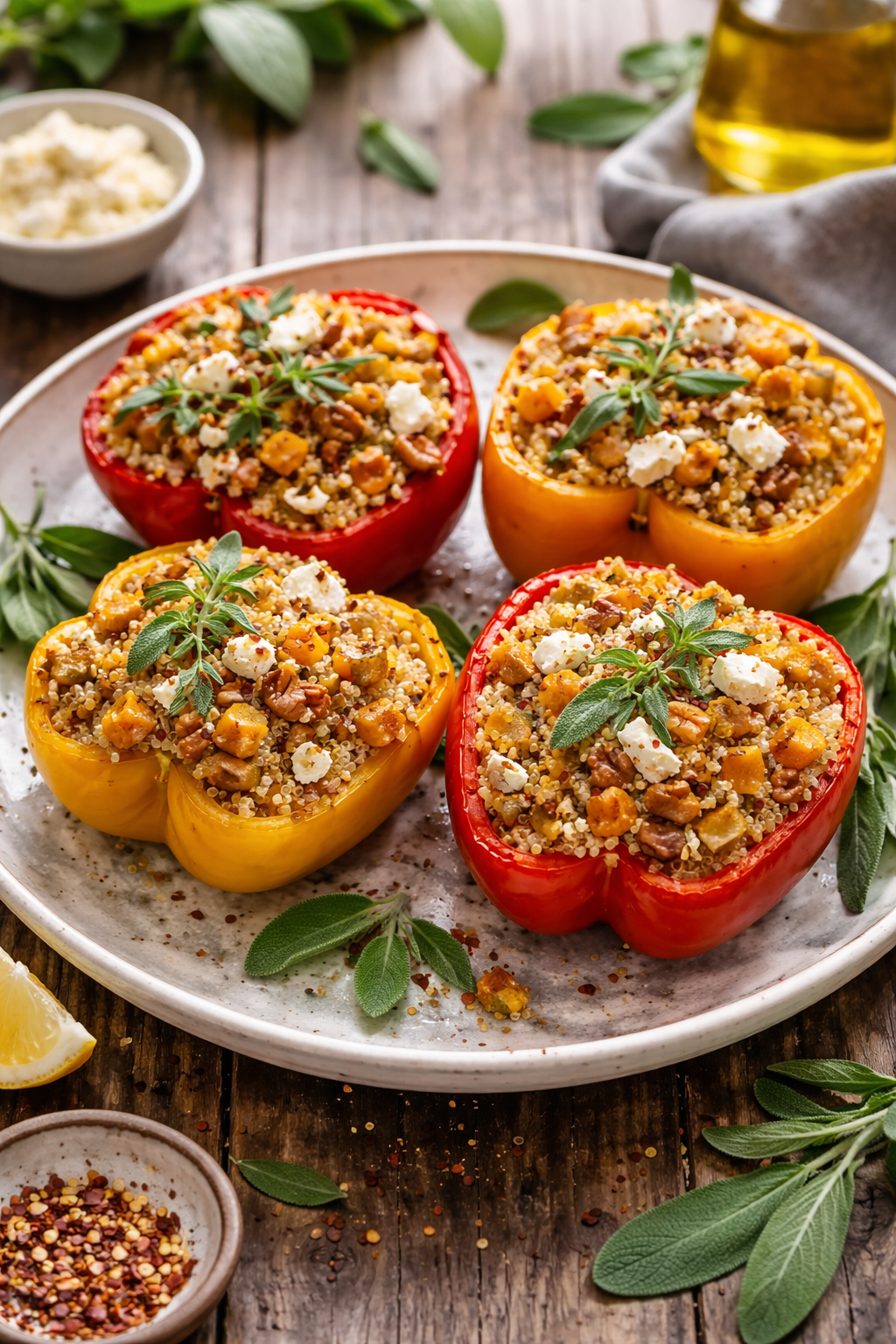
Why These Stuffed Pumpkin Sage Peppers Are a Game-Changer
Picture this: It’s a chilly fall evening, and your kitchen smells like heaven. The warm scent of roasted pumpkin mingles with earthy sage, while vibrant bell peppers sit patiently, ready to be stuffed with goodness. I first made these Savory Pumpkin and Sage Stuffed Bell Peppers with Quinoa and Feta for a cozy family dinner, and let me tell you—they disappeared faster than cookies at a bake sale. If you’ve never thought of combining pumpkin, sage, quinoa, and feta, now’s the time. Trust me, your taste buds will thank you.
The Story Behind Stuffed Pumpkin Sage Peppers
I stumbled upon the idea of stuffed bell peppers years ago when my neighbor brought over a version filled with rice and beef. While it was delicious, I wanted something lighter yet still hearty. Enter pumpkin, that versatile star of autumn cooking. Pumpkins aren’t just for pies or lattes; they’re rich in flavor, packed with nutrients, and perfect for savory dishes. Sage, an herb that screams fall, adds depth with its peppery, earthy notes. This dish marries tradition with a modern twist—think of it as comfort food with a health-conscious makeover.
Why You’ll Love This Recipe
Here’s the deal: These Stuffed Pumpkin Sage Peppers are simple, satisfying, and downright scrumptious. They’re vegetarian-friendly but hearty enough to win over meat lovers too. Plus, they’re packed with protein from the quinoa and calcium from the feta. The combination of sweet pumpkin, sharp feta, and aromatic sage creates layers of flavor that dance on your tongue. And let’s not forget the colors! The orange and green make this dish look like fall on a plate.
When to Serve These Stuffed Peppers
This recipe shines at casual weeknight dinners, potlucks, or holiday gatherings. Imagine serving these at Thanksgiving as a side dish or bringing them to a Halloween party—they’re festive without trying too hard. I once made these for a book club meeting, and they were such a hit that everyone asked for the recipe.
Ingredients
- 4 large bell peppers (any color)
- 1 cup cooked pumpkin puree (not pumpkin pie filling)
- 1 cup cooked quinoa
- 1/2 cup crumbled feta cheese
- 1 tbsp fresh sage, finely chopped (or 1 tsp dried sage)
- 1 small onion, diced
- 2 garlic cloves, minced
- 1 tbsp olive oil
- Salt and pepper to taste
- Optional: sprinkle of paprika or chili flakes for extra kick
Substitution Options
Don’t have pumpkin? Try butternut squash instead. For a vegan twist, swap the feta with a plant-based alternative or nutritional yeast. Brown rice can replace quinoa if you’re out of options, and dried thyme works well if you’re short on sage. Feel free to add spinach or kale for extra greens!
Preparation Instructions
Step 1: Prepare Your Peppers
Start by preheating your oven to 375°F (190°C). Cut the tops off the bell peppers and remove the seeds and membranes. You want them hollowed out but sturdy enough to hold their shape. Arrange the peppers in a baking dish so they stand upright—I find using a muffin tin helps keep them stable. Brush the outsides lightly with olive oil for a glossy finish later. Pro tip: Save those pepper tops; chop them up and toss them into salads!
Step 2: Sauté the Aromatics
Heat the olive oil in a skillet over medium heat. Add the diced onion and sauté until soft and translucent—about 3-4 minutes. Toss in the garlic and cook for another minute until fragrant. The smell is intoxicating, trust me. Garlic and onions are like the power couple of the culinary world. Once done, transfer the mixture to a bowl.
Step 3: Mix the Filling
In the same bowl, combine the cooked quinoa, pumpkin puree, chopped sage, and crumbled feta. Mix everything together until well incorporated. Taste and season with salt and pepper. The bright orange filling looks beautiful against the specks of green sage and white feta. At this point, you might be tempted to grab a spoon. Go ahead, I won’t judge.
Step 4: Stuff the Peppers
Using a spoon, fill each pepper generously with the pumpkin-quinoa mixture. Pack it down gently but don’t overstuff—you don’t want to burst your little stuffed gems. Sprinkle a bit of extra feta on top for a melty, golden crown. Chef’s tip: Drizzle a splash of olive oil over the tops before baking. It helps achieve that irresistible caramelized glow.
Step 5: Bake to Perfection
Pop the stuffed peppers into the oven and bake for 30-35 minutes. Keep an eye on them; you want the peppers tender but not collapsing. About halfway through, I suggest giving them a quick peek. Your kitchen will smell incredible—a mix of savory herbs and roasted goodness. If you’re feeling fancy, sprinkle some paprika or chili flakes for added visual appeal.
Chef’s Secret
For an unexpected burst of flavor, try adding a teaspoon of balsamic vinegar to the filling. It enhances the sweetness of the pumpkin without overpowering the other ingredients. Trust me, it’s a game-changer.
Timing Details
- Prep Time: 15 minutes
- Cooking Time: 35 minutes
- Total Time: 50 minutes
A Fun Fact About the Dish
Did you know pumpkins are technically fruits? Yep, they’re part of the squash family and loaded with immune system support thanks to their high vitamin A content, according to researchers. So not only do these stuffed peppers taste amazing, but they also give your body a nutrient boost!
Necessary Equipment
- Sharp knife for cutting peppers
- Baking dish or muffin tin
- Spatula or spoon for mixing
- Oven-proof dish for baking
Storage Tips
Let’s talk leftovers because, let’s face it, these peppers reheat beautifully. Store any uneaten portions in an airtight container in the fridge for up to 3 days. When reheating, cover them with foil to prevent drying out.
If you have more than you can eat within three days, freeze the extras. Place the cooled peppers in freezer-safe bags and label them with the date. They’ll last up to 3 months.
To thaw, simply move them to the fridge overnight, then reheat in the oven or microwave. Freezing ensures you’ll always have a quick, healthy meal on hand.
Tips and Advice
If your peppers seem wobbly, slice a tiny bit off the bottoms to create a flat surface. Be careful not to cut too much—you don’t want any holes! Another pro tip: Toast the sage leaves briefly in a dry skillet for enhanced flavor. Also, consider doubling the recipe—it’s one of those dishes people beg you to make again.
Presentation Ideas
Garnish the peppers with fresh parsley or chives for a pop of color. Serve them on a bed of arugula or spinach for added elegance. Pairing them with a side of crusty bread or a simple green salad makes for a complete meal. And remember, presentation is key—even something as rustic as stuffed peppers benefits from a dash of effort.
Healthier Alternatives
Want to experiment? Here are six variations:
- Gluten-Free Version: Swap quinoa for millet or buckwheat.
- Vegan Delight: Use cashew cream instead of feta.
- Spicy Kick: Add diced jalapeños or red pepper flakes.
- Protein Powerhouse: Stir in black beans or chickpeas.
- Low-Carb Option: Replace quinoa with cauliflower rice.
- Mediterranean Flair: Add kalamata olives and sun-dried tomatoes.
Check out our Sweet Potato Black Bean Quesadillas for another hearty veggie dish. Or, if you’re craving pasta, our Chicken Alfredo is creamy perfection. For baked comfort, don’t miss Baked Ziti, and explore more everyday delights here.
Common Mistakes to Avoid
Mistake 1: Skipping the Olive Oil Rub
Failing to rub the bell peppers with olive oil can leave them looking dull after baking. A light coating ensures they roast evenly and take on that appealing golden hue. Pro tip: Use your fingers for even coverage.
Mistake 2: Overfilling the Peppers
Overloading the peppers may cause the filling to spill out during baking. Stick to generous but not excessive portions. Remember, less is often more when stuffing vegetables.
Mistake 3: Ignoring Resting Time
After baking, resist the urge to dig in immediately. Let the peppers rest for 5-10 minutes. This allows the flavors to meld and prevents burns.
Explore More Everyday Recipes
Love easy, nutritious meals? Dive into our collection of everyday recipes for inspiration all year round.
FAQs
Are These Stuffed Peppers Gluten-Free?
Yes! As long as you use certified gluten-free quinoa, these peppers are safe for anyone avoiding gluten.
Can I Make Them Ahead of Time?
Absolutely. Assemble the peppers ahead, store them covered in the fridge, and bake just before serving. They’re also freezer-friendly.
How Do I Know If My Bell Peppers Are Ripe?
Look for firm, shiny peppers with bright colors. Avoid ones with wrinkles or soft spots—they should feel heavy for their size.
What Can I Substitute for Feta?
Goat cheese or ricotta are great alternatives. For a dairy-free option, try cashew cream or nutritional yeast.
Do I Have to Use Fresh Sage?
While fresh sage offers brighter flavor, dried sage works fine too. Start with half the amount since dried herbs are more potent.
Can I Use Canned Pumpkin?
Yes, canned pumpkin is a convenient substitute for homemade puree. Just ensure it’s plain, not spiced.
What Makes This Dish Nutritious?
Quinoa provides protein and fiber, while pumpkin packs vitamins A and C. Feta adds calcium, making this a balanced, nutrient-rich meal.
How Long Does It Last in the Freezer?
These stuffed peppers stay good in the freezer for up to 3 months. Always label and date your containers for easy reference.
Is This Dish Kid-Friendly?
Totally! Kids love the colorful peppers and mild flavors. You can adjust the seasoning to suit their tastes.
Can I Grill the Peppers Instead of Baking?
Grilling adds a smoky twist but requires extra care. Wrap the peppers in foil to prevent burning, and monitor closely.
Final Thoughts
There’s something magical about pulling a tray of Stuffed Pumpkin Sage Peppers out of the oven. Their vibrant colors, irresistible aromas, and wholesome ingredients make them unforgettable. Whether you’re whipping them up for a cozy family meal or impressing guests at a dinner party, this recipe delivers every time. So why wait? Get in the kitchen and give it a try—you might just discover your new favorite dish.
Stuffed Pumpkin Sage Peppers
Ingredients
Equipment
Method
- Preheat your oven to 375°F (190°C).
- Cut the tops off the bell peppers and remove the seeds and membranes.
- Arrange the peppers in a baking dish so they stand upright; brush the outsides lightly with olive oil.
- Heat olive oil in a skillet over medium heat, add diced onion and sauté until soft and translucent (3-4 minutes).
- Add minced garlic and cook for another minute until fragrant, then transfer mixture to a bowl.
- In the same bowl, combine the cooked quinoa, pumpkin puree, chopped sage, and crumbled feta; mix until well incorporated.
- Season with salt and pepper to taste.
- Fill each pepper generously with the pumpkin-quinoa mixture; sprinkle extra feta on top.
- Drizzle a splash of olive oil over the tops, then bake in the oven for 30-35 minutes.