
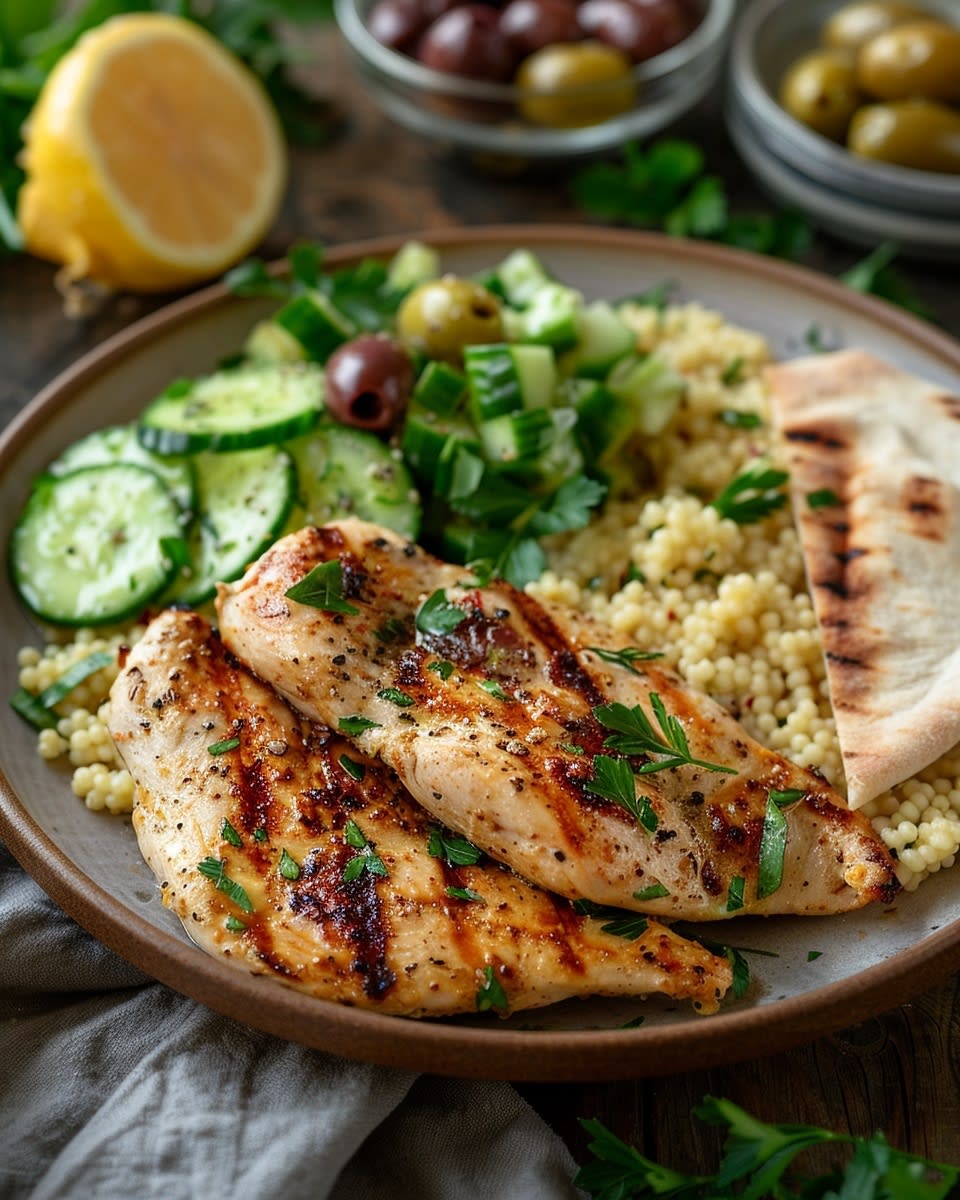
Welcome to My Kitchen: Discovering the Mediterranean Chicken and Couscous Bowl
Last Tuesday, I came home exhausted after a long day. I needed dinner fast, but I wasn’t about to order takeout again. I opened my fridge and spotted leftover chicken, a box of couscous, and some cherry tomatoes. In less than 30 minutes, I had created a colorful bowl that looked like it came from a fancy restaurant. My kids actually asked for seconds. That’s when I knew this Mediterranean Chicken and Couscous Bowl had to become a regular in our house.
I’m thrilled to share this recipe with you today. It’s one of those meals that makes you feel good about what you’re eating. The colors pop on the plate. The flavors dance on your tongue. And the best part? You don’t need fancy cooking skills or hard-to-find ingredients.
This dish brings together everything I love about Mediterranean food. It’s fresh and light but still fills you up. The chicken gives you protein to keep you energized. The couscous adds a fluffy, satisfying base. Fresh vegetables bring crunch and vitamins. A drizzle of olive oil and a squeeze of lemon tie it all together.
I’ve made this bowl at least a dozen times now. Sometimes I add olives. Other times I throw in some roasted red peppers. The recipe works for rushed weeknight dinners and relaxed weekend lunches. My neighbor borrowed the recipe last month, and now she makes it every week for her family.
Why Choose a Mediterranean Chicken and Couscous Bowl?
The Mediterranean diet has been studied by scientists for decades. They keep finding the same results. People who eat this way live longer and have fewer health problems. They have stronger hearts. Their minds stay sharp as they age. Their bodies fight off disease better.
This Mediterranean Chicken and Couscous Bowl packs all those benefits into one meal. You’re not just eating food. You’re giving your body fuel that actually helps it work better.
Let me break down what makes this bowl so good for you. The chicken provides lean protein without extra fat. Your muscles need protein to stay strong. Your immune system uses it to fight off bugs. Kids need it to grow. Adults need it to maintain their health.
Couscous often gets overlooked, but it’s a smart choice for your plate. It cooks in just five minutes. It’s made from wheat, so it gives you fiber that keeps your digestion happy. Fiber also helps you feel full longer, which means you won’t be raiding the snack cabinet an hour after dinner.
The vegetables in this bowl add more than just pretty colors. Tomatoes give you lycopene, which protects your cells. Cucumbers keep you hydrated. Spinach or arugula pack in iron and vitamins. Red onions add flavor and antioxidants. Each vegetable plays its own role in keeping you healthy.
Olive oil deserves special mention. I use it in almost everything I cook now. It’s full of healthy fats that your heart loves. These fats help your body absorb vitamins from the vegetables. They also make you feel satisfied after eating. A little bit goes a long way.
Fresh herbs transform this bowl from good to amazing. Parsley adds a clean, bright taste. Mint brings a cool freshness. Basil gives you that classic Mediterranean vibe. These aren’t just garnishes. They’re packed with nutrients and make every bite more interesting.
The Perfect Balance of Flavor and Nutrition
I used to think healthy food meant boring food. I was so wrong. This Mediterranean Chicken and Couscous Bowl proves you can have both taste and nutrition on the same plate.
The magic happens when you combine different flavors. The chicken gets seasoned with garlic, oregano, and a touch of paprika. These spices don’t just add taste. They have anti-inflammatory properties that help your body heal and recover.
The couscous soaks up whatever flavors you add to it. I usually cook mine in chicken broth instead of water. This simple trick makes it taste so much better. Sometimes I add a pinch of turmeric or cumin to the cooking liquid. The couscous turns golden and picks up those warm, earthy notes.
Fresh lemon juice brightens everything. I squeeze it over the finished bowl right before serving. The acidity cuts through the richness and wakes up your taste buds. It also helps your body absorb iron from the vegetables better.
The texture variety in this bowl keeps every bite interesting. You get tender chicken, fluffy couscous, crisp vegetables, and creamy elements if you add feta cheese or hummus. Your mouth experiences different sensations with each forkful.
This meal works for so many different eating styles. If you’re watching calories, it naturally stays light. If you need more energy, add extra couscous or an additional protein. Vegetarians can swap the chicken for chickpeas or grilled halloumi. People avoiding dairy can skip the feta cheese without losing flavor.
I’ve served this bowl to guests many times. They always ask for the recipe. One friend told me she never thought healthy eating could taste this good. Another friend makes it every Sunday for her meal prep. She portions it into containers and has lunch ready for the whole week.
The cost factor matters too. You don’t need expensive ingredients to make this dish shine. Basic chicken breasts or thighs work perfectly. Regular couscous from any grocery store does the job. Seasonal vegetables keep the price down. You can make a family-sized batch for less than most takeout meals cost.
This bowl also saves time in ways that aren’t obvious at first. You can cook the couscous while the chicken bakes. You can chop vegetables while both of those cook. Everything comes together quickly because you’re working on multiple tasks at once.
The leftovers taste great, which is rare for mixed dishes. I actually think the flavors blend better after a night in the fridge. The couscous absorbs more of the dressing. The chicken stays moist if you store it properly. You can reheat everything together or eat it cold as a salad.


Getting Your Ingredients Together for the Perfect Bowl
Now that you know why this bowl deserves a spot in your weekly rotation, let’s talk about actually making it.
Here’s the thing about gathering ingredients for this Mediterranean Chicken and Couscous Bowl. You probably have half of them already sitting in your pantry. I remember the first time I made this, I thought I’d need to make a special trip to some gourmet store. Nope. Everything came from my regular grocery store, and most items were stuff I already had.
Let me walk you through what you need, and I’ll share some tricks I’ve learned along the way.
For the chicken portion, grab about a pound and a half of boneless, skinless chicken breasts or thighs. I actually prefer thighs because they stay juicier and have more flavor, but breasts work great if that’s what you like. My husband insists on breasts because he thinks they’re healthier, even though I keep telling him thighs aren’t bad for you. Marriage, right?
You’ll need good olive oil, and I mean the stuff you’d actually want to taste. Not the bottom-shelf kind you use for greasing pans. Get something decent because the olive oil flavor really comes through in Mediterranean cooking. I buy mine from a local Mediterranean market, but any extra virgin olive oil from your supermarket works fine.
Fresh lemon juice makes a huge difference here. I tried using bottled lemon juice once when I was being lazy. Never again. The flavor was flat and artificial. Real lemons cost barely anything and take like thirty seconds to squeeze. Just roll them on your counter first to get more juice out.
Garlic is non-negotiable. I use about four cloves for this recipe, but I really love garlic. If you’re not a garlic fanatic like me, three cloves will do. The pre-minced stuff in a jar works in a pinch, though fresh tastes better. My mom always said you can never have too much garlic, and she might be onto something.
The spice blend brings everything to life. Dried oregano is the star here because it screams Mediterranean. Add some paprika for a subtle sweetness and color. A pinch of cumin adds depth, though that’s optional. Salt and black pepper round things out. I also throw in a bit of red pepper flakes when I want some heat, similar to what I do with my spicy honey lime chicken thighs.
For the couscous base, you need plain couscous, which is usually near the rice and pasta in stores. One and a half cups of dry couscous feeds about four people as a main dish. You’ll need water or chicken broth to cook it. Trust me on this: use broth if you have it. The flavor difference is night and day.
Salt and a drizzle of olive oil go into the cooking liquid too. Some people add a bay leaf or a cinnamon stick to the broth while it heats. I tried the cinnamon stick thing after seeing it in a cookbook, and it added this really subtle warmth that was incredible. Totally optional, but kind of cool if you want to experiment.
The vegetable situation is where you can get creative. Cherry tomatoes are my go-to because they’re sweet and don’t need much prep. Just slice them in half. I buy the mixed color ones when I can find them because they make the bowl look like a rainbow.
Cucumbers add that refreshing crunch. I use English cucumbers because they have fewer seeds and thinner skin. Regular cucumbers work too, but peel them first because that thick skin gets weird in the bowl. Dice them into bite-sized pieces, not too small or they get lost in the mix.
Bell peppers bring sweetness and color. Red, yellow, or orange peppers taste sweeter than green ones. I usually grab whatever’s on sale. One medium pepper is enough for the whole recipe. Sometimes I roast the peppers first for a smoky flavor, but that’s extra work that’s not always worth it on a busy night.
Red onion adds a sharp bite that balances the other flavors. Some people hate raw onion, and I get it. If that’s you, soak the sliced onion in cold water for ten minutes before adding it to the bowl. This trick mellows out the harshness while keeping the flavor. Game changer.
Fresh herbs are what make this bowl taste authentic. Parsley and mint are traditional, and they’re usually cheap at the store. Don’t buy the dried versions for this recipe. They won’t give you the same fresh, bright flavor. Buy the bunches with roots still attached if you can. They last longer in your fridge.
I keep a small pot of mint growing on my windowsill now because I use it so much. Funny enough, mint grows like crazy and basically takes care of itself. Worst case, you end up with way too much mint and have to make mojitos. Not really a problem.
Optional add-ins include feta cheese, kalamata olives, chickpeas, and hummus. Feta adds creamy, tangy bites throughout the bowl. Olives give you that salty, briny punch. Chickpeas boost the protein if you’re really hungry. A dollop of hummus makes the whole thing more luxurious.
Marinating and Cooking Your Chicken to Perfection
Alright, ingredients assembled. Now comes the fun part.
The marinade is where your chicken develops real flavor, not just surface seasoning. I learned this lesson the hard way after years of just sprinkling spices on chicken right before cooking. Marinating changes everything.
In a bowl or a zip-top bag, combine about a quarter cup of olive oil with the juice of one large lemon. I usually zest half the lemon into the marinade too because that’s where tons of flavor lives. Add your minced garlic, a tablespoon of dried oregano, a teaspoon of paprika, salt, and pepper. Whisk it all together until it looks combined.
Place your chicken in the marinade and make sure every piece gets coated. If you’re using a bag, squeeze out the air and massage the marinade into the meat. If you’re using a bowl, flip the pieces a few times to coat them well.
The minimum marinating time is thirty minutes. That’s the absolute bare minimum for the flavors to penetrate the meat. An hour is better. If you’re planning ahead, marinate it in the morning and cook it at dinner time. I’ve even left it overnight when I remembered to plan that far in advance, which happens about twice a year.
By the way, the chicken will actually taste more flavorful if you let it sit out for fifteen minutes before cooking. I know we’re all paranoid about leaving chicken out, but fifteen minutes won’t hurt and it helps the meat cook more evenly. Cold chicken going into a hot pan means the outside overcooks before the inside is done.
For cooking, you have options. I usually grill the chicken when the weather’s nice because that char adds another layer of flavor. If you’ve never grilled chicken before, don’t stress. Heat your grill to medium-high, around 400 degrees if you have a thermometer. Oil the grates so the chicken doesn’t stick.
Place the chicken on the grill and leave it alone for five or six minutes. I know the temptation to keep flipping it. Resist. Let it develop that nice golden crust before you flip it once. Cook another five or six minutes on the other side. The internal temperature should hit 165 degrees Fahrenheit. I always use a meat thermometer because guessing leads to either raw or dried-out chicken.
Pan-frying works great too, especially in winter when I’m not going outside to grill. Heat a large skillet over medium-high heat. Add a tablespoon of olive oil. When the oil shimmers and moves easily around the pan, it’s ready. Place your marinated chicken in the pan, leaving space between each piece. Crowding the pan makes the chicken steam instead of getting that beautiful crust.
Cook for about six minutes per side, adjusting the heat if needed. The chicken should sizzle steadily but not smoke up your kitchen. If it’s burning, lower the heat. If nothing’s happening, crank it up a bit. This is similar to the technique I use for my creamy garlic butter chicken and rice skillet, though that one has more steps.
Here’s a mistake I made early on: cutting into the chicken immediately to check if it’s done. Don’t do that. You’ll lose all the juices and end up with dry meat. Use a thermometer or, if you must cut it, do it once when you think it’s almost done.
Once the chicken is cooked through, and this is important, let it rest. Transfer it to a cutting board and leave it alone for five minutes. I set a timer because I always forget otherwise. During this rest, the juices redistribute throughout the meat instead of running all over your cutting board when you slice it.
After the rest, slice the chicken against the grain into strips or cubes. Cutting against the grain makes the meat more tender because you’re shortening the muscle fibers. Look at the chicken and you’ll see lines running through it. Cut perpendicular to those lines.
The sliced chicken should be juicy and golden on the outside, white and fully cooked inside. If you see any pink, pop it back in the pan for another minute. Better safe than sorry with chicken.
Sometimes I make extra chicken because it’s useful to have around. Cold sliced chicken from this recipe tastes amazing in sandwiches the next day. It also heats up well if you want to make another bowl later in the week. Just like how the chicken in one-pot lemon herb chicken orzo stays moist as leftovers, this preparation keeps the meat tender even after refrigeration.
If you’re cooking for a crowd, you can bake the chicken instead. Spread the marinated pieces on a sheet pan lined with foil. Bake at 425 degrees for about twenty-five minutes. This method requires less attention and frees you up to prepare the rest of the bowl components. The chicken won’t have the same charred flavor as grilling or pan-frying, but it still tastes delicious and the ease factor can’t be beaten when you’re feeding a bunch of people.


Cooking the Couscous: The Five-Minute Base That Changes Everything
While your chicken is resting on the cutting board, it’s the perfect moment to tackle the couscous. This is honestly the easiest part of the whole recipe, and I feel like couscous doesn’t get enough credit for how forgiving it is.
Here’s what happens: you basically pour hot water over tiny grains and walk away. That’s it. No stirring, no watching, no anxiety about it sticking to the bottom of the pot. After years of burning rice and overcooking pasta, couscous feels like a gift.
Start by measuring out your couscous. One and a half cups of dry couscous will expand to about four cups when it’s cooked, which feeds four people generously. Pour it into a large bowl that has a lid, or use a pot with a tight-fitting cover. I usually just grab my biggest mixing bowl and cover it with a plate that fits snugly on top.
Now boil your water or chicken broth. You need about two cups of liquid for every cup and a half of couscous. I use an electric kettle because it’s faster than heating water on the stove, but either way works. While the liquid is heating, add a good pinch of salt and a tablespoon of olive oil to it.
The olive oil does something magical. It keeps the couscous grains separate so you don’t end up with one giant clump. I learned this trick from my college roommate who studied abroad in Morocco. She came back cooking couscous like a pro, and I’ve stolen all her techniques.
Once your liquid is boiling, pour it directly over the couscous. You’ll hear this satisfying sizzle. Give it one quick stir, then immediately cover the bowl tightly. Set a timer for five minutes and resist the urge to peek. I know it’s tempting, but lifting the lid lets out the steam that’s actually cooking the couscous.
During these five minutes, you can chop your vegetables or prep your dressing. Multitasking during this step makes the whole meal come together ridiculously fast. By the way, this is why I love this Mediterranean Chicken and Couscous Bowl for weeknights. Everything happens at once, and before you know it, dinner is ready.
When the timer goes off, remove the cover. The couscous should have absorbed all the liquid and look fluffy. Take a fork and fluff it up, running the fork through the grains to separate them. This step matters because it aerates the couscous and makes it light instead of dense.
Here’s where you can customize. I usually add chopped fresh parsley right into the couscous at this point. Sometimes I throw in some fresh mint too. The herbs add little bursts of flavor throughout the base instead of just sitting on top. Taste the couscous now and adjust the salt if needed. It should taste good on its own, not bland.
One mistake I made early on was letting the couscous sit too long before fluffing it. It compacted into this weird, gummy mess. If you fluff it right away, you’ll have perfect, separate grains every time. If you need to make it ahead, fluff it immediately after cooking, then let it cool and store it. You can reheat it later without issues.
Sometimes I add a squeeze of lemon juice to the couscous itself. Other times I stir in a spoonful of butter for richness. There’s also a version where I toast the dry couscous in olive oil before adding the hot liquid, which gives it a nutty flavor. That extra step isn’t necessary for a weeknight, but it’s worth trying when you have time.
Assembling Your Mediterranean Chicken and Couscous Bowl
Alright, this is genuinely the most fun part of making this meal. You get to build your bowl exactly how you want it, and every single one looks different. It’s like edible art, but you don’t need any artistic talent.
I like using wide, shallow bowls for this because they show off all the components. Regular dinner bowls work fine too. Grab your bowl and start with the couscous as your foundation. Spoon a generous amount into the bottom, spreading it out a bit so it covers the base. I usually use about a cup per person, but pile on more if you’re really hungry.
Next comes your beautiful sliced chicken. Arrange the pieces right on top of the couscous, slightly to one side rather than dead center. This creates visual interest and leaves room for your vegetables. The warm chicken sitting on the couscous starts to meld their flavors together, which is exactly what you want.
Now for the vegetables. This is where your bowl becomes Instagram-worthy without even trying. Place your halved cherry tomatoes in one section. Add your diced cucumbers in another area. Scatter the sliced bell peppers around. Tuck in some thin slices of red onion here and there.
Don’t just dump everything in the middle. Think about color distribution. Red tomatoes next to green cucumbers next to orange peppers creates this vibrant contrast that makes the bowl exciting to look at and eat. My daughter calls this “rainbow food,” and she’s way more likely to eat vegetables when they’re arranged nicely.
If you’re adding extras like feta cheese, olives, or chickpeas, sprinkle those on now. I love adding crumbled feta because it melts slightly from the warm chicken and couscous. The salty, creamy cheese works so well with the other Mediterranean flavors. Kalamata olives bring that briny punch that some people live for. I’m sort of neutral on olives, but my husband would eat them by the handful.
Fresh herbs go on top as a final flourish. Tear some parsley leaves and mint leaves and scatter them over everything. Whole leaves look prettier than chopped herbs at this stage. They also taste more intense when you bite into a whole leaf mixed with everything else.
The dressing is simple but essential. In a small bowl or jar, whisk together three tablespoons of good olive oil with the juice of half a lemon. Add a pinch of salt and some freshly ground black pepper. Taste it. It should be bright and tangy and slightly salty. If it’s too acidic, add a bit more olive oil. If it tastes flat, add more lemon or salt.
Drizzle this dressing all over your assembled bowl. Don’t be shy. The couscous needs that moisture and flavor. The vegetables come alive with the acidity. The chicken gets an extra layer of richness. I usually drizzle in a back-and-forth pattern so every bite gets some dressing.
Some people like to serve the dressing on the side so everyone can add their own amount. That works too, especially if you’re feeding picky eaters. I make extra dressing and keep it in a small jar on the table for anyone who wants more.
Here’s a pro tip I discovered by accident: add a dollop of hummus right in the center of your bowl. It creates this creamy element that ties everything together when you mix it in as you eat. The hummus also adds more protein and helps with digestive health thanks to the fiber from chickpeas. I started doing this after visiting a Mediterranean restaurant that served their bowls this way, and now I can’t imagine the dish without it.
The assembled bowl should look abundant and colorful. Every component should be visible and identifiable. You should be able to see the fluffy couscous, the golden chicken, the bright vegetables, the herbs, and the glistening dressing. It looks impressive, but it took you maybe three minutes to put together.
I usually bring the assembled bowls to the table immediately while the chicken and couscous are still warm. The contrast between the warm base and the cool, crisp vegetables is part of what makes this dish so satisfying. However, this bowl also works wonderfully at room temperature or even cold, which makes it perfect for lunch boxes or picnics.
When you take your first bite, try to get a little bit of everything on your fork. The combination of textures and flavors is what makes this Mediterranean Chicken and Couscous Bowl so special. Each ingredient is good on its own, but together they create something way better than the sum of their parts.
Making It Your Own: Variations and Storage Tips
After making this bowl dozens of times, I’ve discovered that it’s ridiculously adaptable. The basic formula stays the same, but you can switch things up based on what you have or what you’re craving.
For a vegetarian version, swap the chicken for roasted chickpeas or grilled halloumi cheese. I’ve done the chickpea version for my vegetarian sister-in-law, and she actually liked it better than the chicken. Toss drained chickpeas with olive oil and the same spices you’d use on the chicken, then roast them at 400 degrees for about twenty minutes until they’re crispy.
If you’re not a couscous fan, you can absolutely use other grains. Quinoa works great and adds more protein. Brown rice gives you a heartier, chewier base. Even cauliflower rice works if you’re doing low-carb. The Mediterranean flavors work with basically any base you choose. I’ve seen similar flexibility with other recipes, like when I browse through different main dish options and notice how core flavors can work across different foundations.
Seasonal vegetables keep this bowl interesting year-round. In summer, I add grilled zucchini and fresh corn. Fall means roasted butternut squash and pomegranate seeds. Winter calls for roasted Brussels sprouts and dried cranberries. Spring brings asparagus and peas. You’re basically working with a template that accepts whatever produce looks good at the market.
The dressing can change too. Sometimes I make a yogurt-based sauce with Greek yogurt, lemon, garlic, and dill. Other times I go with tahini thinned out with lemon juice and water. A simple balsamic vinaigrette works surprisingly well too. The point is that the core components are flexible enough to handle different flavor profiles.
Storage is straightforward but requires a small strategy. If you’re meal-prepping, store each component separately. Keep the couscous in one container, the chicken in another, and the raw vegetables in a third. The dressing goes in a small jar. This prevents everything from getting soggy. When you’re ready to eat, assemble the bowl fresh. It takes two minutes and tastes way better than pre-assembled bowls.
If you do need to store assembled bowls, they’ll keep in the fridge for about two days. The vegetables will release some water and the couscous will absorb the dressing, but it’s still totally edible. Just maybe not as picture-perfect as a freshly assembled bowl.
The cooked chicken lasts about four days in the fridge, so you can make a big batch on Sunday and use it throughout the week. I often grill extra chicken specifically for this purpose. Having pre-cooked protein ready to go makes weeknight dinners so much easier.
Cooked couscous keeps for about a week in an airtight container. You can eat it cold, reheat it in the microwave with a splash of water, or even pan-fry it for a different texture. I’ve used leftover couscous in salads, as a side dish for other meals, and even mixed into scrambled eggs for a weird but surprisingly good breakfast.
One batch of dressing lasts about a week in the fridge. The olive oil will solidify when cold, so just leave it out at room temperature for ten minutes before using it. Give it a good shake or stir to recombine the ingredients.
This recipe scales beautifully whether you’re cooking for one or feeding a crowd. For a solo meal, use one chicken breast, half a cup of couscous, and smaller amounts of vegetables. For a party, just multiply everything and set up a build-your-own-bowl station. People love customizing their own meals, and it takes pressure off you as the host.
I hope you give this Mediterranean Chicken and Couscous Bowl a try soon. It’s become one of those recipes I recommend to anyone who asks for something healthy, quick, and actually delicious. Make it once, and I bet it becomes part of your regular rotation too.
Frequently Asked Questions About Mediterranean Chicken and Couscous Bowl
What are the health benefits of a Mediterranean diet?
The Mediterranean diet is packed with heart-healthy fats from olive oil, lean proteins, whole grains, and tons of vegetables. Research shows it can reduce your risk of heart disease, help maintain healthy cholesterol levels, and even support brain health as you age. The diet is naturally anti-inflammatory because it focuses on fresh, minimally processed ingredients. It’s also been linked to better weight management and lower rates of type 2 diabetes. Best of all, it doesn’t feel like a restrictive diet because the food actually tastes amazing and keeps you satisfied.
Can I use quinoa instead of couscous?
Absolutely, quinoa works perfectly in this bowl and actually adds more protein and nutrients than couscous. Rinse your quinoa first to remove any bitter coating, then cook it according to package directions, usually about fifteen minutes. Quinoa has a slightly nuttier flavor and more texture than couscous, which some people prefer. It’s also gluten-free if that matters for your diet. The cooking time is longer than couscous, so just plan accordingly. I’ve made this bowl with quinoa many times and it’s equally delicious.
How long should I marinate the chicken?
The minimum marinating time is thirty minutes, which is enough for the flavors to penetrate the surface of the meat. An hour to two hours gives you even better results as the acids in the lemon juice start to tenderize the chicken. If you’re planning ahead, you can marinate it overnight, but I wouldn’t go longer than twenty-four hours or the texture can get mushy. Even a quick fifteen-minute marinade is better than no marinade at all. Just remember to let the chicken come to room temperature for about fifteen minutes before cooking for more even results.
What are some other Mediterranean herbs I can use?
Beyond parsley and mint, you can try fresh basil for a sweeter, more aromatic flavor. Dill adds a fresh, slightly tangy taste that works beautifully with the lemon. Oregano is classic Mediterranean, and using fresh oregano instead of dried takes it to another level. Cilantro isn’t traditional but works if you love it. Fresh thyme adds an earthy, subtle flavor. I’ve even used fresh rosemary chopped very finely, though it’s quite strong so use it sparingly. Mix and match herbs based on what you have available or what flavors you’re craving.
Is this dish suitable for meal prep?
This bowl is fantastic for meal prep, which is one of the reasons I make it so often. Store the components separately to maintain the best texture and freshness throughout the week. The chicken stays moist for about four days in the fridge. Couscous keeps well for about a week. Prep your vegetables and store them in airtight containers. Keep the dressing in a small jar and shake it before using. When you’re ready to eat, just assemble a bowl, and you’ve got a fresh, healthy meal in two minutes. It’s easier than most meal prep recipes because you’re not reheating a pre-assembled dish.
Can I add more vegetables to the bowl?
Definitely, and I actually encourage it. Roasted eggplant brings a creamy, smoky element. Sautéed spinach or arugula adds greens and wilts nicely from the warm chicken. Artichoke hearts from a jar give you that classic Mediterranean flavor. Roasted red peppers are sweeter and more complex than raw peppers. Shredded carrots add crunch and color. Radishes bring a peppery bite. There’s really no wrong answer here. Just keep the proportions balanced so you still have a good ratio of base to protein to vegetables.
Can I make this bowl dairy-free?
Yes, this recipe is naturally dairy-free if you skip the feta cheese. The core ingredients don’t include any dairy, and the dish is still incredibly flavorful without it. If you miss that creamy, tangy element that feta provides, try adding extra olives or a dairy-free yogurt-based sauce. Some people add nutritional yeast for a cheesy flavor without actual cheese. Hummus also provides creaminess and richness that makes up for the missing feta. I’ve served the dairy-free version to lactose-intolerant friends many times, and nobody felt like they were missing out.
What’s the best way to reheat leftovers?
If you stored the components separately, I recommend eating the couscous and vegetables cold or at room temperature with freshly warmed chicken. To reheat the chicken, microwave it with a damp paper towel over it for about a minute to prevent drying out. You can also reheat chicken in a skillet with a tiny splash of water or broth. Couscous reheats well in the microwave with a splash of water stirred in. If you stored an assembled bowl, reheat it gently in the microwave for one to two minutes, knowing the vegetables will be softer but still tasty. Cold bowls work great as salads too.
Can I use chicken thighs instead of breasts?
Chicken thighs are actually my preferred choice for this recipe because they stay juicier and have more flavor than breasts. They also forgive slight overcooking better, so you’re less likely to end up with dry meat. Boneless, skinless thighs work best for easy eating. They take about the same cooking time as breasts, though I usually add a minute or two per side. Thighs are often cheaper than breasts too, which is a nice bonus. Just trim off any excess fat before marinating if you prefer leaner meat.
How can I make this bowl spicier?
There are several ways to add heat to this bowl without overwhelming the Mediterranean flavors. Add red pepper flakes to the chicken marinade or sprinkle them on top of the finished bowl. Dice up a fresh jalapeño or serrano pepper and mix it with the vegetables. Drizzle some harissa, a North African chili paste, over the bowl for authentic spice. Add a pinch of cayenne pepper to the couscous cooking liquid. You could even make a spicy yogurt sauce with hot sauce or sriracha mixed in. Start with small amounts and adjust to your heat preference.
Ingredients
Equipment
Method
- Dans un bol ou un sac en plastique, mélangez l'huile d'olive, le jus de citron, le zeste de citron (si utilisé), l'ail émincé, l'origan, le paprika, le sel et le poivre.
- Ajoutez le poulet à la marinade, en veillant à ce que chaque morceau soit bien enrobé, et laissez mariner pendant au moins 30 minutes (1 heure ou plus est mieux).
- Préchauffez le gril ou la poêle à feu moyen-vif.
- Faites cuire le poulet mariné pendant environ 6 minutes de chaque côté ou jusqu'à ce qu'il atteigne une température interne de 165°F.
- Laissez le poulet reposer pendant 5 minutes, puis coupez-le contre le grain.
- Dans un grand bol, mélangez le couscous avec de l'eau bouillante ou du bouillon de poulet, une pincée de sel et une cuillère à soupe d'huile d'olive.
- Couvrez et laissez reposer pendant 5 minutes, puis égrenez à la fourchette et incorporez le persil et la menthe hachés, si désiré.
- Assemblez le bol en commençant par une base de couscous, puis toppez avec le poulet tranché, les tomates cerises, le concombre, le poivron et l'oignon rouge.
- Garnissez de fromage feta, d'olives ou de pois chiches, si vous utilisez ; terminez par un filet de vinaigrette à base d'huile d'olive, de jus de citron, de sel et de poivre.