
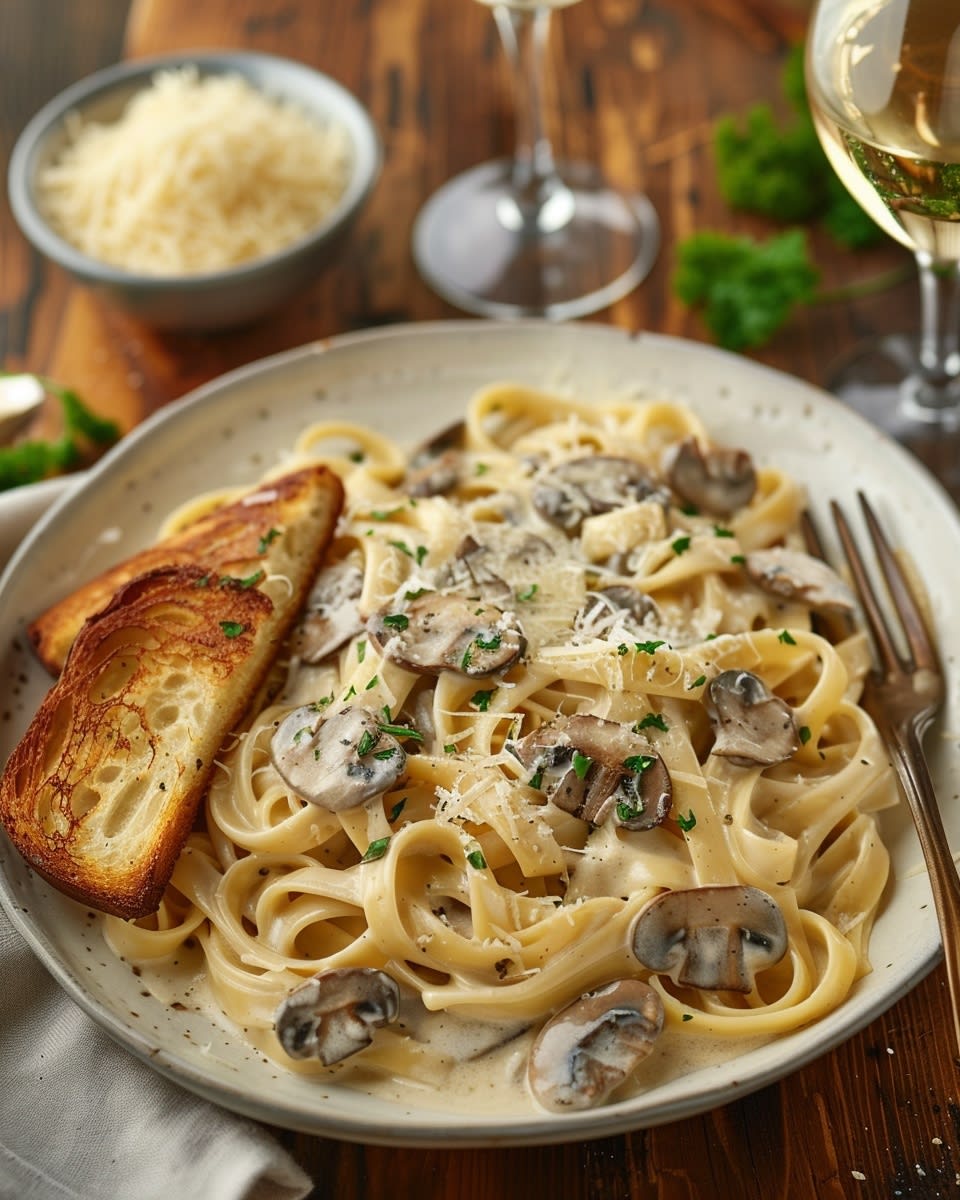
I still remember the first time I tasted creamy mushroom fettuccine at a small Italian restaurant tucked away in my neighborhood. The silky sauce coated each strand of pasta perfectly, and the earthy mushrooms made every bite feel like a warm hug. I knew right then I had to learn how to make it at home. That was five years ago, and this dish has become my go-to comfort meal whenever I need something satisfying and quick.
There’s something magical about combining tender pasta with a rich, velvety mushroom sauce. The best part? You don’t need to be a trained chef to pull it off. This recipe works for busy weeknights when you want something special without spending hours in the kitchen. It’s also fancy enough to serve when guests come over, and they’ll never guess how simple it was to make.
The beauty of this dish lies in its flexibility. You can stick with the classic cream-based version or switch things up based on what’s in your fridge. Some nights I make it with white wine for extra depth. Other times I add chicken for protein or spinach for color. My vegan friends love when I prepare a mushroom fettuccine no cream version using cashews. The possibilities keep this recipe from ever getting boring.
Classic Creamy Mushroom Fettuccine Recipe
Let me walk you through making the traditional version first. Once you master this base recipe, you’ll have the confidence to experiment with your own twists. The whole process takes about 30 minutes from start to finish.
Start by gathering your ingredients. You’ll need fresh fettuccine pasta (or dried works fine too), about a pound of mushrooms, heavy cream, butter, garlic, parmesan cheese, and some fresh herbs if you have them. I prefer using a mix of mushrooms like cremini and shiitake because they add more flavor than plain white button mushrooms.
Get a large pot of salted water boiling for your pasta. While that heats up, slice your mushrooms about a quarter inch thick. Don’t make them too thin or they’ll disappear into the sauce. Heat a large skillet over medium-high heat and add two tablespoons of butter. Once it melts and starts to foam, toss in your mushrooms.
Here’s a tip I learned the hard way: don’t crowd the pan. If you pile all the mushrooms in at once, they’ll steam instead of getting that beautiful golden brown color. Cook them in batches if needed. Let them sit undisturbed for a few minutes so they can develop a nice sear. When they start to release their moisture and turn golden, that’s when the real flavor develops.
Once your mushrooms look caramelized, add minced garlic and cook for about 30 seconds until it smells amazing. Pour in about a cup of heavy cream and let it simmer gently. The cream will thicken as it reduces. This takes maybe five minutes. Keep an eye on it and stir occasionally.
By now your pasta should be ready. I always cook fettuccine for one minute less than the package says. It’ll finish cooking in the sauce and absorb all those incredible flavors. Reserve a cup of pasta water before draining. That starchy water is liquid gold for adjusting your sauce consistency.
Add the drained pasta directly to your sauce. Toss everything together and let it cook for another minute or two. If the sauce seems too thick, splash in some of that reserved pasta water. It helps the sauce coat the noodles perfectly. Finish with freshly grated parmesan cheese and a handful of chopped parsley. Season with salt and pepper to taste.
The key to perfect texture is getting the sauce just right. It should be thick enough to cling to the pasta but not so thick that it’s gloopy. Think of it like silk rather than glue. If you accidentally make it too thick, that pasta water will save you every time.
Variations on the Classic Recipe
Now that you’ve got the basics down, let’s talk about switching things up. My dairy-free friends always ask me to make a mushroom fettuccine vegan version, and it turns out better than you’d expect.
For a cream-free version, soak raw cashews in hot water for about 20 minutes. Blend them with some vegetable broth, nutritional yeast, and garlic powder until smooth. This creates a surprisingly creamy sauce that even dairy lovers enjoy. You can also use coconut cream or a good quality almond milk as your base. Just add some cornstarch to help it thicken properly.
The mushroom fettuccine Jamie Oliver version caught my attention because he adds a splash of white wine to deglaze the pan after cooking the mushrooms. That step adds incredible depth to the sauce. He also uses thyme and a touch of lemon zest at the end, which brightens the whole dish. I tried his method last month and now I always keep white wine in my kitchen just for this recipe.
Speaking of wine, making a white wine mushroom alfredo sauce takes this dish to restaurant quality. After your mushrooms are golden, pour in half a cup of dry white wine and let it bubble away for a couple minutes. The alcohol cooks off but leaves behind this complex, slightly tangy flavor that cuts through the richness of the cream.
Another game-changing variation involves mixing cream of mushroom with alfredo sauce. I know it sounds like cheating, but sometimes you want dinner done in 15 minutes. Heat up a jar of quality alfredo sauce and stir in a can of cream of mushroom soup. Add sautéed fresh mushrooms for texture and nobody will know you took a shortcut. It’s thick, rich, and deeply satisfying.
If you want to make this meal more substantial, try creamy mushroom chicken fettuccine. Season chicken breasts with salt, pepper, and Italian herbs, then cook them in the same pan before starting your mushrooms. Slice the cooked chicken and add it back at the end. The chicken soaks up the sauce and makes this a complete dinner.
For a fancy variation, I love making a mushroom sherry cream sauce pasta. Replace the white wine with dry sherry. The nutty, slightly sweet notes of sherry complement mushrooms like nothing else. Just use it sparingly because the flavor is strong. Two tablespoons is usually enough.
Want to add vegetables? Creamy mushroom and spinach pasta is my favorite way to sneak in greens. Throw a few handfuls of fresh spinach into the sauce right before adding the pasta. It wilts down in seconds and adds color plus nutrition. Sun-dried tomatoes also work beautifully in this dish.
For texture lovers, try the mushroom and nut fettuccine approach. Toast some pine nuts or chopped walnuts in a dry pan until fragrant. Sprinkle them on top just before serving. They add a wonderful crunch that contrasts with the silky pasta.
No matter which version you choose, the foundation stays the same. Good quality mushrooms, properly cooked pasta, and a sauce that brings everything together. The rest is just playing around based on your mood and what’s available in your kitchen.


Adding Extra Flavors and Ingredients
Since we’ve covered the foundation, let me share what I’ve discovered about transforming this simple dish into something that matches your specific cravings.
Spinach became my secret weapon after my sister-in-law mentioned she struggled getting her kids to eat greens. I started making creamy mushroom and spinach pasta for family dinners, and honestly, nobody complained. The trick is timing. Add your spinach right when the cream starts simmering, before the pasta goes in. Baby spinach works best because it’s tender and wilts quickly without turning bitter. I usually grab two or three big handfuls and just stir them into the bubbling sauce. They shrink down dramatically, so what looks like way too much becomes just the right amount. The earthiness of spinach actually complements mushrooms instead of competing with them. Plus, the bright green color makes the whole dish look more vibrant and appetizing.
Here’s the thing about adding spinach: don’t use frozen unless you absolutely have to. I tried it once when I ran out of fresh, and the extra moisture made my sauce watery. If frozen spinach is your only option, thaw it completely and squeeze out every drop of liquid you can. Wrap it in paper towels and really wring it out. Otherwise you’ll end up with a thin, disappointing sauce that slides right off the noodles.
When I need something more filling, I turn to creamy mushroom chicken fettuccine. This version feels like a complete restaurant meal. Cut boneless chicken thighs into bite-sized pieces instead of using whole breasts. Thighs stay juicier and have more flavor. Season them generously with salt, pepper, and maybe some dried oregano or basil. Cook them in your skillet first, getting a nice golden crust on all sides. This takes about six or seven minutes. Remove them to a plate while you make the mushroom sauce following the same steps as before. When everything’s almost done, nestle the chicken pieces back into the sauce so they can warm through and soak up all that creamy goodness.
A trick I learned from my neighbor who’s an actual chef: don’t overcook the chicken initially. It’s going to spend more time in the hot sauce later, so taking it out when it’s just barely done prevents it from getting dry and rubbery. Similar to how we approach chicken in Cajun alfredo dishes, the residual heat finishes the cooking process while building flavor.
Now about that mushroom and nut fettuccine variation. I stumbled onto this by accident when I was making the regular version and noticed a bag of pecans sitting in my pantry. Toasted nuts add this incredible dimension that changes the whole experience. Pine nuts are traditional and elegant, but they’re expensive. Walnuts work beautifully and cost way less. Even sliced almonds bring a delicate crunch. Whatever you choose, toast them first. Put them in a dry skillet over medium heat and shake the pan frequently. Watch them closely because nuts go from perfect to burned in about thirty seconds. When they smell nutty and turn slightly darker, immediately transfer them to a cool plate. Sprinkle them over individual servings right before eating so they stay crispy.
My favorite discovery involves hazelnuts. Chop them roughly and toast them until fragrant. The slightly sweet, buttery flavor pairs with mushrooms better than you’d think. Sometimes I’ll even brown my butter before starting the mushrooms, which creates this nutty base flavor that amplifies when you add actual nuts at the end.
Funny enough, the white wine mushroom alfredo sauce version happened because I accidentally bought cooking wine instead of regular cream one grocery trip. Instead of running back to the store, I improvised. After sautéing the mushrooms until golden, I poured in about half a cup of Pinot Grigio from the bottle I’d opened the night before. The pan sizzled dramatically, and I scraped up all those brown bits stuck to the bottom. That’s where tons of flavor hides. Let the wine bubble and reduce by half before adding your cream. The result had this sophisticated, slightly tangy note that cut through the richness perfectly. My husband, who usually doesn’t notice cooking details, specifically asked what I did differently.
Pick a wine you’d actually drink, not that cheap cooking wine from the grocery store. It doesn’t need to be expensive, just decent. Sauvignon Blanc and Chardonnay also work well. The alcohol cooks off completely, leaving behind the complex flavors. If you’re worried about the alcohol content, just let it simmer an extra minute or two. You can also swap wine for chicken or vegetable broth with a squeeze of lemon juice if you want to avoid alcohol entirely, though you’ll lose some of that depth.
Something I’ve noticed when adding these extra ingredients: your sauce might need adjusting. More ingredients mean more liquid, so you might need a bit more pasta water or an extra handful of parmesan to bring everything together. Don’t be afraid to taste as you go and make corrections. The beauty of this fettuccine recipe lies in its forgiving nature. Much like baked ziti with its layers of cheese, this dish responds well to adjustments and personal touches.
Vegan and Dairy-Free Options
Let me tell you, creating a mushroom fettuccine vegan version challenged everything I thought I knew about creamy pasta. My friend Marcus went vegan two years ago, and I was determined to make something he could eat that didn’t taste like a compromise.
The sauce base makes or breaks this dish. I’ve tested probably eight different approaches. Raw cashews blended with vegetable broth create the most convincing cream sauce. Soak a cup of raw cashews in boiling water for twenty minutes while you prep everything else. Drain them, then blend with about three-quarters cup of vegetable broth, two tablespoons of nutritional yeast, a clove of garlic, and half a teaspoon of salt. Blend until completely smooth. This takes longer than you think, maybe two or three minutes in a regular blender. High-speed blenders like Vitamix do it faster. The result should be silky and pourable, not grainy.
If you’re not into cashews or have nut allergies, full-fat coconut milk works surprisingly well. Use the kind from a can, not the carton. Refrigerate the can overnight, then scoop out just the thick cream on top. Leave the watery part behind. This coconut cream has the same richness as heavy cream. The subtle coconut flavor actually complements mushrooms nicely, adding a slight sweetness that balances the earthiness.
Another option involves silken tofu. Sounds weird, I know. Blend a package of silken tofu with a few tablespoons of olive oil, some garlic powder, and a squeeze of lemon juice. It creates this neutral, creamy base that takes on whatever flavors you add. I usually boost it with white miso paste for that umami depth that mimics parmesan.
For the pasta itself, most dried fettuccine is accidentally vegan, but double-check the ingredients. Fresh pasta usually contains eggs. Some stores carry vegan fresh pasta, or you can find it at specialty shops. Honestly though, good quality dried pasta works perfectly fine. The texture of something like fresh pasta in other dishes is lovely, but dried holds up better with plant-based sauces.
Here’s what surprised me about dairy-free versions: they can actually taste lighter and let the mushroom flavor shine through more. Heavy cream sometimes masks subtle flavors. The cashew sauce I make highlights the earthiness of the mushrooms instead of drowning them. Marcus claims he likes my vegan version better than the original, though I think he’s being generous.
The biggest challenge with vegan cream sauces is getting them to thicken properly without dairy fat. Adding a tablespoon of tapioca starch or cornstarch dissolved in cold water helps. Stir it into your sauce and let it simmer for a few minutes. It’ll thicken up nicely without affecting the flavor. You can also reduce the sauce longer, which concentrates the flavors while evaporating excess liquid.
Nutritional yeast deserves special mention. This stuff is magic for vegan cooking. It has this cheesy, nutty flavor that makes you forget about parmesan. I use probably double what most recipes suggest because I love the depth it adds. Start with two tablespoons and taste. Add more if you want that cheesy punch. It also adds B vitamins, so that’s a bonus.
One thing to remember: plant-based sauces don’t reheat as smoothly as dairy ones. They can separate or get grainy. If you’re meal prepping, store the sauce separately from the pasta. When reheating, add a splash of plant milk or broth and whisk vigorously over low heat. Sometimes I’ll even throw it back in the blender for thirty seconds to bring it back together.
By the way, the same herbs and aromatics work in vegan versions. Fresh thyme, rosemary, and parsley all shine. Garlic is essential. I probably use more garlic in my vegan version because it adds that pungent, savory note that helps compensate for missing cheese. Don’t be shy with the salt either. Plant-based ingredients sometimes need more seasoning than their dairy counterparts.
The flavor profile of a well-made vegan mushroom fettuccine should be: earthy from the mushrooms, creamy from whatever base you chose, savory from nutritional yeast and garlic, with brightness from lemon juice or fresh herbs. It shouldn’t taste like it’s missing something. If it does, you probably need more salt, more nutritional yeast, or a squeeze of acid to wake everything up. The principles are similar to any good pasta dish, whether you’re going for comfort like spicy noodles with bold flavors or something more subtle and creamy.


Creative Sauces and Flavors to Elevate Your Mushroom Fettuccine
Once you’re comfortable with the basics, the real fun begins. I started experimenting with different flavor profiles after making the same recipe for about two months straight. Don’t get me wrong, I loved it, but my taste buds were craving something a bit more adventurous.
That’s when I discovered mushroom sherry cream sauce pasta. My uncle brought a bottle of dry sherry back from a trip to Spain, and I had no idea what to do with it. I’d heard chefs mention sherry in cooking shows, so I figured why not try it in my mushroom sauce? That single experiment changed everything. Sherry brings this deep, nutty complexity that regular wine just can’t match. It’s slightly sweet but not sugary, with these caramelized undertones that make mushrooms taste even more mushroomy, if that makes sense.
Here’s how I incorporate sherry: after browning the mushrooms beautifully, I push them to the sides of the pan and add just a touch more butter in the center. Let it melt, then pour in about three tablespoons of dry sherry. Don’t use cream sherry for this, you need the dry stuff. Let it sizzle and reduce for about ninety seconds while scraping up those flavorful brown bits. The alcohol smell will be strong at first but fades quickly as it cooks off. Then proceed with adding your cream as usual. The sherry weaves through the sauce, adding layers of flavor that make people think you spent hours developing the recipe.
A word of caution though: sherry has a strong personality. Too much will overpower everything else. I learned this the hard way when I got heavy-handed one evening and ended up with pasta that tasted more like I was drinking sherry than eating dinner. Start with two tablespoons if you’re nervous, taste the sauce before adding the pasta, and you can always splash in a bit more if you want that flavor more pronounced.
Speaking of flavor balance, this is where cooking becomes more art than science. Everyone’s palate is different. My husband likes things saltier than I do. My best friend thinks I never use enough garlic. The beauty of making food at home is adjusting everything to match your preferences exactly.
When I’m tasting my sauce before serving, I’m checking for several things. First, saltiness. Undersalted food tastes flat and boring. The sauce should taste well-seasoned on its own because the pasta will dilute it slightly. If it needs salt, add it in small pinches, stirring and tasting between additions. Remember that parmesan is salty too, so factor that in before you go overboard.
Next, I check for richness versus brightness. Cream sauces can feel heavy if there’s nothing to cut through that fat. A squeeze of fresh lemon juice right at the end works wonders. Just half a lemon usually does it. The acidity lifts everything and makes your mouth want another bite instead of feeling coated. Sometimes I’ll use a splash of white wine vinegar if I’m out of lemons. Red pepper flakes add heat, which also helps balance richness. I keep a jar next to my stove for this exact reason.
Texture matters too. Your sauce should coat a spoon but still drip off slowly. Too thick and it becomes gluey. Too thin and it pools at the bottom of the bowl instead of clinging to the noodles. This is where that reserved pasta water becomes crucial. Add it one splash at a time, tossing the pasta vigorously. The starch in that water helps everything emulsify into a glossy, clingy sauce that looks professional.
Here’s something I wish I’d known earlier: fresh herbs added at different times create different effects. Woody herbs like thyme and rosemary should go in early with the mushrooms so they have time to infuse their flavor. Delicate herbs like parsley, basil, or chives get stirred in right before serving. Heat kills their bright, fresh flavor, so adding them at the last second preserves that pop of color and taste. I usually reserve some herbs for garnishing individual plates because it makes everything look more intentional and restaurant-quality.
Another dimension worth exploring involves umami boosters. A teaspoon of white miso paste stirred into the sauce adds incredible savory depth without making it taste Asian. Worcestershire sauce, just a few dashes, brings complexity. Soy sauce or tamari works too, especially in the vegan versions. These ingredients amplify the natural glutamates in mushrooms, making everything taste meatier and more satisfying. Some nutritionists even discuss how certain umami-rich foods can influence inflammation and diet, which is an interesting bonus when you’re already making something delicious.
By the way, truffle oil deserves a mention even though it’s controversial. A tiny drizzle right before serving adds luxury, but it’s easy to overdo. Truffle oil is powerful stuff. One small bottle lasted me almost a year because I use maybe four or five drops per serving. My advice: buy a small bottle of quality truffle oil rather than a cheap large one. The artificial stuff smells like gasoline and ruins everything it touches.
Pairing Your Mushroom Fettuccine
A perfect pasta dish deserves equally thoughtful accompaniments. I used to just serve this with garlic bread and call it dinner, which is totally fine, but exploring different pairings made the whole meal more interesting.
For sides, I like keeping things light since the pasta itself is rich. A simple arugula salad with lemon vinaigrette cuts through the cream beautifully. The peppery bite of arugula complements earthy mushrooms better than regular lettuce. Toss it with some shaved parmesan, toasted pine nuts, and a squeeze of lemon. That’s it. Simple but effective.
Roasted vegetables work wonderfully too. Asparagus, green beans, or broccolini roasted with olive oil and garlic add color and nutrition without competing with the main dish. I usually roast them while the pasta water heats up, timing everything so it all finishes together. Brussels sprouts halved and roasted until crispy on the edges create this addictive contrast with silky pasta.
If you want bread, consider something beyond basic garlic bread. A crusty baguette for soaking up extra sauce is perfect. Or make crostini with ricotta and honey for a sweet-savory contrast. I’ve even served this with focaccia topped with rosemary and sea salt. The key is having something to mop up that incredible sauce because leaving any behind feels like a crime.
As for drinks, wine pairing depends on which version you made. The classic creamy mushroom fettuccine pairs beautifully with Chardonnay, especially one that’s been oak-aged. The buttery notes in the wine mirror the richness of the sauce. If you used white wine in your sauce, pour a glass of the same wine you cooked with. That’s an easy way to ensure everything harmonizes.
For the sherry cream sauce version, I actually prefer a dry Fino or Manzanilla sherry served chilled. It echoes the flavors in the dish while the dryness keeps your palate from feeling overwhelmed. Sherry is underrated as a food wine, probably because people associate it with their grandmother’s sweet stuff. Dry sherry is a completely different experience.
If you added chicken, a Pinot Noir works surprisingly well. The lighter body won’t overpower the dish, and the subtle earthiness complements mushrooms. For vegan versions, I like a crisp Sauvignon Blanc or even a dry rosé. The acidity in these wines balances plant-based richness nicely.
Non-alcoholic options matter too. Sparkling water with lemon cleanses your palate between bites. Iced herbal tea, especially something with mint or chamomile, provides a refreshing contrast. I’ve even served this with a virgin mojito at a summer dinner party, and the mint-lime combination was unexpectedly perfect.
The point isn’t following strict rules but thinking about balance. Rich pasta wants something to refresh your mouth. Heavy cream wants acidity. Earthy mushrooms want either more earthiness to amplify them or brightness to contrast. Once you understand these principles, you can pair instinctively.
One last thing about presentation: I started plating this dish differently after watching a cooking show where the chef said we eat with our eyes first. Instead of dumping everything in a bowl, I use tongs to twirl the fettuccine into a neat nest on the plate. Spoon a bit of extra sauce over the top. Finish with fresh herbs, a crack of black pepper, and maybe some parmesan shavings. It takes thirty extra seconds but transforms how people perceive the meal. Suddenly your weeknight dinner looks like something from a Italian restaurant.
If you’ve enjoyed exploring these variations and want even more inspiration for your pasta nights, you’ll find plenty of creative ideas in our pasta and noodles collection that pair well with these techniques.
The best part about mastering this dish is the confidence it builds. Once you understand how cream sauces work, how to balance flavors, and how different ingredients interact, you can basically improvise any pasta dish. You’re not following recipes anymore, you’re cooking.
Frequently Asked Questions
How can I make a creamy mushroom fettuccine without cream?
You’ve got several great options for cream-free versions. My favorite involves blending soaked raw cashews with vegetable broth until silky smooth, which creates a surprisingly rich sauce. Full-fat coconut milk from a can works beautifully too, adding a subtle sweetness that complements mushrooms. For a lighter option, use reserved pasta water whisked with a bit of flour or cornstarch, then add plenty of parmesan to create creaminess without actual cream. Each method produces different textures, so experiment to find your favorite.
What are some variations of the Jamie Oliver mushroom fettuccine recipe?
Jamie’s approach typically includes white wine for deglazing, fresh thyme, and a touch of lemon zest at the end for brightness. He often uses a mix of wild mushrooms rather than just one type to add complexity. Some versions include garlic and shallots for aromatic depth. He’s also known for finishing with a handful of torn parsley and sometimes adds a splash of truffle oil for special occasions. The key element in his style is layering flavors rather than relying solely on cream for richness.
Can I add chicken to the creamy mushroom fettuccine?
Absolutely, and it transforms this into a complete meal. Season chicken thighs or breasts with salt, pepper, and Italian herbs, then cook them first in your skillet until golden. Remove them while you make the sauce, then slice and add them back at the end to warm through. The chicken absorbs the creamy mushroom sauce and adds protein that makes the dish more filling. You can also use rotisserie chicken as a shortcut, just shred it and toss it in during the last few minutes of cooking.
How do I make a vegan version of the creamy mushroom fettuccine?
Start with a cashew cream base made from soaked raw cashews blended with vegetable broth and nutritional yeast for that cheesy flavor. Alternatively, use full-fat coconut cream or a silken tofu blend. Make sure your pasta is egg-free, and replace butter with olive oil or vegan butter. Add extra garlic, nutritional yeast, and herbs to boost the savory flavors that dairy usually provides. A squeeze of lemon juice and some white miso paste add depth that makes you forget about the missing cream entirely.
What is the best way to incorporate white wine into the mushroom alfredo sauce?
Add the wine right after your mushrooms have developed a nice golden color, before you pour in the cream. Use about half a cup of dry white wine like Pinot Grigio or Sauvignon Blanc, and let it bubble vigorously for two to three minutes to cook off the alcohol and reduce by half. This concentrates the flavor and removes the harsh alcohol taste. Scrape the bottom of the pan while the wine simmers to release all those flavorful brown bits. Only then should you add your cream, which will incorporate all those complex wine flavors into the sauce.
Is there a dairy-free option for the creamy mushroom fettuccine?
Yes, and it can taste just as indulgent as the original. Cashew cream is my top choice because it mimics dairy cream’s richness better than anything else. Soak raw cashews for twenty minutes, then blend them smooth with vegetable broth. Coconut cream from a refrigerated can also works wonderfully, providing natural fat and body. For nut-free versions, try blending silken tofu with olive oil and lemon juice. Whatever base you choose, boost the flavor with nutritional yeast, garlic, and plenty of seasoning since plant-based sauces need more help than dairy versions.
How can I add a nutty flavor to my mushroom fettuccine?
Toast nuts like pine nuts, walnuts, pecans, or hazelnuts in a dry skillet until fragrant and lightly browned, then sprinkle them over the finished dish. Browning your butter before adding mushrooms creates a nutty base flavor throughout the sauce. You can also incorporate ground nuts into the sauce itself, or finish with a drizzle of toasted nut oils like walnut or hazelnut oil. Hazelnuts pair especially well with mushrooms because their buttery sweetness complements the earthiness. Just remember to toast nuts right before serving so they stay crunchy rather than getting soggy in the sauce.
Can I use sherry in the cream sauce for the fettuccine?
Definitely, and it adds sophisticated depth that regular wine can’t match. Use dry sherry, not cream sherry, and add about two to three tablespoons after browning your mushrooms. Let it reduce for about ninety seconds before adding cream. The nutty, slightly sweet notes of sherry amplify the earthiness of mushrooms beautifully. Start with less rather than more because sherry has a strong flavor that can overpower the dish if you’re too generous. It’s one of those ingredients that makes people ask what your secret is because they can taste something special but can’t quite identify it.
How do I prevent my cream sauce from separating or becoming grainy?
Keep your heat at medium or medium-low once you add the cream, never letting it come to a hard boil. High heat causes the proteins in cream to break down and separate, creating that grainy texture nobody wants. If you’re adding cheese, remove the pan from direct heat first and stir the cheese in gradually, allowing each addition to melt before adding more. Using freshly grated parmesan rather than pre-grated helps too since pre-grated cheese contains anti-caking agents that can make sauces grainy. If your sauce does break, sometimes whisking in a tablespoon of cold cream can bring it back together.
What type of mushrooms work best for creamy mushroom fettuccine?
A mix of varieties creates the most interesting flavor. Cremini mushrooms provide meaty texture and deep flavor, while shiitake add earthiness and a slightly chewy bite. Oyster mushrooms contribute a delicate texture that almost melts into the sauce. White button mushrooms work fine if that’s what you have, but they’re milder in flavor. I avoid portobello caps in cream sauces because they release dark liquid that turns the sauce an unappetizing gray color. Whatever you choose, slice them evenly and don’t overcrowd the pan so they brown properly instead of steaming.
I hope these variations and tips inspire you to make this dish your own. The wonderful thing about creamy mushroom fettuccine is that it welcomes experimentation while remaining delicious even in its simplest form. Whether you stick with the classic version or venture into sherry-spiked territory, you’re creating something comforting and special. Try a few different approaches, adjust things to match your taste, and don’t be afraid to improvise based on what’s in your kitchen. I’d love to hear which version becomes your favorite.
Ingredients
Equipment
Method
- Faire bouillir une grande casserole d'eau salée pour les pâtes.
- Trancher les champignons à environ un quart de pouce d'épaisseur.
- Dans une grande poêle, faire fondre le beurre à feu moyen-vif.
- Ajouter les champignons par portions, en cuisant jusqu'à ce qu'ils soient dorés.
- Une fois les champignons caramélisés, ajouter l'ail émincé et faire revenir pendant 30 secondes.
- Verser la crème épaisse et laisser mijoter pendant 5 minutes jusqu'à ce qu'elle épaississe.
- Cuire les fettuccines pendant 1 minute de moins que les instructions de l'emballage ; réserver une tasse d'eau de pâtes.
- Égoutter les fettuccines et les ajouter à la poêle avec la sauce.
- Mélanger pour combiner et cuire pendant une minute supplémentaire, en ajoutant de l'eau de pâtes réservée si nécessaire.
- Terminer avec du fromage Parmesan râpé, du persil haché et assaisonner avec du sel et du poivre.