
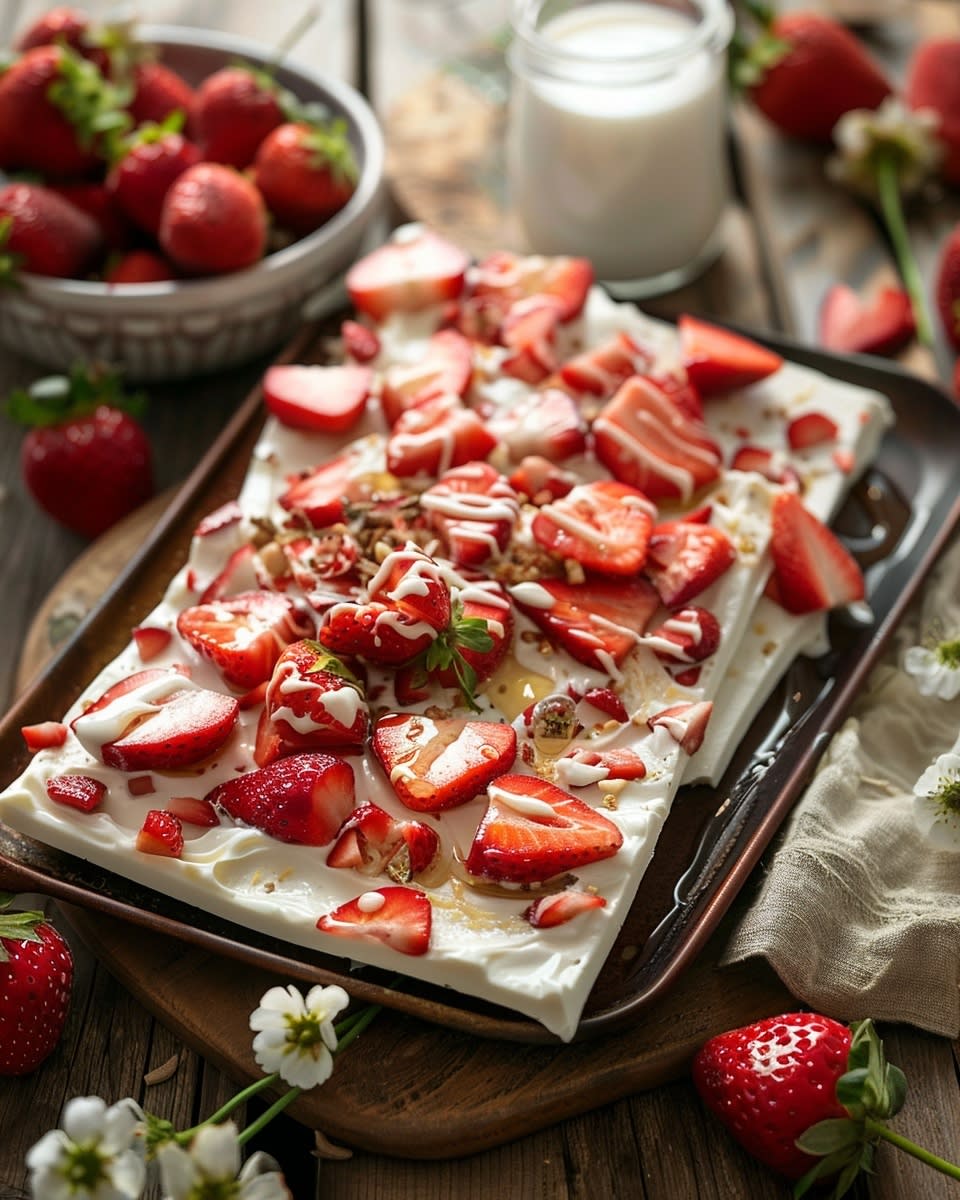
Introduction: My Love for Strawberry Greek Yogurt Bark
Last summer, I opened my freezer looking for something sweet but not too heavy. That’s when I spotted a container of strawberry Greek yogurt bark I had made the day before. One bite changed everything. The creamy yogurt melted on my tongue while the frozen strawberry pieces added a burst of freshness. I was hooked.
Since then, I’ve been making this simple treat almost every week. My kids love it. My friends ask for the recipe. Even my husband, who usually skips healthy snacks, sneaks pieces from the freezer when he thinks no one is watching.
This tasty frozen snack has become a staple in my home. It takes less than 10 minutes to prepare. You don’t need fancy equipment or hard-to-find ingredients. Just spread, top, freeze, and enjoy. The best part? You can make it your own with different toppings and flavors.
The internet loves this recipe too. Food bloggers rave about it. Instagram feeds fill up with beautiful bark photos every summer. Health-conscious parents praise it as a guilt-free dessert their kids actually enjoy. It’s not a passing trend. This snack has earned its place in kitchens across the country.
What is Strawberry Greek Yogurt Bark?
Let me break this down simply. Strawberry Greek yogurt bark is frozen yogurt spread thin on a baking sheet and broken into pieces like chocolate bark. You mix Greek yogurt with a touch of sweetener and vanilla. Then you top it with fresh or frozen strawberries and whatever else sounds good. After a few hours in the freezer, you break it into bite-sized pieces.
The name comes from its appearance. When you break the frozen yogurt, it cracks and snaps like traditional chocolate bark. The pieces have irregular shapes that make them fun to eat. Some people call it frozen yogurt bark or yogurt bark snacks.
This snack became popular for good reasons. It looks impressive but takes almost no skill to make. You can customize it to fit any diet or taste preference. Kids can help make it without creating a huge mess. It stores well in the freezer for weeks.
The key ingredients are simple:
- Greek yogurt – The creamy base that holds everything together
- Fresh or frozen strawberries – Sweet, tangy, and packed with flavor
- A sweetener – Honey, maple syrup, or your preferred option
- Optional toppings – Nuts, chocolate chips, coconut, granola, or other fruits
The flavor combines sweet and tangy notes. The strawberries add natural sweetness and a slight tartness. Greek yogurt brings a creamy, rich taste that balances the fruit perfectly. When frozen, the texture becomes similar to a light ice cream or frozen custard.
Greek yogurt makes this recipe special. Regular yogurt contains more water and creates icy crystals when frozen. Greek yogurt has been strained to remove excess liquid. This process concentrates the protein and creates a thick, creamy texture. One serving packs about 15-20 grams of protein depending on the brand you use.
The creamy texture of Greek yogurt stays smooth even when frozen. It doesn’t get rock-hard like ice. You can bite right into it without waiting for it to thaw. The higher protein content also keeps you fuller longer compared to regular frozen treats.
People often compare this to other yogurt bark variations. Chocolate yogurt bark uses cocoa powder or melted chocolate mixed into the base. It appeals to chocolate lovers who want a richer flavor. Raspberry yogurt bark swaps strawberries for raspberries and creates a slightly more tart taste. Coconut yogurt bark uses coconut flakes as a topping or coconut yogurt as the base for a tropical twist.
Some recipes take different approaches. A yogurt bark pioneer woman recipe might add crushed cookies or candy pieces. Keto yogurt bark uses sugar-free sweeteners and low-carb toppings like pecans and sugar-free chocolate chips. You can even make protein yogurt bark by mixing in protein powder for an extra nutritional boost.
I’ve tried making yogurt bark in the oven, but I don’t recommend it. The yogurt can separate or become runny. The freezer method works better and gives you more control over the final texture.
Why Choose Strawberry Greek Yogurt Bark?
Let’s talk about why this snack deserves space in your freezer. The health benefits stand out first. A typical serving contains only 80-120 calories depending on your toppings. Compare that to a bowl of ice cream at 300-500 calories. You save calories without feeling deprived.
The protein content makes it stand out from other frozen treats. Greek yogurt naturally contains probiotics that support digestive health. These good bacteria help your gut function properly. When you eat yogurt regularly, you might notice improved digestion and less bloating.
The low sugar content matters too. Fresh strawberries add natural sweetness without refined sugar. You control exactly how much sweetener goes into your bark. Most store-bought frozen desserts hide tons of added sugar. Making your own puts you in charge of what goes into your body.
Here’s a quick comparison of nutritional benefits:
| Benefit | Why It Matters |
|---|---|
| High Protein | Keeps you full and supports muscle health |
| Low Calorie | Satisfies sweet cravings without derailing your diet |
| Probiotics | Supports gut health and digestion |
| Calcium | Strengthens bones and teeth |
| Vitamin C | Boosts immune system from fresh strawberries |
The versatility of this yogurt bark tasty treat amazes me every time. I eat it as a mid-afternoon snack when I need an energy boost. My daughter grabs a piece after soccer practice. My neighbor serves it as a light dessert after dinner parties. It works for any occasion.
You can enjoy it straight from the freezer on a hot day. It cools you down and satisfies your sweet tooth at the same time. I pack pieces in my gym bag for a post-workout snack. The protein helps my muscles recover while the natural sugars give me quick energy.
Parents love it because kids think they’re getting a special treat. They don’t realize they’re eating something healthy. I’ve served this at birthday parties and playdates. Kids gobble it up faster than candy.
The recipe adapts to different dietary needs easily. Use dairy-free yogurt for a vegan version. Choose sugar-free sweeteners for diabetic-friendly bark. Add extra protein powder for athletes. Swap out strawberries for any fruit you prefer. The base recipe stays the same while you customize the details.
I make a big batch every Sunday. It lasts all week and gives my family a healthy option when cravings hit. No more running to the store for ice cream. No more feeling guilty about late-night snacks. We have something delicious and nutritious waiting in the freezer whenever we want it.


How to Make Strawberry Greek Yogurt Bark
Now that you know why this treat deserves a spot in your weekly routine, let me walk you through exactly how I make mine. Trust me, if you can spread peanut butter on toast, you can make this.
First, grab your ingredients. You’ll need 2 cups of full-fat Greek yogurt, 2 tablespoons of honey or maple syrup, half a teaspoon of vanilla extract, and about a cup and a half of fresh or frozen strawberries. That’s it for the basics.
Here’s my process. I line a baking sheet with parchment paper. This step matters more than you might think. Without parchment paper, your bark will stick like crazy and you’ll lose half of it trying to peel it off. Learn from my mistakes.
In a medium bowl, I mix the Greek yogurt with my sweetener and vanilla. I use a whisk to get it really smooth. No lumps allowed here. The mixture should look creamy and slightly glossy. If it seems too thick, I add a tiny splash of milk to loosen it up.
Then comes the fun part. I pour the yogurt mixture onto my prepared baking sheet and spread it out with a spatula. I aim for about a quarter-inch thickness. Too thin and it breaks into tiny shards. Too thick and it takes forever to freeze and can feel a bit icy. Getting that goldilocks thickness took me a few tries, but now I eyeball it perfectly.
While preparing the strawberries, I slice fresh ones into thin pieces. Frozen strawberries work great too, but I let them thaw for about five minutes first and pat them dry with paper towels. Excess moisture can make your bark icy instead of creamy.
I scatter the strawberry slices across the yogurt surface. Some people arrange them in perfect rows. I just throw them on randomly because life’s too short for perfect strawberry placement. Both ways taste exactly the same.
Here’s where choosing quality ingredients really shows. For Greek yogurt, I always reach for brands with at least 15 grams of protein per serving. The ingredient list should be short, just milk and live cultures. Some brands add thickeners or stabilizers that can affect the texture when frozen. Fage and Chobani work beautifully in my experience, though store brands often work just fine too.
Funny enough, the fat content matters more than I originally thought. Full-fat Greek yogurt creates the creamiest bark. Low-fat versions freeze harder and taste less rich. If you want to cut calories, go with 2% instead of nonfat. The texture difference between full-fat and 2% is minimal, but nonfat gets noticeably icier.
When picking strawberries, I look for bright red color without white shoulders near the stem. They should smell sweet and feel firm but not rock-hard. During winter when fresh strawberries cost a fortune and taste like cardboard, I switch to frozen without hesitation. Actually, frozen strawberries often have better flavor because they’re picked at peak ripeness and flash-frozen immediately.
The freezing time runs about 3 to 4 hours minimum. I usually make mine in the evening and leave it overnight. In the morning, I break it into irregular pieces and store them in a freezer-safe container. Breaking the bark feels oddly satisfying, like bubble wrap for your kitchen.
Now let’s talk variations because this is where things get really exciting. For a coconut yogurt bark, I sprinkle unsweetened coconut flakes over the strawberries before freezing. Toasting the coconut first adds an amazing nutty flavor that takes it to another level. Just spread coconut flakes on a baking sheet and toast them at 325 degrees for about 5 minutes until golden. Watch them carefully because they burn fast.
My chocolate yogurt bark version adds 2 tablespoons of unsweetened cocoa powder to the yogurt mixture. I also drizzle melted dark chocolate over the top in zigzag patterns using a fork. The chocolate hardens when it hits the cold yogurt and creates these beautiful ribbons throughout. If you’re after something similar, you might enjoy my chocolate cottage cheese mousse which uses a comparable technique with different ingredients.
For keto yogurt bark, I swap regular honey for a sugar-free sweetener like monk fruit or erythritol. I add chopped pecans, slivered almonds, and sugar-free chocolate chips on top. The carb count drops significantly while keeping all the satisfaction. My sister follows keto and says this version keeps her from feeling deprived when everyone else has dessert.
Want to make protein yogurt bark? Mix in a scoop of vanilla protein powder with your yogurt base. I use about 30 grams of protein powder per 2 cups of yogurt. This bumps the protein content way up and makes it perfect for post-workout recovery. The texture stays creamy as long as you whisk it thoroughly so no protein powder clumps remain.
A raspberry yogurt bark works exactly the same way but uses raspberries instead of strawberries. The flavor gets a bit more tart, which I actually prefer sometimes. Mixing half strawberries and half raspberries gives you the best of both worlds.
By the way, people ask me about making yogurt bark in the oven. Some recipes suggest baking it at a very low temperature to set it faster. I tried this once after seeing a yogurt bark pioneer woman style recipe that mentioned it. The result was disappointing. The edges got runny and separated while the center stayed too soft. The freezer method gives you much better control and consistent results every single time. Sometimes the old-fashioned way wins.
Creative topping ideas could fill an entire notebook. I’ve experimented with dozens of combinations. Crushed graham crackers add a cheesecake vibe. Chopped pistachios bring gorgeous color and crunch. A sprinkle of cinnamon creates warmth that pairs beautifully with strawberries. Mini chocolate chips, chia seeds, hemp hearts, dried cranberries, or granola all work wonderfully. When I want something really special, I drizzle almond butter in swirls across the top before freezing, similar to what I do with my no bake peanut butter oat bars.
Fresh mint leaves chopped finely give a refreshing twist. Lemon zest brightens the whole flavor profile. A light dusting of matcha powder makes it Instagram-worthy and adds antioxidants. I even made a version with crushed freeze-dried strawberries sprinkled on top for intense berry flavor.
Tips for Perfecting Your Yogurt Bark
Getting the consistency just right took me several batches to figure out. The thickness I mentioned earlier, that quarter-inch sweet spot, really does matter. When I spread it thinner thinking I’d get more pieces, they shattered into frustrating little bits. Going thicker made it feel more like frozen yogurt popsicles than bark.
The spreading technique helps too. I use an offset spatula if I have one handy, but a regular rubber spatula works fine. I spread from the center outward, working in smooth motions. Choppy back-and-forth spreading creates air pockets that can make your bark texture uneven.
Storage makes a huge difference in quality. After breaking the bark into pieces, I layer them in an airtight container with parchment paper between layers. This prevents them from freezing together into one giant clump. The bark stays fresh in the freezer for up to two months, though mine never lasts that long.
Some people use freezer bags, but I find containers protect the pieces better. Those irregular edges can be fragile. Tossing them loose in a bag leads to lots of tiny crumbs at the bottom.
Freezing time affects the final result more than you’d expect. Three hours gives you bark that’s frozen but still slightly soft, almost like soft-serve ice cream. Four hours creates firmer pieces that snap cleanly. Anything beyond that doesn’t change much. I’ve accidentally left bark in the freezer for a week before breaking it apart, and it turned out fine.
Here’s the thing about serving it. I pull pieces out and eat them immediately while they’re rock-solid frozen. Some people prefer letting them sit at room temperature for 2 to 3 minutes to soften slightly. My kids can’t wait that long. They grab pieces straight from the freezer and munch away.
Making it visually appealing doesn’t require artistic talent. The natural beauty of strawberries does most of the work. I make sure my strawberry slices vary in size for visual interest. Mixing in a few small pieces with larger slices creates dimension. Sometimes I add a handful of fresh blueberries alongside the strawberries for color contrast, much like I do in my lemon blueberry yogurt cake.
Drizzles always look impressive with minimal effort. Whether you’re drizzling honey, melted chocolate, or nut butter, the technique stays the same. Load a fork with your drizzle ingredient and wave it back and forth over the yogurt in quick motions. The uneven pattern looks way more professional than trying to make perfect lines.
One trick I learned from my mother-in-law involves tapping the baking sheet gently on the counter right after spreading the yogurt. This releases any air bubbles trapped in the mixture and creates a smoother surface. Those tiny bubbles can create weak spots where your bark breaks in weird places.
Color layering takes this treat to the next level. I sometimes divide my yogurt mixture in half and add a tiny bit of beet powder or natural food coloring to one portion. Then I drop spoonfuls of each color onto the pan and swirl them together with a knife for a marbled effect. It looks fancy but takes about thirty extra seconds.
Temperature matters when you’re ready to break the bark. Right out of the freezer, it can be too hard and shatter into dust. Letting the whole pan sit at room temperature for just two minutes makes breaking it much easier. You get nicer pieces with better edges.
If you’re meal prepping for the week, consider making multiple flavors at once. I sometimes make a strawberry version on one pan and a different fruit combination on another. Having variety prevents snack boredom. The process is nearly identical, so doubling recipes doesn’t add much extra time. It’s similar to how I batch-make my 3 ingredient banana oat cookies on Sunday afternoons.
The best advice I can give you? Don’t stress about perfection. My first batch looked pretty rough with uneven thickness and randomly scattered toppings. It still tasted amazing. Your family won’t care if the strawberries aren’t arranged symmetrically or if the edges are a bit thicker than the middle. They’ll just be happy to have something cold, sweet, and actually good for them waiting in the freezer.


Exploring Creative Variations and Customizations
The beauty of this frozen treat lies in how endlessly adaptable it becomes once you understand the basic method. Over the past year, I’ve probably created close to thirty different versions, each one teaching me something new about flavor combinations and what actually works.
The yogurt bark pioneer woman approach that I’ve seen floating around food blogs takes a more indulgent route. Ree Drummond’s style typically involves adding crushed Oreos, mini M&Ms, or even broken pretzel pieces for that sweet-and-salty combination. Her version leans into the dessert category more heavily while still maintaining that protein-packed yogurt base. I made a version inspired by her recipes for my daughter’s sleepover last month, mixing in crushed chocolate chip cookies and mini marshmallows. The girls went absolutely wild for it, though I wouldn’t call it an everyday healthy snack.
Another popular variation making rounds on social media combines peanut butter swirls throughout the yogurt base before adding strawberries. I mix about three tablespoons of natural peanut butter with a tablespoon of honey to thin it slightly, then drizzle it across the yogurt and swirl with a knife. The combination reminds me of those chocolate-covered strawberries dipped in peanut butter that fancy candy stores sell for ridiculous prices.
Here’s the thing about dietary customizations. They’re way easier than most people assume. For a vegan version, coconut-based Greek yogurt works surprisingly well. Brands like Kite Hill or Culina make thick, creamy plant-based yogurts that freeze beautifully. I’ve also had success with cashew-based yogurts, though they tend to freeze slightly harder than dairy versions. The flavor profile shifts just a bit, taking on subtle nutty undertones that actually complement strawberries quite nicely.
Making it gluten-free requires almost no adjustments since the base recipe contains no gluten anyway. Just watch your toppings. Skip the crushed cookies or graham crackers unless they’re certified gluten-free. Stick with nuts, seeds, coconut, and fresh fruit for totally safe options. My cousin has celiac disease and she makes this weekly without any issues.
For low-sugar versions, I completely skip added sweeteners and rely on the natural sugars in the fruit. Greek yogurt by itself isn’t very sweet, so I increase the vanilla extract to a full teaspoon and add a pinch of cinnamon for flavor depth. Using super ripe strawberries helps tremendously since they’re naturally sweeter. If you need some sweetness without sugar, stevia or monk fruit sweeteners dissolve well into the yogurt base without affecting texture.
The protein yogurt bark I mentioned earlier deserves more attention because it’s become my go-to post-gym snack. Beyond just mixing in protein powder, I top mine with hemp hearts, which add about 10 grams of protein per serving along with healthy omega-3 fats. Chopped almonds or cashews boost protein even further. I calculated once that a generous serving of my protein-packed version contains nearly 30 grams of protein, which rivals most protein bars but tastes about a thousand times better.
When adding protein powder, choosing the right type matters more than you’d think. Whey protein blends smoothest but isn’t suitable for vegans or people with dairy sensitivities. Plant-based protein powders work fine but can taste slightly chalky. I’ve found that vanilla-flavored proteins work better than unflavored ones, which sometimes have a strange aftertaste when frozen. Collagen powder is another option I’ve tested. It dissolves completely and doesn’t affect flavor at all while adding about 20 grams of protein per scoop.
Now let’s dive into some creative flavor combinations that have blown my mind. Strawberry and mint creates this refreshing combination perfect for summer afternoons. I chop about two tablespoons of fresh mint leaves very finely and mix them right into the yogurt base. The cooling mint flavor cuts through the sweetness of strawberries in the most satisfying way. It reminds me of those fancy spa water infusions but in frozen snack form.
Strawberry and almond is another winner that’s become a household favorite. I mix a half teaspoon of almond extract into my yogurt base and top it with sliced strawberries and toasted almond slivers. The almond flavor is subtle but noticeable, adding complexity that regular vanilla extract alone can’t achieve. Sometimes I drizzle a tiny bit of amaretto liqueur into the yogurt mixture when making a batch just for adults. Not enough to really taste the alcohol, just enough to enhance that almond essence.
I stumbled upon an amazing combination completely by accident one day when I had leftover ingredients from making smoothies. Strawberry, banana, and walnut yogurt bark turned out ridiculously good. I mash half a ripe banana into the yogurt, slice fresh strawberries on top, and sprinkle chopped walnuts everywhere. The banana adds natural sweetness and creates an even creamier texture when frozen. It tastes almost like banana split ice cream but with actual nutritional value.
For something more sophisticated, I’ve made a balsamic strawberry version that sounds weird but tastes incredible. I macerate the strawberry slices in a tablespoon of balsamic vinegar with a tiny pinch of black pepper for about ten minutes before adding them to the yogurt. The vinegar brings out the strawberries’ natural sweetness while adding depth. This version always impresses dinner guests who expect standard fruit-and-yogurt flavor.
Funny enough, my most unexpected success came from a tropical-inspired bark. I mixed passion fruit pulp into the yogurt base, topped it with strawberries and toasted coconut, then drizzled everything with lime juice before freezing. The tangy passion fruit paired with sweet strawberries created this complex flavor that tasted like vacation in frozen form. I make this version whenever I need a mood boost during dreary winter months.
Spice-infused versions offer another avenue worth exploring. A quarter teaspoon of cardamom mixed into the yogurt creates this warm, floral note that elevates basic strawberry bark into something special. I’ve also tried chai spice blend, which includes cinnamon, ginger, cloves, and cardamom. That version tastes like a frozen chai latte with strawberries. It’s particularly good in fall when I’m craving cozy flavors but still want something cold and refreshing.
Layered bark takes more effort but looks stunning and offers varied texture in each bite. I divide my yogurt mixture into thirds, leaving one plain, mixing cocoa powder into another, and adding strawberry puree to the third. Then I dollop spoonfuls of each onto the pan and swirl them together for a marbled effect. Each piece has different flavor notes depending on which layer you bite into first.
The nutrient density of these variations can be quite impressive when you choose toppings wisely. Adding seeds like chia, flax, or pumpkin increases minerals and healthy fats. According to USDA guidelines on nutrient density, incorporating diverse whole foods into snacks boosts their overall nutritional value significantly. I try to include at least two different nutrient-dense toppings in every batch I make.
By the way, savory yogurt bark might sound absolutely insane, but I’ve actually made it work. Using unsweetened Greek yogurt as the base, I add everything bagel seasoning, cucumber slices, cherry tomatoes, and fresh dill. It’s basically a frozen tzatziki situation that works as an appetizer for summer parties. My husband was skeptical until he tried it. Now he requests it specifically when we host barbecues.
One combination I return to repeatedly involves coffee. Mixing a tablespoon of instant espresso powder into the yogurt creates this lightly coffee-flavored base. Add strawberries and dark chocolate chips, and you’ve got something that tastes like a frozen mocha dessert. The slight bitterness of coffee balances the sweet fruit perfectly. This version has become my Saturday morning treat, paired with my actual cup of coffee.
For kids who are picky about fruit chunks, I puree half the strawberries and swirl the puree into the yogurt base before freezing. This creates pink-swirled bark that looks fun while distributing strawberry flavor throughout. Then I add just a few whole strawberry pieces on top for texture. My nephew, who normally picks fruit out of everything, actually eats this version without complaint.
Seasonal adaptations keep things interesting year-round. During fall, I swap strawberries for diced apples and add cinnamon and chopped pecans. Winter calls for pomegranate seeds and pistachios. Spring brings back strawberries with edible flowers pressed on top for a gorgeous presentation. Summer means basically any berry combination I can get my hands on. This rotation prevents the recipe from getting boring even though I make it constantly.
If you’re looking for more ways to satisfy your sweet tooth with healthier options, you might enjoy browsing through other creative ideas in our dessert recipes collection, where you’ll find plenty of inspiration for guilt-free treats.
Frequently Asked Questions About Yogurt Bark
Can I use regular yogurt instead of Greek yogurt?
You technically can, but the results won’t be nearly as good. Regular yogurt contains much more water content than Greek yogurt, which creates icy crystals when frozen rather than that smooth, creamy texture we’re after. The bark will also be more fragile and harder to break into nice pieces. If Greek yogurt isn’t available, strain regular yogurt through cheesecloth for several hours to remove excess liquid before using it. This DIY method creates something similar to Greek yogurt and will work much better than using regular yogurt straight from the container.
How long does the yogurt bark need to freeze?
Minimum freezing time is about three hours, though I usually recommend four hours for best results. Overnight works perfectly if you’re making it the evening before you need it. The bark needs to be completely frozen solid throughout before you break it into pieces. If you try breaking it too early, you’ll end up with a mushy mess. The thickness of your bark layer affects freezing time, so if you spread it thicker than the recommended quarter-inch, add an extra hour or two. Once fully frozen, it keeps well for up to two months in a proper airtight container.
Can I make this without an oven?
Absolutely, and in fact, you should never use an oven for this recipe. Yogurt bark is meant to be frozen, not baked. Some confusion might arise from recipes that toast toppings like coconut or nuts before adding them to the bark, but the bark itself always goes in the freezer, never the oven. The freezing method preserves the probiotics in Greek yogurt, which heat would destroy. The only time you’d use an oven is if you’re pre-toasting nuts or coconut flakes separately, then letting them cool completely before sprinkling them on the yogurt.
What are some alternative toppings for the yogurt bark?
The options are practically endless. Beyond fresh fruit, try crushed freeze-dried fruit for intense flavor without added moisture. Nuts like almonds, pecans, walnuts, or pistachios add crunch and healthy fats. Seeds such as pumpkin seeds, sunflower seeds, or chia seeds boost nutrition. For something more indulgent, mini chocolate chips, cacao nibs, or drizzled nut butter work beautifully. Granola adds texture but can get slightly soft when frozen. Coconut flakes, either plain or toasted, bring tropical vibes. Even edible flowers make stunning additions if you’re serving this at a special event.
Is this recipe suitable for a keto diet?
Yes, with a few simple modifications. Use full-fat Greek yogurt, which has fewer carbs than low-fat versions. Swap honey or maple syrup for keto-friendly sweeteners like erythritol, monk fruit, or stevia. Choose low-carb toppings such as nuts, seeds, coconut flakes, and sugar-free chocolate chips. Berries contain some carbs, so if you’re following strict keto, use strawberries sparingly or swap them for blackberries, which are lower in carbs. A typical serving of keto-friendly yogurt bark contains only about 5-7 net carbs depending on your specific ingredients and portion size.
Can I make this ahead of time for a party?
This is actually one of the best make-ahead desserts you can prepare. I usually make it two or three days before I need it, giving me one less thing to stress about on party day. Once frozen solid, break it into pieces and store them in an airtight container between layers of parchment paper. You can even make it up to two weeks in advance if your freezer space allows. Right before serving, arrange the pieces on a cold platter. They’ll stay frozen for about 20-30 minutes at room temperature, giving guests plenty of time to enjoy them before they start melting.
How should I store the leftover yogurt bark?
Storage is super important for maintaining quality. After breaking the bark into pieces, layer them in an airtight freezer-safe container with parchment paper between each layer. This prevents pieces from freezing together into one big clump. Push out as much air as possible before sealing the container, as excess air can cause freezer burn over time. Stored properly, yogurt bark stays fresh and delicious for up to two months. I keep mine in a container near the front of my freezer for easy access, though like I mentioned before, mine rarely lasts more than a week before my family devours it all.
Can I use frozen strawberries instead of fresh ones?
Frozen strawberries work perfectly fine and are often my preferred choice during off-season months when fresh berries are expensive and tasteless. The key is preparing them correctly. Let frozen strawberries thaw for about five minutes, then pat them very dry with paper towels to remove excess moisture. Too much liquid can make your bark icy rather than creamy. You can also use them semi-frozen, which actually works quite well. Slice them while they’re still partially frozen, which makes cutting easier, then place them on the yogurt immediately. They’ll release less moisture this way.
Why is my yogurt bark too icy and not creamy?
Several factors cause icy texture instead of creamy smoothness. Using low-fat or nonfat yogurt is the most common culprit, as these lack the fat content needed for creamy texture when frozen. Adding too much liquid sweetener can also create iciness. Excess moisture from wet fruit contributes to the problem too, so always pat fruit dry before adding it. Make sure you’re using actual Greek yogurt, not regular yogurt, as the higher protein and fat content makes a huge difference. Finally, if your freezer runs extremely cold, the bark might freeze too hard. Letting it sit at room temperature for two minutes before eating can help.
Can I add fresh lemon or lime juice to the yogurt base?
You absolutely can, and citrus juice adds a lovely bright flavor that complements berries beautifully. However, add it carefully because too much acid can cause the yogurt to separate or become grainy. I stick to one or two teaspoons of fresh lemon or lime juice per two cups of yogurt. Mix it in thoroughly along with your sweetener and vanilla. The citrus zest is even better than juice because it provides intense flavor without adding extra liquid. I use a microplane to grate lemon or lime zest directly into my yogurt mixture, usually about half a teaspoon. The result tastes fresh and vibrant without risking texture issues.
Making your own strawberry Greek yogurt bark at home puts you in complete control of what goes into your frozen treats. You choose the sweetness level, pick quality ingredients, and create custom flavor combinations that store-bought options could never match. The next time your family raids the freezer looking for something sweet, they’ll find something that actually nourishes their bodies while satisfying those cravings. Give it a try this weekend and see how quickly it becomes your new favorite freezer staple.
Ingredients
Equipment
Method
- Tapissez une plaque de cuisson de papier sulfurisé.
- Dans un bol moyen, mélangez le yaourt grec, le miel ou sirop d'érable et l'extrait de vanille jusqu'à consistance lisse.
- Versez le mélange de yaourt sur la plaque préparée et étalez-le sur environ un quart de pouce d'épaisseur.
- Coupez les fraises fraîches ou décongelez et essuyez les fraises congelées.
- Éparpillez les tranches de fraises sur le yaourt.
- Congelez pendant 3 à 4 heures ou toute la nuit jusqu'à ce que ce soit solide.
- Cassez la écorce en morceaux irréguliers et conservez-la dans un récipient hermétique au congélateur.