
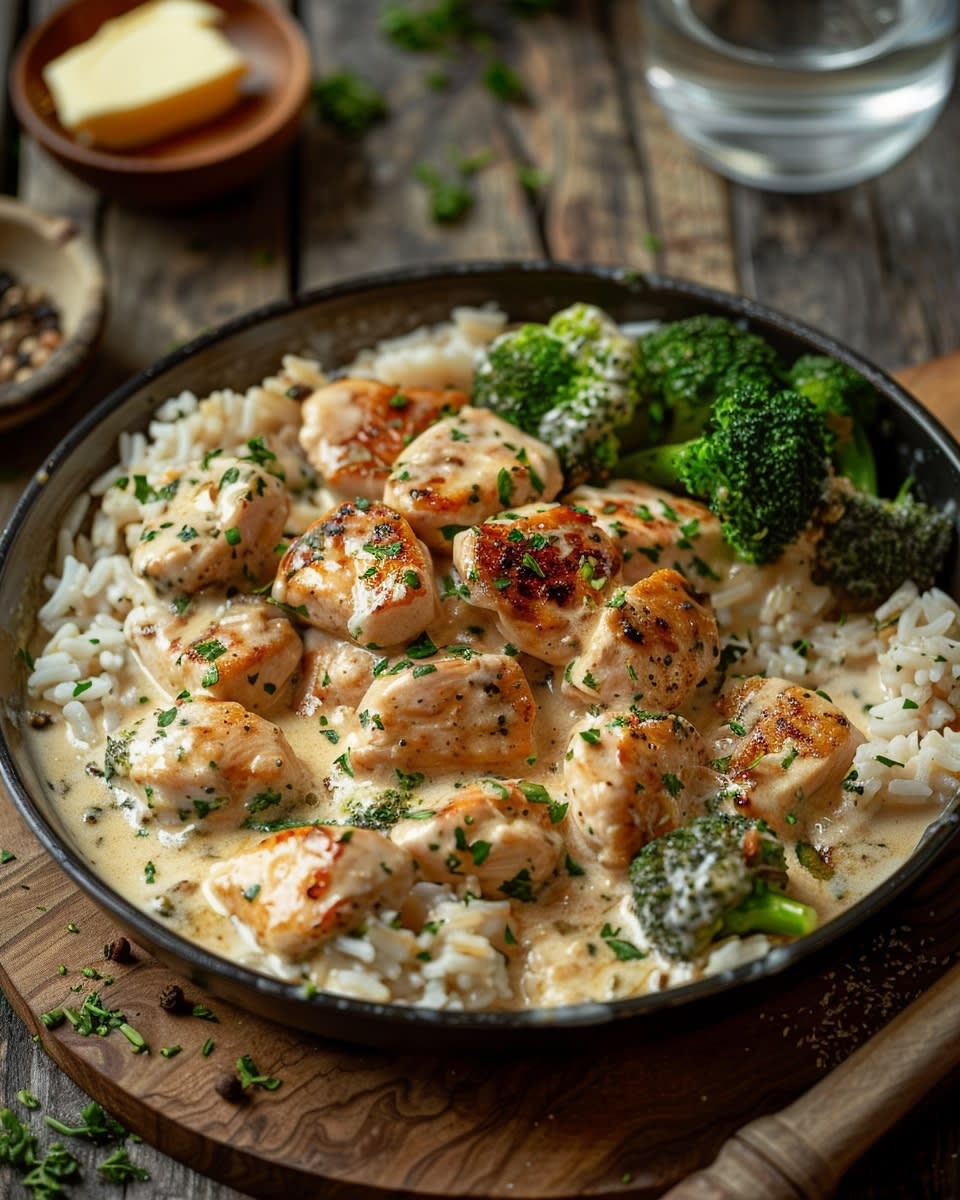
Last Tuesday night, I found myself staring into my fridge at 6 PM with nothing planned for dinner. My kids were hungry, my husband would be home in an hour, and I had chicken thighs, some rice, and a few basic ingredients. That’s when I threw together what has now become our family’s most-requested meal: Creamy Garlic Butter Chicken and Rice Skillet. The best part? Everything cooked in one pan, and I had dinner on the table in under 40 minutes. No fancy ingredients, no complicated steps, just pure comfort food that made everyone happy.
This dish has completely changed how I think about weeknight cooking. I’m excited to share my go-to recipe with you, along with all the tips and tricks I’ve learned from making it dozens of times. Whether you’re new to cooking or just looking for a reliable meal that never disappoints, this creamy garlic butter chicken and rice skillet will become your secret weapon in the kitchen.
Why This Creamy Garlic Butter Chicken and Rice Skillet Is So Popular
There’s something magical about a meal that brings together tender chicken, fluffy rice, and a rich, garlicky sauce all in one pan. This dish has taken the internet by storm, and I completely understand why. The first time I made it for my family, my daughter actually asked if we were having restaurant food for dinner. That’s the kind of impression this meal makes.
The creamy texture of the sauce coats every grain of rice and piece of chicken perfectly. The garlic butter creates this incredible aroma that fills your entire house while it cooks. I’ve had neighbors knock on my door asking what I’m making because the smell was so good. It’s rich without being too heavy, flavorful without being overwhelming, and satisfying in a way that simple meals just are.
What really sets this dish apart is the convenience factor. As someone who dreads doing dishes after a long day, having just one skillet to clean makes me actually want to cook. You brown the chicken in the same pan where you’ll cook the rice. The rice absorbs all those beautiful flavors from the chicken and garlic butter. Nothing goes to waste, and you’re not juggling multiple pots and pans.
I’ve served this creamy garlic butter chicken and rice skillet at casual family dinners on random Wednesdays. I’ve also made it when we had guests over for a more formal dinner party. Both times, it was a hit. The dish has this rare quality of feeling both comfortable and special at the same time. You can serve it straight from the skillet for a rustic family-style meal, or you can plate it nicely with some fresh herbs for a fancier presentation.
The flavors work for everyone. My picky eight-year-old loves it. My father-in-law, who claims he doesn’t like “fancy food,” asks for seconds every time. Even my friend who usually only eats salads told me she couldn’t stop eating it. That kind of universal appeal is rare in home cooking.
Another reason this dish has gained such a devoted following is its incredible flexibility. Running low on chicken? You can use fewer pieces and add more vegetables. Don’t have fresh garlic? Garlic powder works in a pinch. Want to make it lighter? Swap heavy cream for half-and-half or even milk with a bit of cream cheese. Need to feed a crowd? The recipe doubles easily without any adjustments to cooking time or technique.
I’ve adapted this recipe countless times based on what I had available. Once I used brown rice instead of white, and while it took longer to cook, it was delicious. Another time I threw in some spinach and sun-dried tomatoes because that’s what I had in my fridge. The base recipe is so solid that it can handle all kinds of variations without falling apart.
For families dealing with dietary restrictions, this dish can be modified pretty easily. I’ve made a dairy-free version using coconut cream and olive oil instead of butter. It had a slightly different flavor profile, but it was still creamy and delicious. You can also use cauliflower rice for a low-carb version, though you’ll need to adjust the cooking time significantly.
The ingredient list is another major selling point. You don’t need anything exotic or expensive. Chicken, rice, butter, garlic, cream, and some basic seasonings. These are items most people already have in their kitchen. I’ve never had to make a special trip to a specialty store for this recipe. Your regular grocery store has everything you need.
Time is probably the biggest factor in why this dish has become so popular. From start to finish, you’re looking at about 40 minutes. That includes prep time, cooking time, and even a few minutes to let the rice rest. For a complete meal that feeds four to six people, that’s incredibly efficient. I can get home from work, change out of my work clothes, and still have dinner ready before everyone gets too hungry and cranky.
The one-pot aspect also means less mental energy spent on timing. You’re not trying to coordinate when the rice will be done with when the chicken will be done. Everything cooks together, so everything finishes together. This makes it perfect for those nights when your brain is too tired to manage multiple cooking processes at once.
People also love how this creamy garlic butter chicken and rice skillet reheats. Leftovers actually taste great the next day, which isn’t always true for rice dishes. I usually add a splash of chicken broth or cream when reheating to bring back that creamy consistency. My husband takes it for lunch at work, and he says his coworkers are always jealous.
The comfort food factor cannot be overstated. This is the kind of meal that makes you feel taken care of. It’s warm, filling, and just indulgent enough to feel like a treat without being too rich. On stressful days, coming home to this dish feels like a warm hug. That emotional connection to food is part of why certain recipes become favorites that people make again and again.


Ingredients and Preparation for Your Creamy Garlic Butter Chicken and Rice
Now that you know why this dish works so well, let’s talk about actually making it. The ingredient list is refreshingly simple, which is part of what makes this recipe so accessible. I keep most of these items stocked in my kitchen at all times now because I make this meal so often.
For the chicken, you’ll want about a pound and a half of boneless, skinless chicken thighs. I know breasts are often the default choice, but trust me on this one. Thighs stay so much more tender and juicy, especially in a one-pan dish where they’re cooking for a while. The first time I made this with breasts, they came out a bit dry. Thighs have just enough fat to keep everything moist and flavorful. If you absolutely must use breasts, just watch your cooking time carefully and maybe pound them to an even thickness so they cook uniformly.
The rice is another crucial component. I use long-grain white rice, usually jasmine or basmati. These varieties give you fluffy, separate grains that don’t turn mushy. You’ll need about a cup and a half, which sounds like a lot, but it feeds several people. Here’s something I learned the hard way: rinse your rice before using it. I skipped this step once because I was in a hurry, and the final dish had this weird gummy texture from all the excess starch. Just put your rice in a fine-mesh strainer and run cold water over it until the water runs clear. Takes maybe two minutes but makes a huge difference.
Garlic is the star of the show here. You’ll want at least six cloves, maybe more if you’re like me and believe there’s no such thing as too much garlic. Fresh garlic is really important for this recipe. I’ve tried it with jarred minced garlic and garlic powder when I was desperate, and while it’s still good, the flavor isn’t quite as vibrant. Fresh garlic gives you that punchy, aromatic quality that makes the whole dish come alive. I mince mine pretty fine so it distributes evenly throughout the sauce.
Butter and cream create that luscious, rich sauce everyone loves. I use regular unsalted butter, about four tablespoons, and heavy cream or heavy whipping cream. You’ll need about a cup. Don’t try to cut corners by using skim milk or something similar. The fat content in heavy cream is what makes the sauce thick and coating without needing any flour or cornstarch. Plus, it doesn’t separate or curdle when it simmers with the rice. If you’re looking for other creamy chicken dishes, you might enjoy this marry me chicken recipe which has a similarly indulgent sauce.
For seasoning, you’ll need chicken broth (about two cups), salt, pepper, and Italian seasoning or dried thyme. I like Italian seasoning because it has that blend of herbs that just works with garlic and butter. Some fresh parsley for garnish is nice but totally optional. Oh, and I always add a bit of paprika to the chicken before cooking it. Gives it a nice color and a subtle warmth.
Preparing everything before you start cooking makes the actual process so much smoother. I learned this from watching cooking shows where they have everything in little bowls. Feels fancy, but it’s actually practical. Pat your chicken thighs dry with paper towels and season both sides generously with salt, pepper, and paprika. The dry surface helps them get a better sear. If your chicken is wet, it’ll steam instead of brown, and you’ll miss out on all that flavor.
Mincing the garlic takes a few minutes. Sometimes I use a garlic press, but I actually prefer chopping it by hand. You get better control over the size, and I find it releases more of those aromatic oils. My trick is to smash each clove with the flat side of my knife first. Makes the peel come right off, and the garlic is easier to chop.
Measure out your rice after rinsing and let it drain in the strainer while you prep everything else. Have your chicken broth and cream measured and ready to pour. Once you start cooking, things move pretty quickly, and you don’t want to be scrambling to measure liquids while your garlic is burning in the pan.
Cooking Techniques That Make All the Difference
The cooking process itself is where the magic happens, and there are some specific techniques that really elevate this dish from good to amazing. Starting with the chicken, you want a good sear. Heat your skillet over medium-high heat and add about a tablespoon of butter or oil. When it’s shimmering and hot, lay your chicken thighs in the pan. Don’t move them around. This was hard for me to learn because I always want to fiddle with food while it’s cooking, but resist that urge.
Let the chicken cook undisturbed for about five minutes on the first side. You’re looking for a deep golden-brown crust. That crust is packed with flavor from the Maillard reaction, which is just a fancy way of saying the proteins and sugars in the chicken are caramelizing and creating hundreds of new flavor compounds. Flip the chicken and cook the other side for another four to five minutes. The chicken doesn’t need to be fully cooked at this point because it’ll finish cooking with the rice later.
Once your chicken has that beautiful color, remove it from the skillet and set it on a plate. Don’t wipe out the pan. All those brown bits stuck to the bottom are pure flavor gold. This is what chefs call fond, and it’s going to make your sauce incredible. If you enjoy these kind of simple skillet meals, this one pot beef and zucchini skillet uses similar techniques.
Turn the heat down to medium and add the remaining butter to the same skillet. When it melts, add your minced garlic. Here’s where timing matters. Garlic goes from perfect to burnt in about thirty seconds, so stay close. Stir it constantly and cook just until it’s fragrant, maybe forty-five seconds to a minute. You’ll smell it immediately when it’s ready. That’s your cue to add the rice.
Pour your rinsed rice into the skillet with the garlic butter and stir everything together. You want every grain of rice coated in that garlicky butter. This step is called toasting the rice, and it adds another layer of flavor. Cook it for about two minutes, stirring occasionally. You’ll notice the rice starts to look slightly translucent around the edges.
Now pour in your chicken broth. The liquid should sizzle when it hits the hot pan, and you’ll see all those brown bits from the chicken lifting off the bottom of the skillet. Stir everything together and bring it to a simmer. Once it’s bubbling gently, nestle your chicken thighs right into the rice. Pour any juices that accumulated on the plate back into the skillet too.
Reduce the heat to low and cover the skillet with a tight-fitting lid. This is crucial for cooking the rice properly. The trapped steam is what cooks the rice and keeps the chicken moist. Set a timer for twenty minutes and don’t peek. I know it’s tempting, but every time you lift that lid, you’re releasing steam and lowering the temperature, which messes with the cooking time.
When the timer goes off, remove the skillet from heat but keep it covered for another five minutes. This resting time lets the rice absorb any remaining liquid and become perfectly fluffy. I learned about this step from my grandmother, who made perfect rice every single time. She always said the resting was as important as the cooking.
After the rest, remove the chicken to a cutting board and pour the heavy cream over the rice. Stir it in gently, and you’ll see the rice transform into this creamy, dreamy consistency. The residual heat from the skillet warms the cream and helps it incorporate without needing additional cooking. Taste it at this point and adjust your seasonings. I usually add a bit more salt and some freshly cracked black pepper.
Slice or dice your chicken and nestle it back into the creamy rice. Sometimes I leave the thighs whole if I’m serving family-style, but slicing them makes it easier for everyone to serve themselves. If you’re interested in other dishes where chicken and sides cook together, this sheet pan chicken and potatoes recipe has a similar convenience factor.
The cream sauce should coat the rice like a rich risotto, but not be soupy. If it seems too thick, you can stir in a splash more cream or some of the leftover chicken broth. If it’s too thin, let it sit for a few minutes uncovered. The rice will continue absorbing liquid as it sits. Funny enough, this dish is actually better if you let it rest for about five minutes before serving anyway. Gives all the flavors time to meld together.
Garnish with fresh parsley and maybe a bit of grated Parmesan cheese if you want to get fancy. The bright green of the parsley makes it look more appealing, and the fresh herb flavor cuts through the richness of the cream and butter. For a complete meal, you might want to check out this creative protein bowl for ideas on balancing rich dishes with lighter elements.
The key to mastering this dish is understanding that each step builds on the last one. The chicken creates flavorful fond, the butter and garlic create an aromatic base, the rice absorbs all those flavors as it cooks, and the cream ties everything together at the end. It’s simple cooking, but when you do each step with attention, the results are spectacular.


Serving Suggestions and Creative Variations for Your Creamy Garlic Butter Chicken and Rice
One of my favorite things about this creamy garlic butter chicken and rice skillet is how well it plays with other dishes. While it’s absolutely hearty enough to stand alone as a complete meal, sometimes you want to round things out with a few complementary sides. The richness of the cream and butter means you’ll want something fresh and bright alongside it.
I almost always serve this with a simple green salad. Nothing fancy, just some mixed greens, cherry tomatoes, cucumber, and a light vinaigrette. The acidity from the dressing cuts through the richness of the chicken and rice in the most satisfying way. My go-to vinaigrette is three parts olive oil to one part lemon juice or red wine vinegar, plus a bit of Dijon mustard, salt, and pepper. Shake it up in a jar and you’re done. The fresh, crisp vegetables give your palate a break between bites of the creamy rice.
Steamed or roasted vegetables are another excellent choice. Broccoli is probably my most common pairing because it’s easy and my kids will actually eat it. I just steam it until it’s bright green and tender-crisp, then toss it with a little butter, salt, and lemon juice. Asparagus is beautiful when you’re trying to make the meal feel a bit more special. Roast it in the oven with olive oil, salt, and pepper at 400 degrees for about twelve minutes. Green beans work wonderfully too, either steamed or sautéed with a bit of garlic.
For something with a bit more substance, I love serving crusty bread on the side. There’s something deeply satisfying about tearing off a piece of warm bread and using it to scoop up that garlicky cream sauce. A baguette from the bakery section of your grocery store, warmed in the oven for five minutes, turns this into something that feels restaurant-quality. My husband could honestly eat the entire loaf if I let him.
As far as garnishes go, fresh herbs make a huge visual and flavor difference. Parsley is the classic choice and what I use most often. Chopped fresh basil is gorgeous if you have it, especially in the summer when it’s growing like crazy in the garden. Chives give you that mild oniony flavor that works beautifully with the garlic. Even a bit of fresh thyme or oregano can elevate the whole dish. Just a handful of something green and fresh scattered over the top before serving makes it look like you put in way more effort than you actually did.
A sprinkle of grated Parmesan cheese is never a bad idea either. The salty, nutty flavor of good Parmesan complements the garlic butter sauce perfectly. Sometimes I also add a pinch of red pepper flakes if I’m in the mood for a little heat. Just a tiny bit adds complexity without making it actually spicy.
Recipe Variations You’ll Want to Try
The basic recipe is fantastic, but there’s so much room to play around with it based on what you like or what you have available. I’ve probably made twenty different versions of this dish by now, and most of them have been delicious.
Adding vegetables directly into the skillet is an easy way to bulk up the meal and sneak in more nutrients. Spinach is my favorite addition because it wilts down so much. I stir in about three or four cups of fresh spinach right at the end when I add the cream. It wilts in about a minute and adds this nice pop of color. No one in my family even complains about eating their greens when they’re swimming in that creamy garlic sauce.
Mushrooms are another winner. Slice up about eight ounces of baby bellas and sauté them with the garlic before adding the rice. They add this wonderful earthy flavor and a meaty texture that makes the dish feel even heartier. Sun-dried tomatoes bring a sweet-tart element that contrasts beautifully with the rich cream. I usually use the ones packed in oil, drain them, chop them up, and stir them in with the rice.
Frozen peas or corn can be stirred in during the last five minutes of cooking. They add sweetness and make the dish more colorful. My daughter loves when I add peas because she thinks they look like little green jewels. Whatever keeps her eating vegetables, right? Bell peppers, diced small and sautéed with the garlic, add a nice crunch and a pop of color.
If you want to change up the rice situation, you absolutely can. Brown rice works, but you’ll need to increase the liquid to about three cups and extend the cooking time to forty minutes. The texture is chewier and more nutty, which some people really prefer. Wild rice or a wild rice blend adds texture and visual interest. I’ve done half white rice and half wild rice, which gave it this rustic, wholesome feel.
For a low-carb version, cauliflower rice is surprisingly good. You’ll want to skip the whole simmering step since cauliflower rice cooks so quickly. Instead, cook your chicken, make your sauce, and then stir in the cauliflower rice at the very end. Let it cook for just three to five minutes until tender. It obviously doesn’t have the same starchy, comforting quality as regular rice, but it still tastes great and soaks up all that garlic butter flavor.
Seasoning variations can totally change the vibe of the dish. Instead of Italian seasoning, try using herbs de Provence for a French-inspired version. Cajun seasoning gives it a completely different personality with a bit of heat and smokiness. I’ve even used curry powder for an unexpected twist that my family loved. Just a tablespoon of curry powder cooked with the garlic creates this warm, aromatic sauce that’s totally different but equally delicious.
Want to add cheese beyond just a garnish? Stir in a half cup of grated Parmesan or Gruyere with the cream for an extra-rich, extra-indulgent version. Cream cheese also works beautifully. Add about four ounces of softened cream cheese with the cream and stir until it melts. It makes the sauce even thicker and more luscious.
Different proteins can work too, though chicken thighs are definitely my favorite. Boneless chicken breasts are fine if you prefer white meat, just watch them carefully so they don’t overcook. I’ve done this with shrimp, adding them in the last five minutes of cooking so they don’t get rubbery. Italian sausage, removed from the casings and browned, creates a totally different but amazing dish. Even turkey works well if that’s what you have on hand.
Making the Most of Your Leftovers
This dish reheats pretty well, which is saying something for a rice dish. Store leftovers in an airtight container in the fridge for up to four days. When reheating, add a splash of chicken broth or cream to bring back that creamy consistency. The microwave works fine, but I actually prefer reheating it in a skillet over medium-low heat. It tastes fresher that way and you can control the texture better.
Here’s something I discovered by accident that’s become a regular thing in my house: turn the leftovers into a casserole. Transfer the leftover chicken and rice to a baking dish, sprinkle the top generously with shredded mozzarella or cheddar cheese, and bake at 350 degrees for about twenty minutes until everything’s hot and bubbly. The cheese gets all golden and crispy on top. It’s like getting a completely different meal from the same ingredients.
Creamy chicken and rice soup is another fantastic use for leftovers. Add the leftover chicken and rice to a pot with about four cups of chicken broth, bring it to a simmer, and add some frozen mixed vegetables or fresh carrots and celery. Let it cook for fifteen minutes until the vegetables are tender. You might need to add more cream to get the consistency right, but the result is this comforting, restaurant-quality soup that tastes like you spent hours making it.
I’ve also used leftovers as a filling for stuffed peppers. Cut bell peppers in half lengthwise, remove the seeds, and fill them with the leftover chicken and rice. Top with cheese and bake at 375 degrees for about thirty minutes. The peppers get tender and slightly sweet, which pairs beautifully with the garlicky rice.
If you’re looking for more inspiration on what to do with main dish proteins and grains, the main dish recipe collection has tons of ideas that work for both fresh meals and creative leftover transformations.
Another trick I’ve done is turn it into fried rice. Heat a large skillet or wok over high heat with some oil. Break up the leftover chicken and rice and fry it, stirring constantly, until it gets a bit crispy and caramelized around the edges. Push it to the side of the pan, scramble an egg or two, then mix everything together. Add some soy sauce and frozen peas. It’s this fun fusion dish that doesn’t taste like leftovers at all.
Stuffed tomatoes are gorgeous and taste amazing. Hollow out large beefsteak tomatoes, fill them with the leftover chicken and rice, top with breadcrumbs and Parmesan, and bake until the tomatoes are tender. This was something my grandmother used to make with leftover rice, and adapting it for this dish just felt right.
Common Questions About Making Creamy Garlic Butter Chicken and Rice
How do I prevent the rice from becoming mushy?
The key is rinsing your rice thoroughly before cooking to remove excess starch. Also, resist the urge to stir the rice while it’s cooking under the lid. Every time you lift the lid and stir, you break the rice grains and release more starch, which creates that gummy texture. Use the right ratio of liquid to rice—about one and a third cups of liquid per cup of rice. Finally, let the rice rest off the heat for five minutes after cooking. This allows any remaining moisture to absorb evenly without overcooking.
Can I use a different type of protein, like shrimp or tofu?
Absolutely, and I’ve tried both successfully. For shrimp, skip the initial searing step and add raw, peeled shrimp during the last five minutes of cooking with the lid on. They cook quickly and can get rubbery if overcooked. For tofu, use extra-firm tofu, press out the moisture, cube it, and pan-fry it separately until golden. Add it at the end like you would the cooked chicken. Pork chops or turkey cutlets also work well following the same technique as the chicken thighs.
What are some good substitutes for cream if I’m lactose intolerant?
Coconut cream is my favorite dairy-free alternative and actually tastes amazing in this dish. It gives you that same richness and thickness without any dairy. Just use the thick cream from the top of a can of full-fat coconut milk. Cashew cream, made by blending soaked cashews with water, works beautifully and has a neutral flavor. Oat cream is another option that’s become more widely available and has a nice creamy texture. Understanding basic nutrition basics can help you make substitutions that work for your dietary needs without sacrificing flavor. Some people also use lactose-free heavy cream if they can find it.
How can I make this dish spicier?
There are several easy ways to add heat without overwhelming the dish. Red pepper flakes stirred in with the garlic are the simplest option—start with a quarter teaspoon and add more to taste. Diced jalapeños sautéed with the garlic add fresh heat and flavor. A few dashes of hot sauce or sriracha stirred into the cream creates an even heat throughout. Cayenne pepper or chili powder mixed with your chicken seasoning gives the whole dish a warm kick. I sometimes use spicy Italian sausage instead of chicken for a different kind of heat.
Is there a way to make this recipe lower in calories?
You can definitely lighten it up without sacrificing too much. Use chicken breasts instead of thighs to reduce fat and calories. Replace the heavy cream with half-and-half or even whole milk, though you might need to add a tablespoon of flour or cornstarch to help thicken the sauce. Reduce the butter to two tablespoons instead of four, or use olive oil for part of it. Adding extra vegetables like spinach, mushrooms, or zucchini bulks up the volume without adding many calories. Using cauliflower rice instead of regular rice dramatically reduces the carbs and calories.
Can I prepare this dish ahead of time and reheat it later?
Yes, though the texture is always best fresh. You can cook the entire dish up to two days ahead and store it covered in the fridge. When reheating, add some extra chicken broth or cream because the rice will have absorbed a lot of the sauce. Reheat it covered in a 350-degree oven for about twenty minutes, or in a covered skillet over medium-low heat, stirring occasionally. You can also prep all your ingredients ahead—season the chicken, chop the garlic, rinse the rice—and store everything separately in the fridge. Then when you’re ready to cook, everything comes together quickly.
What is the best way to store leftovers?
Transfer cooled leftovers to an airtight container and refrigerate within two hours of cooking. They’ll keep well for up to four days in the fridge. Make sure the container is truly airtight because rice can dry out quickly. For longer storage, this dish freezes surprisingly well for up to three months. Let it cool completely, then portion it into freezer-safe containers or bags. Thaw it overnight in the fridge before reheating. When reheating from frozen, add extra liquid because the rice will be quite dry after freezing.
How can I add more vegetables to the dish without compromising the flavor?
The trick is choosing vegetables that complement the garlic butter cream sauce rather than competing with it. Spinach, mushrooms, and peas are my top choices because they absorb the flavors beautifully. Dice vegetables small so they cook through with the rice—think pea-sized pieces of carrots, bell peppers, or zucchini. Add heartier vegetables like carrots or broccoli when you add the rice so they have enough time to cook through. Delicate vegetables like spinach or frozen peas go in during the last few minutes. Don’t overload it—two cups of added vegetables is plenty without overwhelming the dish.
Can I make this in a different type of pan if I don’t have a large skillet?
You’ll need something with a lid that can hold at least four quarts of food and can go from stovetop to a covered simmer. A large sauté pan or a wide, shallow pot works perfectly. Even a Dutch oven is great for this recipe. What won’t work well is a deep, narrow pot because the rice needs to spread out in a relatively thin layer to cook evenly. If your lid doesn’t fit tightly, you can cover the pan with aluminum foil and then put the lid on top. Just make sure whatever you use is big enough to hold the chicken, rice, and liquid without overflowing.
Why did my sauce turn out watery instead of creamy?
This usually happens when there’s too much liquid or not enough resting time. The rice needs to absorb most of the chicken broth during cooking before you add the cream. If you lifted the lid frequently while cooking, you might have needed to cook it longer to evaporate enough liquid. The solution is to let it sit uncovered for five to ten minutes after adding the cream. The rice will continue absorbing liquid as it sits. If it’s still too watery, you can return it to low heat uncovered and let it simmer gently for a few minutes. Next time, make sure your lid fits tightly and resist peeking during the cooking time.
Give this creamy garlic butter chicken and rice skillet a try this week, and I think you’ll understand why it’s become such a staple in my kitchen. There’s something really special about a dish that delivers so much comfort and flavor with so little fuss, and I’d love to hear how it turns out for you and what creative variations you come up with.
Ingredients
Equipment
Method
- Essuyez les cuisses de poulet et assaisonnez généreusement avec du sel, du poivre et du paprika.
- Faites chauffer une poêle à feu moyen-vif et ajoutez 1 cuillère à soupe de beurre.
- Faites saisir les cuisses de poulet pendant environ 5 minutes jusqu'à ce qu'elles soient dorées. Retournez et faites cuire pendant 4 à 5 minutes supplémentaires. Retirez de la poêle.
- Réduisez le feu à moyen et ajoutez le reste du beurre dans la poêle.
- Ajoutez l'ail émincé et faites sauter jusqu'à ce qu'il soit fragrant (environ 45 secondes à 1 minute).
- Incorporez le riz rincé et faites-le toaster pendant environ 2 minutes jusqu'à ce qu'il soit légèrement translucide sur les bords.
- Versez le bouillon de poulet et portez à ébullition. Remettez les cuisses de poulet dans le riz.
- Couvrez avec un couvercle, réduisez le feu à doux et faites cuire pendant 20 minutes sans ouvrir le couvercle.
- Après 20 minutes, retirez du feu et laissez reposer couvert pendant 5 minutes.
- Versez la crème épaisse sur le riz et mélangez délicatement pour combiner.
- Coupez ou tranchez le poulet et mélangez-le avec le riz crémeux.
- Servez garni de persil frais et éventuellement de fromage parmesan.