
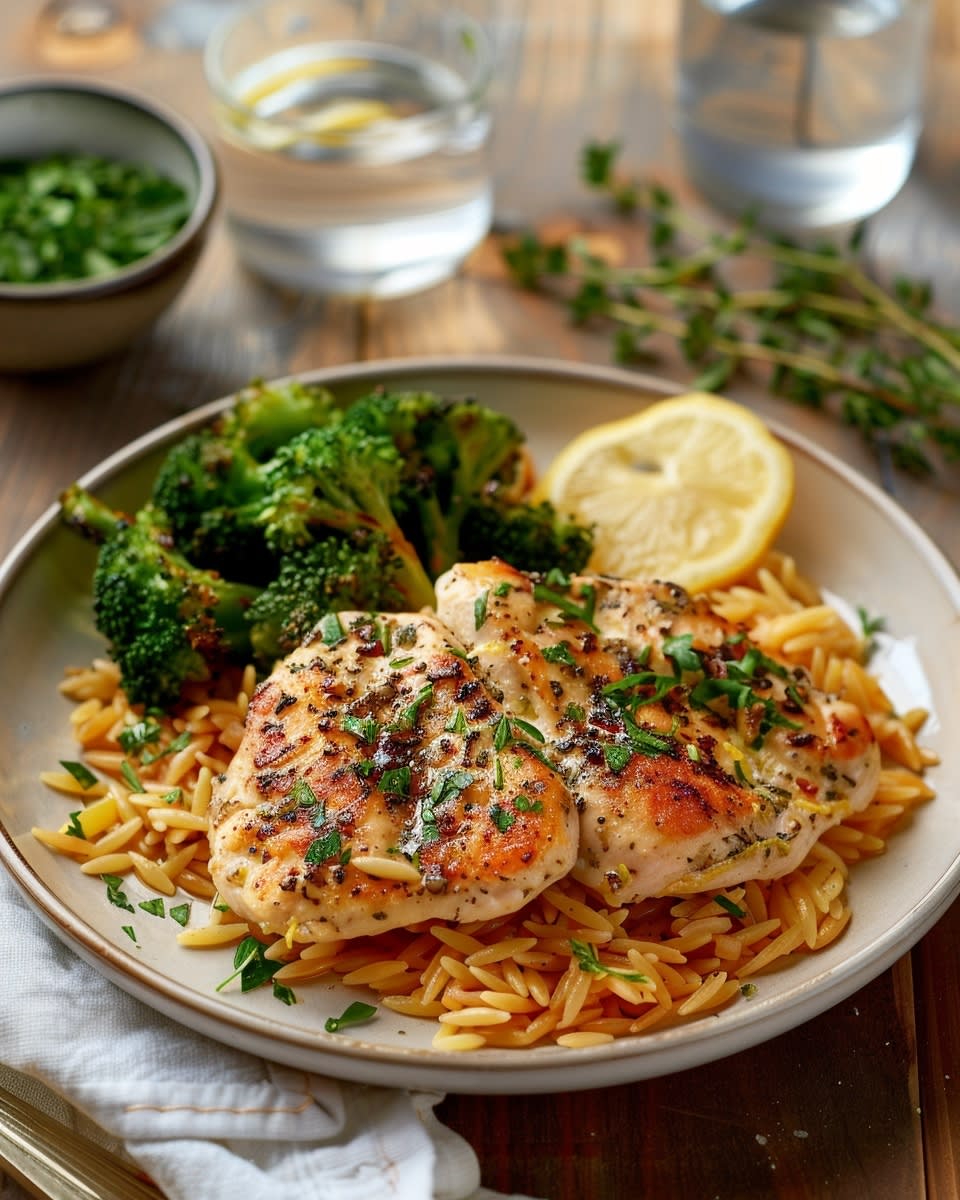
The Magic of One-Pot Lemon Herb Chicken Orzo
Last Tuesday, I stared at my kitchen sink piled high with dirty pots and pans. I’d made a simple chicken dinner, but somehow created enough dishes to fill a restaurant dishwasher. That’s when I remembered why I fell in love with one-pot meals in the first place. They save my sanity on those nights when cooking feels like a chore instead of something enjoyable.
One-pot meals are exactly what they sound like. You throw everything into a single pot or pan, let it cook, and serve straight from there. No juggling multiple burners. No mountains of dishes waiting for you after dinner. Just good food and easy cleanup. The One-Pot Lemon Herb Chicken Orzo takes this concept and turns it into something special. It’s bright, flavorful, and comes together in about 30 minutes.
This dish combines tender chicken with tiny pasta called orzo, fresh herbs, and a tangy lemon sauce that ties everything together. The best part? Everything cooks in the same pan, which means the orzo soaks up all the flavor from the chicken and herbs. You get a complete meal with protein, carbs, and plenty of taste in one simple recipe.
Busy weeknights call for meals that don’t require much thought or effort. After a long day at work, the last thing anyone wants is a complicated recipe with twenty steps and endless cleanup. This One-Pot Lemon Herb Chicken Orzo fits perfectly into those hectic evenings when you need dinner on the table fast. It’s also great for family dinners because kids and adults both enjoy the mild, fresh flavors.
I started making this recipe during those weeks when life gets overwhelming. You know the ones. Work deadlines pile up, kids have activities every night, and somehow you still need to put real food on the table. This dish became my go-to because I could make it without thinking too hard. I always keep chicken, orzo, and lemons on hand now.
Why Choose a One-Pot Meal?
The cleanup advantage alone makes one-pot recipes worth trying. Think about your typical dinner routine. You might use a cutting board, a pan for the protein, a pot for pasta or rice, maybe another pan for vegetables, plus all the prep bowls and utensils. That’s easily six to ten items that need washing. With a one-pot meal, you’re looking at maybe three or four things total. That’s a huge difference on a weeknight.
I used to spend almost as much time cleaning my kitchen as I did cooking. It felt ridiculous. Now I spend that extra time sitting down with my family or actually relaxing in the evening. That shift has made dinner feel less like a dreaded task and more like something I can handle without stress.
Time-saving goes beyond just the cleanup. One-pot recipes often cook faster because everything shares the same heat source. The ingredients cook together and flavors blend naturally while you do other things. You can help kids with homework, fold laundry, or just take a breath. You don’t need to stand over multiple burners stirring and checking different pots.
People with busy schedules find these meals perfect for their lifestyle. If you work long hours, have kids in sports or activities, or just feel exhausted by dinnertime, one-pot meals remove so many barriers. You don’t need to be an experienced cook to make them work. The simple process means fewer chances to mess something up.
Here’s what makes one-pot meals practical for busy people:
- Less active cooking time: You can walk away while things simmer instead of constantly monitoring multiple dishes
- Fewer ingredients to manage: Everything goes into one place, so there’s less measuring and organizing
- Easier meal planning: Most one-pot recipes are complete meals, so you don’t need to think about side dishes
- Simple shopping lists: These recipes typically use straightforward ingredients you can find anywhere
- Minimal kitchen space needed: Great for small kitchens or when your counter space is limited
The versatility of one-pot dishes surprises people who haven’t tried them. You might think cooking everything together would create mushy, bland food. That’s not true at all. The key is adding ingredients at the right times so everything cooks properly. Chicken goes in first to brown and develop flavor. Orzo and liquid come next. Fresh herbs and lemon juice finish things off at the end.
You can adapt one-pot recipes to match what you have in your kitchen or what your family likes to eat. Don’t have fresh thyme? Dried herbs work fine. Want more vegetables? Add spinach, peas, or cherry tomatoes. Need to use chicken thighs instead of breasts? Go for it. The basic method stays the same while the flavors change based on your choices.
One-pot meals also introduce you to flavor combinations you might not try otherwise. When ingredients cook together, they share their tastes in ways that separate dishes can’t match. The chicken juices flavor the orzo. The herbs infuse everything. The lemon brightens the whole dish. This natural blending creates depth without complicated techniques or fancy ingredients.
I’ve made variations of this One-Pot Lemon Herb Chicken Orzo dozens of times now. Sometimes I add sun-dried tomatoes for a Mediterranean twist. Other times I throw in artichoke hearts or olives. My kids prefer it plain with extra parmesan cheese on top. The base recipe works every time, and the changes keep it interesting.
The beauty of one-pot cooking extends beyond just convenience. These meals teach you how flavors work together. You start to understand which herbs pair well with chicken, how citrus brightens heavy dishes, and why building layers of taste matters. You become a better cook without taking a single class.
Budget-conscious cooks love these recipes too. You use fewer resources since only one burner runs. There’s less food waste because you can see exactly what you’re making. Leftovers store easily in one container. You can stretch expensive proteins further by combining them with affordable grains or pasta.
When I make this dish for friends or family who come over, they always ask for the recipe. They’re shocked when I tell them how simple it is. People expect restaurant-quality flavors to require complicated methods. But good cooking often comes down to fresh ingredients and letting them shine together. This One-Pot Lemon Herb Chicken Orzo proves that point every time.


Gathering Your Ingredients for Perfect Lemon Herb Chicken Orzo
Now that you understand why this recipe makes life easier, let’s talk about what actually goes into it. I keep most of these ingredients stocked because they’re versatile enough for other meals too. Nothing here is hard to find or weirdly expensive, which matters when you’re trying to feed a family without breaking the bank.
For the chicken, I usually grab about a pound and a half of boneless, skinless chicken breasts. You can cut them into bite-sized pieces or use chicken thighs if that’s what you prefer. Thighs have more fat, which means they stay juicier and add extra flavor to the orzo as everything cooks together. I’ve used both plenty of times and honestly can’t pick a favorite.
The orzo itself is just rice-shaped pasta. It looks like grains of rice but cooks like any other pasta. You’ll need about one and a half cups of dried orzo for this recipe. I find it in the pasta aisle at every grocery store I visit. Some stores stock it near the rice instead, so check both spots if you’re having trouble. It’s become way more popular in recent years, so most places carry at least one brand now.
Fresh lemons are non-negotiable here. You need both the juice and the zest, so grab two medium lemons to be safe. Fresh lemon juice has this bright, clean taste that bottled stuff just can’t match. I learned that lesson the hard way when I tried to take a shortcut once. The dish tasted flat and boring, like something was missing. Fresh citrus makes such a difference that it’s worth the tiny bit of extra effort to juice a couple of lemons.
For herbs, fresh really does beat dried in this particular recipe. I use a combination of fresh thyme and fresh parsley. The thyme goes in during cooking and fills your kitchen with this amazing smell. The parsley gets stirred in at the end for a pop of color and fresh flavor. You need maybe two tablespoons of chopped fresh thyme and a quarter cup of chopped parsley. If you absolutely must use dried thyme, cut the amount to about one tablespoon since dried herbs are more concentrated.
Garlic goes into pretty much everything I cook, and this herb chicken dish is no exception. Three or four cloves, minced up fine, add depth without overpowering the lemon. I’ve gotten lazy and used jarred minced garlic when I’m really pressed for time. It works, but fresh garlic has more punch.
You’ll also need chicken broth. About three cups does the trick. The orzo absorbs the broth as it cooks, which is how it picks up so much flavor. I keep boxes of chicken broth in my pantry because they last forever and work for so many recipes. If you make your own stock, even better. The richer your broth, the more flavorful your final dish will be.
Olive oil for cooking, salt and pepper for seasoning, and maybe half a cup of grated parmesan cheese if you want to make things extra good. The parmesan isn’t required, but it adds a salty, nutty richness that my family really loves. I stir some into the orzo and pass extra at the table for people to add more.
Here’s where you can get creative with add-ins. I rotate through different vegetables depending on what’s in my fridge. Cherry tomatoes, halved and thrown in during the last five minutes, add sweet bursts of flavor. Spinach wilts right into the dish if you stir it in at the end. Frozen peas work great too. My friend adds artichoke hearts, which gives it a fancier feel. Sun-dried tomatoes would be amazing here, similar to how they shine in Marry Me Chicken with Sun-Dried Tomato Cream Sauce.
If you want more vegetables but don’t want to change the base recipe much, try One Pot Ground Beef Zucchini Skillet for inspiration on how to bulk up one-pot meals with produce. The technique is similar even though the proteins differ.
Some people like adding a splash of white wine when they add the broth. It’s not necessary, but if you have an open bottle, about a third of a cup adds another layer of flavor. I don’t always have wine around, so I skip it more often than not. The dish tastes great either way.
Cooking Your One-Pot Lemon Herb Chicken Orzo Step by Step
Alright, ingredients assembled. Now comes the fun part where everything actually comes together. The whole process takes about thirty minutes from start to finish, and most of that is hands-off time while the orzo cooks.
Start by seasoning your chicken pieces with salt and pepper. Don’t be shy here. Proper seasoning at every step builds flavor. I lay the chicken pieces on a plate and sprinkle both sides generously. Let them sit for a minute while you heat your pot.
Use a large, deep skillet or a Dutch oven for this recipe. You need something with enough surface area to brown the chicken and enough depth to hold all the liquid later. I use my big cast iron skillet most of the time. Heat it over medium-high heat and add about two tablespoons of olive oil. Wait until the oil shimmers before adding the chicken.
Place the chicken pieces in the hot oil, making sure not to crowd them. If they’re too close together, they’ll steam instead of browning. Work in batches if you need to. Let each piece sit undisturbed for about three to four minutes until a golden crust forms on the bottom. Flip them over and cook another three minutes on the other side. The chicken doesn’t need to cook through completely at this stage since it’ll finish cooking in the broth later.
Once the chicken has some nice color on it, remove it from the pot and set it aside on a clean plate. The pan should have some browned bits stuck to the bottom. That’s pure flavor right there. Don’t wash the pan.
Lower the heat to medium and add your minced garlic and fresh thyme to the same pot. You might need to add a tiny splash more olive oil if things look dry. Stir the garlic and thyme around for about thirty seconds until they smell incredible. Watch carefully because garlic burns fast and turns bitter.
Now add your orzo straight into the pot with the garlic and herbs. Stir it around for a minute or two. This step, called toasting, gives the pasta a slightly nutty flavor and helps it hold its shape better as it cooks. The orzo should smell toasty and look a bit golden.
Pour in your chicken broth and add the zest from one lemon. If you’re using wine, add it now too. Stir everything together, scraping up those browned bits from the bottom of the pan. Bring the liquid to a boil, then reduce the heat so it bubbles gently.
Nestle the chicken pieces back into the pot, pushing them down slightly so they’re partially submerged in the liquid. Cover the pot with a lid and let everything simmer for about twelve to fifteen minutes. The orzo needs to absorb most of the liquid and turn tender.
Here’s the thing about cooking orzo: it can go from perfectly tender to mushy paste pretty quickly. Check it around the twelve-minute mark. The orzo should be tender but still have a slight bite to it, similar to Creamy Garlic Butter Chicken and Rice Skillet where the rice needs that perfect texture. If there’s still a lot of liquid left, remove the lid and let it cook another few minutes uncovered.
When the orzo is done, remove the pot from the heat. This is crucial. Take it off the burner completely. Now squeeze the juice from your lemons over everything. I usually start with one lemon and taste before adding the second. You want bright citrus flavor without making the dish sour.
Stir in your fresh chopped parsley and about half of your parmesan cheese if you’re using it. The residual heat will melt the cheese right into the orzo, creating this creamy texture without any actual cream. If you added vegetables like spinach or peas, stir those in now too. The heat from the dish will cook them just enough.
Taste and adjust the seasoning. You’ll probably need more salt and maybe some black pepper. The lemon herb chicken should taste bright and fresh with the herbs coming through clearly. If it seems flat, add a bit more lemon juice or salt.
Let the dish rest for about five minutes before serving. This rest time lets the orzo soak up any remaining liquid and all the flavors settle together. The chicken will be perfectly cooked through and the whole thing will have this cohesive taste where everything complements everything else.
Funny enough, this resting period is when I usually set the table and get drinks ready. By the time everyone sits down, the dish is at the perfect temperature for eating. Not too hot, not cool, just right.
If you love the combination of lemon and herbs with chicken, you should try Sheet Pan Lemon Garlic Chicken and Potatoes sometime. It uses similar flavor profiles but with a completely different cooking method. Both recipes prove how well citrus and herbs work with chicken.
I serve this straight from the pot at the table, family style. Everyone helps themselves, and I pass extra parmesan and some crusty bread for soaking up the lemony orzo at the bottom of their bowls. It’s become one of those meals where people go back for seconds without even thinking about it.


Making Your One-Pot Chicken Orzo Your Own
Here’s where this recipe gets even better. Once you’ve made the basic version a couple times and gotten comfortable with it, you can start tweaking things to match exactly what you and your family like. I probably make this dish twice a month, and it rarely looks exactly the same way twice. That flexibility is what keeps it from getting boring.
The serving side of things can go a bunch of different directions depending on your mood. Sometimes I keep it super simple and just serve the one-pot chicken orzo in bowls with nothing else. It’s already a complete meal with protein and carbs, so you don’t technically need anything alongside it. But other times, especially when I have people over, I like to round things out a bit.
A crisp green salad works perfectly here. I’m talking about something light and fresh that contrasts with the warm, comforting orzo. My go-to is mixed greens with cucumber, red onion, and a simple lemon vinaigrette. The vinaigrette echoes the lemon in the main dish without competing with it. Sometimes I throw in some cherry tomatoes and shaved parmesan to tie it all together.
Garlic bread is another winner. Actually, any crusty bread situation makes sense because you’ll want something to soak up that lemony, herby sauce at the bottom of your bowl. I buy those par-baked baguettes from the grocery store and keep them in my freezer. They take maybe ten minutes to bake, and they’re done right when the orzo finishes cooking. Slather them with butter and garlic if you’re feeling fancy, or just serve them plain.
Roasted vegetables on the side add color and extra nutrition if you’re in the mood. Broccoli, asparagus, or green beans all work great. I toss them with olive oil, salt, and pepper, then roast them at 425 degrees while the orzo simmers away. Everything finishes around the same time, and you’ve got a full spread without much extra effort.
Now let’s talk about dietary variations because not everyone eats the same things. The great news is that this recipe adapts pretty easily to different needs.
For gluten-free folks, you obviously can’t use regular orzo since it’s wheat pasta. But gluten-free orzo exists now. I’ve seen it at stores like Whole Foods and even regular supermarkets in the health food section. It’s usually made from rice or corn. The texture isn’t identical to wheat orzo, but it gets close enough that most people won’t notice much difference. You could also substitute with small gluten-free pasta shapes like elbows or shells. Just watch the cooking time since different pastas absorb liquid at different rates.
Actually, here’s something I discovered by accident. You can use white rice instead of orzo entirely. I did this once when I realized too late that I was out of orzo. I used about a cup of long-grain white rice and followed the same basic method. The dish turned out different but still really good. The rice needed a few extra minutes to cook through, and I had to add maybe half a cup more broth. It became more of a pilaf situation, but my family loved it just as much.
Dairy-free adjustments are simple. Just skip the parmesan cheese at the end. The dish has plenty of flavor without it, honestly. If you really miss that cheesy element, nutritional yeast gives you a similar savory, umami taste. I sprinkle about two tablespoons in at the end when I make this for my friend who can’t do dairy. She says she doesn’t feel like she’s missing anything.
For vegetarians, swap the chicken for chickpeas or white beans. Add them when you would’ve added the chicken back to the pot. They’ll warm through and pick up all those herb and lemon flavors beautifully. You’ll want to use vegetable broth instead of chicken broth, obviously. I’ve made this version several times when I’m just not feeling like eating meat, and it’s legitimately delicious. Sometimes I add extra vegetables like zucchini or bell peppers to make it more substantial.
Low-carb people have asked me about this recipe before. Honestly, it’s tough to make this low-carb since orzo is literally pasta. But you could try using cauliflower rice instead. I haven’t personally tested this, but I imagine you’d cut way down on the liquid since cauliflower doesn’t absorb broth the same way pasta does. Maybe use just one cup of broth and add the cauliflower rice toward the end of cooking so it doesn’t turn to mush.
If you’re watching your sodium for health reasons related to everyday nutrition, use low-sodium or no-sodium chicken broth and control the salt yourself. I do this sometimes just because store-bought broth can be crazy salty. You can always add more salt at the table if someone wants it, but you can’t take it away once it’s in there.
Protein variations beyond just chicken work great too. I’ve made this with turkey cutlets cut into chunks. Worked perfectly. Shrimp would be amazing here, though you’d add them much later in the cooking process since they cook so fast. Maybe stir them in during the last five minutes and just let them turn pink. That would give you more of a Mediterranean seafood vibe.
Pork tenderloin, sliced thin, would also substitute nicely for the chicken. Same cooking method, similar timing. You’d get a slightly richer flavor from the pork, which might be a nice change of pace.
Vegetable additions change the whole character of the dish in fun ways. I mentioned spinach and tomatoes earlier, but there’s so much more you can do. Diced zucchini mixed in with the orzo adds bulk without heaviness. Frozen peas stirred in at the end give you pops of sweetness. Roasted red peppers from a jar bring smokiness. Kalamata olives make it more Greek-inspired.
My neighbor makes a version with asparagus cut into one-inch pieces. She adds them about halfway through the orzo cooking time so they get tender but not mushy. In spring when asparagus is everywhere and cheap, that combination of lemon, herbs, chicken, and asparagus tastes incredibly fresh and seasonal.
Funny enough, my kids prefer this with basically no vegetables at all. Just the chicken, orzo, and herbs. I sneak spinach in sometimes because it disappears into the dish, but if they see chunks of tomato or zucchini, they pick around them. I figure they’re getting protein and some herbs, so I don’t stress about it too much on weeknights.
The herb situation offers room for creativity too. I stick with thyme and parsley most of the time because that’s what I know works. But basil instead of parsley would be fantastic, especially in summer. Dill would give it a totally different personality, almost Scandinavian. Oregano would push it toward Greek or Italian territory. Cilantro and lime instead of parsley and lemon would create a completely new dish with Mexican or Thai vibes.
Spice level can be adjusted if you like heat. Red pepper flakes added with the garlic bring a gentle warmth that doesn’t overwhelm the lemon. I use maybe half a teaspoon for my family. Or you could stir in some harissa paste or sriracha at the end for more intense heat.
The cooking method itself can vary slightly based on what equipment you have. I usually make this on the stovetop, but you could absolutely start it on the stove and finish it in the oven if that works better for your setup. Just make sure your pot is oven-safe. Some people have told me they’ve adapted this for their Instant Pot, though I haven’t tried that myself. The pressure cooker would definitely speed things up even more.
Batch cooking works well with this recipe too. I sometimes double everything and make two pots at once. One for dinner that night, one that goes straight into the fridge or freezer for later. It’s barely any extra work since you’re already doing all the prep, and future you will be so grateful to have a ready-made dinner waiting.
If you’re exploring more recipes like this, browsing through different main dish options can give you tons of inspiration for other weeknight meals that come together just as easily.
Presentation matters more than people think, even for casual weeknight dinners. I serve this in shallow bowls rather than on plates because it’s a bit saucy. A sprinkle of extra fresh herbs on top makes it look like something from a restaurant. Lemon wedges on the side let people add more brightness if they want it. These tiny touches take five seconds but make the meal feel more special.
For meal prep purposes, this one-pot chicken orzo holds up remarkably well. I pack it into individual containers for lunches all the time. It reheats beautifully in the microwave. You might need to add a splash of water or broth when reheating because the orzo continues absorbing liquid as it sits. Just stir it in, heat everything through, and you’ve got a fresh-tasting lunch that didn’t require any morning prep work.
The recipe scales up or down easily too. Cooking for just yourself? Cut everything in half. Feeding a crowd? Double or triple it, though you might need to work in batches for browning the chicken depending on your pot size. The proportions stay consistent regardless of scale.
I think what I love most about this recipe is how forgiving it is. If you overcook the orzo slightly, it still tastes good. If you forget the lemon zest, the juice alone carries enough citrus flavor. If you only have dried herbs, it works. Not every recipe tolerates mistakes and substitutions this well, which makes this one perfect for people who are still building confidence in the kitchen.
This dish has honestly transformed my weeknight cooking routine. I spent years thinking that flavorful, satisfying meals required complicated techniques or lots of time. But recipes like this prove that wrong. Good ingredients, a solid method, and one pot can create something that everyone actually wants to eat. That’s a win in my book.
Your Questions About Easy One-Pot Meals Answered
How long does it take to cook the One-Pot Lemon Herb Chicken Orzo?
From start to finish, you’re looking at about 30 to 35 minutes total. That includes browning the chicken, toasting the orzo, and simmering everything together. The active cooking time where you’re actually doing something is maybe 10 minutes, with the rest being hands-off simmering time. It’s one of those easy one-pot meals that fits perfectly into busy weeknight schedules when you need dinner fast but don’t want to compromise on flavor or nutrition.
Can I use other types of pasta instead of orzo?
Absolutely. Small pasta shapes work best because they cook in a similar timeframe and absorb the broth nicely. Try ditalini, small shells, or even broken-up spaghetti. The cooking time might vary slightly depending on what pasta you choose, so check the package directions and keep an eye on the liquid levels. Larger pasta shapes might need more broth and a longer cooking time. I’ve successfully used whatever small pasta I had in my pantry when I ran out of orzo.
What can I substitute for fresh herbs if I don’t have them?
Dried herbs work in a pinch, though the flavor won’t be quite as bright. Use about one-third the amount since dried herbs are more concentrated. So if the recipe calls for two tablespoons of fresh thyme, use about two teaspoons of dried. Add dried herbs earlier in the cooking process, with the garlic, so they have time to rehydrate and release their flavors. Skip dried parsley though since it doesn’t add much. You could use a squeeze of extra lemon juice at the end instead.
Is this dish suitable for meal prepping?
Yes, it’s actually fantastic for meal prep. The flavors develop even more as it sits, so leftovers often taste better the next day. Portion it into individual containers and store them in the fridge for up to four days. You can also freeze portions for up to three months. The orzo texture changes slightly after freezing, becoming a bit softer, but it’s still perfectly edible and tasty. Reheat with a splash of broth or water to restore moisture.
How do I store leftovers?
Let the dish cool to room temperature first, then transfer it to an airtight container. It’ll keep in the refrigerator for about four days. Don’t leave it sitting out for more than two hours after cooking. When you’re ready to eat it again, reheat portions in the microwave or warm everything in a pot on the stove. Add a little chicken broth or water while reheating since the orzo soaks up liquid as it sits.
Can I make this dish ahead of time?
You can prep the ingredients ahead, like cutting the chicken and measuring everything out, but I don’t recommend cooking it completely ahead. The orzo gets mushy if it sits in liquid too long. If you need to prepare in advance for a dinner party or busy evening, brown the chicken and store it separately, then finish the cooking process when you’re ready to eat. That way everything stays fresh and the textures come out right.
What size pot do I need for this recipe?
A large, deep skillet or a Dutch oven works best. You need something that’s at least 12 inches in diameter and about 3 inches deep to hold all the ingredients comfortably. The pot should be wide enough to brown the chicken in a single layer and deep enough to hold three cups of broth plus all the other ingredients. I use my 5-quart Dutch oven most often. Cast iron skillets with high sides also work great.
Can I add more vegetables to make it healthier?
Definitely. Spinach, kale, peas, cherry tomatoes, zucchini, bell peppers, and asparagus all work beautifully in this dish. Add heartier vegetables like zucchini or bell peppers with the orzo so they cook through. Stir in quick-cooking vegetables like spinach or peas during the last few minutes. This is an easy way to bulk up the nutrition and fiber without changing the basic recipe. My kids don’t even notice extra vegetables when they’re mixed into the orzo.
Why is my orzo mushy?
Mushy orzo usually means it cooked too long or in too much liquid. Check it at the 12-minute mark rather than waiting the full 15 minutes. The orzo should be tender but still have a slight bite, like al dente regular pasta. Also, make sure to remove the pot from heat as soon as the orzo is done because it continues cooking in the residual heat. If you know your stove runs hot, start checking even earlier, around 10 minutes.
Can I use chicken thighs instead of breasts?
Yes, and many people actually prefer thighs for this recipe. They’re more forgiving because the extra fat keeps them juicy even if you slightly overcook them. Boneless, skinless thighs work best for ease, but you can use bone-in thighs if that’s what you have. Just increase the simmering time to make sure the chicken cooks through completely, probably closer to 20 minutes. The bones add extra flavor to the broth too, which makes the orzo even better.
Give this recipe a try next time you’re standing in your kitchen wondering what to make for dinner. I think you’ll be surprised by how much flavor comes from such a simple process, and how nice it feels to only wash one pot afterward.
Ingredients
Equipment
Method
- Assaisonnez le poulet avec du sel et du poivre.
- Faites chauffer l'huile d'olive dans une grande poêle ou cocotte à feu moyen-vif.
- Faites dorer les morceaux de poulet pendant 3-4 minutes de chaque côté, puis mettez de côté.
- Ajoutez l'ail haché et le thym frais dans la casserole, en cuisant pendant 30 secondes.
- Incorporez l'orzo et faites-le dorer pendant une minute ou deux jusqu'à ce qu'il soit légèrement doré.
- Versez le bouillon de poulet et le zeste de citron, en portant à ébullition.
- Remettez le poulet dans la casserole, couvrez et laissez mijoter pendant 12-15 minutes.
- Vérifiez la tendreté de l'orzo et évitez de trop cuire.
- Retirez du feu et pressez le jus de citron sur le mélange.
- Incorporez le persil et la moitié du parmesan, ajustant l'assaisonnement si nécessaire.
- Laissez reposer pendant 5 minutes avant de servir.